

Acmella oleracea Flower Heads vs. Leaves: What's the Difference?
When most people first discover Acmella oleracea, they immediately notice its distinctive yellow flower heads. Commonly known as Buzz Buttons, Electric Daisies, or the Toothache Plant, these unusual flowers have become famous for the unique tingling sensation they create when eaten.
However, focusing only on the flowers tells only part of the story.
Like many edible plants, Acmella oleracea is made up of several botanical structures, each with its own characteristics and purpose. The flower heads, leaves, stems, and roots all contribute to the plant's growth, but they differ significantly in appearance, culinary applications, and naturally occurring plant compounds.
Understanding these differences is important for anyone working with Acmella oleracea, whether you're growing it in your garden, preparing it in the kitchen, studying its botanical properties, or producing high-quality plant extracts.
While chefs often choose flower heads for their visual impact and remarkable sensory experience, the leaves provide their own culinary value, offering fresh herbal flavors that complement a variety of dishes.
Likewise, botanical researchers and formulators carefully consider which part of the plant is most appropriate for a specific purpose. The selection of plant material is one of the first steps in producing consistent, high-quality botanical ingredients.
In this guide, we'll explore how the flower heads and leaves of Acmella oleracea compare, where they differ, and why understanding the whole plant provides a deeper appreciation of one of nature's most fascinating edible botanicals.
Understanding the Anatomy of Acmella oleracea
Before comparing the flower heads and leaves, it's helpful to understand the structure of the plant itself.
Acmella oleracea is a fast-growing herbaceous plant belonging to the Asteraceae family, the same botanical family that includes sunflowers, chamomile, daisies, and calendula.
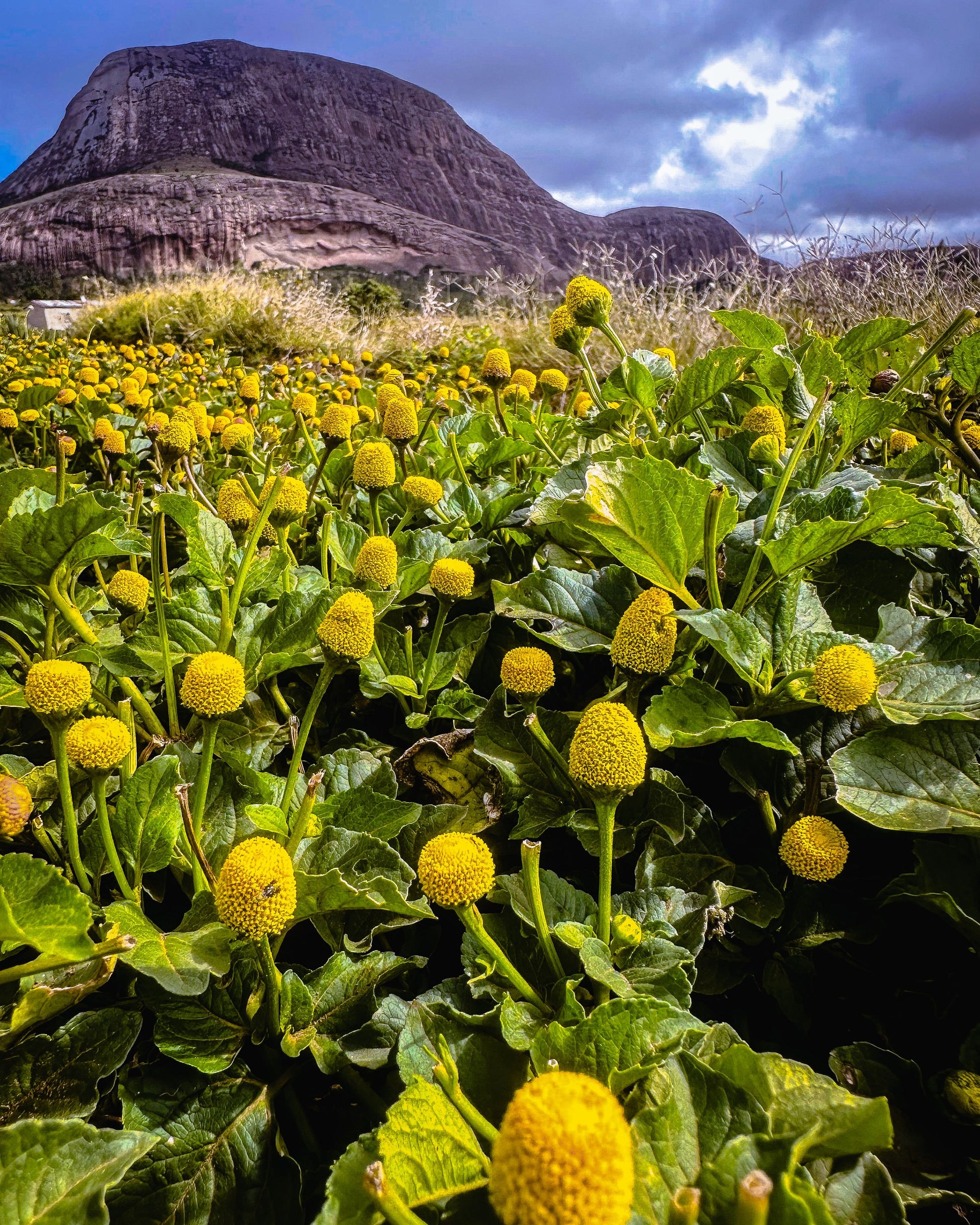
Although many people refer to the bright yellow "flowers," what appears to be a single flower is actually a flower head, also known botanically as an inflorescence.
Like other members of the daisy family, each flower head is composed of many tiny individual florets grouped together into a single compact structure.
The plant itself consists of four primary parts:
Flower Heads
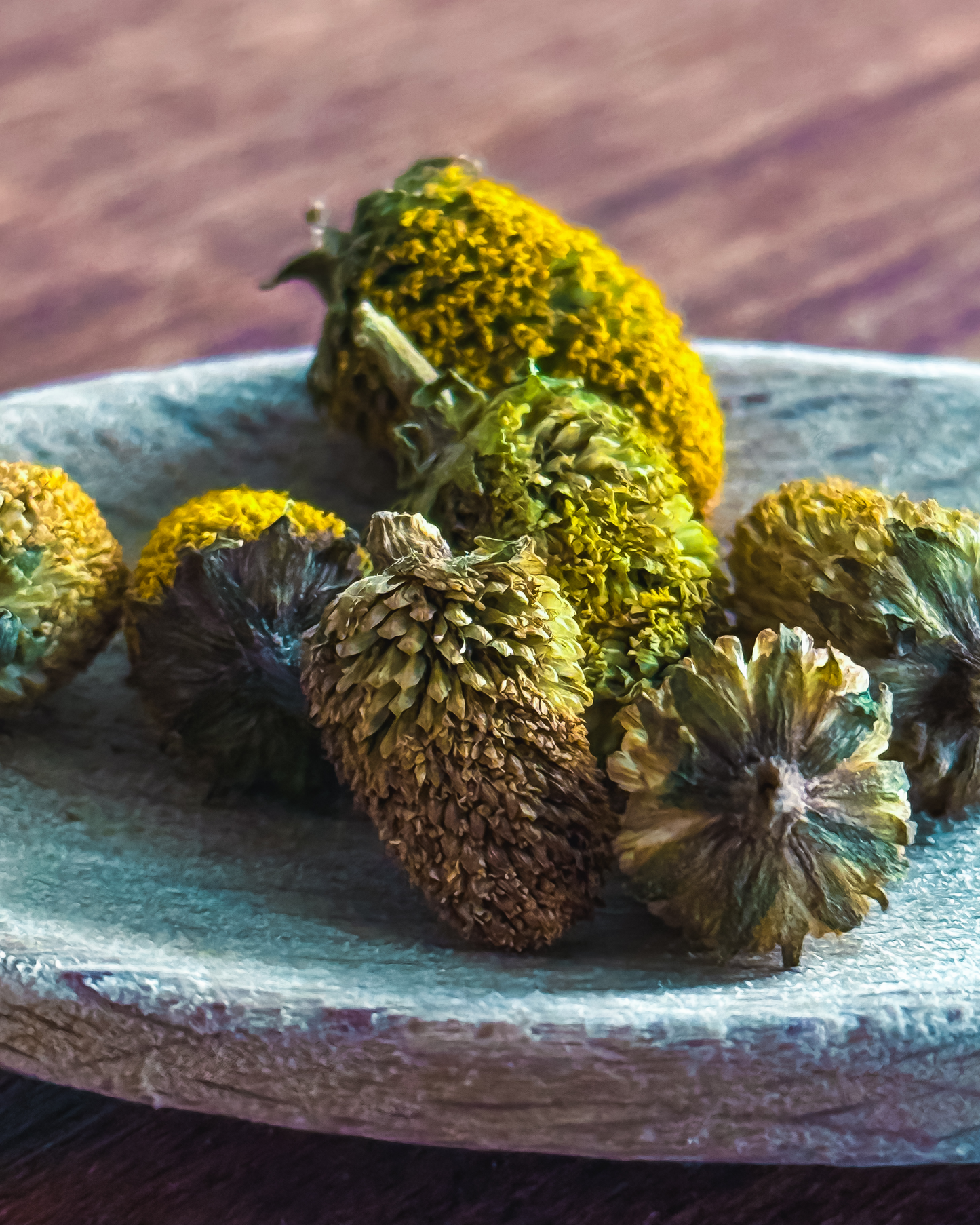
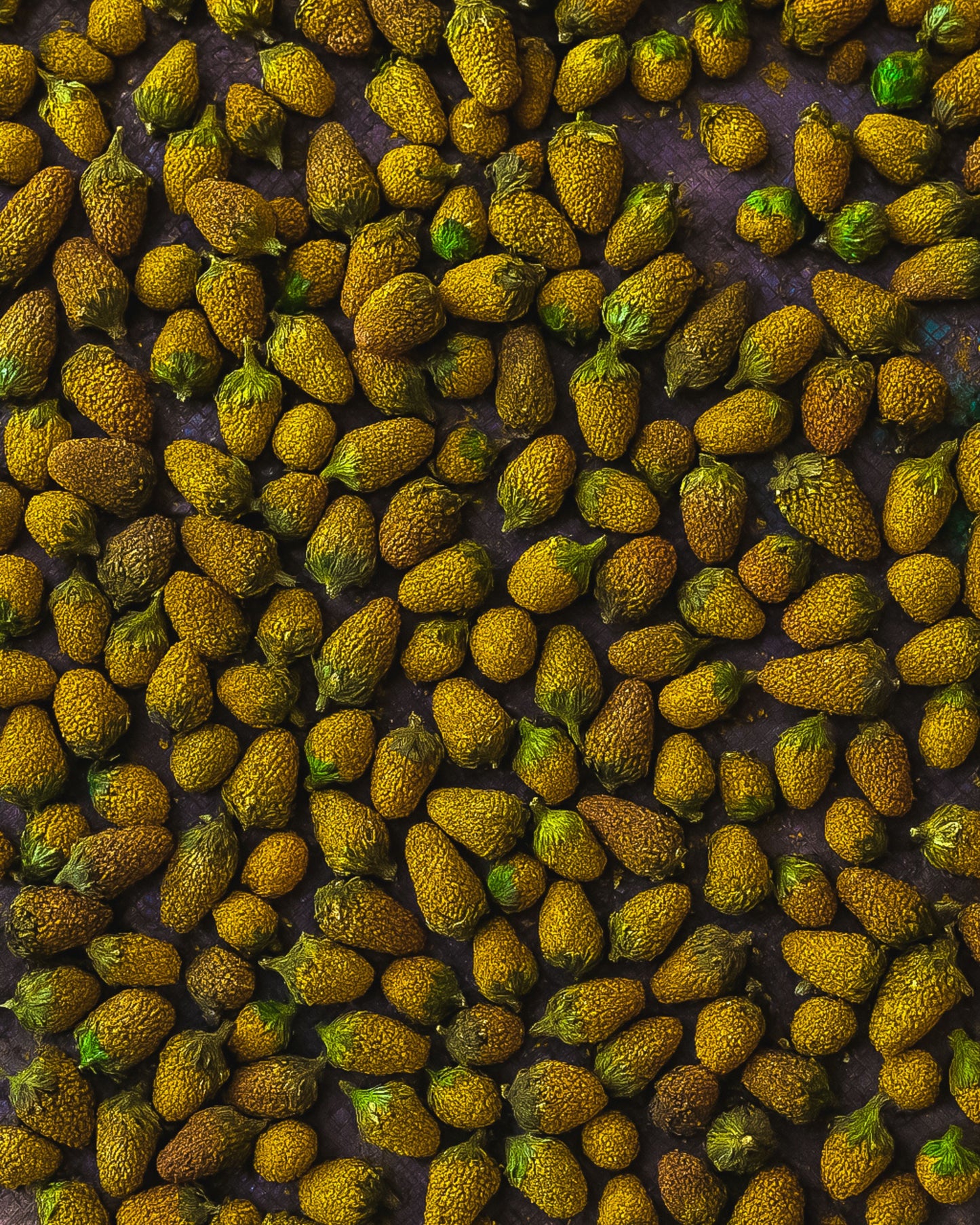
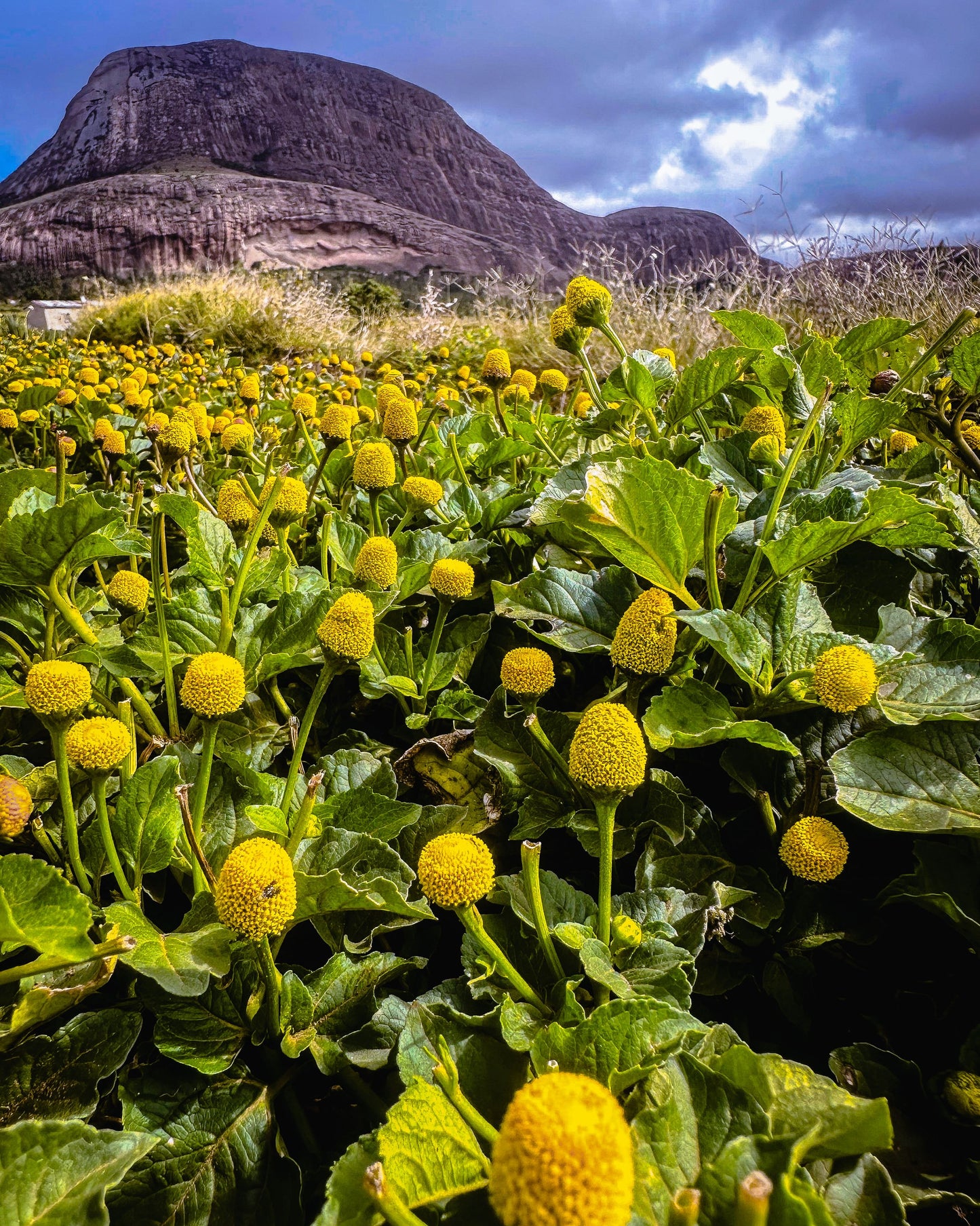
The cone-shaped yellow flower heads are the most recognizable feature of Acmella oleracea. They attract pollinating insects, produce seeds, and are responsible for the plant's growing popularity in fine dining and botanical research.
Leaves
The bright green leaves grow along branching stems and are responsible for photosynthesis, converting sunlight into the energy the plant needs for growth.
Young leaves are also edible and have long been incorporated into traditional cuisines in regions where the plant is cultivated.
Stems
The stems support the leaves and flowers while transporting water and nutrients throughout the plant.
Although edible when young, they are generally less commonly used than the flowers or leaves.
Roots
The roots anchor the plant and absorb water and minerals from the soil.
Unlike the aerial portions of the plant, the roots are not commonly used in culinary applications.

Different Plant Parts, Different Natural Chemistry
One of the most important concepts in botanical science is that different tissues within the same plant naturally contain different concentrations of phytochemicals.
Plants do not distribute their naturally occurring compounds evenly.
Instead, these compounds are produced and stored in varying amounts depending on the function of each tissue.
Factors influencing natural variation include:
- genetics;
- plant maturity;
- growing conditions;
- climate;
- soil composition;
- sunlight exposure;
- harvesting stage.
For this reason, researchers and botanical ingredient manufacturers rarely consider a plant as a single, uniform material.
Instead, they carefully evaluate which plant part best suits a particular application.
This principle applies to Acmella oleracea as well.
Although naturally occurring spilanthol can be found throughout the plant, the flower heads and leaves differ in both their botanical role and their overall chemical composition.
Understanding this distinction helps explain why chefs and formulators often make different choices depending on their intended use.
| Characteristic | ||
|---|---|---|
| Primary Function | Reproduction and seed production | Photosynthesis and plant growth |
| Appearance | Cone-shaped yellow flower heads, often with a reddish-brown tip at maturity | Bright green, ovate leaves with serrated margins |
| Edibility | Yes | Yes |
| Flavor Profile | Herbal with a pronounced tingling sensation | Fresh, green, slightly peppery and herbal |
| Mouthfeel | Strong tingling and salivating sensation | Mild tingling with a fresher herbal taste |
| Relative Spilanthol Content | Generally the highest concentration within the aerial parts of the plant | Present, but typically lower than in the flower heads |
| Botanical Compounds | Rich in alkylamides (including spilanthol), flavonoids and other phytochemicals | Contains alkylamides, chlorophyll, flavonoids and other naturally occurring plant compounds |
| Sensory Intensity | High | Mild to moderate |
| Culinary Uses | Garnishes, cocktails, desserts, seafood, tasting menus, edible flower presentations | Salads, soups, pestos, herb blends, sauces and vegetable dishes |
| Visual Appeal | Excellent; highly decorative | Provides fresh green colour and texture |
| Use in Botanical Extracts | Frequently selected for premium extracts due to higher spilanthol content and sensory consistency | Sometimes included in whole-plant extracts or specialty botanical preparations |
| Harvest Stage | Collected when flower heads are fully developed but before excessive aging | Usually harvested while young and tender for the best culinary quality |
| Commercial Value | Higher due to demand for culinary and extraction applications | Primarily valued as a culinary herb and complementary botanical material |
Scientific Note
Spilanthol is naturally present throughout Acmella oleracea, but it is not distributed uniformly. Studies indicate that flower heads generally contain higher concentrations than leaves; however, the exact amount varies considerably depending on plant genetics, cultivation practices, environmental conditions, maturity at harvest, post-harvest processing, and analytical methods. Consequently, reputable botanical manufacturers rely on standardized extraction and quality testing rather than assuming a fixed spilanthol content for any specific plant part.
The Flower Heads: The Plant's Signature Feature
When people think of Acmella oleracea, they almost always picture its distinctive flower heads.
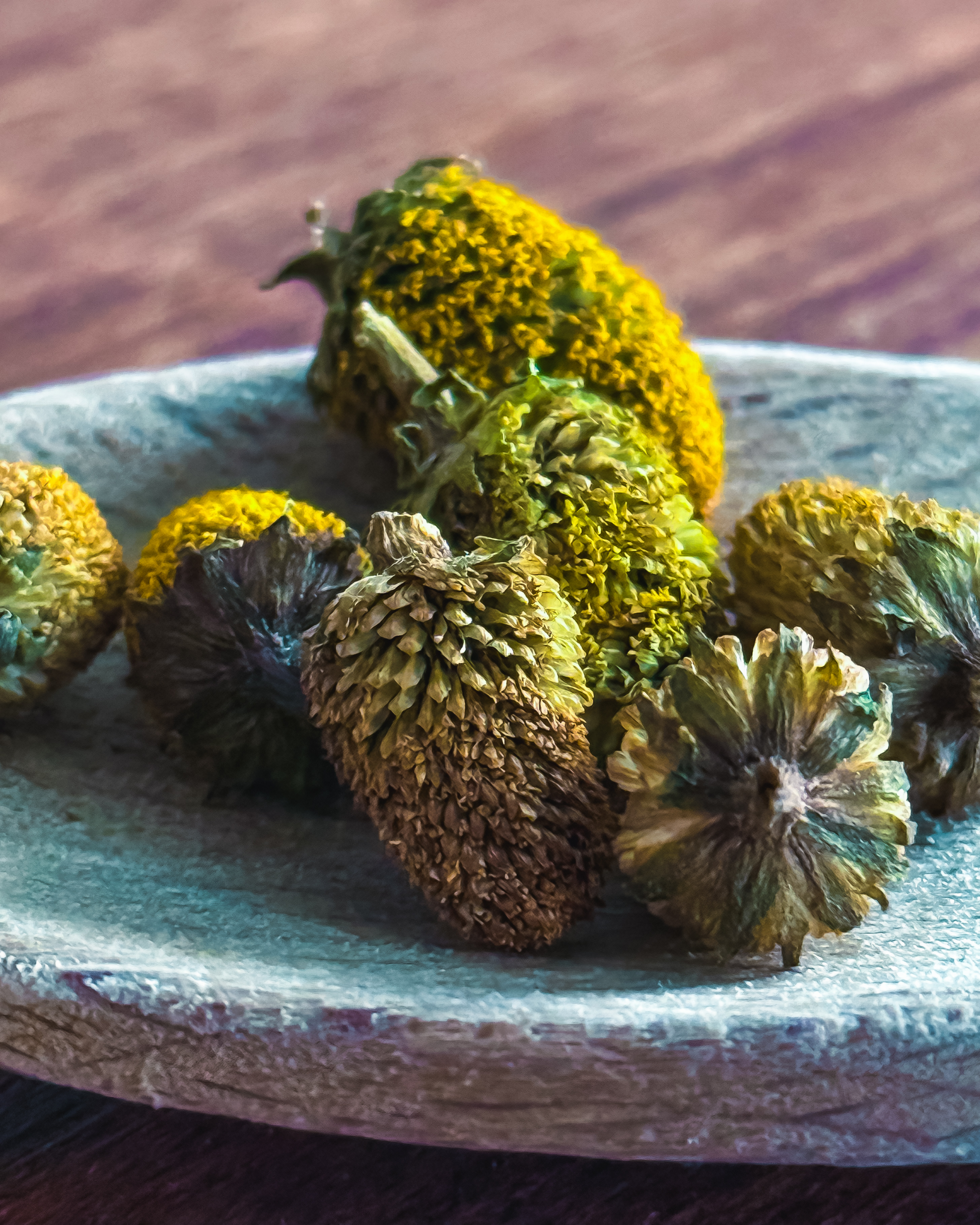
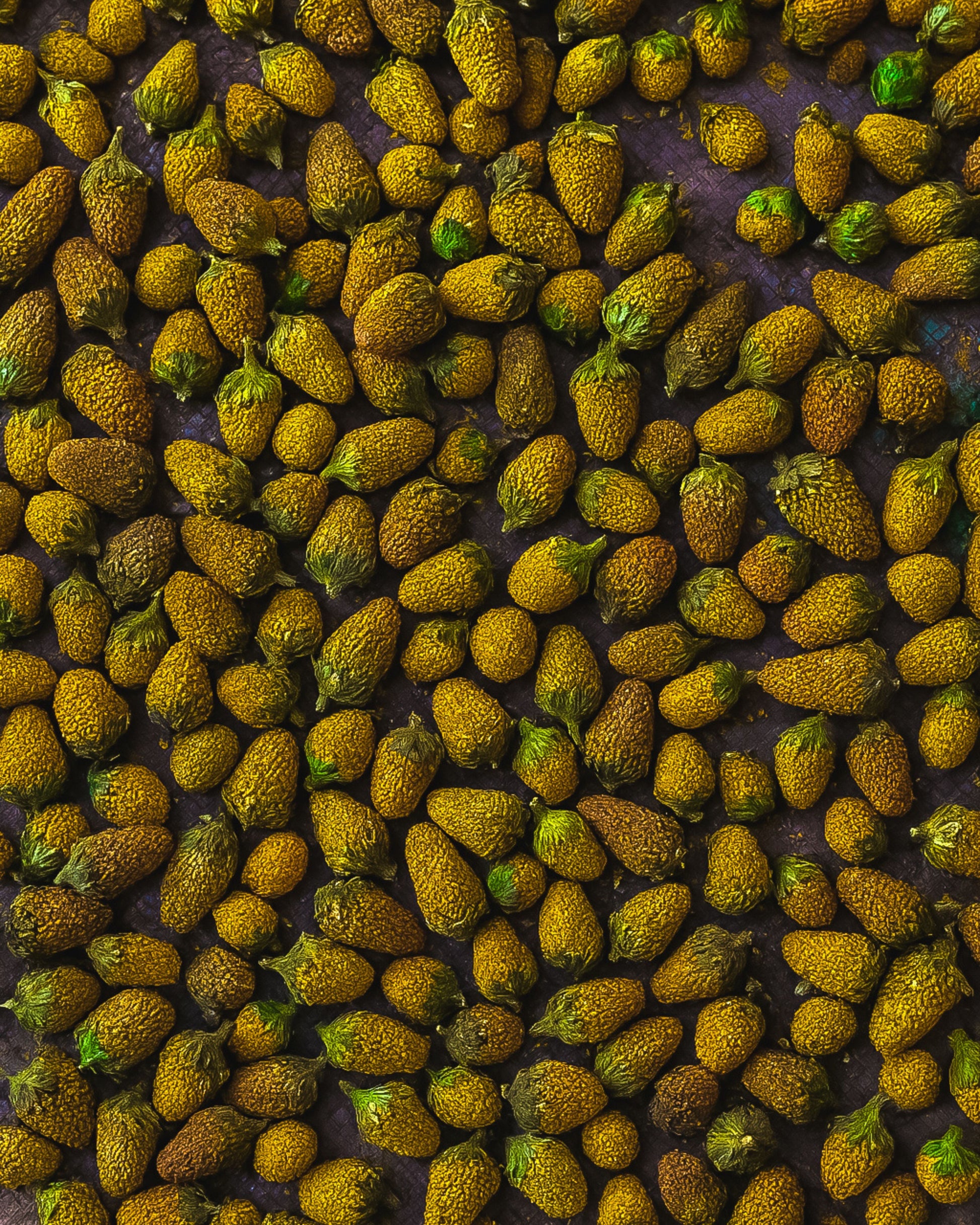
Rising above the foliage on slender stems, the flowers are small, cone-shaped structures with a bright golden-yellow appearance and a characteristic reddish-brown tip.
Their unusual shape makes them instantly recognizable among edible flowers.
Unlike many ornamental blossoms that are appreciated primarily for their beauty, the flower heads of Acmella oleracea are valued for combining visual appeal with a unique sensory experience.
This combination has made them increasingly popular among:
- fine dining chefs;
- craft mixologists;
- molecular gastronomy specialists;
- botanical educators;
- edible flower growers.
In restaurants, the flower heads are rarely used simply as decoration.
Instead, they become an interactive element of the meal, encouraging diners to experience not only flavor and aroma but also changes in mouthfeel that distinguish Acmella oleracea from almost every other edible flower.
Their vibrant appearance also contributes to modern plating styles, where natural botanical ingredients are used to create visually memorable dishes.
Beyond the kitchen, the flower heads are of particular interest to botanical researchers because they are generally recognized as the richest source of the naturally occurring alkylamide spilanthol, the compound most closely associated with the plant's distinctive sensory properties.
However, it is important to understand that the concentration of spilanthol is not fixed.
It can vary according to:
- plant variety;
- cultivation practices;
- environmental conditions;
- harvest timing;
- post-harvest handling.
This natural variation is one reason why responsible botanical sourcing and standardized extraction methods are so important when producing consistent botanical ingredients.