

Part 1: Understanding Acmella Seed Germination
Table of Contents
- Introduction
- Understanding Acmella oleracea Seeds
- What Happens During Germination?
- The Ideal Conditions for Germination
- Conclusion to Part 1
Introduction
Growing Acmella oleracea from seed is one of the most rewarding ways to cultivate this remarkable plant. Whether you know it as Paracress, Buzz Buttons, Electric Daisy, or the Toothache Plant, successful germination is the first step toward producing healthy plants with vigorous foliage and distinctive cone-shaped flower heads.
Although Acmella oleracea is generally considered easy to grow, seed germination is influenced by several environmental factors. Temperature, moisture, light, air circulation, and seed quality all interact to determine whether a seed remains dormant or develops into a healthy seedling. Small changes in these conditions can significantly affect both germination speed and overall success.
For home gardeners, understanding these factors improves germination rates and reduces frustration caused by poor emergence. For commercial growers, consistent germination contributes to more uniform crops, predictable production schedules, and improved cultivation efficiency.
This guide explains the biology of Acmella oleracea seed germination, discusses the environmental conditions that influence successful sprouting, and provides practical troubleshooting advice based on established horticultural principles. Rather than focusing on a single technique, the article explores how multiple factors work together to support healthy seedling establishment.
Understanding Acmella oleracea Seeds
Before discussing germination itself, it is helpful to understand the seeds being planted.
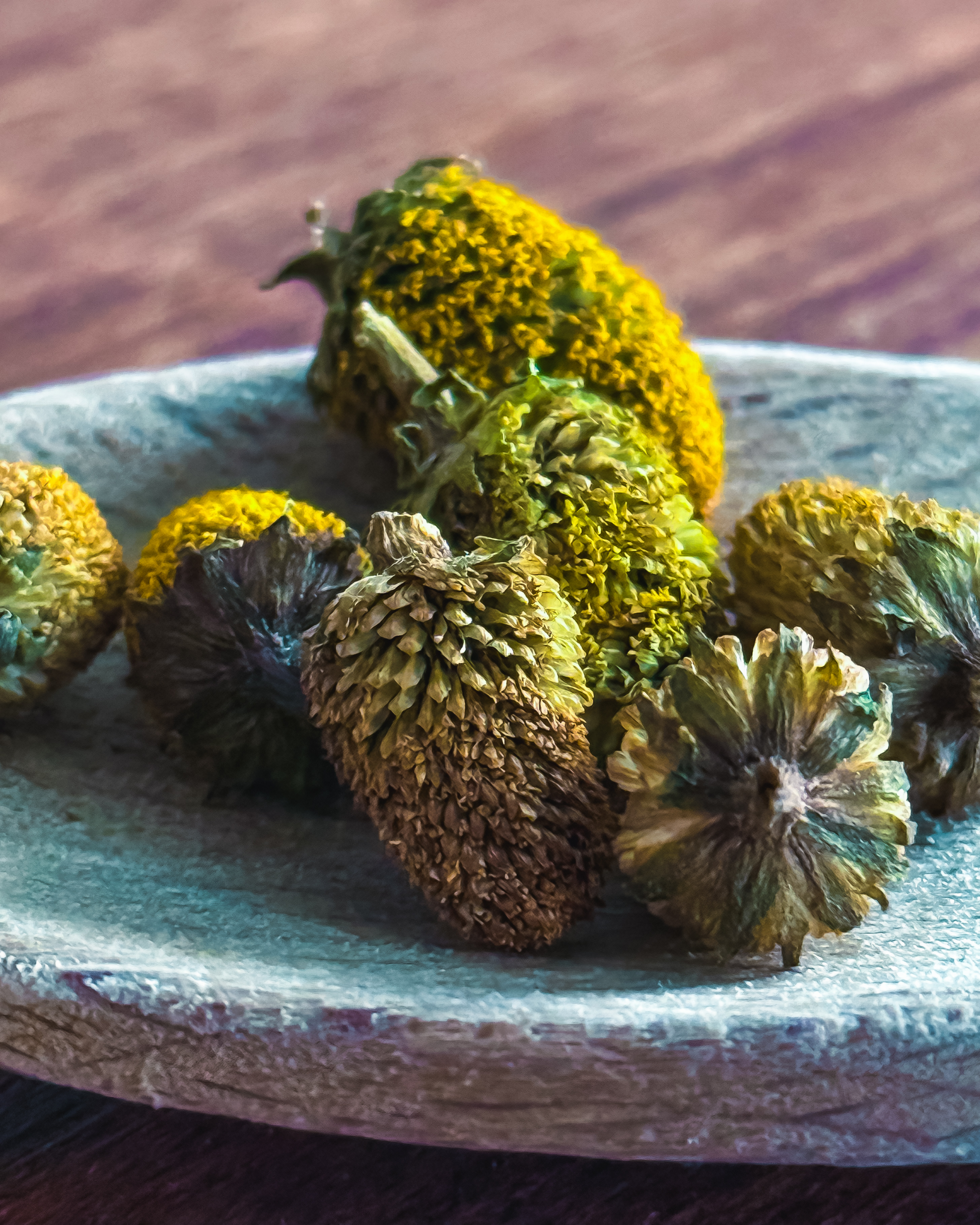
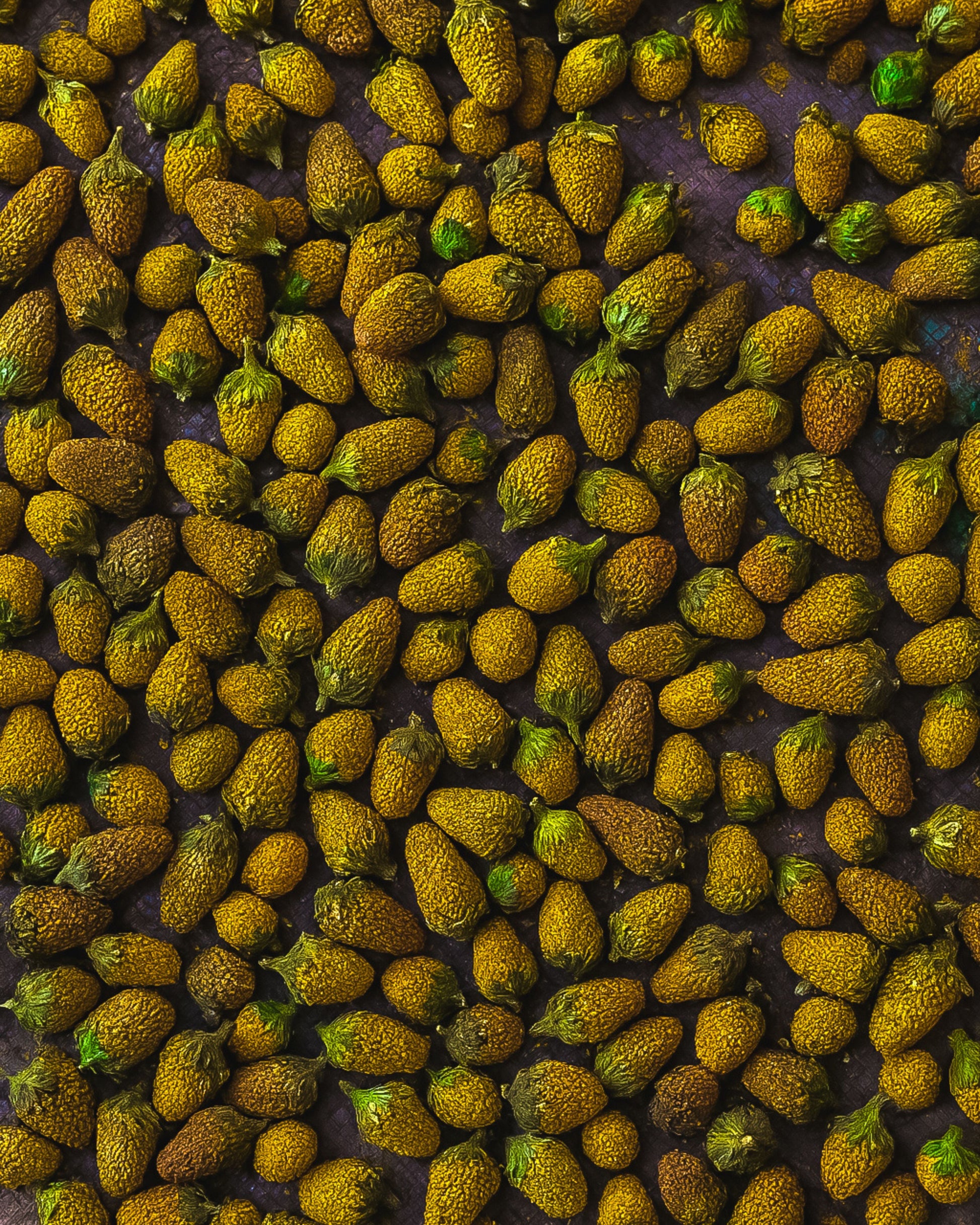
Strictly speaking, the "seeds" of Acmella oleracea are dry fruits known as achenes, a characteristic shared by many members of the Asteraceae family. Each achene contains a single seed enclosed within a protective outer layer.
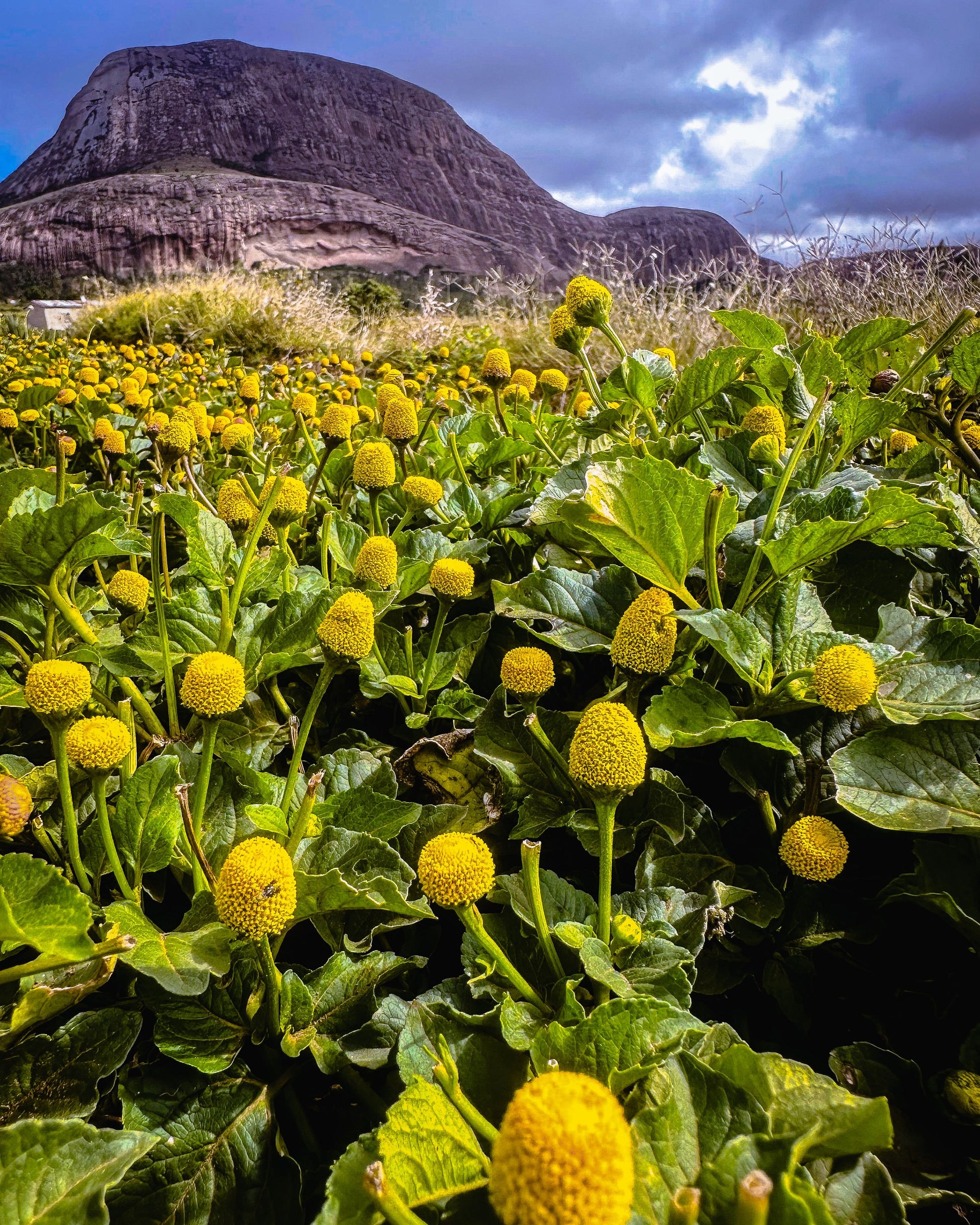
These mature achenes develop after flowering, when the bright yellow composite flower heads gradually dry and complete seed formation.
Seed Size
Acmella oleracea produces relatively small seeds.
Healthy mature seeds are typically:
- slender;
- dark brown to black;
- lightweight;
- only a few millimetres long.
Their small size means they contain limited stored energy compared with larger seeds, making suitable germination conditions particularly important during the early stages of development.
Seed Dormancy
Unlike some plant species that require prolonged dormancy, freshly harvested Acmella oleracea seeds can often germinate once environmental conditions become favourable.
However, germination percentages vary depending on:
- seed maturity;
- harvest timing;
- drying conditions;
- storage practices;
- seed age.
High-quality seeds generally germinate more reliably than poorly stored or immature seed lots.
Seed Viability
Not every seed is capable of producing a healthy seedling.
Seed viability naturally declines over time and is influenced by storage conditions.
Viability is generally better maintained when seeds are stored in:
- cool environments;
- low humidity;
- darkness;
- airtight containers.
Heat and moisture during storage may accelerate deterioration before sowing even begins.
What Happens During Germination?
Germination is far more than the appearance of a small green shoot. It is a complex biological process in which a dormant seed resumes active metabolism and begins developing into a new plant.
Each stage depends on suitable environmental conditions.
Stage 1: Water Uptake
The first step is imbibition, during which the dry seed absorbs water from its surroundings.
Water uptake causes the seed to swell and activates metabolic processes that were largely inactive during dormancy.
This hydration is essential because it enables enzymes to begin mobilising stored food reserves.
Stage 2: Metabolic Activation
Once hydrated, the embryo resumes active growth.
Stored carbohydrates, proteins, and lipids are gradually converted into energy and building materials that support early development.
During this stage:
- respiration increases;
- enzyme activity accelerates;
- cell division resumes.
Although no visible changes may yet be apparent, significant biological activity is occurring inside the seed.
Stage 3: Root Emergence
The first visible sign of successful germination is the emergence of the radicle, the embryonic root.
This root performs several essential functions:
- anchoring the seedling;
- absorbing water;
- absorbing nutrients.
Root development begins before leaves appear because establishing water uptake is essential for continued growth.
Stage 4: Shoot Development
After the root system becomes established, the shoot begins emerging above the growing medium.
The young seedling gradually develops:
- cotyledons (seed leaves);
- the first true leaves;
- an expanding stem.
As photosynthesis increases, the seedling becomes progressively less dependent on stored seed reserves.
The Ideal Conditions for Germination
Successful germination depends on creating an environment that supports the seed throughout each developmental stage.
Rather than relying on a single factor, growers should consider several environmental conditions together.
Temperature
Temperature strongly influences germination speed and uniformity.
Acmella oleracea is a warm-season tropical species.
Most growers achieve the best germination when temperatures remain consistently warm rather than fluctuating dramatically between day and night.
Excessively cool temperatures may:
- delay germination;
- reduce uniformity;
- increase the time required for emergence.
Excessive heat, on the other hand, may stress developing embryos or encourage rapid drying of the growing medium.
Maintaining stable temperatures generally produces more consistent results than exposing seeds to repeated extremes.
Moisture
Moisture is equally important.
The growing medium should remain:
- evenly moist;
- well-drained;
- never waterlogged.
Seeds require sufficient water for imbibition, but excessive moisture may reduce oxygen availability and increase the likelihood of fungal growth or seed decay.
The goal is consistent moisture rather than saturation.
Oxygen
Seeds require oxygen throughout germination.
Although often overlooked, oxygen supports cellular respiration and energy production.
Poorly aerated growing media may limit oxygen availability, slowing germination even when temperature and moisture appear suitable.
A loose, well-drained seed-starting mix generally provides better aeration than compacted soil.
Light
Unlike many larger seeds, Acmella oleracea seeds are often sown close to the surface because of their small size.
Some growers therefore expose them to light during germination, while others provide only a very thin covering of growing medium.
Regardless of the exact sowing method, avoiding deep burial generally improves the likelihood that emerging seedlings will successfully reach the surface.
Seed Quality
Even perfect growing conditions cannot compensate for poor-quality seeds.
Successful germination begins with:
- mature seeds;
- appropriate storage;
- reliable suppliers;
- careful handling.
Starting with viable seed lots provides the strongest foundation for healthy seedlings.
Why Germination Success Varies
Even experienced growers occasionally observe differences between seed batches.
Variability may result from:
- natural biological differences;
- seed maturity;
- storage history;
- environmental fluctuations;
- sowing technique.
Recognising these sources of variation helps growers interpret results more realistically and identify opportunities for improvement.

Conclusion to Part 1
Successful germination of Acmella oleracea begins long before the first seedling emerges. Understanding the biology of the seed, the stages of germination, and the environmental conditions that influence early development provides the foundation for consistent cultivation. Warm temperatures, even moisture, adequate oxygen, appropriate light exposure, and high-quality viable seeds all work together to activate the dormant embryo and support healthy seedling establishment.
Rather than relying on a single "secret" technique, successful growers focus on creating balanced conditions that meet the seed's changing needs throughout the germination process. Appreciating how these factors interact helps explain why germination rates vary between seed batches and growing environments. In Part 2, we will examine optimal sowing practices, discuss growing media, containers, watering techniques, and environmental management, and explain how to maximise germination success from the day the seeds are planted.
Part 2: Sowing Techniques, Growing Conditions and Early Seedling Care
Table of Contents
- Choosing the Right Growing Medium
- How to Sow Acmella oleracea Seeds
- Temperature and Humidity Management
- Watering During Germination
- Caring for Young Seedlings
- Conclusion to Part 2
Choosing the Right Growing Medium
Successful germination begins with an appropriate growing medium. While Acmella oleracea is adaptable once established, young seedlings are far more sensitive to excess moisture, poor aeration, and compacted soils during their first weeks of growth.
An ideal seed-starting medium should provide a balance between moisture retention and drainage. It must hold enough water to keep the seeds hydrated while allowing excess moisture to drain away, ensuring oxygen remains available to the developing roots.
A suitable germination medium should be:
- light and friable;
- well-drained;
- capable of retaining moderate moisture;
- low in weed seeds and pathogens;
- easy for delicate roots to penetrate.
Commercial seed-starting mixes are commonly used because they offer a fine texture that promotes uniform seed-to-soil contact.
Avoid Heavy Garden Soil
Although mature Acmella oleracea plants tolerate a range of soil types, heavy garden soil is generally less suitable for germinating seeds.
Dense soils may:
- become compacted;
- drain slowly;
- reduce oxygen availability;
- encourage fungal diseases.
Young seedlings benefit from loose growing media that support rapid root development.
Drainage Is Essential
Waterlogged media create one of the most common causes of germination failure.
When air spaces fill completely with water:
- oxygen availability decreases;
- respiration slows;
- seed decay becomes more likely;
- fungal growth may increase.
Maintaining moisture without saturation is one of the most important aspects of successful germination.
How to Sow Acmella oleracea Seeds
Because Acmella oleracea produces very small seeds (achenes), sowing technique differs slightly from that used for larger vegetable seeds.
Proper placement improves both emergence and seedling uniformity.
Sowing Depth
The seeds should not be buried deeply.
Their limited energy reserves make it difficult for emerging seedlings to push through excessive amounts of growing medium.
Many growers either:
- sow seeds directly on the surface; or
- cover them with only a very thin layer of fine growing medium or vermiculite.
This approach allows emerging shoots to reach light more easily after germination.
Seed Spacing
Even small seedlings require space for healthy development.
Overcrowding may result in:
- reduced airflow;
- competition for light;
- tangled roots;
- uneven growth.
Leaving sufficient space between seeds simplifies later transplanting and reduces stress on young plants.
Choosing Containers
Acmella oleracea seeds can be started in various containers, including:
- seed trays;
- plug trays;
- small nursery pots;
- propagation cells.
Regardless of the container type, adequate drainage holes are essential to prevent water accumulation.
Temperature and Humidity Management
Environmental conditions strongly influence both the speed and uniformity of germination.
Warm, stable conditions generally produce more consistent results than fluctuating temperatures.
Maintaining Warm Conditions
As a tropical species, Acmella oleracea germinates most reliably under consistently warm conditions.
Rapid changes between daytime and nighttime temperatures may slow development and increase variability between individual seeds.
Where possible, maintain a stable environment throughout the germination period.
Humidity
Moderate humidity helps reduce excessive evaporation from the growing medium.
Some growers use humidity domes or propagation covers during the earliest stages.
However, enclosed environments require careful monitoring.
Excess humidity without adequate ventilation may encourage:
- fungal growth;
- mould development;
- damping-off disease.
Balancing humidity with airflow produces healthier seedlings.
Air Circulation
Good airflow is often overlooked but plays an important role in healthy seedling development.
Adequate ventilation helps:
- reduce excess humidity;
- discourage fungal pathogens;
- strengthen young stems;
- maintain a healthier growing environment.
Once seedlings emerge, gentle air movement is generally beneficial.
Watering During Germination
Water management is one of the most common challenges faced by new growers.
Both underwatering and overwatering may reduce germination success.
Keep the Medium Evenly Moist
Throughout germination, the growing medium should remain:
- consistently moist;
- never completely dry;
- never saturated.
Allowing the surface to dry completely may interrupt germination, while excessive watering can deprive seeds of oxygen.
Consistency is more important than large fluctuations in moisture.
Gentle Watering
Because the seeds are very small, heavy watering can easily displace them.
Gentle watering methods help maintain uniform seed placement.
Many growers prefer:
- fine mist sprayers;
- careful bottom watering;
- gentle irrigation systems.
These techniques reduce disturbance during the critical early stages.
Avoid Standing Water
Containers should never remain in standing water for prolonged periods.
Excess water may:
- reduce oxygen availability;
- soften seed tissues;
- increase disease pressure.
Proper drainage allows excess moisture to escape while retaining adequate hydration.
Light After Germination
Once seedlings emerge, light becomes one of the most important environmental factors.
Insufficient light often results in:
- elongated stems;
- weak growth;
- pale foliage.
Providing adequate illumination encourages compact, vigorous seedlings capable of supporting later flowering.
Whether using natural sunlight or artificial grow lights, uniform lighting promotes more balanced development.
Caring for Young Seedlings
The period immediately after germination is often more critical than germination itself.
Young seedlings remain delicate until their first true leaves have fully developed.
Cotyledons
The first leaves to appear are the cotyledons, also known as seed leaves.
These structures provide:
- initial photosynthesis;
- continued seedling development;
- support while true leaves begin forming.
Cotyledons differ in appearance from mature foliage and should not be mistaken for the plant's characteristic serrated leaves.
True Leaves
The first true leaves resemble miniature versions of the mature plant.
As they develop, seedlings begin displaying familiar characteristics such as:
- opposite leaf arrangement;
- serrated leaf margins;
- bright green colour.
At this stage, growth generally accelerates.
Thinning Seedlings
Where seeds were sown densely, thinning may improve overall plant quality.
Removing weaker seedlings allows remaining plants greater access to:
- light;
- nutrients;
- airflow;
- growing space.
Healthy spacing reduces competition during early development.
Hardening Off
Before transplanting outdoors, seedlings should gradually adapt to external conditions.
This process, known as hardening off, reduces transplant shock by exposing plants progressively to:
- sunlight;
- wind;
- temperature fluctuations.
Sudden transfer from protected indoor conditions directly into full outdoor exposure may stress young plants.
Common Early Mistakes
Even experienced gardeners occasionally encounter problems.
Some of the most frequent early mistakes include:
- sowing seeds too deeply;
- keeping the growing medium excessively wet;
- allowing the medium to dry completely;
- insufficient light after emergence;
- poor ventilation;
- overcrowded seedlings.
Most of these issues are easily avoided through careful observation and gradual environmental adjustments.
Conclusion to Part 2
Successful germination of Acmella oleracea depends not only on viable seeds but also on thoughtful sowing techniques and careful environmental management. A light, well-drained growing medium, shallow sowing depth, consistent moisture, stable warmth, and good air circulation all contribute to healthy seedling establishment. Once the first shoots emerge, providing adequate light, avoiding excessive watering, and gradually acclimating seedlings to outdoor conditions help ensure strong, vigorous growth.
The early seedling stage is a period of rapid development during which small adjustments can have a significant impact on long-term plant health. Rather than focusing on a single cultivation technique, successful growers monitor the interaction between moisture, temperature, light, and airflow, adapting conditions as seedlings develop. In Part 3, we will explore the most common germination problems, explain how to diagnose and troubleshoot poor emergence, discuss transplanting into the garden, and provide practical recommendations for achieving consistently high germination success year after year.