

Quick Answer
Acmella oleracea is a flowering plant in the daisy family (Asteraceae) best known for producing Spilanthol, a naturally occurring alkylamide concentrated in its flower heads. Native to South America and now cultivated in regions including Madagascar, India, and Southeast Asia, the plant is valued for its distinctive sensory properties, traditional uses, botanical interest, and growing importance in cosmetic, food, and scientific research.
Botanical Profile
| Characteristic | Information |
|---|---|
| Scientific Name | Acmella oleracea |
| Family | Asteraceae |
| Genus | Acmella |
| Common Names | Toothache Plant, Paracress, Buzz Buttons, Electric Daisy, Sichuan Buttons |
| Life Cycle | Usually cultivated as an annual |
| Growth Habit | Low-growing herbaceous plant |
| Flower Color | Yellow with reddish-brown center (varies slightly) |
| Primary Compound | Spilanthol |
| Native Range | Tropical South America |
| Current Cultivation | South America, Madagascar, India, Southeast Asia and other tropical regions |
Table of Contents
- What Is Acmella oleracea?
- Botanical Classification
- Scientific Names and Common Names
- Taxonomy Explained
- Where Does Acmella oleracea Come From?
- A Brief History
- Traditional Uses
- Key Botanical Facts
What Is Acmella oleracea?
Acmella oleracea is a tropical flowering plant belonging to the Asteraceae, or daisy family, one of the largest families of flowering plants on Earth.
Although modest in size, it has attracted worldwide attention because of its distinctive flower heads, rich phytochemical profile, and the naturally occurring compound Spilanthol, which contributes to the characteristic tingling sensation experienced when the flowers are chewed.
Today, Acmella oleracea occupies a unique position at the intersection of botany, agriculture, cosmetic science, gastronomy, and natural products research.
Researchers investigate its phytochemistry, formulators explore its cosmetic potential, chefs use its flowers to create memorable sensory experiences, and botanists value it as a fascinating example of a medicinal and culinary plant with global significance.
Its growing popularity has also led to increased cultivation outside its native range, particularly in tropical regions well suited to its environmental requirements.

Botanical Classification
Every plant has a scientific classification that reflects its evolutionary relationships.
This system allows botanists worldwide to identify species accurately, regardless of language or local common names.
The classification of Acmella oleracea is:
| Rank | Classification |
|---|---|
| Kingdom | Plantae |
| Clade | Angiosperms |
| Clade | Eudicots |
| Clade | Asterids |
| Order | Asterales |
| Family | Asteraceae |
| Genus | Acmella |
| Species | Acmella oleracea |
Being part of the Asteraceae family places Acmella oleracea alongside familiar plants such as sunflowers, daisies, chamomile, lettuce, and echinacea.
Although these plants differ greatly in appearance and use, they share common botanical characteristics that reflect their evolutionary ancestry.
Science in Everyday Life
Why Scientific Names Matter
Imagine travelling to five different countries and asking for the same plant.
One person calls it Toothache Plant.
Another says Paracress.
A chef knows it as Buzz Buttons.
A gardener calls it Electric Daisy.
Although the names differ, botanists know they are referring to the same species: Acmella oleracea.
Scientific names provide a universal language that avoids confusion and ensures researchers, growers, and manufacturers are discussing the same plant.
Scientific Names and Common Names
Few botanical species have accumulated as many common names as Acmella oleracea.
These names often reflect local traditions, culinary uses, or the sensory experience associated with the flowers.
Some of the most widely used include:
- Toothache Plant
- Paracress
- Buzz Buttons
- Electric Daisy
- Sichuan Buttons
- Jambu (particularly in Brazil)
- Eyeball Plant (occasionally used in horticulture)
While these names are useful in everyday language, scientific publications almost always use the botanical name Acmella oleracea to ensure precision.
Taxonomy Explained
Plant taxonomy is the science of naming, describing, and classifying plants according to their evolutionary relationships.
Modern taxonomy combines traditional botanical observation with molecular and genetic research to improve our understanding of how plant species are related.
Acmella oleracea belongs to the genus Acmella, which contains several species distributed primarily across tropical and subtropical regions.
Historically, this plant has sometimes been confused with members of the genus Spilanthes due to similarities in appearance and overlapping common names.
Advances in botanical research have helped clarify these relationships, and today Acmella oleracea is widely recognized as the accepted scientific name for the species discussed throughout this guide.
Related article: Acmella vs. Spilanthes: What's the Difference? (Coming Soon)
Where Does Acmella oleracea Come From?
Botanical evidence indicates that Acmella oleracea originated in tropical South America, where it has been cultivated and used for generations.
Over time, the plant spread to many tropical and subtropical regions through agriculture, trade, and horticulture.
Today it is cultivated in countries including:
- Brazil
- Peru
- Madagascar
- India
- Sri Lanka
- Thailand
- Vietnam
- Malaysia
- Indonesia
Its adaptability to warm, humid climates has contributed to its widespread cultivation across multiple continents.
While the species is now grown in many regions, cultivation methods, environmental conditions, and agricultural practices vary, influencing both plant growth and phytochemical composition.
A Brief History
The history of Acmella oleracea stretches back centuries.
Indigenous communities in South America cultivated the plant for culinary and traditional purposes long before it attracted scientific attention.
In northern Brazil, particularly in the Amazon region, the plant became an important ingredient in regional cuisine, where its distinctive sensory properties continue to be appreciated today.
During the nineteenth and twentieth centuries, botanists formally described and classified the species, while researchers gradually began investigating its phytochemistry and naturally occurring alkylamides.
In recent decades, interest has expanded significantly as scientists, cosmetic formulators, chefs, and botanical producers have explored new applications for the plant.
Today, Acmella oleracea represents a remarkable example of how traditional botanical knowledge and modern scientific research can complement one another.
Traditional Uses
Throughout its history, Acmella oleracea has been incorporated into a variety of cultural traditions.
Historical records and ethnobotanical research describe its use in:
- traditional food preparations
- regional culinary dishes
- botanical traditions in South America
- ornamental gardening
- sensory gastronomy
Modern scientific research continues to investigate the chemistry of the plant and its naturally occurring compounds.
It is important to distinguish traditional uses, which reflect historical and cultural practices, from scientifically established evidence, which depends on rigorous laboratory and clinical research.
This distinction helps readers understand the difference between cultural history and contemporary scientific knowledge.
Key Botanical Facts
| Feature | Description |
|---|---|
| Plant Type | Herbaceous flowering plant |
| Botanical Family | Asteraceae |
| Native Region | Tropical South America |
| Modern Cultivation | Tropical regions worldwide |
| Most Recognizable Feature | Cone-shaped flower heads |
| Principal Natural Compound | Spilanthol |
| Main Areas of Interest | Botany, cosmetics, food, scientific research |
Key Takeaways
- Acmella oleracea is a flowering plant belonging to the Asteraceae family.
- It is known by many common names, including Toothache Plant, Paracress, Buzz Buttons, and Electric Daisy.
- The species originated in tropical South America and is now cultivated in many tropical regions, including Madagascar.
- The plant is best known for its flower heads, which contain naturally occurring Spilanthol.
- Modern interest in Acmella oleracea spans botany, cosmetic science, gastronomy, agriculture, and natural products research.
Understanding the Plant: Anatomy, Growth & Cultivation
To appreciate Acmella oleracea, it helps to look beyond its famous flower heads and understand the plant as a complete living organism.
Every part of the plant, from its roots to its leaves, plays a role in growth, reproduction, and the production of naturally occurring phytochemicals.
For botanists, farmers, and researchers, understanding the plant's biology is essential.
Healthy plants produce healthy flowers, and healthy flowers form the foundation for high-quality botanical ingredients.

Plant Morphology
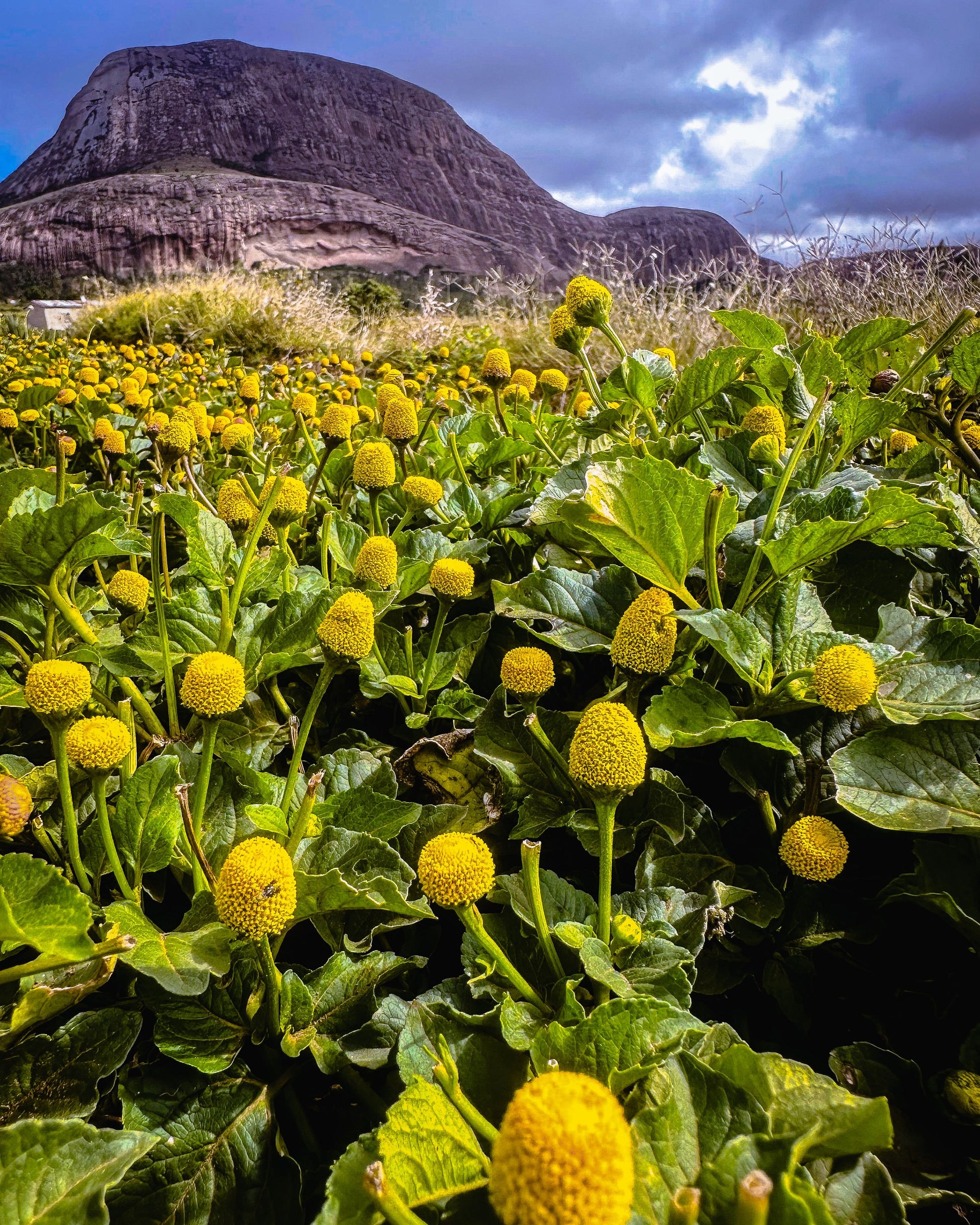
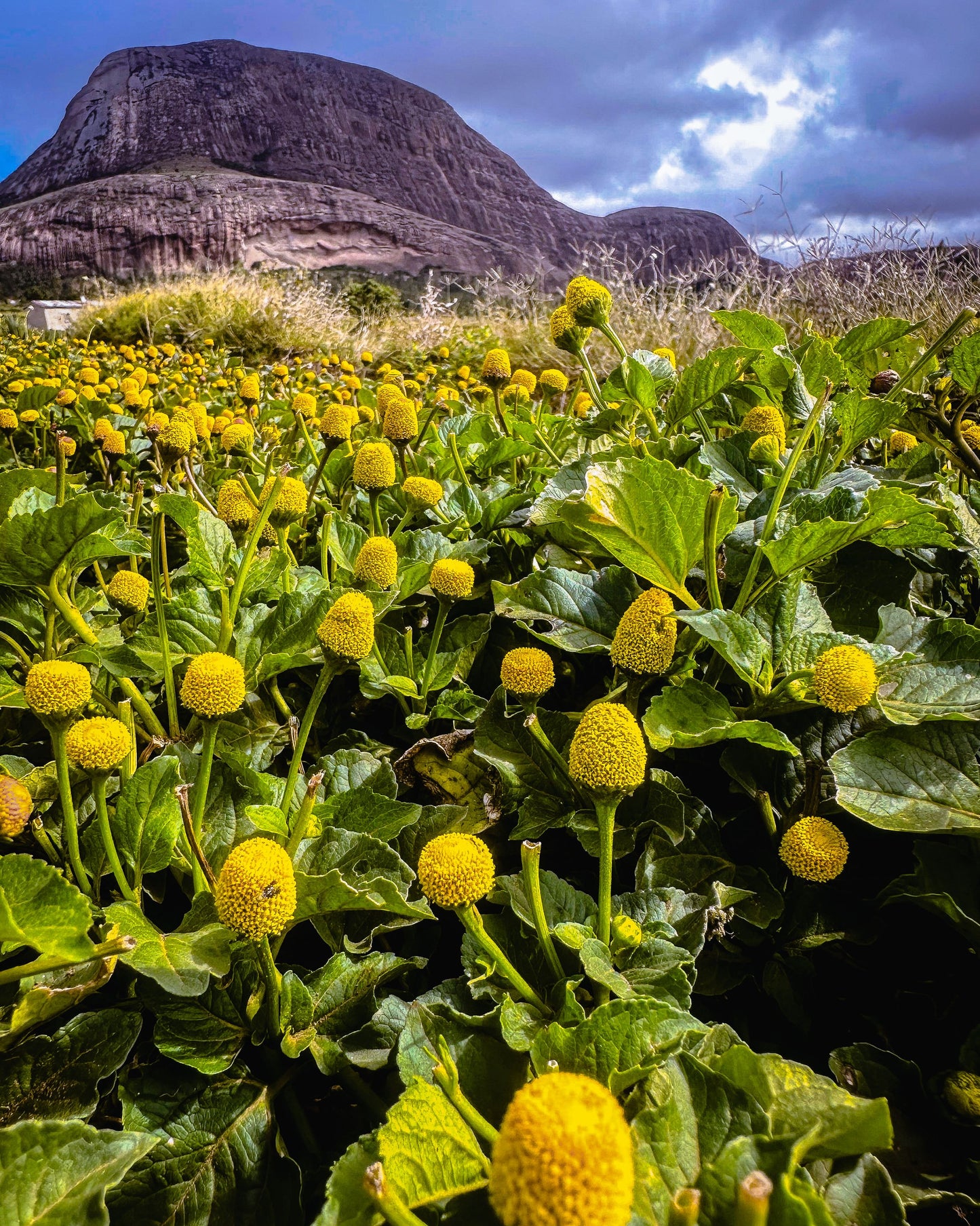
Acmella oleracea is a low-growing herbaceous plant that is usually cultivated as an annual in tropical and subtropical climates.
Under favorable growing conditions, it develops into a compact, branching plant with numerous flower heads distributed across the canopy.
Typical characteristics include:
- Upright to spreading growth habit
- Soft green stems
- Oval to lance-shaped leaves
- Numerous rounded flower heads
- Fibrous root system
- Rapid vegetative growth during warm seasons
Although the plant appears relatively simple, its anatomy is highly specialized and well adapted to warm, humid environments.
Science in Everyday Life
Why Botanists Study Plant Structure
Imagine trying to understand how a car works by looking only at its wheels.
You would miss the engine, transmission, steering, and electrical systems.
Plants are no different.
The flower may attract the most attention, but every organ has a specific function that contributes to the health and development of the whole plant.
Studying plant morphology helps scientists understand not only how a plant grows but also how cultivation practices may influence its overall quality.
The Flower Heads
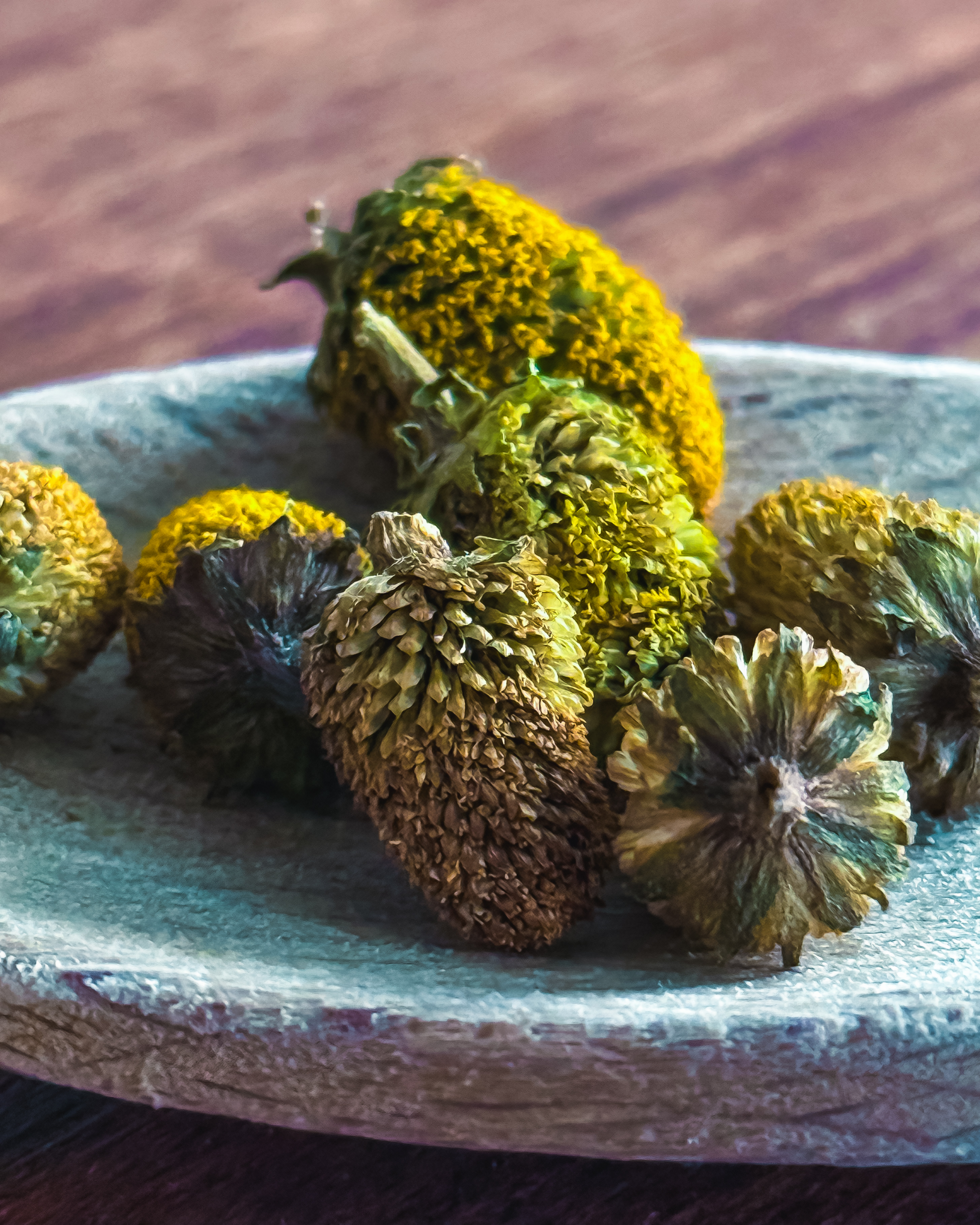
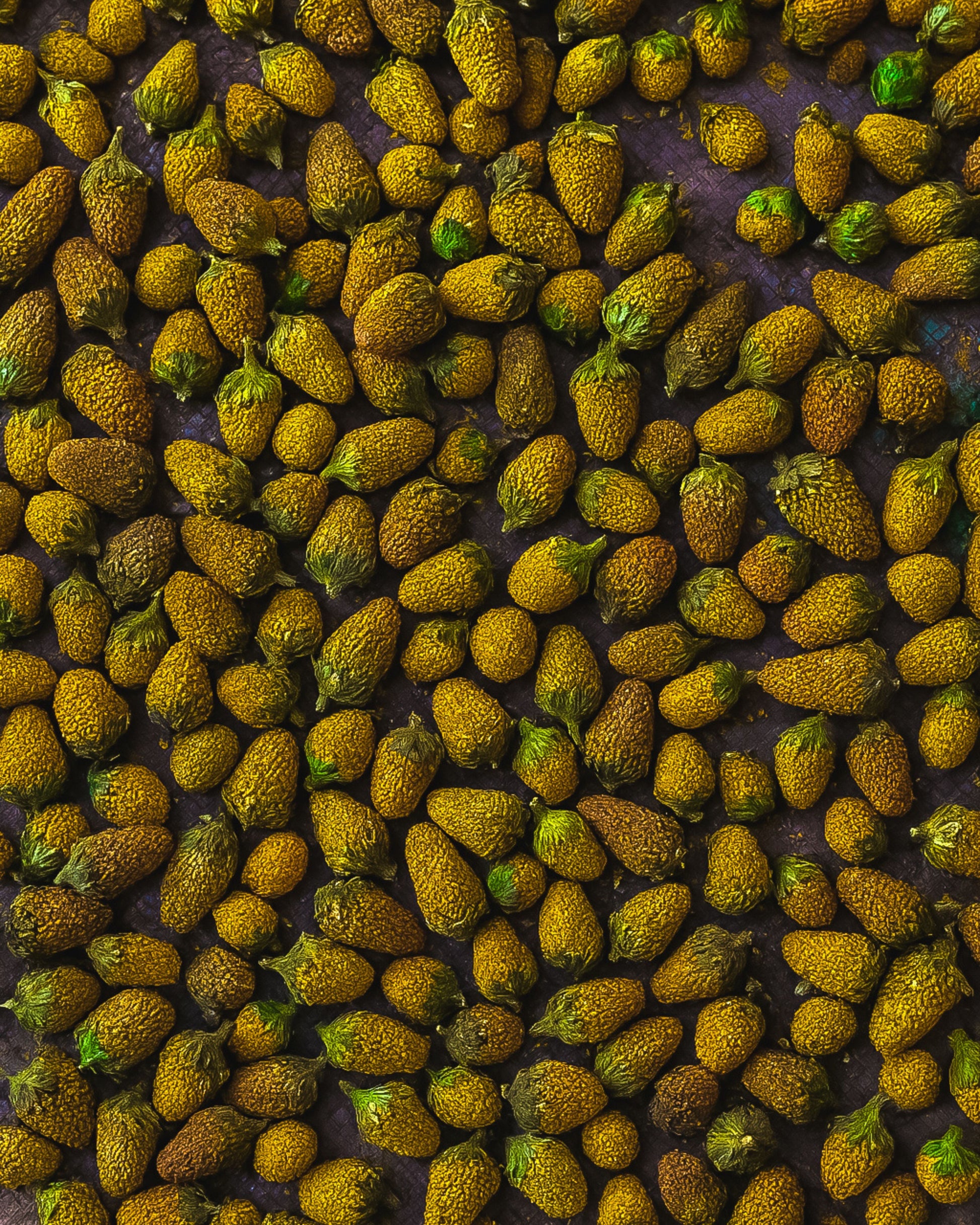
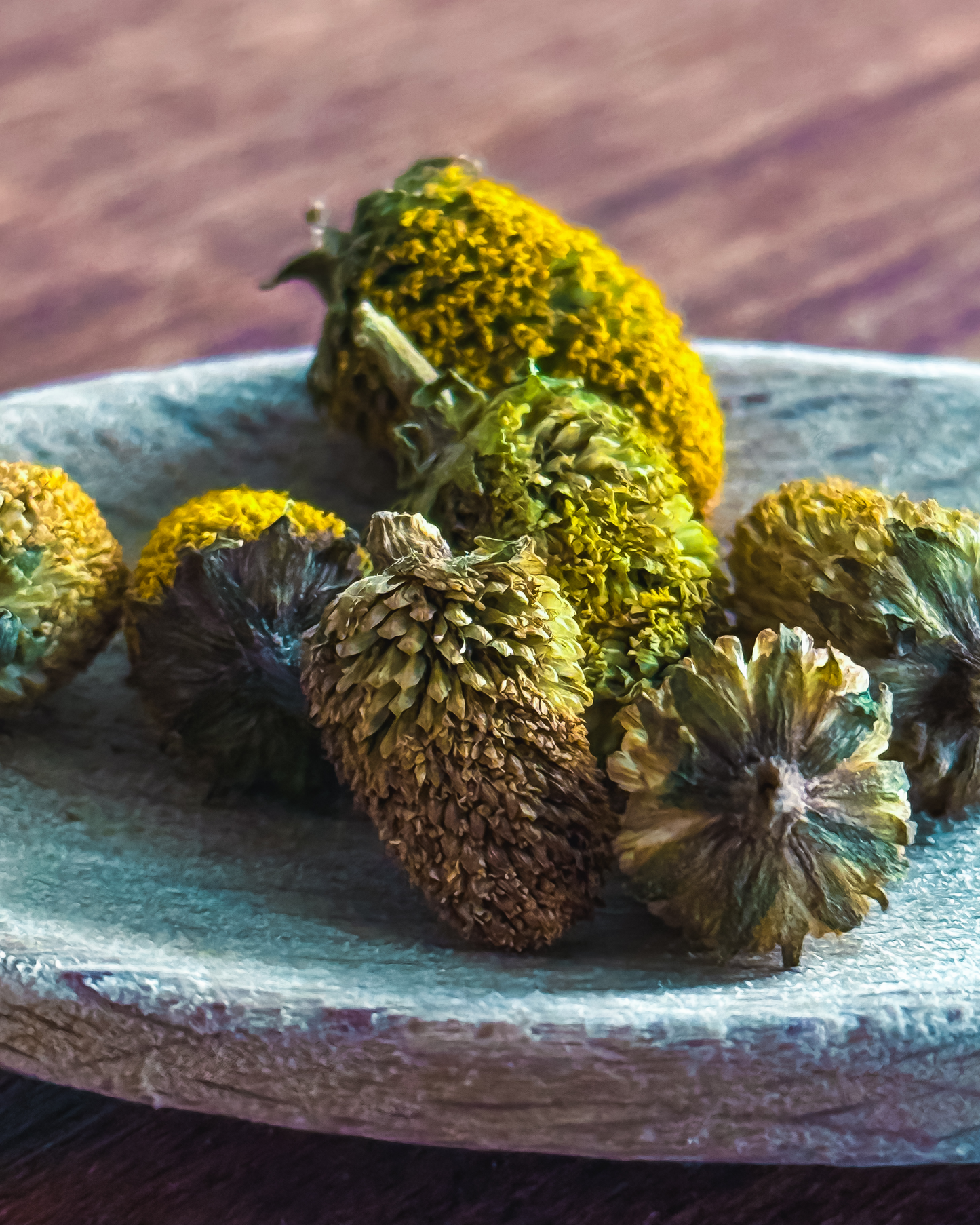
The flower heads are the most recognizable feature of Acmella oleracea.
Rather than being a single flower, each "button" is actually a compact collection of many tiny flowers grouped together into one structure, a characteristic shared by members of the Asteraceae family.
The flower heads are typically:
- Cone-shaped to rounded
- Yellow with a reddish-brown center (depending on maturity and variety)
- Rich in naturally occurring phytochemicals
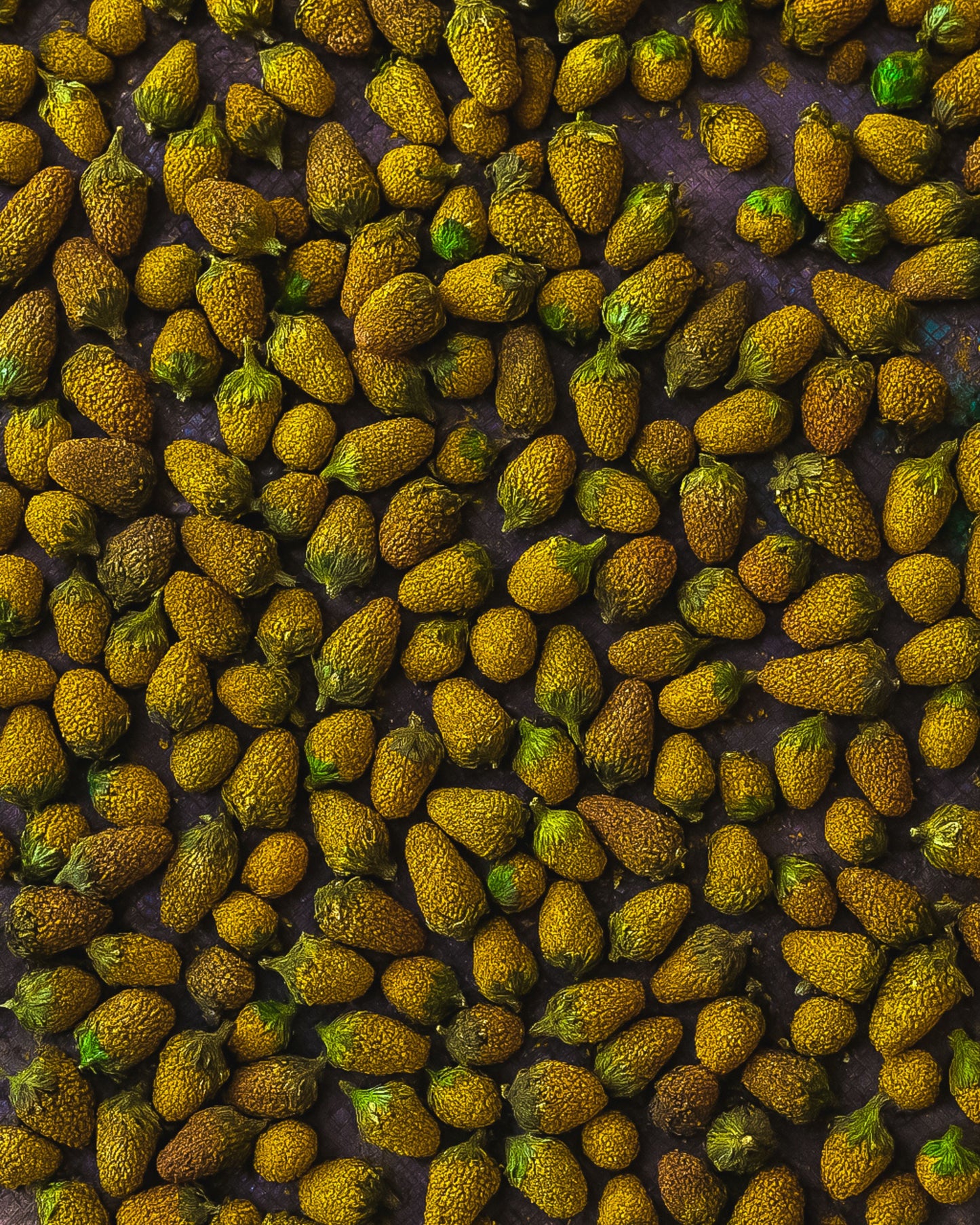
- The primary botanical material used in many cosmetic and botanical applications
Scientific research has shown that the flower heads generally contain the highest concentrations of Spilanthol, making them the preferred plant part for many specialized extracts.
This is one reason why high-quality botanical producers often focus on harvesting whole flower heads rather than processing the entire plant indiscriminately.
Leaves
The leaves of Acmella oleracea are simple, soft, and bright green.
They typically grow in opposite pairs along the stem and provide the energy needed for growth through photosynthesis.
Key characteristics include:
- Oval to lance-shaped
- Slightly toothed margins
- Smooth to lightly textured surface
- Bright green coloration
- Prominent leaf veins
Although the leaves contain phytochemicals, their chemical profile differs from that of the flower heads.
Understanding these differences is important when selecting botanical material for extraction or research.
Stems
The stems support the plant's leaves and flowers while transporting water, minerals, and nutrients throughout the plant.
Young stems are generally:
- Green
- Flexible
- Slightly succulent
- Highly branched
As the plant matures, additional branches develop, allowing it to produce increasing numbers of flower heads during the growing season.
Good branching often contributes to higher flower production, which is an important consideration for cultivation.
Roots
Beneath the soil, Acmella oleracea develops a fibrous root system.
These roots anchor the plant while absorbing:
- water
- mineral nutrients
- oxygen from the soil
Healthy roots are essential for vigorous plant growth.
Compacted soils, excessive waterlogging, or poor drainage can limit root development and reduce overall plant health.
Although the roots are rarely the focus of commercial production, they play a critical role in supporting the entire plant.
The Life Cycle of Acmella oleracea
Like many herbaceous annuals, Acmella oleracea progresses through several distinct stages during its life cycle.
- Seed germination
- Seedling establishment
- Vegetative growth
- Branch development
- Flower initiation
- Peak flowering
- Seed production
- Senescence
Each stage is influenced by environmental conditions such as temperature, moisture, sunlight, and soil fertility.
Understanding the life cycle allows growers to make informed decisions about irrigation, nutrition, and harvest timing.
Flowering and Seed Production
One of the defining features of Acmella oleracea is its ability to produce flowers continuously under favorable conditions.
Instead of flowering only once, healthy plants often develop new flower heads over an extended period.
After pollination, seeds begin to mature within the flower head.
These seeds can be collected for future cultivation, helping maintain the production cycle.
For commercial cultivation focused on flower harvest rather than seed production, growers often harvest flower heads before full seed maturation to align with quality objectives.
Ideal Growing Conditions
Acmella oleracea thrives in warm, humid environments with abundant sunlight.
Although cultivation practices vary by region, the plant generally performs best under conditions that provide:
- Warm temperatures
- Well-drained soils
- Consistent moisture
- Good sunlight exposure
- Adequate air circulation
- Balanced soil fertility
Because it is sensitive to frost, cultivation is generally concentrated in tropical and subtropical climates.
Why Madagascar Is an Important Cultivation Region
Over recent years, Madagascar has become an increasingly important source of high-quality Acmella oleracea.
The island's combination of tropical conditions, experienced agricultural communities, and long tradition of cultivating botanical crops provides favorable conditions for producing premium plant material.
Responsible cultivation in Madagascar often emphasizes:
- careful field management
- selective harvesting
- sustainable agricultural practices
- close relationships between growers and producers
- attention to post-harvest quality
Rather than relying solely on climate, successful cultivation reflects the combined influence of environmental conditions and agricultural expertise.
Related article: Why Madagascar Produces Premium Acmella oleracea
Sustainable Cultivation
As global demand for botanical ingredients grows, sustainable farming practices become increasingly important.
Responsible cultivation aims to balance productivity with long-term environmental stewardship.
Examples include:
- protecting soil health
- efficient water management
- minimizing unnecessary waste
- encouraging biodiversity
- supporting farming communities
- careful harvesting practices
Sustainability benefits not only the environment but also the long-term availability and quality of botanical resources.
Botanical Profile: Plant Anatomy
| Plant Part | Primary Function |
|---|---|
| Flower Heads | Reproduction and major source of Spilanthol |
| Leaves | Photosynthesis and energy production |
| Stems | Structural support and nutrient transport |
| Roots | Water and mineral uptake, anchorage |
| Seeds | Plant reproduction and propagation |
Each organ contributes to the plant's growth and overall health, illustrating why cultivation should be viewed as a whole-system process rather than focusing on a single plant part.
Key Takeaways
- Acmella oleracea is a compact herbaceous plant with a branching growth habit.
- The flower heads are the most distinctive botanical feature and are generally the richest source of Spilanthol.
- Leaves, stems, roots, and flowers each perform specialized biological functions.
- The plant progresses through predictable developmental stages from seed germination to seed production.
- Warm climates, appropriate cultivation practices, and sustainable agriculture support healthy plant growth.
- Madagascar has become an important cultivation region because of its favorable environment and agricultural expertise.
The Chemistry, Applications & Future of Acmella oleracea
Botanically, Acmella oleracea is an attractive flowering herb.
Scientifically, it is something much more.
Over the past several decades, researchers have become increasingly interested in its complex phytochemistry, particularly the naturally occurring alkylamide Spilanthol.
At the same time, chefs, cosmetic formulators, agricultural scientists, and botanists have explored new ways to use and understand this remarkable plant.
Today, Acmella oleracea is no longer viewed solely as a traditional botanical species.
It has become an important subject of interdisciplinary research spanning natural products chemistry, cosmetic formulation, food science, sustainable agriculture, and plant biology.
The Chemistry of Acmella oleracea
Like many members of the Asteraceae family, Acmella oleracea produces a diverse range of naturally occurring phytochemicals.
These compounds help the plant interact with its environment and contribute to its unique chemical profile.
Scientists have identified several classes of naturally occurring compounds, including:
- alkylamides
- flavonoids
- phenolic compounds
- terpenoids
- sterols
- fatty acids
- polysaccharides
Rather than acting as isolated substances, these compounds exist together within the plant, creating its characteristic phytochemical composition.
Modern analytical chemistry continues to investigate how these naturally occurring constituents vary between plant parts, cultivation conditions, and extraction methods.
Spilanthol: The Plant's Best-Known Compound
Among all the compounds identified in Acmella oleracea, Spilanthol is undoubtedly the most widely studied.
Spilanthol belongs to a family of naturally occurring compounds known as alkylamides.
It is found primarily in the flower heads, although smaller amounts may also occur in other plant tissues.
Researchers have been particularly interested in Spilanthol because of its distinctive sensory characteristics and its growing importance in botanical research, cosmetic science, and formulation development.
As analytical techniques such as High-Performance Liquid Chromatography (HPLC) have become more sophisticated, scientists have gained a better understanding of how Spilanthol can be identified, quantified, and studied.
Related article: What Is Spilanthol?
Science in Everyday Life
A Plant Is Like an Orchestra
Imagine listening to an orchestra.
Although one violin may play the melody, the music is created by dozens of instruments working together.
If the violin disappeared, the orchestra would not sound the same.
Plants work in a similar way.
Spilanthol is the best-known compound in Acmella oleracea, but it is only one member of a much larger phytochemical "orchestra."
Understanding the plant means appreciating the entire composition rather than focusing on a single molecule.
Modern Cosmetic Applications
The cosmetic industry has shown growing interest in Acmella oleracea because of its naturally occurring phytochemicals and compatibility with botanical formulations.
Today, extracts of Acmella oleracea may be incorporated into products such as:
- facial serums
- botanical oils
- moisturizers
- eye creams
- facial masks
- massage oils
- cosmetic emulsions
Research into botanical ingredients continues to evolve, and formulators evaluate Acmella oleracea alongside many other plant-derived ingredients when developing cosmetic products.
Modern cosmetic science focuses on formulation stability, compatibility, sensory characteristics, and ingredient quality while remaining within applicable regulatory frameworks.
Culinary Uses and Mixology
Beyond cosmetic applications, Acmella oleracea has earned international recognition in the culinary world.
Its flower heads are prized for the distinctive tingling and mouthwatering sensation they create.
This unusual sensory experience has made the plant a favorite ingredient in:
- modern gastronomy
- botanical cocktails
- fine dining
- experimental cuisine
- culinary education
Chefs often use the flowers to introduce an unexpected sensory dimension to dishes and beverages, demonstrating that Acmella oleracea is valued not only for its chemistry but also for its culinary creativity.
Current Scientific Research
Scientific interest in Acmella oleracea continues to expand.
Researchers investigate topics including:
- phytochemistry
- analytical chemistry
- cultivation practices
- extraction technologies
- cosmetic ingredient development
- botanical standardization
- sustainable agriculture
- food science
As with any actively studied botanical species, research continues to evolve.
Some aspects of the plant's chemistry and cultivation are well established, while other areas remain subjects of ongoing investigation.
Distinguishing between established knowledge and emerging research is an important part of responsible scientific communication.
Safety Overview
Acmella oleracea has a long history of culinary and traditional use in several regions of the world.
At the same time, botanical ingredients should always be evaluated according to their intended use, formulation, and applicable regulations.
Researchers continue to investigate the chemistry, stability, and formulation characteristics of Acmella oleracea and its constituents.
Consumers should always follow the intended directions for cosmetic or food products and consult qualified professionals when appropriate.
This balanced approach reflects the importance of evidence-based communication rather than overstating benefits or risks.
Sustainability and Responsible Cultivation
As global interest in botanical ingredients grows, sustainability becomes increasingly important.
Responsible cultivation seeks to balance agricultural productivity with environmental stewardship and long-term resource management.
Important principles include:
- protecting biodiversity
- maintaining soil health
- efficient water use
- responsible harvesting
- reducing unnecessary waste
- supporting farming communities
- promoting transparent supply chains
These practices help ensure that Acmella oleracea remains a valuable botanical resource for future generations.
Why Madagascar Plays an Important Role
Although Acmella oleracea originated in tropical South America, Madagascar has become an increasingly significant cultivation region.
The island's warm climate, agricultural expertise, and rich biodiversity provide favorable conditions for cultivating high-quality botanical crops.
Equally important are the people behind the harvest.
Experienced growers, careful post-harvest handling, and strong relationships throughout the supply chain all contribute to consistent botanical quality.
At Madabuzz, our direct partnerships with farming communities in Madagascar reflect a commitment not only to premium flower heads but also to transparency, sustainability, and long-term collaboration.
By supporting responsible cultivation and reinvesting 5% of every purchase into local schools, we aim to contribute to both botanical excellence and community development.
Scientific Summary
Current scientific understanding supports several important conclusions.
Well Established
✔ Acmella oleracea belongs to the Asteraceae family.
✔ It is naturally rich in Spilanthol and other phytochemicals.
✔ The flower heads are generally the richest source of Spilanthol.
✔ The plant is cultivated in many tropical regions worldwide.
✔ Modern analytical techniques such as HPLC are widely used to study its chemistry.
Areas of Ongoing Research
Researchers continue investigating:
- phytochemical variability
- cultivation optimization
- extraction technologies
- formulation science
- sustainable production
- analytical standardization
- new cosmetic applications
As scientific knowledge expands, our understanding of Acmella oleracea will continue to evolve.
Frequently Asked Questions
What is Acmella oleracea?
Acmella oleracea is a flowering plant in the Asteraceae family, widely known as Toothache Plant, Paracress, Buzz Buttons, or Electric Daisy. It is valued for its unique flower heads and naturally occurring Spilanthol.
Is Acmella oleracea the same as Spilanthol?
No. Acmella oleracea is the plant, while Spilanthol is one of its naturally occurring compounds.
Where is Acmella oleracea native to?
The species originated in tropical South America but is now cultivated in many tropical regions, including Madagascar, India, and Southeast Asia.
Which part of the plant contains the most Spilanthol?
Scientific studies generally indicate that the flower heads contain the highest concentrations of Spilanthol.
Is Acmella oleracea edible?
Yes. The plant has a long history of culinary use in several regions, particularly in South America, where it is incorporated into traditional dishes and modern gastronomy.
Why is Madagascar important?
Madagascar offers favorable growing conditions and experienced agricultural communities that contribute to the cultivation of high-quality Acmella oleracea.
Why are flower heads preferred?
Flower heads generally contain the highest concentrations of Spilanthol and are therefore commonly selected for research and specialized botanical extracts.
Is research on Acmella oleracea still evolving?
Yes. While many aspects of its botany and chemistry are well understood, research into cultivation, extraction, phytochemistry, and formulation continues to develop.
Conclusion
Acmella oleracea is far more than an unusual flowering plant with a memorable tingling sensation.
It is a botanically fascinating species that brings together traditional knowledge, modern analytical chemistry, sustainable agriculture, culinary innovation, and cosmetic science.
Its naturally occurring phytochemicals, particularly Spilanthol, have made it the subject of growing scientific interest, while its adaptability has allowed cultivation to expand well beyond its South American origins into regions such as Madagascar.
Understanding Acmella oleracea requires more than learning its scientific name or recognizing its flower heads. It involves appreciating the relationships between plant biology, cultivation, chemistry, quality assurance, and responsible sourcing.
As research continues and cultivation practices evolve, Acmella oleracea is likely to remain one of the most intriguing botanical species for researchers, formulators, growers, chefs, and anyone interested in the science of plants.