

Quick Answer
Although Spilanthol can be detected in several parts of Acmella oleracea, scientific studies consistently show that the flower heads are the richest natural source. Leaves, stems, and other tissues generally contain considerably lower concentrations, which is why premium botanical producers often harvest mature flower heads rather than processing the entire plant.
Introduction
At first glance, every part of an Acmella oleracea plant appears equally valuable.
The leaves are green and healthy.
The stems support vigorous growth.
The roots anchor the plant beneath the soil.
And the distinctive golden flower heads immediately attract attention.
From a botanical perspective, every part of the plant is important.
Each organ performs a different biological function that allows the plant to grow, reproduce, and survive.
However, from a phytochemical perspective, these plant parts are not identical.
Just as different fruits contain different amounts of natural sugars, vitamins, and aromatic compounds, different parts of Acmella oleracea naturally contain different mixtures of phytochemicals.
Understanding these natural differences is one of the most important steps toward understanding botanical quality.
Every Part of the Plant Has a Different Job
Plants are remarkably specialized organisms.
Each organ has evolved to perform specific biological functions.
The roots absorb water and minerals.
The stems transport nutrients.
The leaves capture sunlight through photosynthesis.
The flower heads are responsible for reproduction and seed formation.
Because each organ performs a different role, the chemistry inside each organ is naturally different as well.
Plants do not distribute every compound evenly throughout their tissues.
Instead, different compounds accumulate where they are most useful to the plant.
This principle is observed throughout the plant kingdom and helps explain why scientists often study individual plant organs separately rather than analyzing the whole plant as a single material.
Science in Everyday Life
An Orange Tree Doesn't Taste the Same Everywhere
Imagine an orange tree.
The fruit is sweet.
The leaves are bitter.
The bark has its own aroma.
The roots have an entirely different chemistry.
Although every part belongs to the same tree, each has a unique composition because it performs a different biological function.
Acmella oleracea follows the same principle.
Its flower heads, leaves, stems, and roots are all part of the same plant, but they are not chemically identical.
Understanding those natural differences is essential when selecting botanical ingredients for research, cosmetic formulation, or extraction.
Understanding Plant Anatomy
Before comparing flower heads and leaves, it helps to understand the basic structure of Acmella oleracea.
The plant consists of several distinct organs, each contributing to its growth and development.
Flower Heads
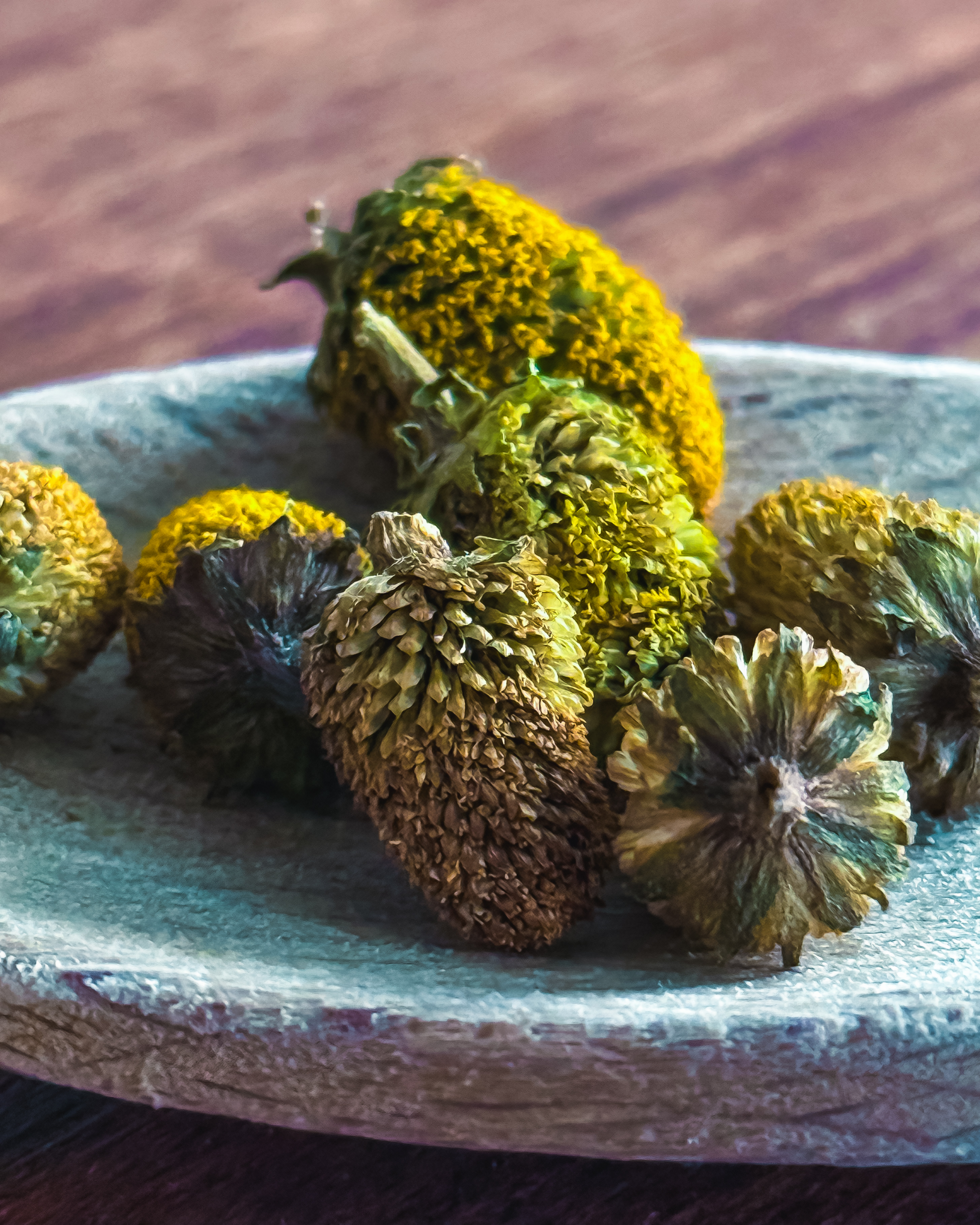
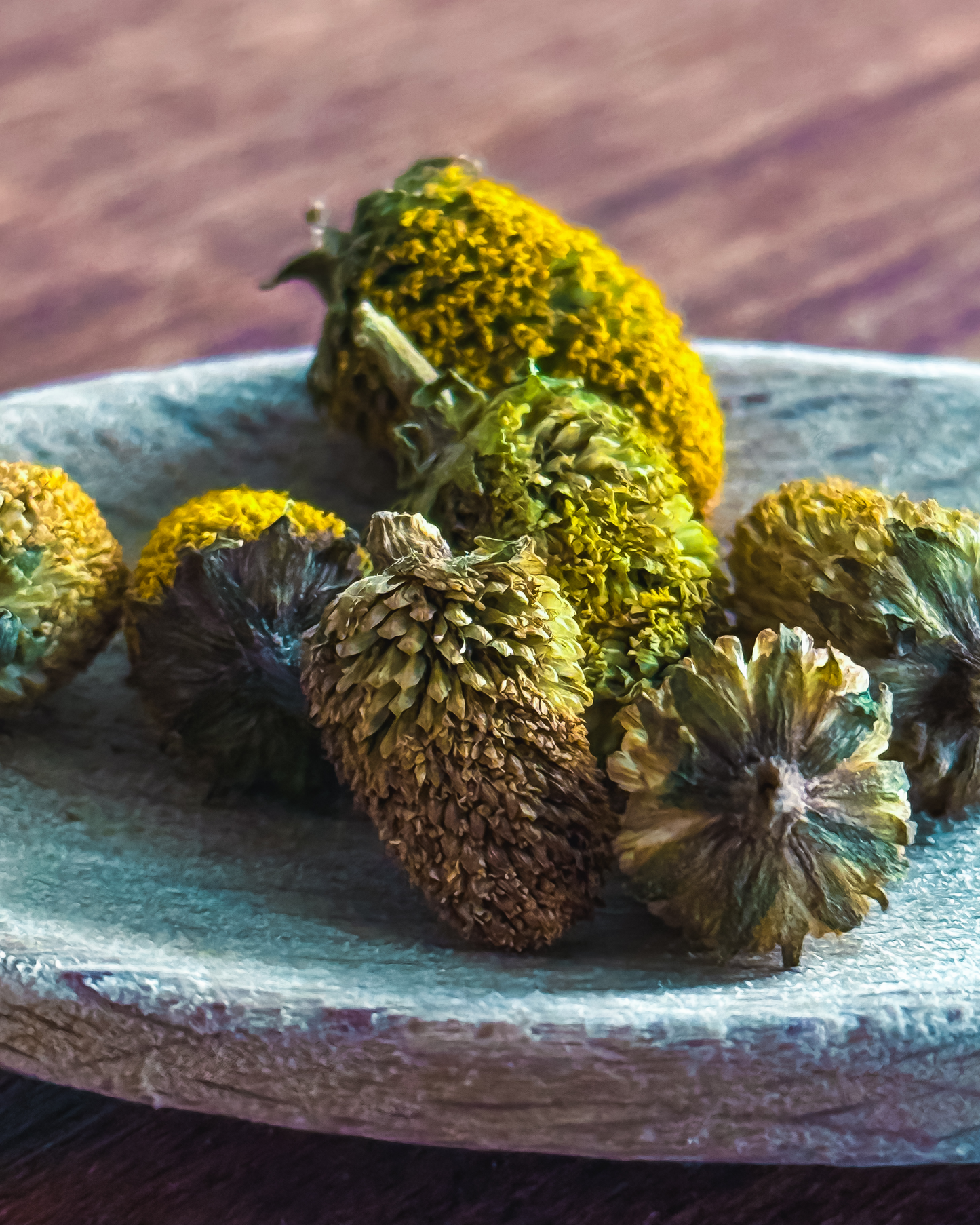
The flower heads are the most recognizable feature of Acmella oleracea.
Although commonly described as flowers, each "button" is actually a composite flower head, made up of many tiny individual florets, a defining characteristic of the Asteraceae family.
These flower heads are responsible for reproduction and seed development and are the primary botanical material used in many premium botanical ingredients.
Leaves
The leaves act as the plant's energy factory.
Through photosynthesis, they convert sunlight into energy that supports growth throughout the entire plant.
Leaves are essential for healthy development, but their primary role is not to produce reproductive structures.
Stems
The stems connect every part of the plant.
They transport water, minerals, and nutrients while supporting the flower heads above the foliage.
Healthy stems allow the plant to branch, producing additional flower heads throughout the growing season.
Roots
Hidden beneath the soil, the roots anchor the plant while absorbing water and essential mineral nutrients.
Although roots are critical for survival, they are not commonly harvested for premium Acmella oleracea botanical ingredients.
Where Is Spilanthol Found?
One of the most common questions asked by researchers, formulators, and consumers is:
"Which part of the plant contains Spilanthol?"
The answer is more nuanced than many people expect.
Scientific studies indicate that Spilanthol can be detected in several parts of Acmella oleracea.
However, research consistently shows that the flower heads are generally the richest natural source, while leaves, stems, and other tissues typically contain considerably lower concentrations.
Exactly how much is present depends on multiple factors, including:
- plant genetics
- cultivation practices
- climate
- soil conditions
- harvest timing
- analytical method
- post-harvest handling
For this reason, reputable botanical producers rely on laboratory analysis rather than assumptions when evaluating botanical materials.
Why Plants Produce Spilanthol
Spilanthol belongs to a group of naturally occurring compounds known as alkylamides.
Scientists believe alkylamides play roles in the plant's interactions with its environment, although research into their ecological functions is still ongoing.
Like many plant metabolites, Spilanthol is part of the plant's natural chemistry.
Its distribution throughout the plant reflects the biological needs of different tissues rather than being evenly spread from roots to flowers.
This is why researchers frequently analyze specific plant organs individually.
Why Flower Heads Receive So Much Scientific Attention
When scientists investigate Acmella oleracea, they often focus on the flower heads.
There are several reasons for this.
Research has consistently shown that the flower heads:
- contain the highest naturally occurring concentrations of Spilanthol
- are botanically well defined
- are relatively consistent to sample
- are widely used in cosmetic and botanical research
- are the preferred raw material for many premium extracts
This does not mean the rest of the plant lacks value.
Leaves are essential for photosynthesis.
Roots sustain the plant.
Stems support growth.
But when the objective is producing high-quality botanical ingredients rich in naturally occurring Spilanthol, the flower heads are generally the preferred botanical material.
Not All Plant Material Is the Same
One of the biggest misconceptions in the botanical industry is that all plant material from the same species is interchangeable.
In reality, this is rarely true.
Just as coffee beans differ from coffee leaves, and grape skins differ from grape seeds, different parts of Acmella oleracea naturally have different botanical compositions.
Understanding those differences allows researchers, formulators, and producers to select the most appropriate plant material for their intended purpose.
Quality begins with choosing the right botanical material—not simply the right plant species.
Plant Anatomy at a Glance
| Plant Part | Primary Biological Role | Relative Spilanthol Distribution* |
|---|---|---|
| Flower Heads | Reproduction and seed formation | Highest |
| Leaves | Photosynthesis | Lower |
| Stems | Structural support and transport | Lower |
| Roots | Water and nutrient uptake | Lowest / not commonly used |
*Relative distribution based on published botanical literature. Actual concentrations vary depending on genetics, cultivation, harvest timing, and analytical methods.
Key Takeaways
- Every part of Acmella oleracea performs a different biological function.
- Different plant organs naturally contain different phytochemical profiles.
- Scientific studies consistently identify the flower heads as the richest natural source of Spilanthol.
- Leaves, stems, and roots remain biologically important but generally contain lower concentrations.
- Understanding which part of the plant is harvested is fundamental to understanding botanical quality.

Flower Heads vs. Leaves: Why Plant Selection Determines Botanical Quality
Once you understand that different parts of Acmella oleracea naturally contain different phytochemical profiles, the next question becomes obvious:
Does it matter which part of the plant is harvested?
The answer is yes.
From a botanical perspective, every part of the plant has value.
Leaves power photosynthesis.
Stems provide support.
Roots absorb water and nutrients.
Flower heads ensure reproduction.
However, when the goal is producing a premium botanical ingredient rich in naturally occurring Spilanthol, the choice of plant material becomes one of the most important quality decisions in the entire production process.
Why Premium Producers Focus on Flower Heads
Scientific research has consistently shown that the flower heads are the richest natural source of Spilanthol within Acmella oleracea.
For this reason, many high-quality botanical producers choose to harvest mature flower heads rather than processing the entire plant.
This approach offers several advantages:
- greater botanical consistency
- selection of the plant's most valuable botanical material
- improved traceability
- easier quality assessment
- better suitability for standardized botanical production
The objective is not simply to harvest more biomass.
It is to harvest the right botanical material.
Science in Everyday Life
Not Every Part of a Plant Has the Same Value
Think about a grapevine.
Wine is made primarily from the grapes, not the leaves or stems.
A tea producer harvests young tea leaves, not the roots.
Coffee comes from coffee beans, not the branches.
The same principle applies to Acmella oleracea.
Although every part of the plant contributes to its survival, not every part contributes equally to the botanical ingredient being produced.
Choosing the correct plant organ is one of the foundations of quality botanical production.
Whole Plant vs. Flower-Only Harvesting
Not every supplier harvests Acmella oleracea in the same way.
Some products are made using whole-plant material, which may include:
- leaves
- stems
- flower heads
- smaller branches
Other producers focus exclusively on flower heads.
Neither approach is inherently "wrong."
The choice depends on the intended application, production method, quality objectives, and economic considerations.
However, if the objective is to maximize the proportion of the plant material that naturally contains the highest levels of Spilanthol, selecting mature flower heads offers a clear botanical advantage.
Why Some Producers Use Whole Plants
Harvesting the entire plant is generally faster and less labor-intensive.
It allows larger volumes of plant material to be collected in a shorter period of time.
For some industrial applications, whole-plant harvesting may be entirely appropriate.
It can also reduce production costs because:
- harvesting is quicker
- less manual sorting is required
- more total biomass is collected
- processing can begin immediately
However, whole-plant material also contains tissues with naturally different phytochemical compositions.
As a result, the overall botanical profile may differ from products prepared exclusively from flower heads.
Why Flower-Only Harvesting Requires More Work
Harvesting only flower heads is considerably more demanding.
Unlike whole-plant harvesting, flower-only production requires growers to inspect each plant individually.
Every mature flower must be selected by hand while leaving younger flowers to continue developing.
This process requires:
- skilled harvesting teams
- multiple harvests throughout the season
- careful field observation
- more time per plant
- greater attention to consistency
For this reason, flower-only harvesting is generally more expensive than harvesting mixed plant material.
But it also allows producers to focus on the botanical structure that scientific literature consistently identifies as the richest natural source of Spilanthol.
Why We Harvest Only Flower Heads
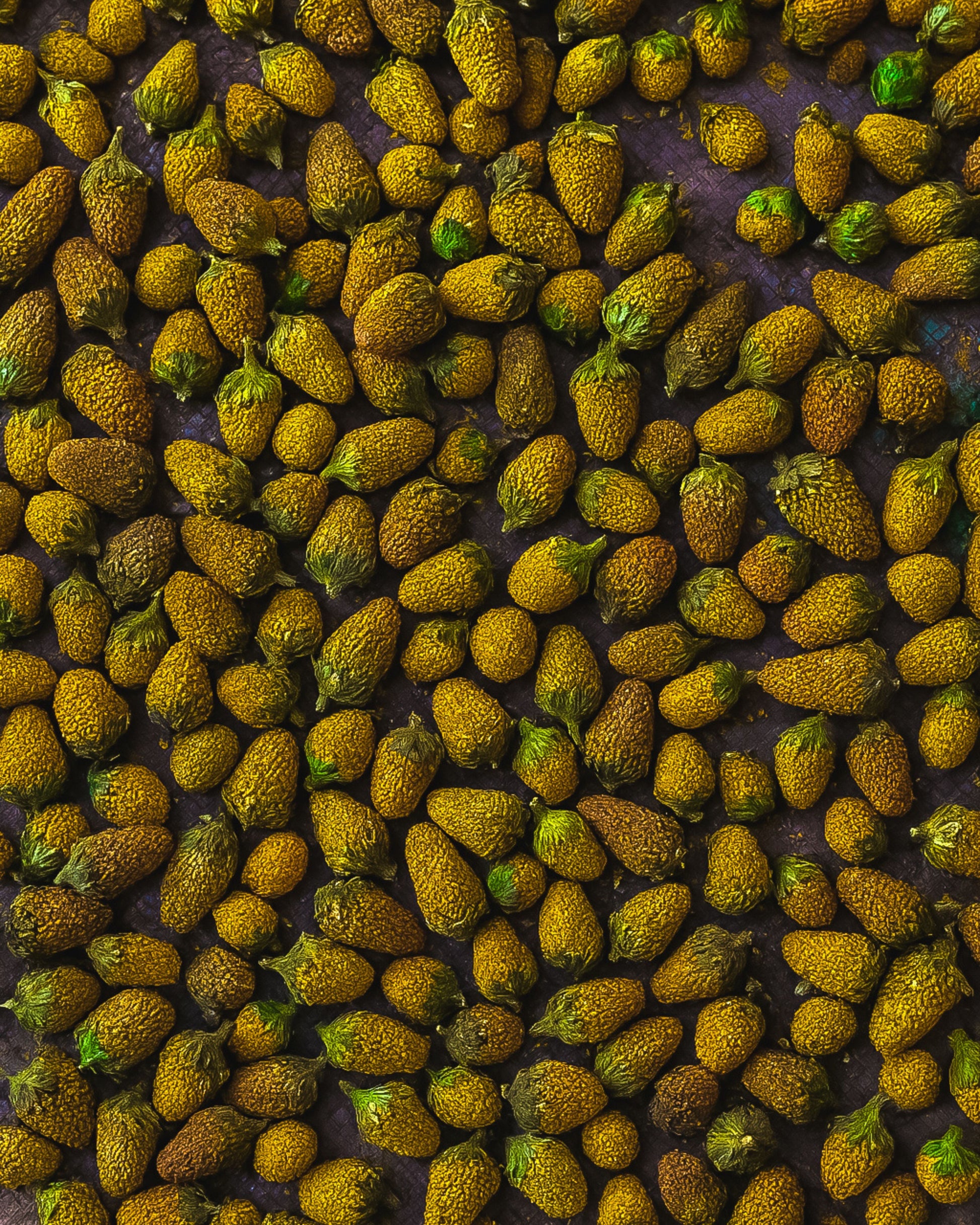
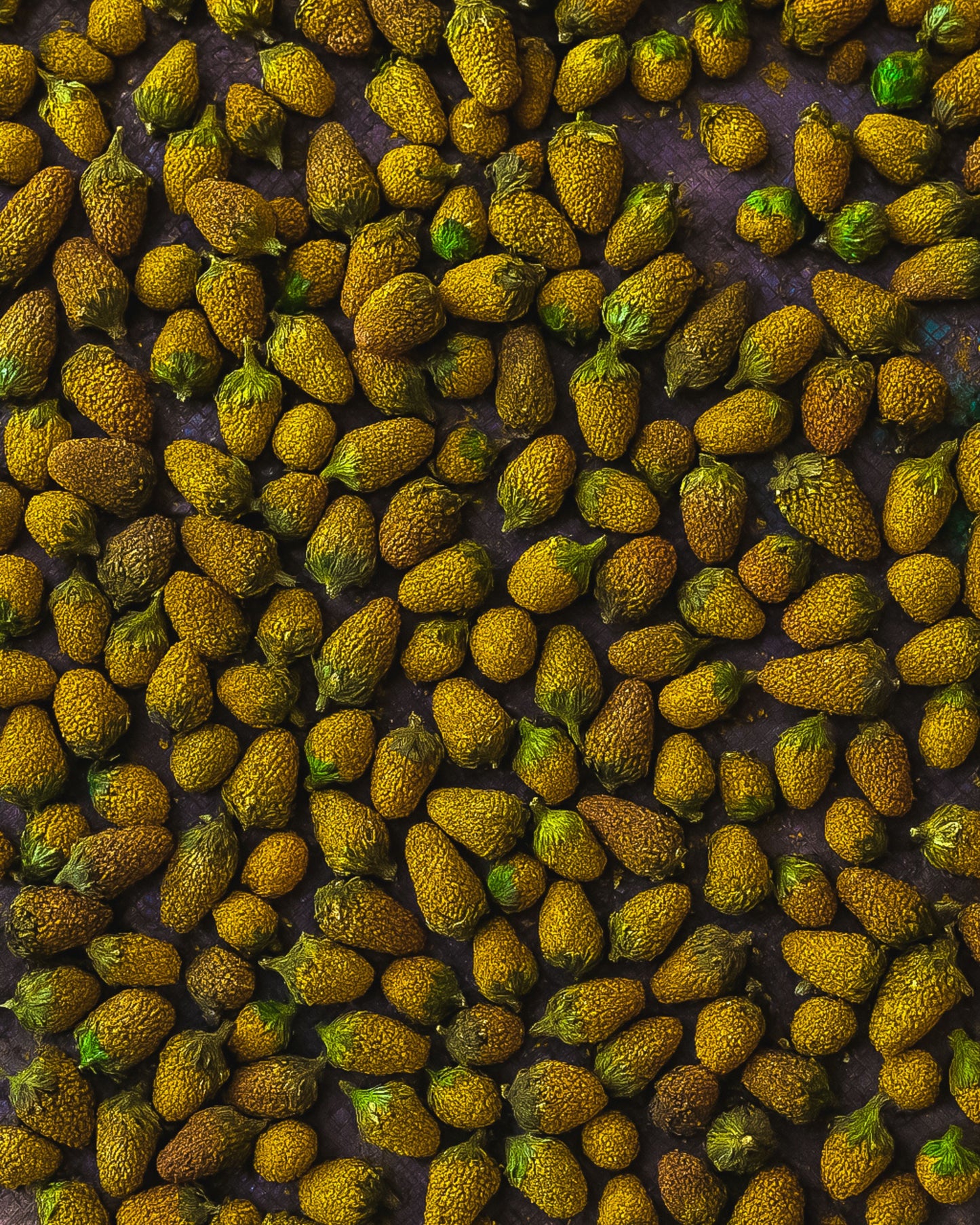
At Madabuzz, we have made a deliberate decision to work exclusively with whole flower heads.
We believe that premium botanical ingredients begin with premium botanical selection.
Instead of maximizing harvest volume, we prioritize botanical quality.
Our harvesting teams in Madagascar carefully select mature flower heads individually, leaving immature flowers to continue their natural development.
This approach requires more time, more experience, and more manual work, but it aligns with our commitment to producing premium botanical ingredients rather than simply collecting the largest possible amount of plant material.
Madagascar: Quality Begins in the Field
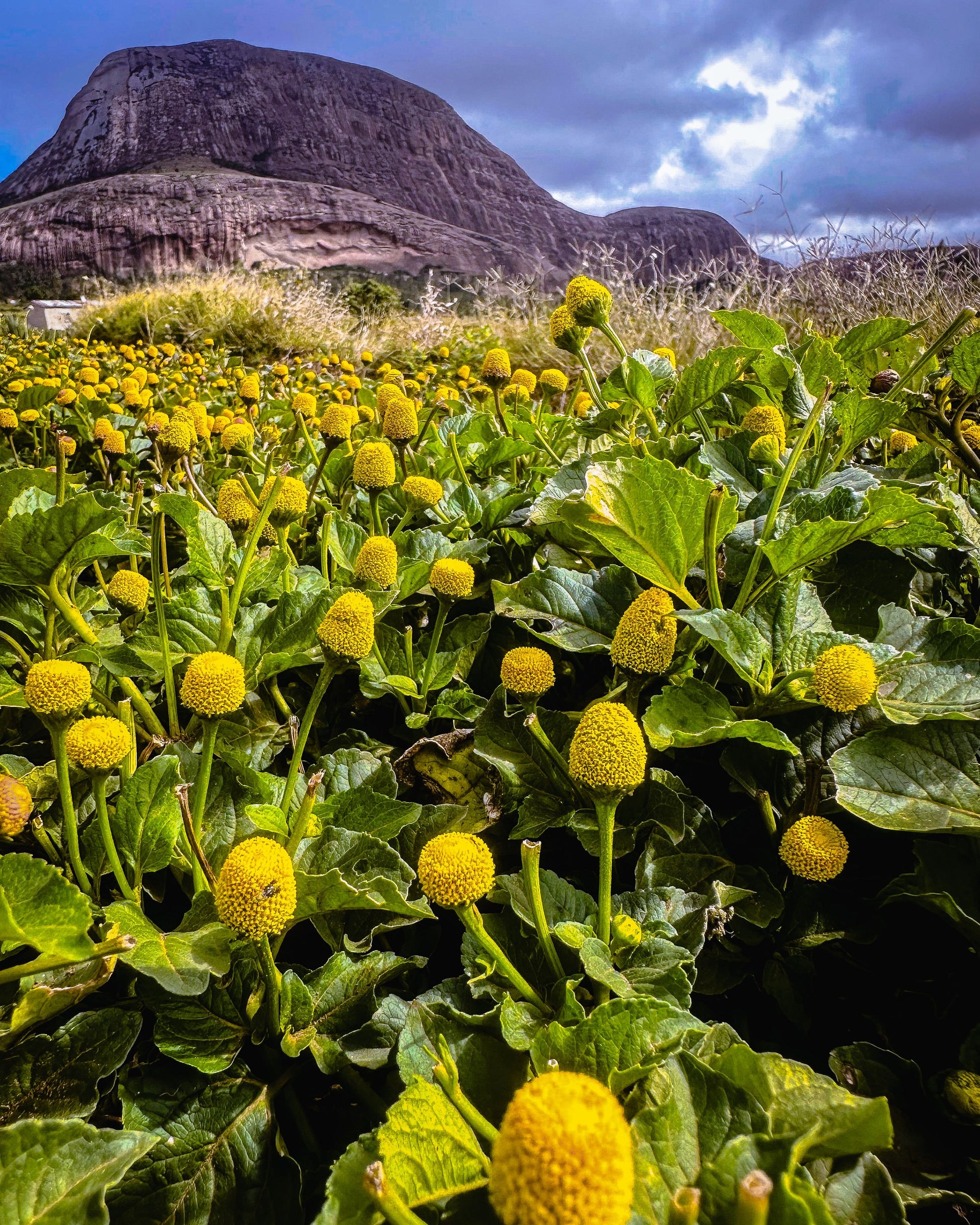
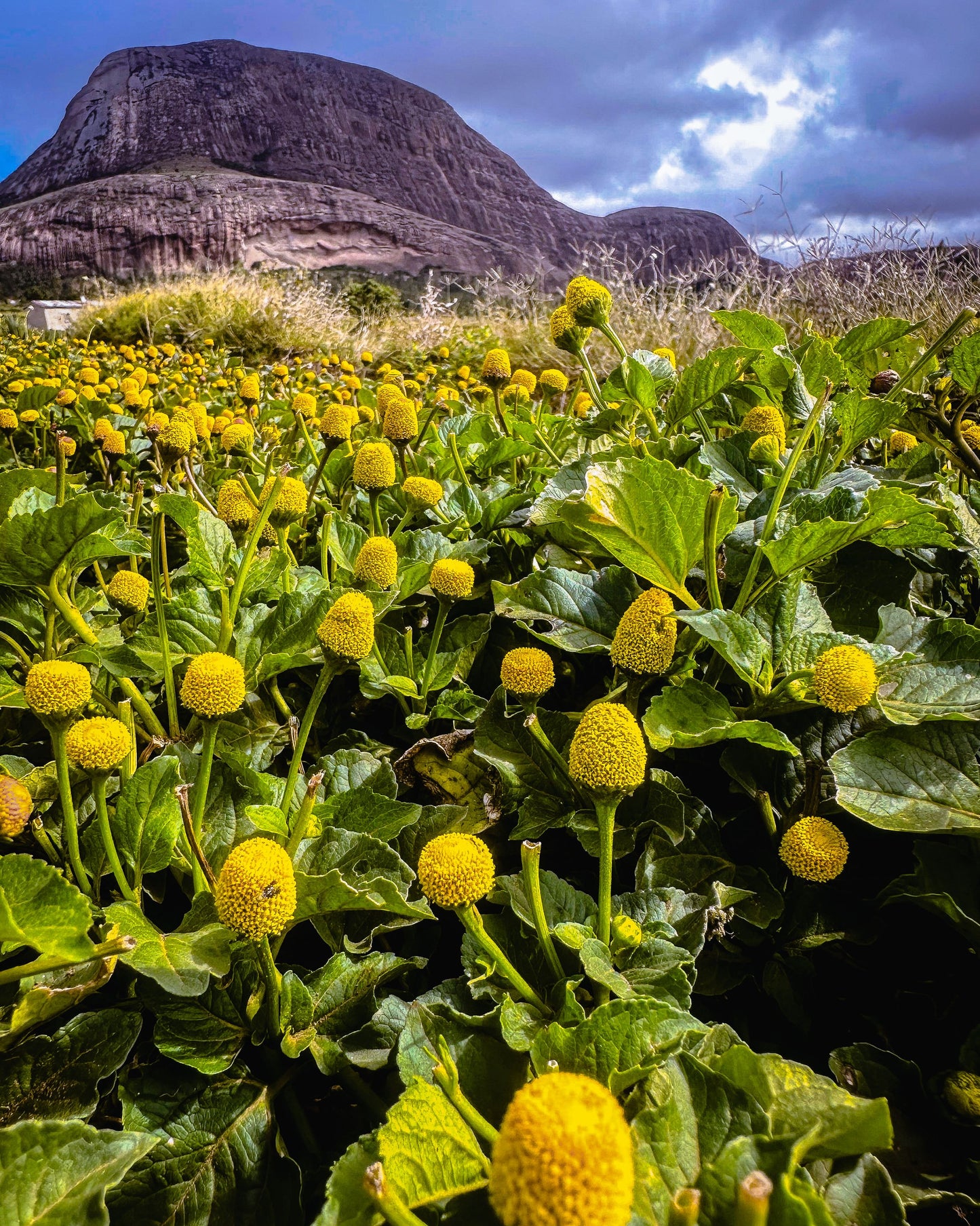
Our Acmella oleracea is cultivated in Madagascar under conditions that naturally support healthy plant growth.
Several factors contribute to the quality of our flower heads:
- fertile volcanic-derived soils
- tropical climate
- abundant sunshine
- seasonal rainfall
- exceptional biodiversity
- experienced farming communities
- natural cultivation practices
Rather than relying on intensive agricultural systems, our cultivation philosophy focuses on allowing the plants to develop naturally before careful manual harvesting.
We do not routinely use synthetic pesticides or herbicides in the cultivation of our Acmella oleracea.
Instead, we believe healthy ecosystems produce healthy plants.
Why Laboratory Verification Is Essential
Harvesting flower heads is only the beginning.
Premium botanical production also requires independent laboratory verification.
Appearance alone cannot determine botanical quality.
For this reason, every Madabuzz production batch undergoes independent laboratory analysis.
This helps verify important quality characteristics using objective scientific methods rather than assumptions.
Our philosophy is simple:
Select carefully.
Harvest responsibly.
Verify scientifically.
Flower Heads vs. Mixed Plant Material
| Flower Heads Only | Mixed Whole-Plant Material |
|---|---|
| Focuses on the plant part generally richest in naturally occurring Spilanthol | Includes plant parts with different phytochemical profiles |
| Harvested individually at maturity | Often harvested in bulk |
| Greater consistency in harvested material | More variable botanical composition |
| More labor-intensive | Faster to harvest |
| Preferred for premium botanical ingredients | Common for large-volume processing |
Relative Distribution of Naturally Occurring Spilanthol
To help readers visualize the botanical differences, this simplified comparison summarizes the general distribution reported in scientific literature.
Important: The chart above is illustrative, showing the relative distribution reported across botanical studies, not absolute concentrations. Actual values vary depending on genetics, cultivation practices, harvest timing, growing conditions, extraction methods, and laboratory analysis.
Why Botanical Selection Matters
Imagine producing premium olive oil.
You would carefully harvest ripe olives, not leaves, branches, and twigs.
The same principle applies to botanical ingredients.
Selecting the appropriate plant material is one of the earliest and most important quality decisions in the production process.
By focusing on mature flower heads, producers can build consistency into the product before extraction or laboratory testing even begins.
Quality starts in the field, not in the laboratory.
Key Takeaways
- Scientific literature consistently identifies the flower heads as the richest natural source of Spilanthol in Acmella oleracea.
- Whole-plant harvesting and flower-only harvesting serve different production goals.
- Flower-only harvesting is more labor-intensive but allows careful selection of mature botanical material.
- Madabuzz harvests only mature flower heads in Madagascar using manual selection and natural cultivation practices.
- Independent laboratory testing complements careful harvesting by verifying quality using objective analytical methods.
Why Flower Selection Defines Botanical Quality
By the time an Acmella oleracea flower reaches harvest, it has already completed weeks of growth.
Its development has been influenced by sunlight, rainfall, soil conditions, biodiversity, genetics, and careful cultivation.
For premium botanical ingredients, the final quality is not determined by a single laboratory test.
It begins with one simple decision:
Which part of the plant should be harvested?
Selecting mature flower heads rather than processing the entire plant is one of the earliest and most important quality decisions a botanical producer can make.
Everything that follows, drying, storage, extraction, and laboratory analysis, builds upon that foundation.
Quality Starts Long Before Extraction
Many people assume that quality is created during extraction.
In reality, extraction can only work with the botanical material it receives.
If the harvested plant material varies greatly in composition, no extraction process can completely compensate for those differences.
This is why experienced botanical producers focus first on:
- selecting the appropriate plant part
- harvesting at the correct stage of maturity
- preserving botanical integrity during drying
- maintaining traceability throughout production
Extraction is important.
But extraction begins with the quality of the harvested flowers.
Science in Everyday Life
Great Olive Oil Begins with Great Olives
Imagine producing premium extra virgin olive oil.
The finest producers do not collect leaves, branches, and unripe fruit together.
They carefully harvest healthy olives at the right stage of maturity because they know the quality of the final oil depends on the quality of the harvested fruit.
Acmella oleracea follows the same principle.
Premium botanical ingredients begin with selecting the most appropriate part of the plant.
Quality is built through careful choices, not shortcuts.
Why Madabuzz Chooses Whole Flower Heads
At Madabuzz, we deliberately harvest whole flower heads only.
This decision is based on both botanical science and our commitment to quality.
Scientific studies consistently identify the flower heads as the richest natural source of Spilanthol within Acmella oleracea.
For us, focusing on flower heads means:
- selecting the most valuable botanical material
- improving consistency between batches
- simplifying traceability
- supporting premium botanical production
- aligning cultivation with scientific understanding
Harvesting only flower heads requires more time, more manual work, and greater expertise.
However, we believe quality should begin in the field, not only in the laboratory.
Why Madagascar Makes a Difference
The quality of any botanical ingredient is influenced by the environment in which it grows.
Madabuzz works with carefully selected farming partners in Madagascar, where Acmella oleracea is cultivated under favorable natural conditions.
Our growing regions benefit from:
- fertile volcanic-derived soils
- warm tropical temperatures
- abundant sunshine
- seasonal rainfall
- healthy biodiversity
- traditional farming knowledge
These conditions support vigorous plant growth while allowing cultivation to remain closely connected to the natural environment.
Rather than relying on intensive agricultural systems, our farmers focus on careful observation, responsible cultivation, and selective harvesting.
100% Natural Cultivation
We believe that exceptional botanical ingredients should begin with responsible farming.
Our cultivation philosophy emphasizes working with nature rather than relying on intensive agricultural inputs.
Our Acmella oleracea is grown using natural farming practices, and we do not routinely use synthetic pesticides or herbicides in its cultivation.
Instead, our farmers focus on:
- healthy living soils
- crop observation
- biodiversity
- responsible harvesting
- long-term sustainability
Healthy ecosystems support healthy plants, and healthy plants provide the foundation for premium botanical ingredients.
From Flower to Laboratory
Harvesting is only one step in our quality journey.
Every batch follows a carefully managed process.
Step 1
Cultivated naturally in Madagascar
↓
Step 2
Manual selection of mature flower heads
↓
Step 3
Controlled drying
↓
Step 4
Careful storage
↓
Step 5
Extraction (where applicable)
↓
Step 6
Independent laboratory testing
↓
Step 7
Quality verification
This process combines traditional cultivation with modern analytical science.
Why Independent Laboratory Testing Matters
Even experienced growers cannot determine every quality characteristic simply by looking at a flower.
Independent laboratory testing provides objective data that complements careful cultivation and harvesting.
Depending on the product, laboratory analysis may include:
- botanical identity
- chromatographic analysis
- naturally occurring Spilanthol content
- moisture content
- microbiological quality
- quality documentation
This scientific verification helps ensure transparency and consistency across production batches.
Our 4.01% Reference Analysis
One of the defining characteristics of Madabuzz is our commitment to measurable quality.
Our independently verified reference analysis identified 4.01% naturally occurring Spilanthol in a flower-head batch produced under our cultivation and quality standards.
This result reflects that specific analyzed batch and demonstrates why independent testing is essential.
Rather than assuming quality based on appearance or origin, we believe every batch should be evaluated through objective laboratory analysis.
This is also why we avoid making unrealistic promises about every harvest, nature varies, and responsible producers verify rather than assume.
Sustainability Beyond the Harvest
For us, sustainability extends beyond agriculture.
It also includes the people behind every harvest.
We work directly with farming communities in Madagascar, building long-term partnerships based on transparency, respect, and shared success.
As part of our commitment, 5% of every Madabuzz purchase supports local educational projects, helping strengthen schools and create opportunities within the communities where our Acmella oleracea is cultivated.
We believe premium botanical ingredients should create value not only for customers, but also for the people who grow them.
Scientific Summary
Current scientific understanding supports several important conclusions.
Well Established
✔ Flower heads are generally the richest natural source of Spilanthol within Acmella oleracea.
✔ Different plant organs have different phytochemical compositions.
✔ Flower-only harvesting provides greater control over botanical consistency.
✔ Independent laboratory testing is an important part of quality assurance.
✔ Harvest timing, cultivation, and post-harvest handling all influence botanical quality.
Areas of Continuing Research
Scientists continue investigating:
- environmental influences on phytochemical composition
- cultivation techniques
- extraction technologies
- analytical methods
- botanical standardization
- sustainable farming systems
As research develops, growers continue refining best practices for producing consistent, high-quality botanical ingredients.
Frequently Asked Questions
Which part of Acmella oleracea contains the most Spilanthol?
Scientific studies consistently identify the flower heads as the richest natural source of Spilanthol, while leaves, stems, and roots generally contain lower concentrations.
Why doesn't Madabuzz use the whole plant?
We focus exclusively on mature flower heads because they represent the preferred botanical material for premium-quality Acmella oleracea ingredients and provide greater consistency for production and laboratory evaluation.
Are leaves useless?
Not at all.
Leaves are essential for photosynthesis and healthy plant growth.
However, their biological role differs from that of the flower heads, and their phytochemical profile is naturally different.
Why are flower-head products usually more expensive?
Flower-only harvesting requires significantly more manual labor, multiple harvests during the growing season, careful selection, and greater attention to quality than harvesting mixed whole-plant material.
Does Madabuzz test every batch?
Yes.
Every production batch is independently analyzed to verify quality and maintain transparency.
Why are your flowers grown in Madagascar?
Madagascar provides a tropical climate, fertile volcanic-derived soils, rich biodiversity, and experienced farming communities. Combined with natural cultivation practices and independent laboratory testing, these conditions support the production of premium botanical ingredients.
What does 4.01% Spilanthol mean?
It refers to the result of an independently analyzed reference batch of flower heads produced under our cultivation and quality standards. Like all botanical materials, future batches may naturally vary, which is why independent laboratory verification remains essential.
Conclusion
Not every part of an Acmella oleracea plant is chemically identical.
Although leaves, stems, roots, and flower heads all contribute to the life of the plant, scientific research consistently shows that the flower heads are the richest natural source of Spilanthol.
Understanding this difference is fundamental to understanding botanical quality.
At Madabuzz, this knowledge shapes every stage of our production process.
From cultivating Acmella oleracea in Madagascar using natural farming practices, to harvesting only mature flower heads, and independently verifying every batch through laboratory analysis, our goal is simple:
To produce botanical ingredients with transparency, consistency, and respect for both science and nature.
Quality begins with the right plant.
It continues with the right harvest.