

Every plant follows a remarkable journey from a tiny seed to a mature organism capable of producing flowers and the next generation of seeds. Understanding this life cycle provides valuable insight into how plants grow, adapt, reproduce, and respond to their environment.
For Acmella oleracea, this journey is particularly fascinating. Known for its distinctive cone-shaped yellow flower heads, edible leaves, and naturally occurring spilanthol, the plant undergoes several well-defined stages that influence its appearance, culinary qualities, and botanical composition.
Whether you are a gardener cultivating Buzz Buttons, a chef interested in harvesting edible flowers, a researcher studying plant development, or a botanical ingredient manufacturer seeking high-quality raw materials, understanding each stage of growth helps explain why harvest timing and plant maturity are so important.
This guide explores the complete life cycle of Acmella oleracea, from seed germination to flowering, seed production, and the beginning of a new generation.
What Is the Life Cycle of Acmella oleracea?
The life cycle of Acmella oleracea follows the same general pattern as many flowering plants but develops relatively quickly under favourable tropical conditions.
The plant progresses through several distinct stages:
- Seed
- Germination
- Seedling development
- Vegetative growth
- Flower formation
- Pollination
- Seed development
- Senescence
- Seed dispersal and the beginning of a new generation
Although these stages occur in sequence, healthy plants often continue producing new flowers while older flower heads begin developing seeds. This overlapping growth pattern allows Acmella oleracea to flower continuously throughout much of the growing season under suitable environmental conditions.
Each developmental stage plays an important role in determining the plant's overall health, productivity, and botanical composition.

Stage 1: The Seed
Every Acmella oleracea plant begins as a small seed.
The seeds are relatively tiny, lightweight, and dark brown to black when fully mature. Like many members of the Asteraceae family, they are adapted for efficient dispersal and rapid germination when environmental conditions become favourable.
Inside each seed is an embryonic plant containing all the genetic information required to produce roots, stems, leaves, flowers, and eventually another generation of seeds.
Although dormant after harvest, the seed remains alive. Dormancy protects the embryo until sufficient moisture, warmth, oxygen, and suitable soil conditions allow growth to begin.
Successful germination depends upon several environmental factors, including:
- adequate soil moisture;
- warm temperatures;
- oxygen availability;
- suitable light conditions;
- healthy, well-drained growing media.
Under favourable conditions, Acmella oleracea seeds often germinate within one to two weeks.
Stage 2: Germination
Germination marks the beginning of active plant growth.
Once the seed absorbs sufficient water, metabolic activity increases rapidly inside the embryo. Stored nutrients begin supplying energy until the young plant can produce its own food through photosynthesis.
The first visible sign of germination is the emergence of the radicle, the young root that grows downward into the soil.
This primary root anchors the seedling while beginning to absorb water and dissolved minerals.
Shortly afterwards, the young shoot emerges above the soil surface carrying the two seed leaves, known as cotyledons.
Although these first leaves differ from mature foliage, they perform an important role by supplying energy during the earliest stages of growth.
Healthy germination establishes the foundation for vigorous plant development throughout the remainder of the life cycle.
Stage 3: Seedling Development
As the seedling becomes established, growth accelerates.
The first true leaves begin to develop above the cotyledons and gradually take over the process of photosynthesis.
These young leaves already display the characteristic shape of mature Acmella oleracea foliage, with ovate blades, serrated margins, and a bright green colour.
At the same time, the root system expands beneath the soil.
Rather than relying solely on the original primary root, numerous secondary roots begin branching outward to improve water and nutrient uptake.
During this stage, the plant remains relatively delicate.
Adequate sunlight, moderate watering, and balanced nutrition are essential for healthy development.
Any environmental stress during early growth can influence later flowering and overall plant productivity.
Stage 4: Vegetative Growth
Vegetative growth is the longest and most important stage of the Acmella oleracea life cycle.
During this period, the plant focuses on producing leaves, stems, and roots while building the energy reserves needed for flowering.
Growth becomes increasingly vigorous as multiple side branches develop from the main stem.
Each new branch supports additional leaves, allowing the plant to capture more sunlight through photosynthesis.
Healthy vegetative growth determines many characteristics of the mature plant, including:
- overall height;
- branching pattern;
- leaf production;
- stem strength;
- root development;
- future flowering potential.
Environmental conditions strongly influence this stage.
Optimal growth generally occurs when plants receive:
- warm temperatures;
- consistent soil moisture;
- fertile, well-drained soil;
- abundant sunlight;
- good air circulation.
Because leaves are responsible for producing the carbohydrates that fuel future flowering, maintaining vigorous vegetative growth is essential for both culinary production and botanical cultivation.
For growers harvesting leaves as an edible herb, this stage represents the period of greatest foliage production.
Stage 5: Flower Formation
As the plant matures, vegetative growth gradually transitions into reproductive development.
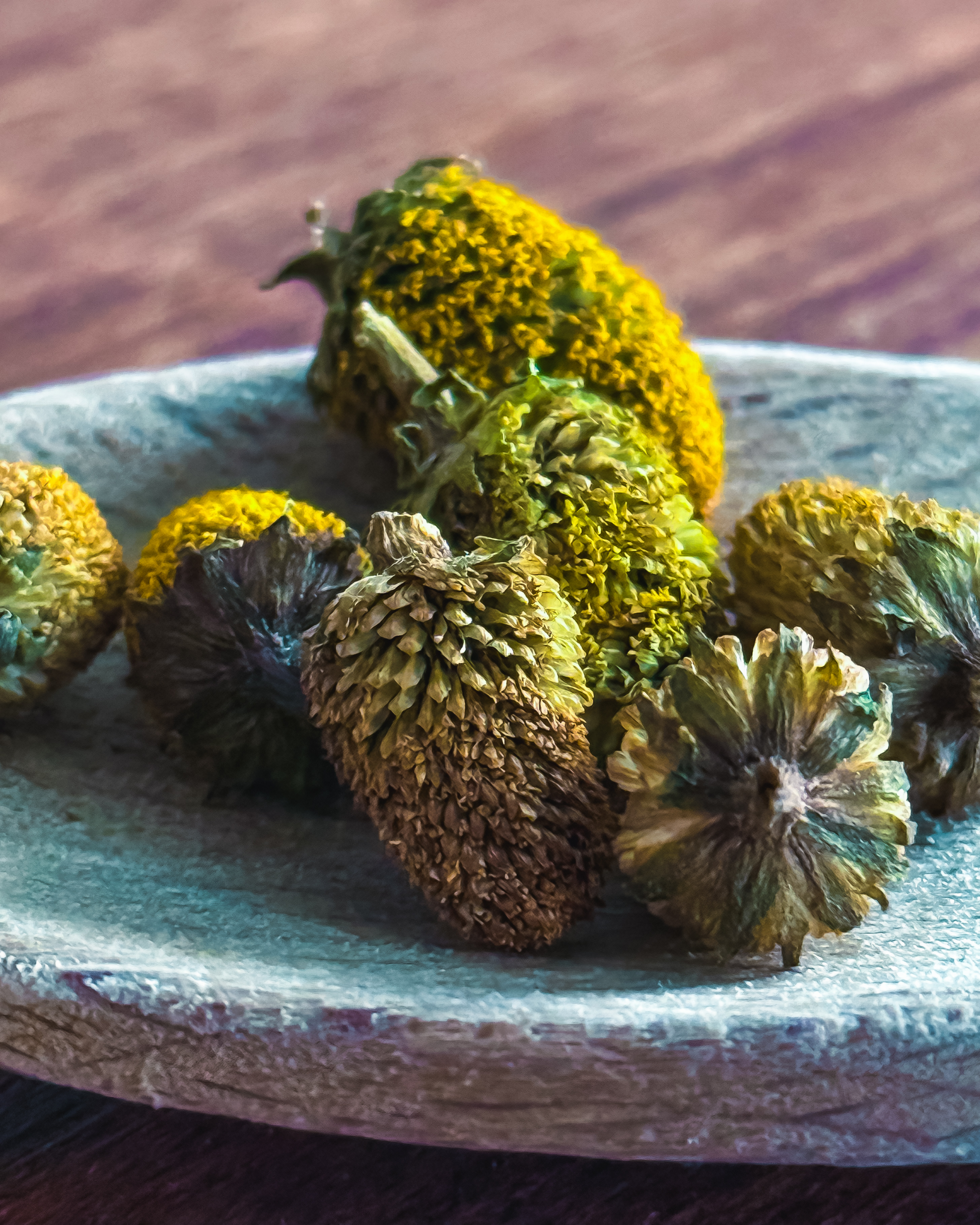
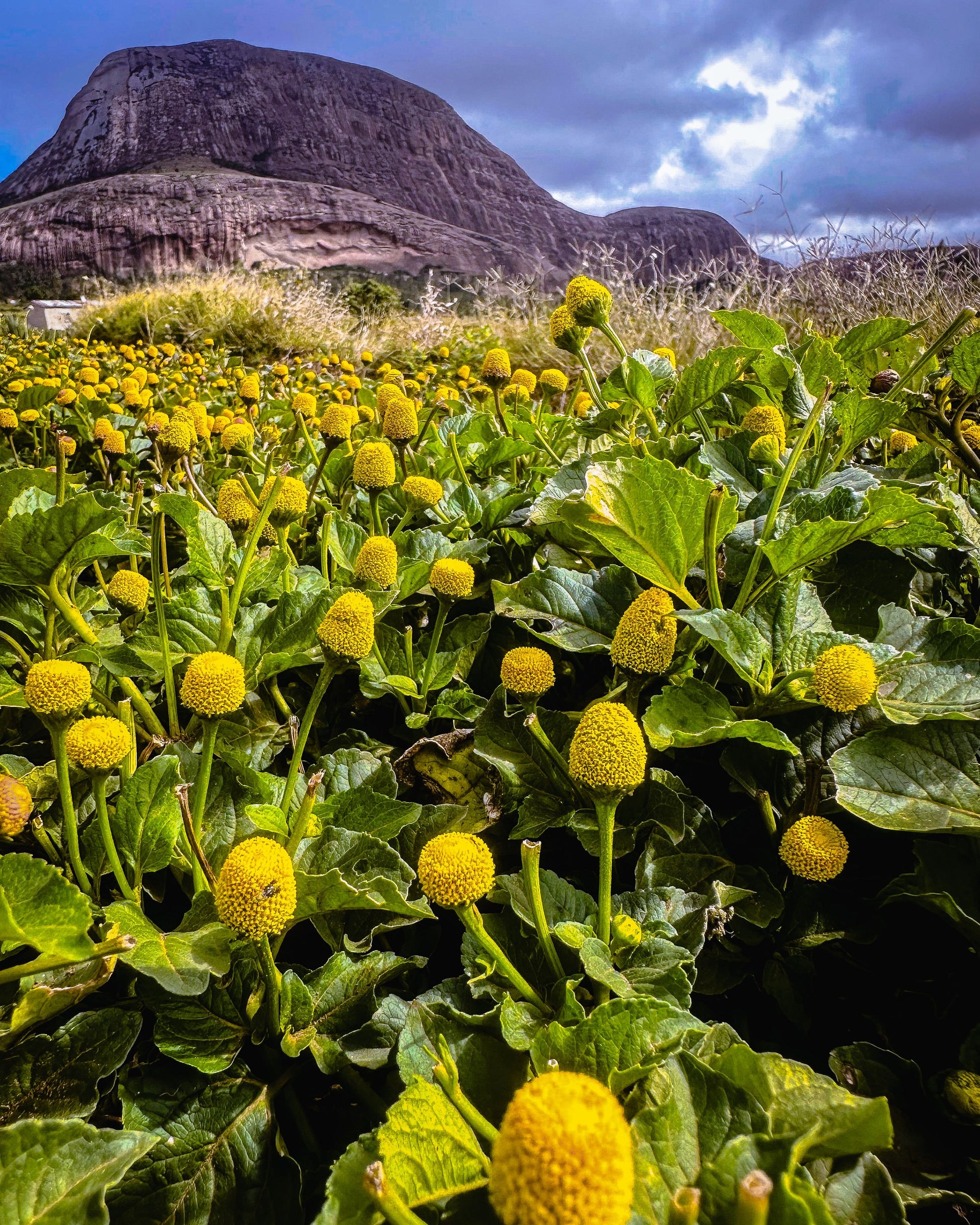
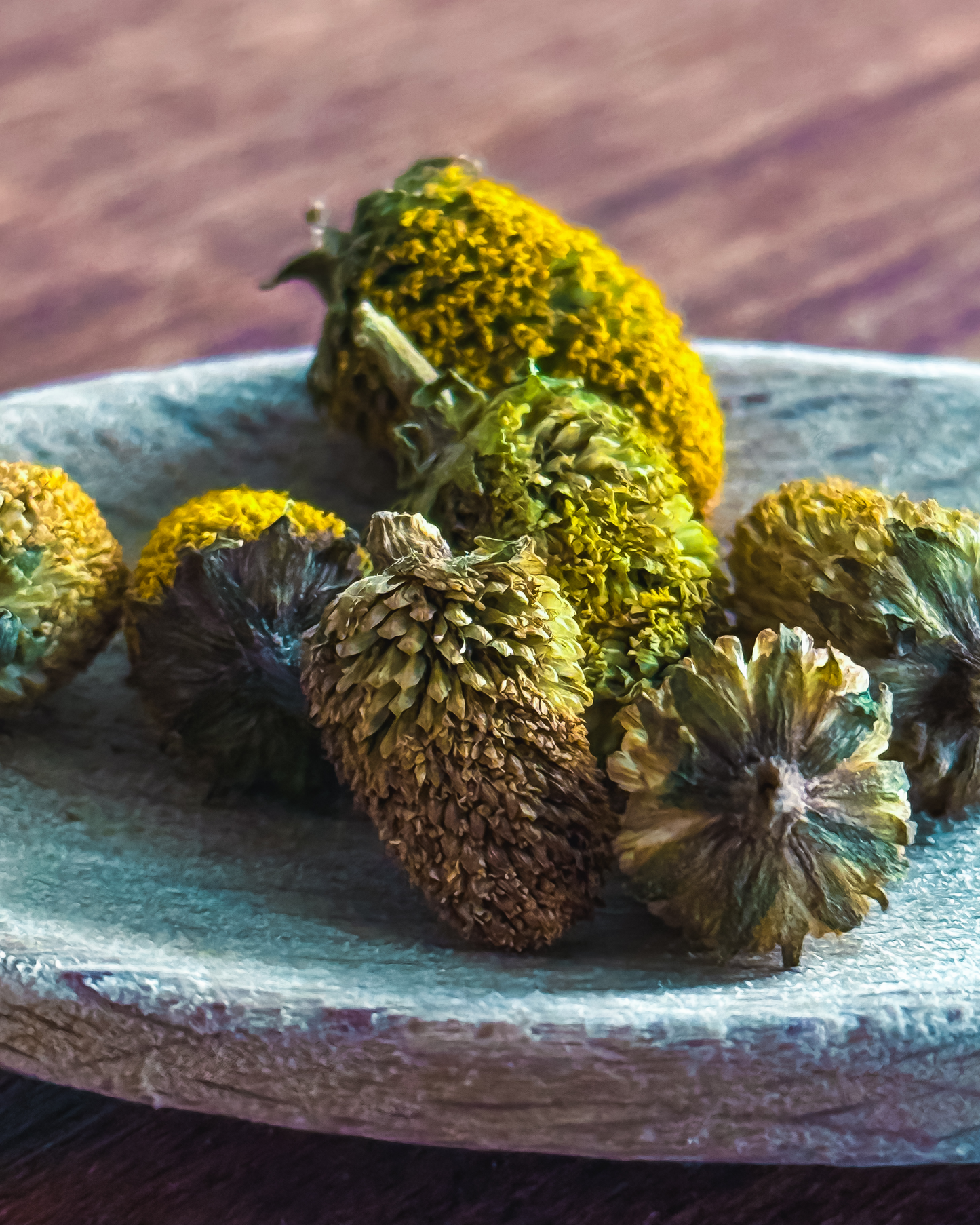
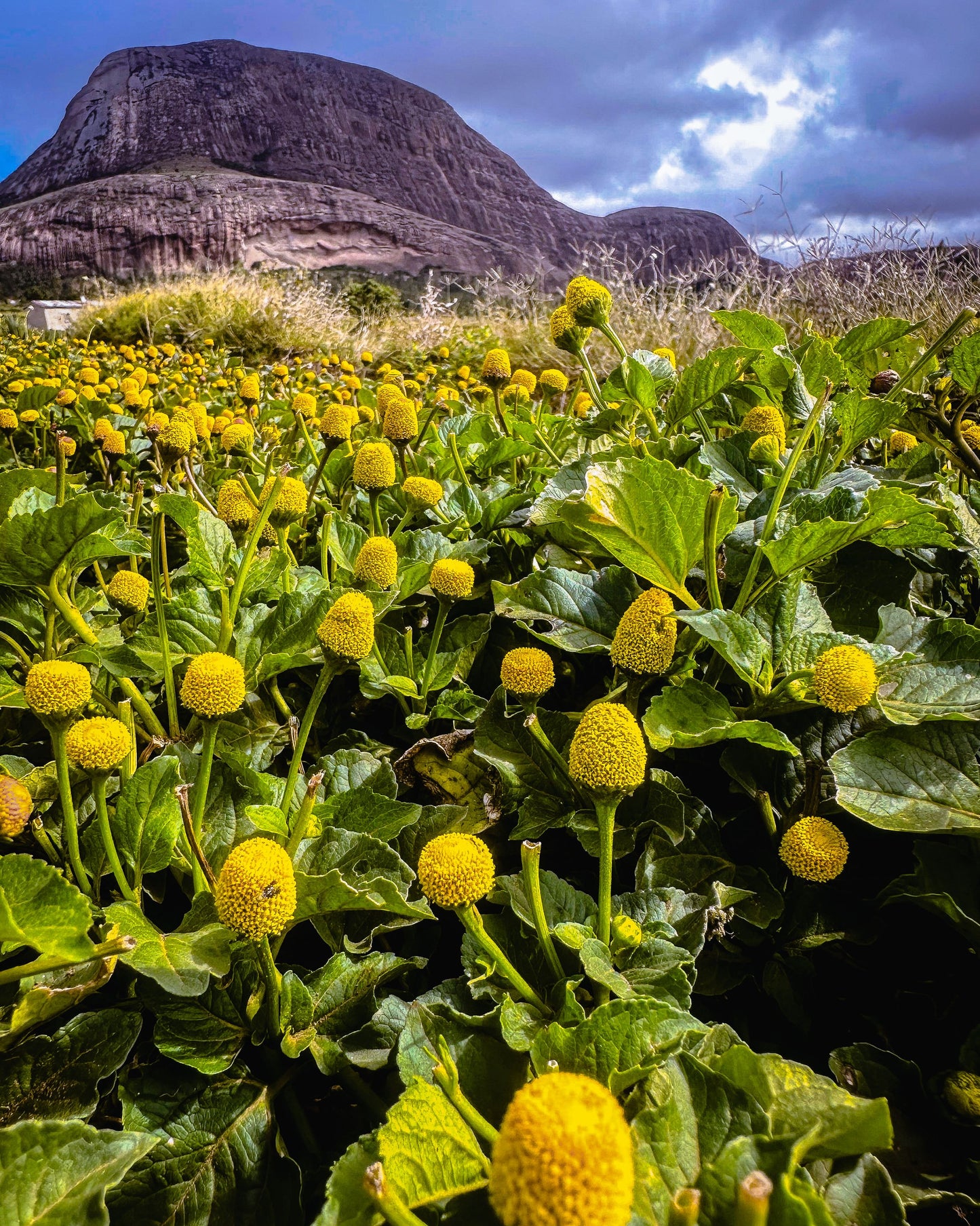
Small flower buds begin forming at the tips of stems and branches before expanding into the distinctive cone-shaped flower heads that make Acmella oleracea instantly recognisable.
Unlike many ornamental daisies, the flower heads lack large white petals.
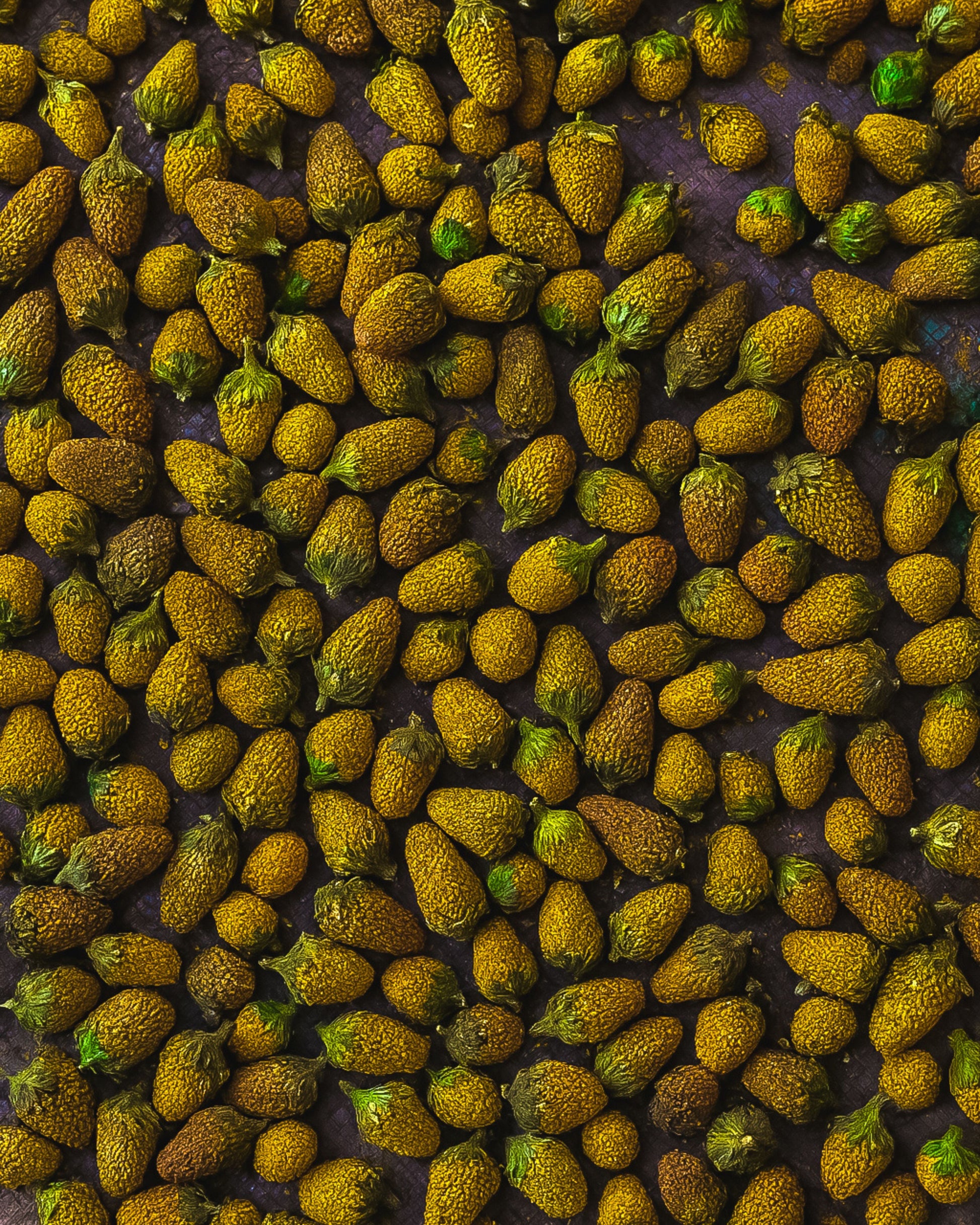
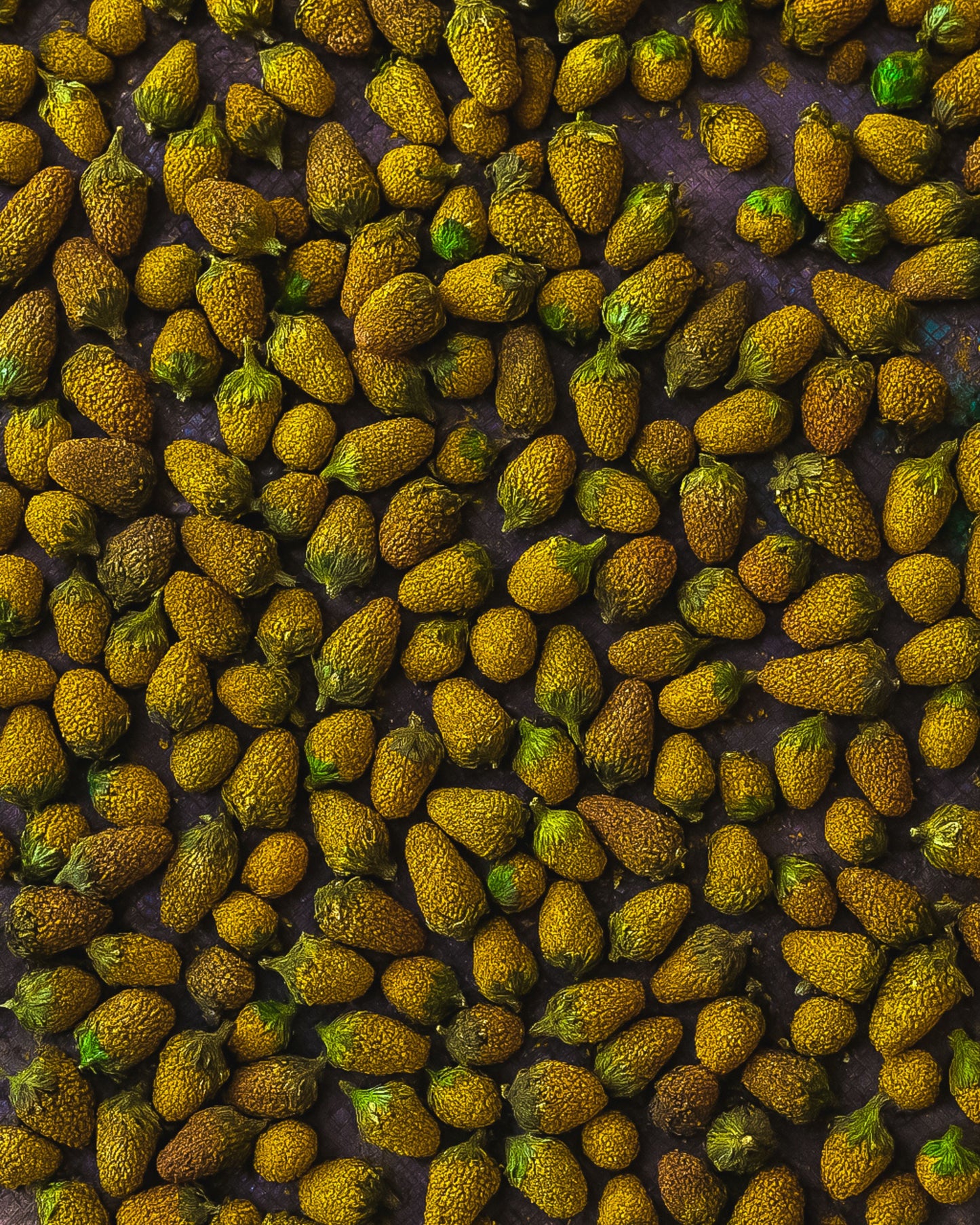
Instead, they consist of dense clusters of tiny yellow florets arranged into a rounded to elongated cone, often developing a reddish-brown centre as they mature.
These unique flower heads perform several important biological functions.
They attract pollinating insects, produce seeds, and ensure the continuation of the species.
From a culinary perspective, they also become the plant's most recognisable feature, valued by chefs for their striking appearance and remarkable sensory experience.
Flower production is influenced by numerous factors, including plant maturity, temperature, daylight, water availability, and overall plant health.
Under favourable tropical conditions, Acmella oleracea can continue producing new flower heads over an extended growing season.