

Part 1: Understanding the Common Names
Table of Contents
- Introduction
- What Is Acmella oleracea?
- What Does "Paracress" Mean?
- Why Is It Called the Toothache Plant?
- What Are Electric Daisy and Buzz Buttons?
- Conclusion to Part 1
Introduction
If you search online for information about Acmella oleracea, you may quickly become confused by the variety of names used to describe what appears to be the same plant. Depending on where you live, or whether you are reading a gardening guide, a scientific paper, a culinary blog, or a cosmetic ingredient label, you might encounter names such as Paracress, Toothache Plant, Electric Daisy, or Buzz Buttons.
At first glance, these names seem to describe different plants. In reality, they are all commonly associated with Acmella oleracea, although they originate from different cultures, traditions, and industries. Some names emphasise the plant's historical uses, others describe its unique sensory properties, while some have become popular through modern gastronomy and commercial marketing.
The challenge is that common names are informal. Unlike scientific names, they are not governed by international botanical rules. The same common name may refer to different species in different countries, while one species may have dozens of common names worldwide.
This is why botanists, researchers, and manufacturers rely on scientific nomenclature. The accepted botanical name, Acmella oleracea, provides a consistent and internationally recognised way of identifying the species regardless of language or location.
In this article, we will explore the origin of the plant's most popular common names, explain why they all became associated with Acmella oleracea, and discuss why scientific names remain the most reliable method of plant identification.
What Is Acmella oleracea?
Before examining the common names, it is important to understand the plant they describe.
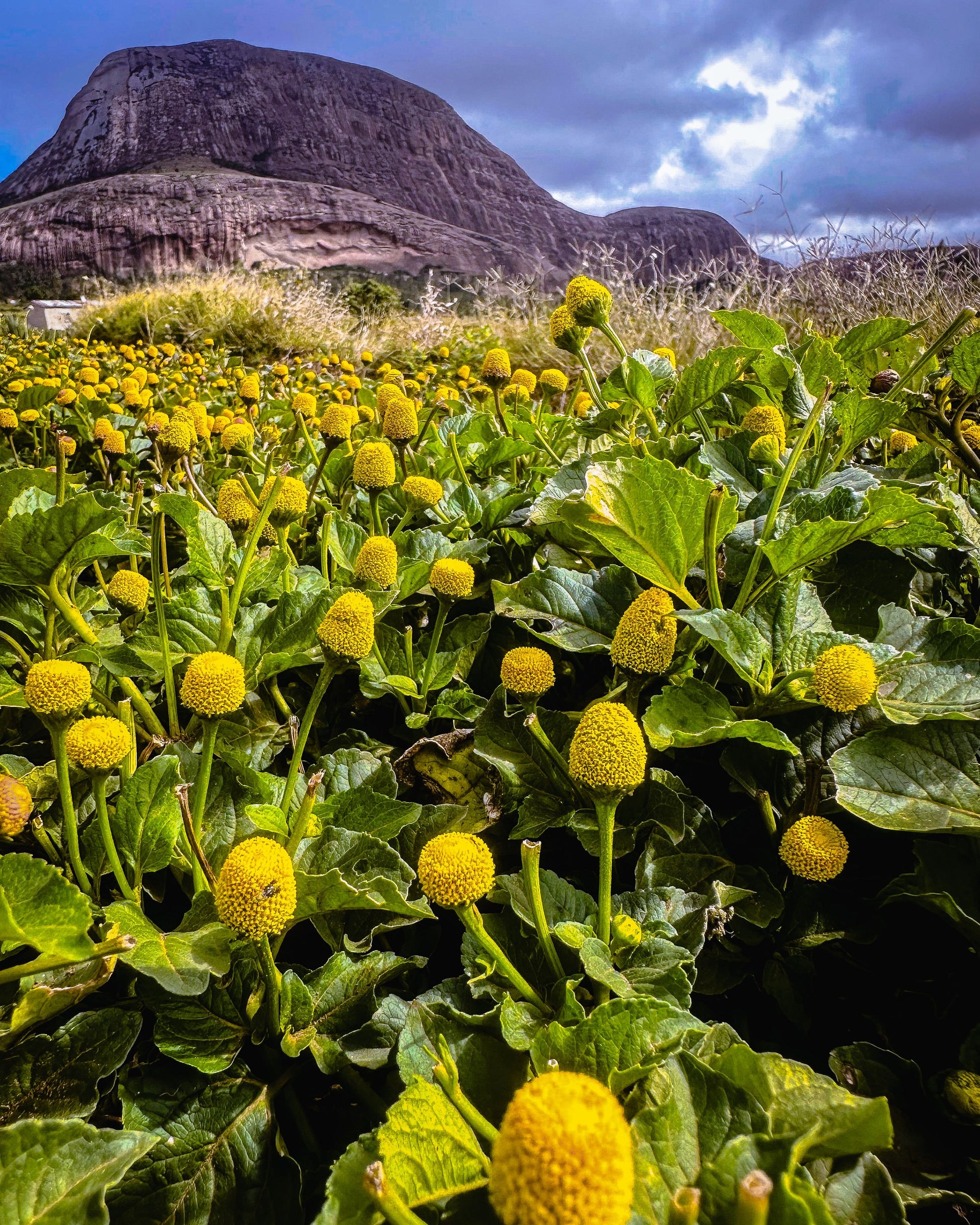
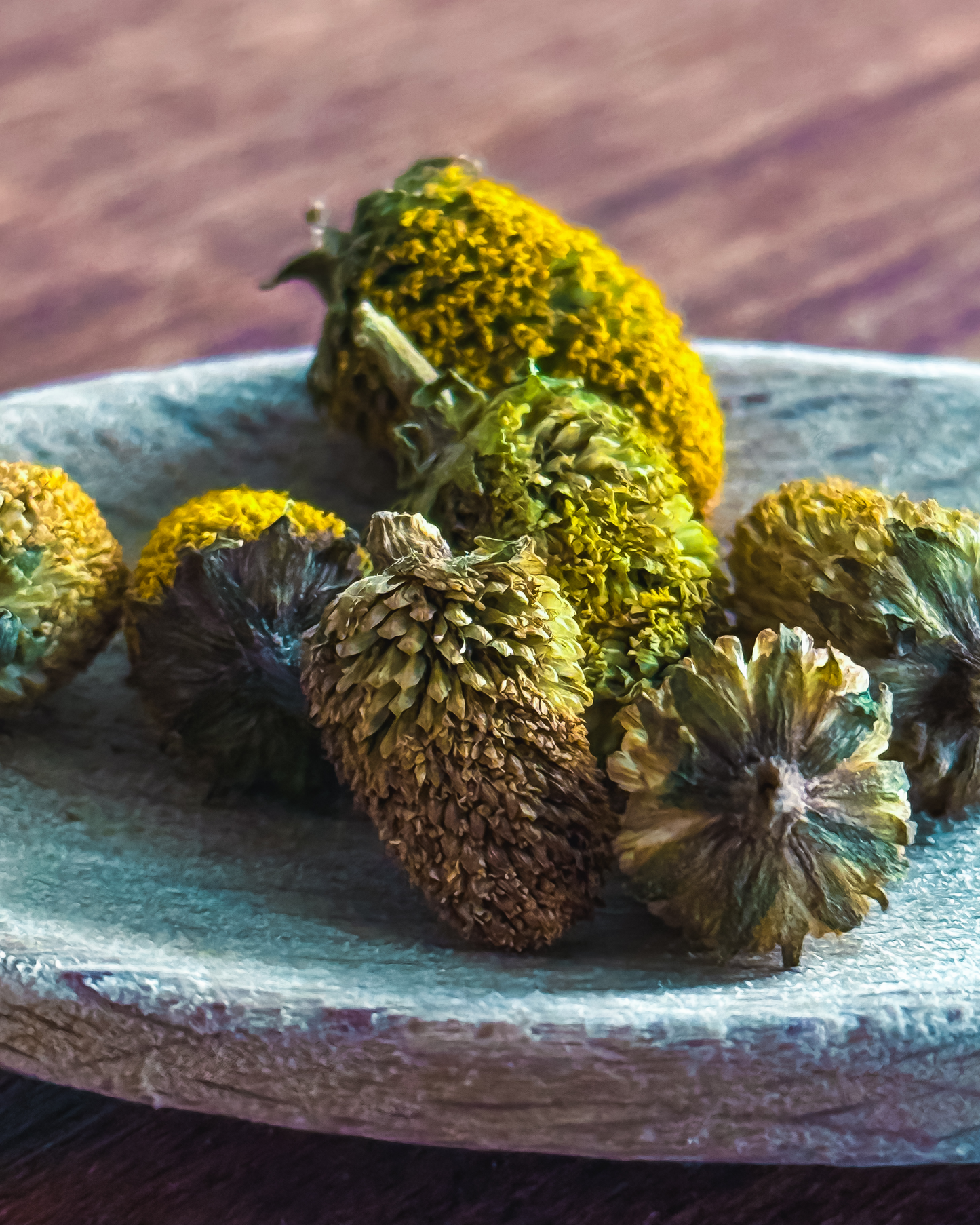
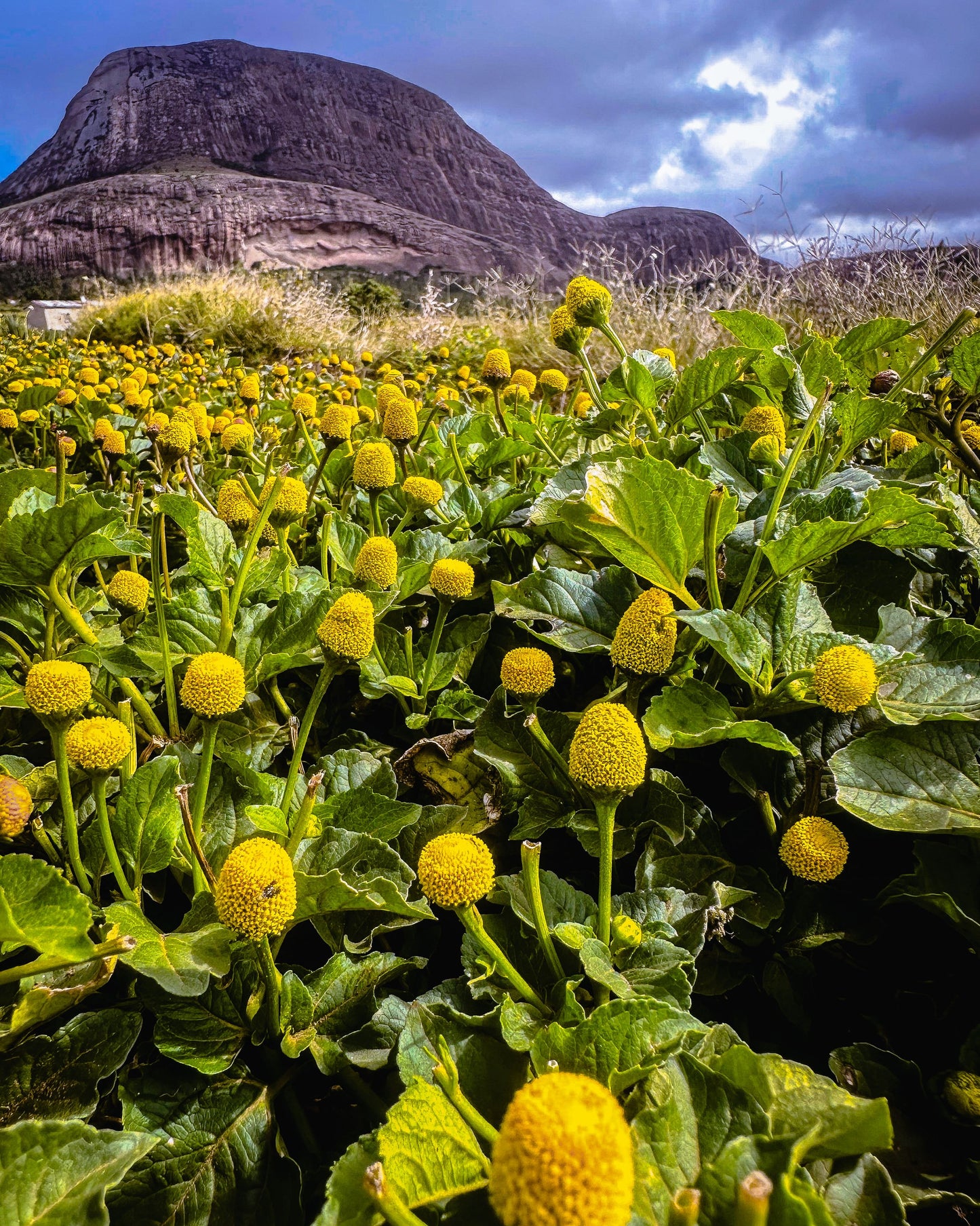
Acmella oleracea is a flowering herb belonging to the Asteraceae, or daisy family, one of the largest families of flowering plants in the world. It is cultivated in tropical and subtropical regions and is widely recognised for its bright yellow cone-shaped flower heads and the naturally occurring compound spilanthol.
Although it is commonly grown as an annual in temperate climates, Acmella oleracea behaves as a short-lived perennial in consistently warm environments.
Botanical Classification
| Rank | Classification |
|---|---|
| Kingdom | Plantae |
| Order | Asterales |
| Family | Asteraceae |
| Genus | Acmella |
| Species | Acmella oleracea |
This scientific classification allows botanists worldwide to identify the plant accurately regardless of local language or common naming traditions.
Distinctive Botanical Characteristics
Several features help distinguish Acmella oleracea from related species.
Healthy mature plants typically exhibit:
- opposite serrated leaves;
- smooth, branching green stems;
- compact bushy growth;
- bright yellow cone-shaped flower heads;
- small dark seeds (achenes).
Together, these characteristics form the basis for reliable botanical identification.
Why Is the Plant So Well Known?
Interest in Acmella oleracea spans several disciplines.
The plant is studied because of its:
- culinary applications;
- botanical chemistry;
- ornamental appearance;
- cultivation characteristics;
- naturally occurring spilanthol.
Its versatility has contributed to the development of numerous common names across different cultures.
What Does "Paracress" Mean?
One of the oldest and most widely recognised common names is Paracress.
The name is generally believed to refer to Pará, a state in northern Brazil where the plant has long been cultivated and incorporated into regional cuisine. In Brazilian cooking, particularly in the Amazon region, the plant is closely associated with the traditional ingredient known as jambu, which is valued for the unique tingling sensation it produces when eaten.
Over time, the English-language term Paracress became widely adopted in horticulture, herbal literature, and botanical commerce.
A Regional Name That Became International
Although its origins are regional, the name Paracress is now used globally.
Today it commonly appears in:
- gardening books;
- seed catalogues;
- botanical nurseries;
- cosmetic ingredient descriptions;
- herbal publications.
The popularity of the name illustrates how local traditions can become internationally recognised through cultivation and trade.
Why the Scientific Name Still Matters
While Paracress is widely understood, it remains an informal common name.
Common names:
- vary between countries;
- may refer to different species;
- have no internationally regulated definition.
For this reason, professional documentation almost always accompanies the common name with the botanical name Acmella oleracea.
Why Is It Called the Toothache Plant?
Another familiar name is Toothache Plant.
Unlike Paracress, which reflects geography, this name originates from traditional observations of the sensory experience produced when parts of the plant are chewed.
Fresh flower heads are known for producing:
- a tingling sensation;
- increased salivation;
- a cooling or buzzing feeling within the mouth.
These distinctive sensory effects inspired the historical common name.
A Traditional Name
The term Toothache Plant has appeared in ethnobotanical and horticultural literature for many years.
It reflects historical and cultural traditions rather than modern scientific classification.
Like many traditional plant names, it describes an observed characteristic rather than providing evidence of clinical efficacy.
Traditional Use Versus Scientific Evidence
It is important to distinguish between:
- traditional plant names;
- historical ethnobotanical uses;
- modern scientific research.
A traditional common name should not be interpreted as proof of a specific medical effect.
Instead, it reflects how communities historically described or recognised the plant.
Modern scientific studies investigate botanical compounds using controlled experimental methods that differ from traditional naming practices.
What Are Electric Daisy and Buzz Buttons?
The names Electric Daisy and Buzz Buttons are more recent and have become especially popular through horticulture, fine dining, and mixology.
Rather than referring to the plant's history or place of origin, these names describe the unusual sensory experience associated with consuming the flower heads.
Electric Daisy
The name Electric Daisy highlights the lively tingling sensation experienced when the fresh flowers are eaten.
It is frequently used by:
- gardeners;
- specialty nurseries;
- edible flower suppliers;
- culinary publications.
Despite the name, the plant is not a true ornamental daisy, although it belongs to the same botanical family.
Buzz Buttons
The term Buzz Buttons has become particularly popular in modern gastronomy.
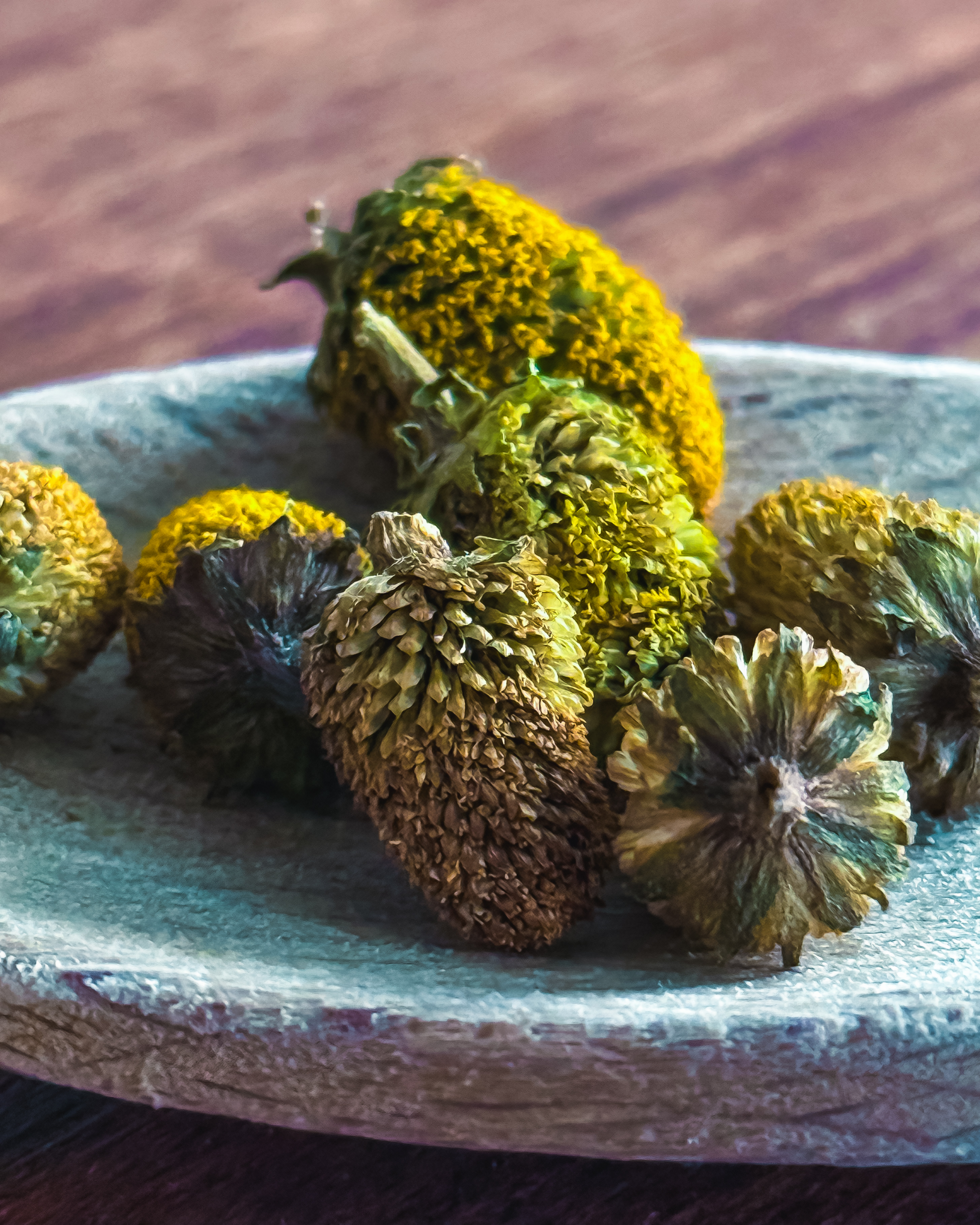
Unlike some other common names, it often refers specifically to the flower heads, which are commonly served in:
- cocktails;
- tasting menus;
- edible flower garnishes;
- contemporary cuisine.
In commercial settings, Buzz Buttons may describe either:
- the whole plant;
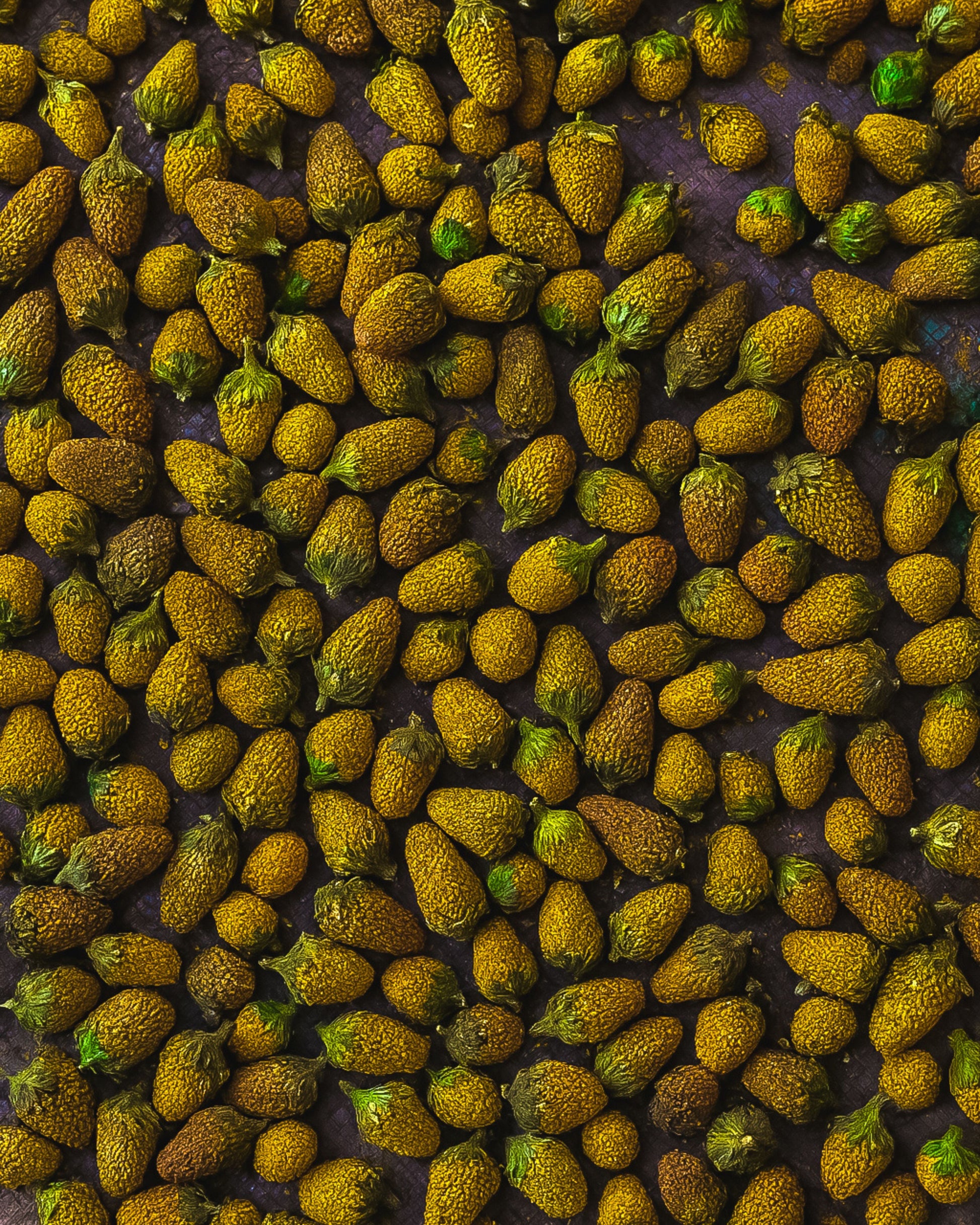
- harvested flower heads;
- packaged edible flowers.
The exact meaning therefore depends on context.
Why These Names Became Popular
The rise of modern gastronomy introduced Acmella oleracea to a much broader audience.
Chefs and mixologists adopted descriptive names that immediately communicate the plant's unusual sensory qualities.
As a result, Electric Daisy and Buzz Buttons have become internationally recognised, even though they are not botanical terms.
Why One Plant Can Have So Many Names
The diversity of common names reflects the plant's remarkable history.
Different communities emphasised different characteristics:
| Common Name | Origin |
|---|---|
| Paracress | Geographic and cultural association with Pará, Brazil |
| Toothache Plant | Traditional sensory observation |
| Electric Daisy | Descriptive culinary and horticultural name |
| Buzz Buttons | Modern gastronomic and commercial name |
Each name tells part of the story of Acmella oleracea, yet none replaces the precision of the scientific botanical name.
Conclusion to Part 1
The many names associated with Acmella oleracea illustrate how a single plant can become known in very different ways depending on culture, geography, tradition, and industry. Paracress reflects the plant's historical connection with northern Brazil, Toothache Plant originates from its distinctive oral sensation, while Electric Daisy and Buzz Buttons emerged through horticulture, fine dining, and modern culinary innovation. Although these names describe the same botanical species in most contexts, they are informal and can vary between regions and sources.
This is why the scientific name Acmella oleracea remains the most reliable method of identification. Unlike common names, it provides a universally recognised standard that supports scientific research, cultivation, product documentation, and international communication. In Part 2, we will examine whether these common names are always interchangeable, explore situations where they may refer to different plants or products, and explain why relying solely on common names can sometimes lead to confusion.

Part 2: Are the Names Always Interchangeable?
Table of Contents
- When the Names Refer to the Same Plant
- Why Common Names Can Be Misleading
- Plant Name vs Product Name
- Related Species and Common Confusion
- Historical Botanical Names
- Conclusion to Part 2
When the Names Refer to the Same Plant
In most gardening books, botanical references, culinary publications, and scientific resources, the names Paracress, Toothache Plant, Electric Daisy, and Buzz Buttons all refer to the same botanical species:
Acmella oleracea
This is the plant cultivated worldwide for:
- edible flowers;
- culinary applications;
- botanical extracts;
- ornamental gardens;
- scientific research.
For most readers, these common names describe different aspects of the same plant rather than different species.
For example:
- Paracress highlights the plant's cultural and geographical history.
- Toothache Plant reflects a traditional historical name.
- Electric Daisy describes the distinctive oral sensation associated with the flowers.
- Buzz Buttons has become popular in modern gastronomy and often refers specifically to the edible flower heads.
Although the emphasis differs, the underlying botanical species is usually the same.
Why Common Names Can Be Misleading
Despite their convenience, common names have important limitations.
Unlike scientific names, they are not regulated by international botanical rules.
This means that:
- one species may have dozens of common names;
- one common name may refer to several different species;
- names vary between countries;
- terminology changes over time.
Consequently, relying solely on a common name can sometimes create confusion.
Regional Differences
Plant names often develop independently in different parts of the world.
A gardener in Europe, a chef in North America, and a farmer in Brazil may all refer to the same plant using completely different terminology.
Likewise, the same common name may be applied to different local species depending on regional traditions.
This is why professional botanists rarely identify plants using common names alone.
Marketing Terminology
Commercial names are often chosen because they are memorable rather than botanically precise.
For example:
Buzz Buttons
is immediately recognisable in the hospitality industry.
Meanwhile,
Electric Daisy
is widely used in:
- restaurant menus;
- edible flower catalogues;
- horticultural marketing.
Neither term represents an official botanical classification.
Internet Confusion
Online information has amplified common-name confusion.
Many websites:
- copy older articles;
- repeat outdated terminology;
- mix historical and modern botanical names;
- omit the scientific name entirely.
Over time, inaccurate naming spreads across multiple websites, making it difficult for readers to determine which terminology is scientifically correct.
Plant Name vs Product Name
Another important distinction is the difference between naming a plant and naming a product.
These are not always the same.
The Botanical Species
The living plant is identified scientifically as:
Acmella oleracea
This name refers to the species itself regardless of how it is grown or used.
Commercial Products
Commercial products may describe only one part of the plant.
Examples include:
- fresh flower heads;
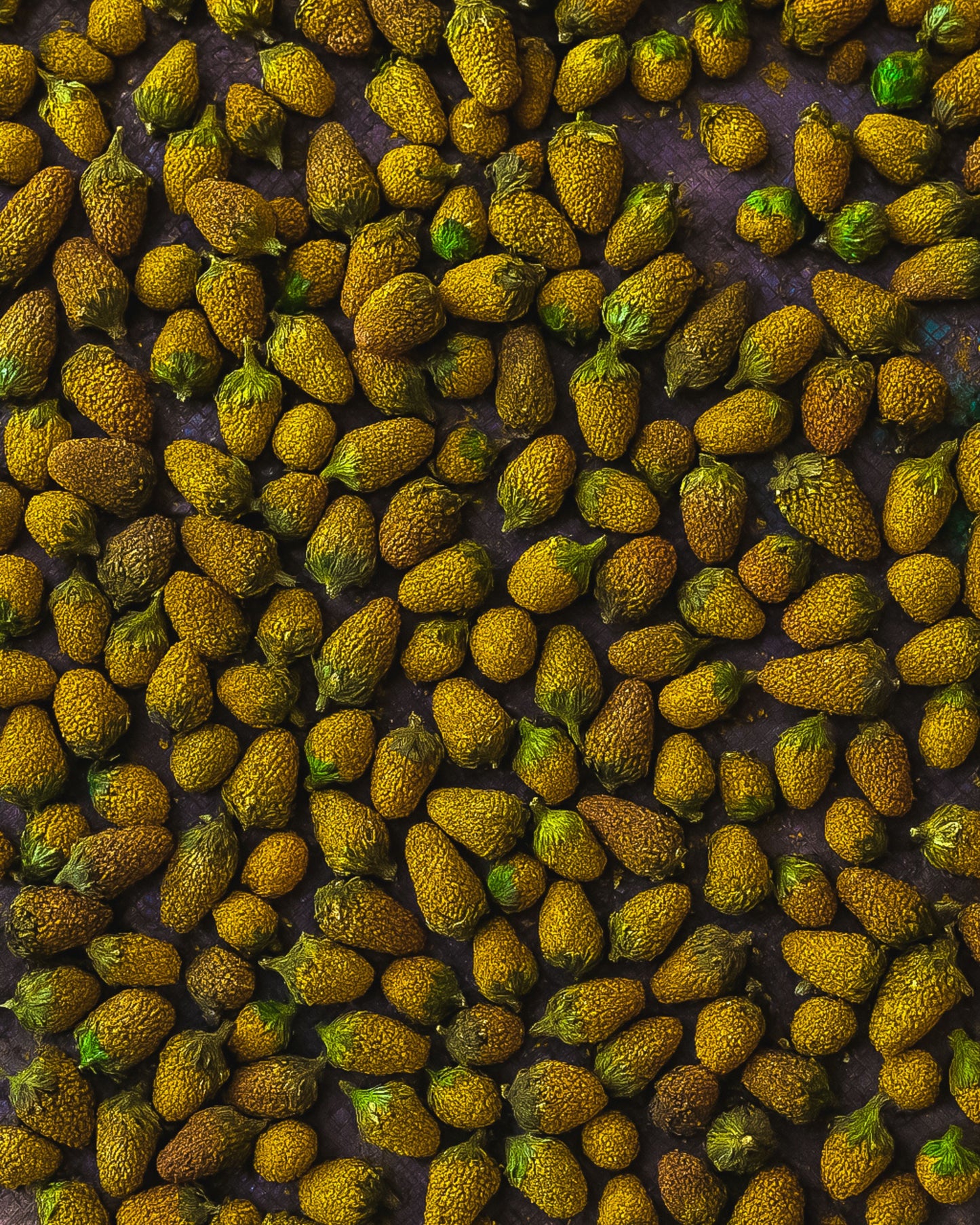
- dried flowers;
- seeds;
- leaf powder;
- botanical extracts;
- cosmetic ingredients.
A product marketed as Buzz Buttons may therefore contain only harvested flower heads rather than the entire plant.
Culinary Terminology
Restaurants frequently describe the edible flowers as:
- Buzz Buttons;
- Electric Daisies.
This terminology immediately communicates the sensory dining experience without requiring customers to recognise the botanical name.
From a botanical perspective, however, these flowers are simply the flowering heads of Acmella oleracea.
Related Species and Common Confusion
Another reason for confusion is that Acmella oleracea belongs to a genus containing several closely related species.
Although these relatives may resemble one another, they are not necessarily identical.
Some species share:
- yellow flower heads;
- similar leaves;
- branching growth habits;
- tropical distributions.
As a result, photographs alone are sometimes insufficient for accurate identification.
Why Botanists Use Multiple Characteristics
Professional identification relies on several diagnostic features.
These include:
- leaf arrangement;
- flower structure;
- seed morphology;
- stem characteristics;
- overall growth habit;
- botanical measurements.
Examining the complete plant provides much greater confidence than relying on appearance alone.
Why Scientific Names Matter
Using the accepted botanical name reduces ambiguity.
Instead of relying on regional terminology, researchers and manufacturers can communicate clearly using:
Acmella oleracea
This consistency is particularly important for:
- scientific publications;
- botanical authentication;
- cultivation records;
- ingredient sourcing;
- quality assurance.
Historical Botanical Names
Confusion surrounding common names is often compounded by historical scientific names.
Readers may encounter:
- Spilanthes acmella
- Spilanthhes oleracea
- Acmella spilanthes
alongside the currently accepted name:
Acmella oleracea
These historical names arise from botanical revisions rather than representing different commercial plants.
Understanding the difference between common names and scientific synonyms helps readers interpret older publications more accurately.
Common Names and Scientific Names Are Different
It is important not to confuse these two concepts.
Common names
Examples include:
- Paracress
- Buzz Buttons
- Toothache Plant
- Electric Daisy
These names vary according to language and culture.
Scientific names
Examples include:
- Acmella oleracea
- historical synonyms found in older literature.
These follow internationally recognised botanical rules.
The two naming systems serve different purposes and should not be interpreted in the same way.
When Should You Be Careful?
Most of the time, using common names is perfectly acceptable in everyday conversation.
However, additional care is advisable when:
- purchasing seeds;
- buying botanical extracts;
- reading scientific papers;
- comparing research studies;
- manufacturing cosmetic ingredients;
- sourcing raw botanical material.
In these situations, the scientific name provides far greater certainty than a common name alone.
A Simple Comparison
| Common Name | Usually Refers To |
|---|---|
| Paracress | Acmella oleracea |
| Toothache Plant | Acmella oleracea |
| Electric Daisy | Acmella oleracea |
| Buzz Buttons | Usually the flower heads of Acmella oleracea, sometimes the whole plant |
| Acmella oleracea | Accepted scientific name of the species |
This table illustrates why scientific nomenclature remains the most reliable method of plant identification.
Conclusion to Part 2
In most situations, Paracress, Toothache Plant, Electric Daisy, and Buzz Buttons all refer to Acmella oleracea, the accepted scientific name for the species cultivated worldwide for culinary, botanical, ornamental, and research purposes. However, these common names are informal and context-dependent. They may vary between countries, industries, or historical sources, and commercial products often use them differently depending on whether they describe the whole plant, fresh flower heads, dried material, or botanical extracts.
Understanding the distinction between common names, product names, and scientific nomenclature helps prevent confusion when reading research papers, purchasing seeds, sourcing botanical ingredients, or interpreting product labels. While common names are useful for everyday communication, the scientific name Acmella oleracea provides the consistency and precision required for accurate botanical identification. In Part 3, we will explore how growers, researchers, manufacturers, and consumers can verify that they are working with authentic Acmella oleracea, examine supplier documentation and product labels, and answer the most frequently asked questions about the plant's many names.
Part 3: How to Verify What You Are Buying or Growing
Table of Contents
- Check the Botanical Name
- Check the Plant Part
- Evaluate Supplier Documentation
- Field Identification Checklist
- Frequently Asked Questions
- Final Scientific Perspective
- Key Takeaways
Check the Botanical Name
Whether you are purchasing seeds, fresh flowers, dried botanical material, cosmetic ingredients, or botanical extracts, the first step is always to verify the scientific name.
Although products may be marketed as Buzz Buttons, Electric Daisy, Paracress, or Toothache Plant, the botanical name should clearly identify the species.
For the edible species discussed throughout this article, the accepted scientific name is:
Acmella oleracea
Using the botanical name eliminates much of the confusion created by regional common names and historical terminology.
Why Scientific Names Matter
Scientific names provide a universal language.
Unlike common names, they remain consistent across:
- countries;
- languages;
- scientific publications;
- cultivation records;
- quality documentation.
This consistency helps ensure that growers, researchers, manufacturers, and consumers are referring to the same species.
Look Beyond the Front Label
Many commercial products display only the marketing name on the front of the packaging.
For example:
- Buzz Buttons
- Electric Daisy
- Paracress
The botanical name is often printed elsewhere on the packaging or in the product specifications.
Checking this information helps confirm exactly which plant is being supplied.
Check the Plant Part
Even after confirming the botanical species, it is important to determine which part of the plant is being sold.
Different products may contain:
- whole plants;
- fresh flower heads;
- dried flowers;
- leaves;
- seeds;
- botanical extracts.
These materials are not interchangeable.
Understanding which plant part is being used is essential for cultivation, culinary applications, cosmetic formulation, and botanical research.
Whole Plant
Garden centres and nurseries usually sell:
- seedlings;
- potted plants;
- young transplants.
These are intended for cultivation rather than immediate processing.
Flower Heads
Buzz Buttons served in restaurants or supplied to cocktail bars are usually the harvested flower heads.
These are the plant's most recognisable feature and are commonly used in:
- fine dining;
- edible flower garnishes;
- molecular gastronomy;
- craft cocktails.
Leaves
Fresh leaves are consumed in some regional cuisines and may also appear in botanical research.
Their appearance differs noticeably from the mature flower heads.
Botanical Extracts
Cosmetic ingredients frequently contain botanical extracts rather than whole plant material.
Product documentation should specify:
- extraction method;
- plant part;
- botanical identity.
This information contributes to transparency and traceability.
Evaluate Supplier Documentation
Reliable suppliers provide considerably more information than simply a product name.
Professional documentation allows buyers to verify the identity and quality of the botanical material.
Botanical Identity
Documentation should clearly identify:
Acmella oleracea
rather than relying only on common names.
Plant Part
A supplier should specify whether the material consists of:
- flowers;
- leaves;
- aerial parts;
- whole plant;
- extract.
This information is particularly important for manufacturers and formulators.
Batch Number
Every production batch should have a unique batch number.
Batch identification supports:
- traceability;
- quality control;
- production records;
- analytical verification.
Country of Origin
Origin information helps document the production history of botanical ingredients.
Depending on the supplier, documentation may identify:
- cultivation country;
- harvest location;
- production facility.
Certificate of Analysis
Professional suppliers often provide a Certificate of Analysis (CoA).
A CoA may include:
- botanical identification;
- batch number;
- analytical specifications;
- quality testing;
- laboratory results.
These documents support objective quality assessment.
Field Identification Checklist
If you are growing or observing the plant, several visible characteristics help confirm identification.
Healthy Acmella oleracea typically displays:
✅ Opposite leaf arrangement
✅ Bright green serrated leaves
✅ Smooth herbaceous stems
✅ Compact branching growth
✅ Upright flower stalks
✅ Bright yellow cone-shaped flower heads
✅ Composite flower heads composed of numerous tiny florets
✅ Small dark achenes after flowering
Examining several characteristics together provides much greater confidence than relying on a single feature.
Frequently Asked Questions
Are Paracress and Buzz Buttons the same?
In most culinary, horticultural, and botanical contexts, both names refer to Acmella oleracea. However, "Buzz Buttons" often describes the edible flower heads specifically, while "Paracress" usually refers to the entire plant.
Is Toothache Plant a medical term?
No.
Toothache Plant is a traditional common name based on historical usage and the characteristic tingling sensation experienced when parts of the plant are chewed. It is not a medical or scientific classification.
Is Electric Daisy a different species?
No.
Electric Daisy is another common name commonly used for Acmella oleracea, particularly in horticulture and modern gastronomy.
Why do some products use different names?
Manufacturers often choose names that are familiar to their customers or appropriate for a particular market.
Restaurant menus, gardening catalogues, cosmetic products, and botanical suppliers may each favour different terminology while referring to the same species.
Which name should appear on professional documentation?
For scientific, regulatory, and quality assurance purposes, the accepted botanical name:
Acmella oleracea
provides the clearest identification.
Common names may be included as supplementary information but should not replace the scientific name.
How can I confirm that I have genuine Acmella oleracea?
The best approach combines several sources of information:
- scientific botanical name;
- plant morphology;
- supplier documentation;
- Certificate of Analysis where applicable;
- reliable cultivation records.
No single characteristic should be used in isolation.
Why Scientific Names Will Always Be More Reliable
Common names are valuable because they make plants easier to recognise and discuss in everyday language.
However, they have limitations.
They may:
- vary between countries;
- change over time;
- be reused for different species;
- describe products rather than plants.
Scientific names avoid these problems by providing an internationally recognised system that remains consistent across research, agriculture, commerce, and regulation.
Final Scientific Perspective
The names Paracress, Toothache Plant, Electric Daisy, and Buzz Buttons all tell part of the story of Acmella oleracea. Some reflect the plant's cultural origins, others describe its distinctive sensory characteristics, while newer names have emerged through horticulture, gastronomy, and commercial marketing. In most modern contexts, these common names refer to the same botanical species, but because they are informal, their meaning can vary depending on region, industry, and historical usage.
For this reason, the accepted scientific name, Acmella oleracea, remains the most reliable way to identify the plant. Unlike common names, it provides a universal standard recognised by botanists, researchers, growers, manufacturers, and regulatory authorities worldwide. When combined with information about the plant part, supplier documentation, and botanical characteristics, the scientific name supports accurate identification, traceability, and quality assurance throughout the entire supply chain.
Whether you are cultivating the plant, purchasing seeds, formulating cosmetic ingredients, sourcing botanical extracts, or simply enjoying Buzz Buttons in a culinary setting, understanding the relationship between common names and scientific nomenclature helps eliminate confusion and promotes clear, evidence-based communication. Common names make the plant approachable, but scientific names ensure everyone is talking about the same species.
Key Takeaways
- Paracress, Toothache Plant, Electric Daisy, and Buzz Buttons are all widely used common names for Acmella oleracea in most culinary, horticultural, and botanical contexts.
- Common names are informal and may vary by country, language, or industry, while Acmella oleracea is the internationally accepted scientific name.
- "Buzz Buttons" often refers specifically to the edible flower heads, whereas "Paracress" generally describes the whole plant.
- When buying seeds, plants, extracts, or cosmetic ingredients, always verify the botanical name, plant part, batch information, and supplier documentation.
- Accurate botanical identification supports scientific research, cultivation, product quality, regulatory compliance, and transparent communication across the botanical supply chain.