

Part 1: From Seed to the First Flower Bud
One of the most practical questions when growing Acmella oleracea is simple:
When will it flower?
The answer is more complicated than counting a fixed number of days after sowing.
Acmella oleracea, widely known as Buzz Buttons, Paracress, Electric Daisy and Toothache Plant, develops through a sequence of biological stages. A seed must germinate, establish a root system, produce leaves and branches, reach sufficient developmental maturity and eventually begin reproductive growth.
How quickly this happens can vary.
Light, temperature, water, nutrition, root conditions, genetics, transplanting and other environmental factors can influence development. Two plants sown on the same day may therefore reach their first visible flower buds at different times.
This makes developmental stage more useful than a rigid calendar.
A practical growth sequence is:
Seed → Germination → Emergence → Seedling → Vegetative Growth → Branching → Floral Transition → Flower Bud Formation → Flowering
The central principle of Part 1 is:
Acmella flowering should be understood as a developmental process rather than a fixed countdown from sowing. Plant age and plant developmental stage are related, but they are not the same thing.
1. Start with the Correct Plant
Before discussing flowering, botanical identity matters.
The accepted scientific name is:
Acmella oleracea (L.) R.K.Jansen
Older literature and commercial material may use the synonym:
Spilanthes oleracea L.
Common names include:
- Buzz Buttons
- Electric Daisy
- Paracress
- Toothache Plant
- Eyeball Plant
Common names are useful, but they are not precise botanical identification.
2. Why Botanical Identity Matters for Flowering
Different plant species can have different:
- growth habits
- flower structures
- environmental responses
- developmental timelines
A flowering schedule attributed to another Acmella species should not automatically be presented as a precise flowering schedule for Acmella oleracea.
3. There Is No Biological Stopwatch Inside the Plant
Garden guides often describe flowering in terms of a fixed number of days.
For example:
Day 1: sow
Day X: flower
That format is convenient, but plants do not develop according to a perfectly fixed clock.
4. Calendar Time and Biological Development Are Different
Two plants can be exactly the same chronological age while being at different developmental stages.
One may already be branching strongly.
Another may still be relatively small.
5. Plant Age
Plant age describes how much chronological time has passed since a defined starting point.
But even this requires definition.
Does age begin from:
- sowing?
- germination?
- emergence?
- transplanting?
Without defining the starting point, statements such as "flowers after X days" can be ambiguous.
6. Developmental Stage
Developmental stage describes what the plant is actually doing biologically.
Examples include:
- germinating
- producing true leaves
- branching
- initiating flower buds
- flowering
- developing seeds
This is often more informative than age alone.
7. The First Important Distinction
Remember:
Plant age ≠ developmental stage
Age tells us how long the plant has existed according to a defined clock.
Stage tells us how far development has progressed.
8. Why Flowering Time Varies
The transition towards flowering can potentially be influenced by several interacting factors, including:
- genetics
- temperature
- light
- water
- nutrition
- root health
- growing medium
- transplant stress
- pests and disease
- general plant health
This makes universal flowering predictions difficult.
9. Genetics Comes First
Plants are biological organisms, not identical manufactured units.
Seed-grown plants can show variation.
Even when grown under similar conditions, individual plants may differ in:
- growth rate
- branching
- size
- flowering time
10. Seed Source Can Matter
Different seed lots may differ in:
- genetic background
- viability
- vigour
- storage history
These factors can influence early crop establishment.
11. Seed Quality and Flowering Are Connected Indirectly
A vigorous seedling may establish more quickly than a weak one.
But seed appearance alone does not tell us exactly when that plant will flower.
12. Germination Is the Beginning of Active Seedling Development
Germination begins when a viable seed resumes active growth under suitable conditions.
Water is absorbed, metabolic processes become active and the embryo begins developing.
13. Sowing Is Not Germination
These terms should not be confused.
Sowing means placing the seed into its growing environment.
Germination is the biological process occurring within a viable seed.
A seed can be sown without successfully germinating.
14. Germination Is Not Emergence Either
A seed can begin germinating before the young shoot becomes visible above the growing medium.
Therefore:
Sowing → Germination → Emergence
represents three different concepts.
15. Emergence Is the Grower's First Obvious Milestone
For practical cultivation, emergence is when the young seedling becomes visible above the substrate or soil surface.
It is easier to observe than the earliest internal stages of germination.
16. Why This Matters for Flowering Records
If one grower measures flowering from sowing while another measures from emergence, their reported timelines are not directly equivalent.
The starting point matters.
17. A Better Record
Instead of simply writing:
Flowered after X days
a cultivation record can specify:
X days from sowing
or:
X days from emergence
This makes the observation more useful.
18. Germination Requires the Right Environment
A viable Acmella seed still requires suitable conditions.
Important factors include:
- moisture
- oxygen
- temperature
- an appropriate germination environment
19. Too Little Water Can Prevent Progress
Seeds require water for germination.
If the growing medium becomes excessively dry, germination or early seedling establishment may be impaired.
20. Too Much Water Can Also Create Problems
A saturated growing medium may restrict oxygen around the seed and young roots.
Water is essential.
Waterlogging is not.
21. Oxygen Matters from the Beginning
Respiration is essential to living plant tissues.
A growing medium should therefore provide both:
moisture
and:
air-filled pore space.
This principle remains important throughout the plant's life.
22. Temperature Influences Development
Biological processes respond to temperature.
Cooler conditions may slow some aspects of development, while unsuitable heat can also create stress.
23. Avoid One Universal Germination Temperature
Unless a specific temperature range is supported for the exact cultivation context, it is better to avoid presenting one narrow number as the only correct condition.
Real growing environments fluctuate.
24. Emergence Does Not Mean the Plant Is Ready to Flower
A newly emerged Acmella seedling has much more development ahead.
It must establish:
- roots
- leaves
- stems
- growing points
before substantial reproductive growth becomes possible.
25. Cotyledons
The first visible leaf-like structures on a seedling are typically the cotyledons.
These are embryonic structures associated with the seed.
They should not automatically be counted as mature true leaves.
26. True Leaves Follow
After establishment, the seedling begins producing leaves with morphology increasingly characteristic of Acmella oleracea.
These are true leaves.
27. Acmella Leaf Morphology
Healthy Acmella oleracea leaves are generally:
- green
- ovate
- visibly veined
- serrated along the margins
Natural variation occurs with plant age, environment and leaf position.
28. Leaf Identification Can Support Botanical Assessment
As true leaves develop, the plant becomes easier to evaluate morphologically than at the earliest seedling stage.
But one leaf alone may not provide complete botanical identification.
29. Seedling Establishment
A seedling becomes increasingly independent as:
- roots expand
- leaves develop
- photosynthetic capacity increases
This is the foundation for later vegetative growth.
30. Root Development Happens Out of Sight
Much of the plant's early development is hidden below the surface.
Roots expand through the growing medium in search of:
- water
- mineral nutrients
- physical space
31. Healthy Roots Support Later Flowering
Flower production depends on a functioning plant.
A healthy root system supports the water and nutrient acquisition needed for:
- leaf development
- branching
- reproductive growth
32. Fertiliser Does Not Make a Seedling Instantly Mature
Adding more fertiliser cannot bypass developmental stages.
A seedling still needs time to develop.
33. More Nitrogen Does Not Create Instant Flowers
Nitrogen supports essential plant processes and vegetative growth.
But high nitrogen supply is not a flowering switch.
34. More Phosphorus Does Not Create Instant Flowers Either
Phosphorus is an essential plant nutrient.
However:
phosphorus ≠ flowering hormone
Applying excessive phosphorus does not turn an immature Acmella seedling into a flowering plant.
35. Early Growth Builds the Plant's Photosynthetic System
Leaves capture light and support photosynthesis.
The resulting carbon compounds contribute to:
- new leaves
- roots
- stems
- later reproductive structures
36. Light Becomes Increasingly Important
As the seedling expands, sufficient light supports compact, productive vegetative development.
Poor light can alter plant architecture.
37. Low Light Can Produce Weak Growth
Under inadequate light, plants may become:
- elongated
- weak
- poorly branched
depending on the conditions.
This can affect later plant development.
38. Fertiliser Cannot Replace Light
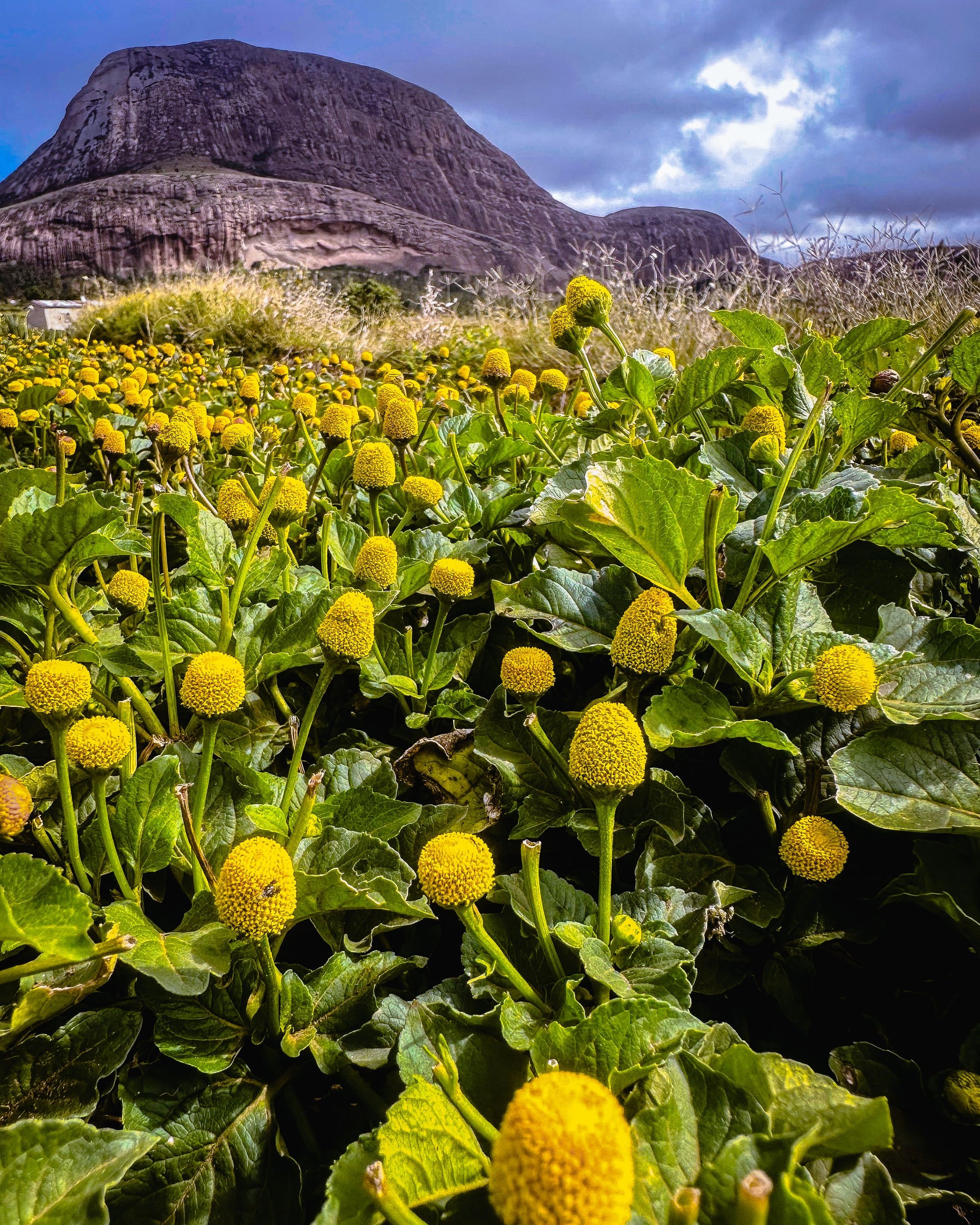
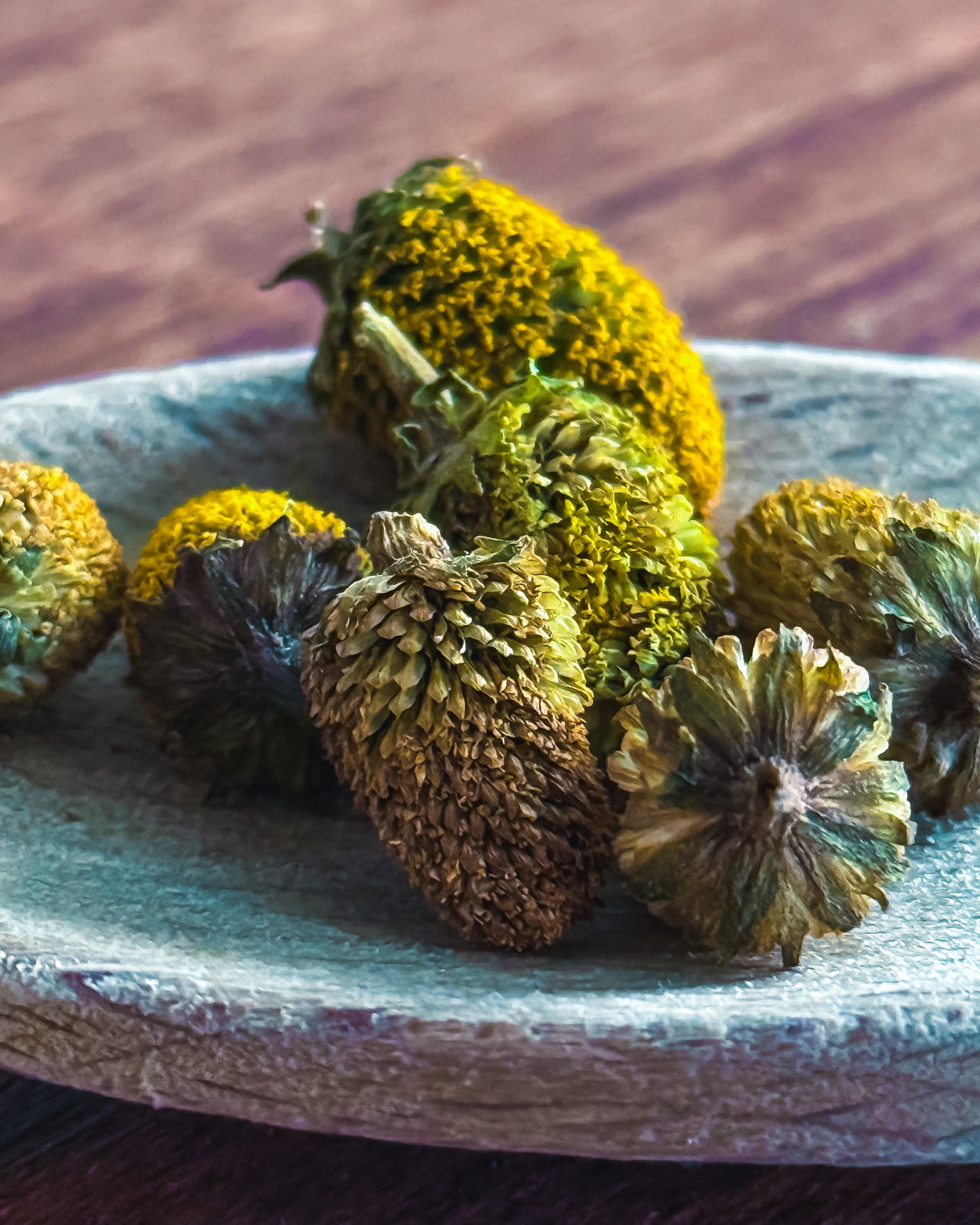
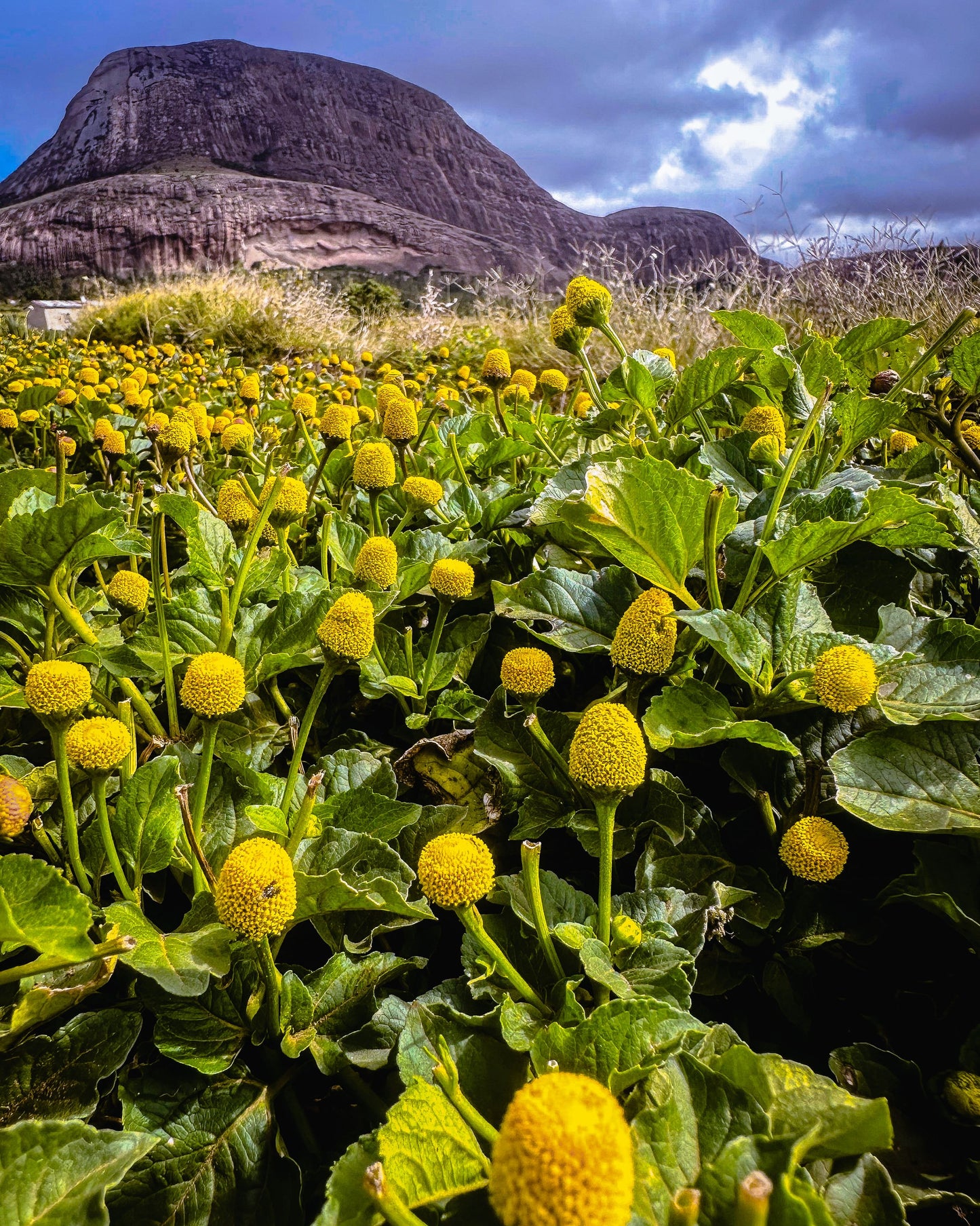
A heavily fertilised plant growing under inadequate light still has inadequate light.
This distinction prevents a common cultivation mistake.
39. Light Intensity and Photoperiod Are Different
These concepts should not be confused.
Light intensity concerns how much light reaches the plant.
Photoperiod concerns the duration of light and darkness within the daily cycle.
40. Photoperiod and Flowering
Some plant species use day length as an important flowering signal.
They may be described as:
- short-day
- long-day
- day-neutral
But such labels should be used carefully for Acmella oleracea unless supported by appropriate species-specific evidence.
41. Avoid Overconfident Photoperiod Rules
It is tempting to write:
"Acmella flowers when days reach exactly X hours."
Without strong evidence, this creates false precision.
Flowering should instead be considered in the context of the complete growing environment.
42. Temperature and Light Interact
A plant growing under strong light but unsuitable temperature conditions may develop differently from one receiving similar light under favourable temperatures.
Environmental variables rarely act completely independently.
43. Water Influences Development
Water supports:
- cell expansion
- nutrient transport
- photosynthesis
- general metabolism
Both chronic shortage and chronic excess can impair growth.
44. Drought Is Not a Reliable Flowering Technique
Stress can alter plant development.
But deliberately withholding water should not be promoted as a universal method for forcing Acmella to flower.
45. Stress Is Not the Same as Maturity
A stressed plant may become:
- smaller
- damaged
- less productive
Stress does not automatically move the plant efficiently towards reproductive maturity.
46. Stress Is Also Not a Potency Strategy
A common botanical misconception is that stressing plants automatically creates more secondary metabolites.
That relationship cannot be assumed for spilanthol.
47. Vegetative Growth Begins to Accelerate
Once established, Acmella plants begin producing increasing amounts of:
- foliage
- stems
- branches
This is the vegetative growth phase.
48. What Is Vegetative Growth?
Vegetative growth primarily involves the plant structures used for:
- support
- photosynthesis
- water acquisition
- nutrient acquisition
These include roots, stems and leaves.
49. Vegetative Growth Is Not Wasted Growth
For a crop valued for flowers, it might be tempting to view leaves and stems as irrelevant.
They are not.
They create the biological infrastructure supporting flower production.
50. Leaves Supply Photosynthetic Capacity
Healthy foliage allows the plant to capture light and support continued development.
A plant cannot be understood by looking only at its flowers.
51. Stems Provide Structure
Acmella develops branching stems that support leaves and flower heads.
Plant architecture therefore influences the number of potential flowering sites.
52. Branching Becomes Important
As vegetative development continues, branching increases the complexity of the canopy.
More branches can create more potential sites for flower development.
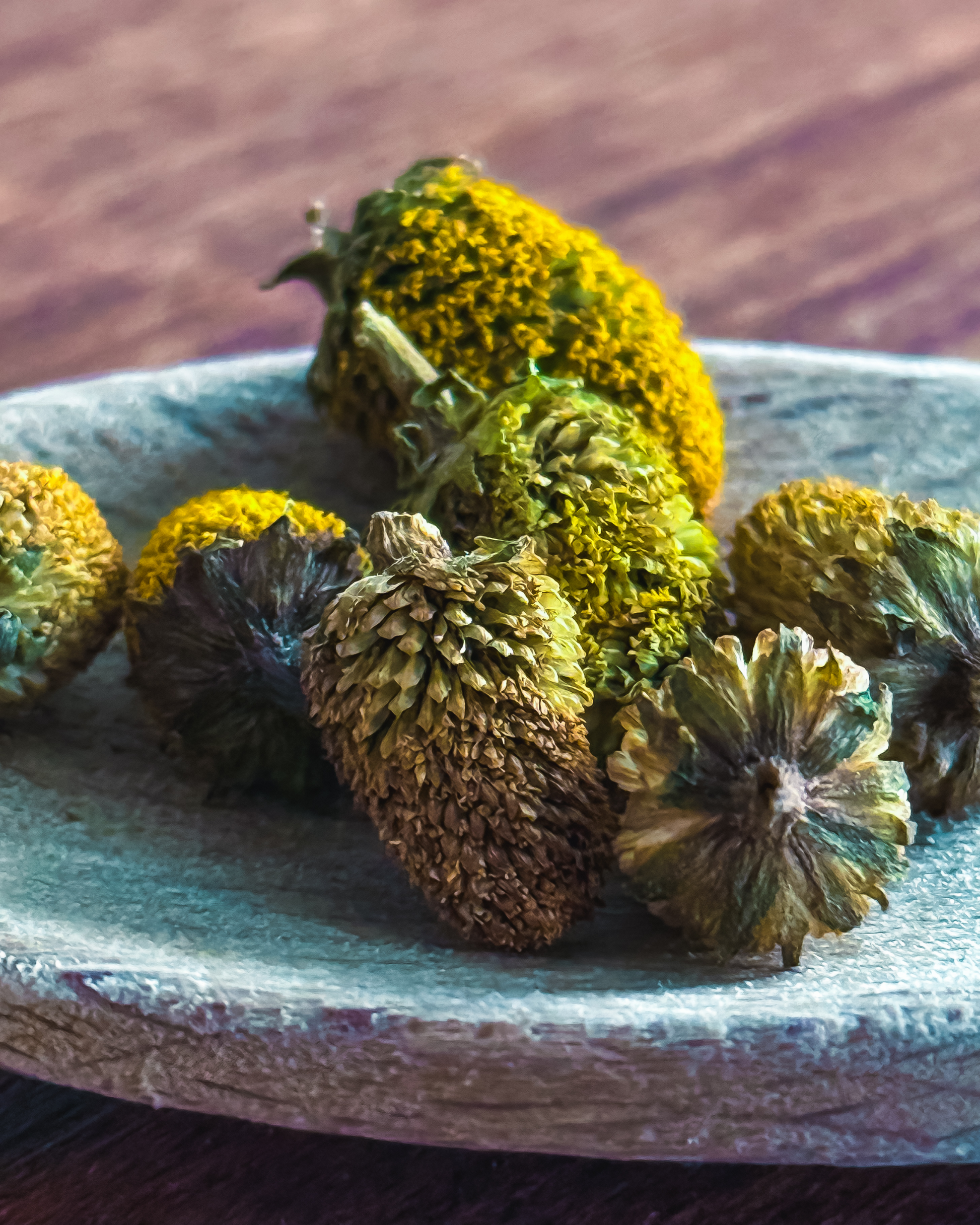
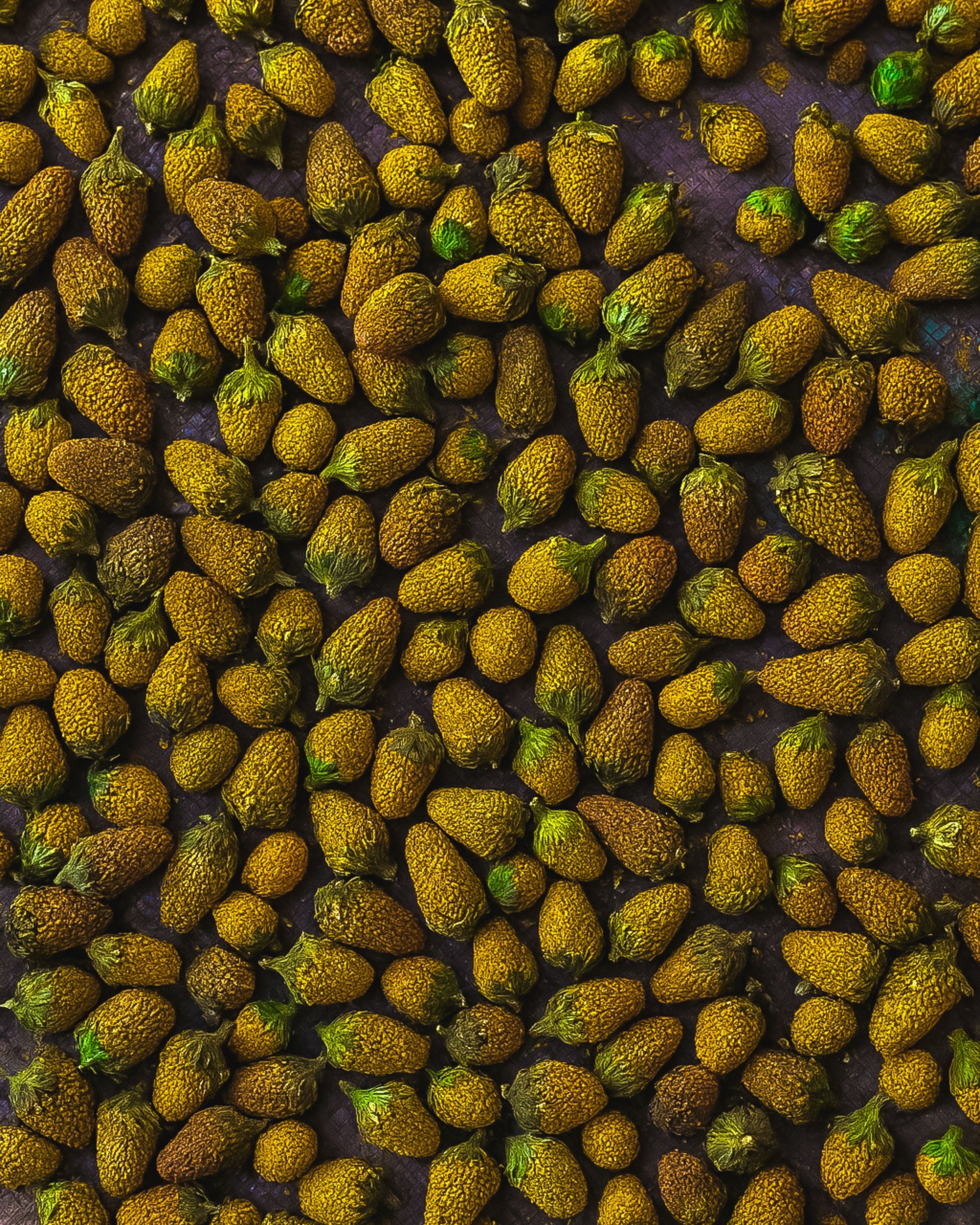
53. More Branches Do Not Guarantee More Harvestable Flowers
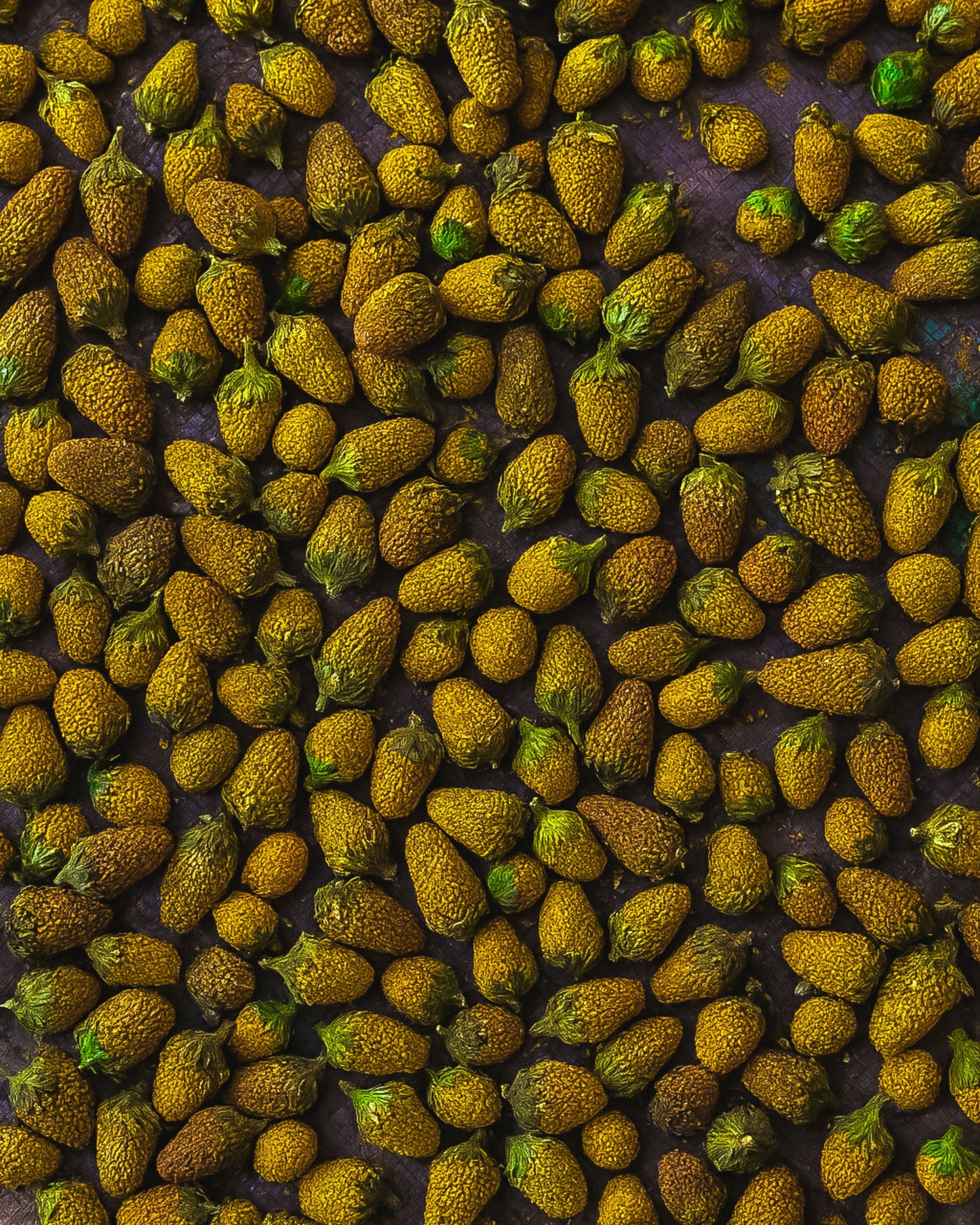
Branching creates potential.
Actual flower production still depends on:
- plant maturity
- environmental conditions
- health
- resource availability
54. Branch Number Is Not a Spilanthol Measurement
A heavily branched plant is not automatically chemically stronger.
Plant architecture and chemical concentration are different measurements.
55. Plant Height Is Also Limited as a Quality Indicator
A taller plant may simply have:
- longer internodes
- different light exposure
- different genetics
Height alone does not define quality.
56. Compact Plants Can Still Be Productive
Likewise, a shorter plant should not automatically be classified as inferior.
Growth habit must be interpreted in context.
57. Internodes
An internode is the stem section between nodes.
Changes in internode length influence overall plant architecture.
58. Nodes
Nodes are points on stems where leaves, branches or reproductive structures can develop.
They are useful landmarks when observing plant growth.
59. Growing Points
Active growing regions produce new plant structures.
As Acmella develops, these growing points contribute to:
- leaves
- branches
- eventually reproductive structures
60. Branching Expands the Flowering Framework
A mature branching plant creates multiple positions from which flower heads can eventually develop.
This is one reason healthy vegetative development matters.
61. Root Space Can Influence Growth
Roots confined to a small volume may encounter:
- limited water reserves
- rapidly changing nutrient concentrations
- physical restriction
Container size therefore becomes part of plant development.
62. Root Restriction Is Not a Reliable Flowering Technique
Some growers deliberately restrict roots in certain crops.
For Acmella, it should not be assumed that severe root restriction improves flowering.
It may simply reduce plant performance.
63. Repotting Can Change Growth
Moving an Acmella plant into a larger container can provide:
- more root volume
- greater water-buffering capacity
- more growing medium
The plant may respond with renewed growth.
64. Repotting Can Also Temporarily Slow Visible Growth
Root disturbance can temporarily affect the plant.
A short pause after transplanting does not automatically indicate nutrient deficiency.
65. Transplant Date Is Not Plant Age
A plant transplanted yesterday may already be several weeks into development.
This matters when people report:
"flowered X days after transplanting."
That is different from days after sowing.
66. Define the Clock
When comparing flowering observations, specify whether timing begins at:
- sowing
- emergence
- transplanting
This small detail dramatically improves data quality.
67. Vegetative Maturity Is Gradual
There is rarely one dramatic moment when a plant becomes "adult."
Development occurs continuously.
68. The Plant Eventually Approaches Reproductive Development
At some point, appropriate growing points begin transitioning towards the production of reproductive structures.
This leads towards flower-bud development.
69. Vegetative and Reproductive Growth Can Overlap
Once flowering begins, Acmella does not necessarily stop producing:
- leaves
- stems
- branches
Vegetative and reproductive development can occur simultaneously.
70. Flowering Is Therefore Not a Complete Phase Switch
The plant does not simply change from:
100% leaves
to:
100% flowers.
Biological development overlaps.
71. Floral Transition
The transition towards flowering involves changes in the activity of growing tissues.
Eventually, reproductive structures begin forming.
72. You Cannot Always See the Earliest Transition
The earliest developmental changes may occur before an obvious flower bud is visible externally.
For home growers, the first visible bud is therefore a much easier milestone.
73. First Visible Flower Bud
A visible flower bud indicates that reproductive development has progressed far enough to be recognised externally.
This is an important practical growth stage.
74. Record Bud Formation Separately from Open Flowering
A useful cultivation record can distinguish:
First visible bud
from:
First clearly developed flower head
These are not the same event.
75. Bud Formation Does Not Mean Immediate Harvest
The young flower head still needs to develop.
Its:
- size
- structure
- colour
- florets
change as it matures.
76. Acmella Produces Composite Flower Heads
The visible Buzz Button is not simply one giant individual flower.
Acmella oleracea belongs to the Asteraceae family.
Its characteristic head contains numerous small florets arranged together.
77. This Explains the Textured Surface
A botanically accurate Acmella flower head should not look like a smooth yellow ball.
Its surface has visible texture created by the many small florets.
78. Natural Acmella Flower Heads Are Not Perfect Spheres
Depending on maturity and perspective, flower heads may appear:
- dome-shaped
- somewhat conical
- elongated
- short cylindrical
Natural variation is expected.
79. The Green Structures Beneath the Head Matter
Green involucral bracts occur beneath the flower head.
They are part of the characteristic composite-head structure.
80. Flower Morphology Changes During Development
A young bud does not look identical to a mature yellow flower head.
This is why developmental stage should be assessed from morphology, not merely calendar age.
81. First Bud and Peak Flowering Are Different
The appearance of one bud tells us that flowering has begun.
It does not mean the plant has reached maximum flower production.
82. Flower Production Can Build Over Time
As additional branches and reproductive sites develop, more flower heads may appear.
This creates a flowering period rather than one single flowering event.
83. Acmella Can Carry Different Stages at Once
A healthy flowering plant may simultaneously carry:
- young buds
- developing heads
- mature flower heads
- ageing heads
This is normal.
84. Therefore, "Flowering Stage" Can Be Broad
Saying a plant is flowering does not tell us the maturity of every flower head on that plant.
For harvest and research, head-level maturity may also matter.
85. This Becomes Important for Sampling
If flowers are being collected for chemical analysis, a sample containing mostly young heads may not be directly comparable with one containing predominantly mature heads.
Sampling should be defined.
86. Flower Colour Is Useful but Limited
Colour can help identify developmental changes.
But colour alone should not be treated as a chemical assay.
87. Yellow Does Not Mean a Defined Spilanthol Percentage
A golden-yellow flower head may be visually mature.
Its appearance cannot tell us an exact spilanthol concentration.
88. Flower Size Does Not Tell Us Exact Spilanthol Either
A larger head contains more botanical material.
That does not prove a higher concentration of spilanthol.
89. Concentration and Total Amount Differ
A larger flower could contain more total material while having the same, lower or higher concentration of a particular compound.
These are different questions.
90. Sensory Strength Is Also Different
A flower that produces a strong tingling sensation may contain compounds associated with Acmella's characteristic sensory effect.
But the sensation is not a quantitative laboratory measurement.
91. Tingling Cannot Date the Flower Precisely
Human sensory response varies.
Therefore:
stronger tingle ≠ exact maturity stage
and:
stronger tingle ≠ exact spilanthol concentration.
92. HPLC Answers a Different Question
Appropriate chromatographic analysis can quantify spilanthol under defined analytical conditions.
It does not tell us when the seed was sown.
93. Cultivation Records and HPLC Complement Each Other
A stronger botanical dataset can connect:
sowing date
↓
emergence
↓
first bud
↓
harvest stage
↓
post-harvest handling
↓
spilanthol analysis
This creates useful context.
94. Why Some Acmella Plants Flower Earlier
Earlier flowering can result from interacting biological and environmental differences.
Potential influences include:
- genetics
- faster establishment
- suitable light
- suitable temperature
- balanced nutrition
- healthy roots
But one early plant does not prove which factor caused the difference.
95. Earlier Is Not Automatically Better
A plant that flowers earlier may not necessarily produce:
- more flowers
- greater flower biomass
- better seeds
- more spilanthol
Timing is only one crop characteristic.
96. Later Is Not Automatically Better Either
Long vegetative growth does not guarantee a larger eventual harvest.
Again, define the production objective.
97. Flowering Time Is a Trait, Not a Complete Quality Score
For a commercial crop, flowering time may influence:
- production scheduling
- harvest planning
- labour
- seasonal fit
But it should not be used as a universal quality ranking.
98. Environmental Stress Can Delay Development
Severe problems such as:
- root damage
- prolonged waterlogging
- drought
- major pest pressure
- severe nutrient imbalance
can reduce growth and potentially interfere with normal development.
99. A Plant That Is Not Flowering May Not Need "Bloom Booster"
Before adding fertiliser, investigate the whole plant.
Ask:
- Is it still young?
- Is light adequate?
- Are roots healthy?
- Is it actively growing?
- Is water management appropriate?
- Is there evidence of nutrient limitation?
100. The "Bloom Booster" Trap
When flower buds do not appear as quickly as expected, growers may reach for high-phosphorus fertilisers.
But flowering delay is not automatically phosphorus deficiency.
101. Diagnose Before Treating
The principle from the Madabuzz soil and fertiliser guide applies again:
Symptom → Investigation → Likely Cause → Targeted Response
not:
Symptom → More fertiliser.
102. Nutrient Balance Supports Development
Acmella requires essential nutrients throughout growth.
These include:
- nitrogen
- phosphorus
- potassium
- calcium
- magnesium
- sulfur
- micronutrients
Balanced nutrition supports plant function.
103. Nutrition Does Not Override Genetics
Even perfectly fertilised plants remain subject to their biological development.
Fertiliser cannot force unlimited growth or flowering.
104. Nutrition Does Not Override Temperature
If environmental conditions severely restrict growth, additional fertiliser may provide little benefit.
105. Nutrition Does Not Override Light
Likewise:
more fertiliser ≠ more sunlight.
This is particularly relevant to indoor and windowsill cultivation.
106. Root Health Remains Central
Before flowering, the root system has already supported the construction of:
- leaves
- stems
- branches
Poor roots can therefore influence the whole developmental pathway.
107. Root Problems Can Look Like Nutrient Problems
If roots cannot absorb nutrients effectively, the plant may show deficiency-like symptoms even when nutrients are present in the growing medium.
108. pH Can Influence Nutrient Availability
An unsuitable root-zone pH can affect the chemical availability of certain nutrients.
Again:
nutrient present ≠ nutrient available.
109. EC Does Not Predict Flowering Date
Electrical conductivity can provide information about dissolved ionic material under defined conditions.
It cannot tell you:
"this Acmella will flower next Tuesday."
110. There Is No Single Flowering Number
A universal statement such as:
"Acmella oleracea always flowers exactly X days after sowing"
should be treated cautiously.
Biological and environmental variation makes such precision unrealistic.
111. Flowering Ranges Need Context
When flowering timelines are reported, useful context includes:
- cultivar or seed source where known
- sowing date
- emergence date
- location or environment
- temperature conditions
- light conditions
- container or field
- transplant date
- first bud date
- first flower date
This makes observations more meaningful.
112. Greenhouse and Outdoor Plants May Differ
Protected cultivation can alter:
- temperature
- light
- water management
- wind exposure
Flowering observations from a greenhouse should not automatically be transferred to outdoor field production.
113. Tropical and Temperate Cultivation May Differ
Acmella oleracea can be cultivated under different climatic systems.
Seasonal patterns in Madagascar are not identical to those in Europe.
114. Madagascar Is Not One Uniform Growing Environment
Within Madagascar, cultivation conditions can vary with:
- elevation
- rainfall
- temperature
- soil
- local season
Avoid treating the country as one single microclimate.
115. Origin Does Not Set a Universal Flowering Clock
The statement:
"Madagascar Acmella flowers after exactly X days"
would require defined cultivation evidence.
Geographical origin alone does not establish a fixed timeline.
116. Field Records Can Provide Local Flowering Data
Commercial growers can build useful production knowledge by recording actual development over multiple crops.
117. A Simple Flowering Record
Useful observations might include:
Sowing
↓
Emergence
↓
First true leaves
↓
Established vegetative growth
↓
Branching
↓
First visible bud
↓
First mature flower head
↓
Main harvest period
↓
Seed maturation
This creates a practical phenology record.
118. Phenology
Phenology is the study or observation of recurring biological developmental events in relation to environmental conditions and time.
Flowering is a classic phenological event.
119. Phenology Is More Informative Than a Single Date
Instead of recording only:
Flowered 10 June
a grower can connect the event with:
- sowing date
- temperature
- rainfall
- cultivation conditions
This makes year-to-year comparisons more useful.
120. Growing Degree Concepts
In horticulture and agriculture, plant development is sometimes modelled using accumulated temperature concepts rather than calendar days alone.
These approaches can be useful for some crops.
121. But Do Not Invent an Acmella Degree-Day Model
Unless a validated model exists for the relevant Acmella oleracea system, it would be inappropriate to create arbitrary:
- base temperatures
- heat-unit thresholds
- flowering predictions
Precision requires data.
122. Observation Comes First
For most home growers, sophisticated modelling is unnecessary.
Watch the plant.
The developmental sequence itself provides useful information.
123. Stage 1: Seed
The cycle begins with viable planting material.
At this stage, no visible vegetative or reproductive structures exist.
124. Stage 2: Germination
The embryo resumes active development.
This occurs before a fully visible seedling is established.
125. Stage 3: Emergence
The young shoot becomes visible above the growing medium.
This is an easy cultivation milestone to record.
126. Stage 4: Seedling
Cotyledons and then true leaves develop while the root system expands.
The plant remains small and vulnerable.
127. Stage 5: Established Vegetative Plant
Leaf area, stems and roots expand.
Growth becomes increasingly vigorous under suitable conditions.
128. Stage 6: Branching
Additional stems and growing points develop.
The future flowering framework becomes more complex.
129. Stage 7: Reproductive Transition
Growing tissues begin moving towards reproductive development.
The earliest changes may not yet be obvious externally.
130. Stage 8: Visible Flower Bud
A recognisable developing flower head appears.
For practical growers, this is one of the clearest signs that flowering is approaching.
131. Stage 9 Comes Next
The flower head will continue expanding and changing as its numerous florets develop.
That process will be explored in Part 2.
132. What Should a Healthy Pre-Flowering Acmella Look Like?
Exact appearance varies, but a healthy plant may show:
- active new growth
- green leaves
- branching stems
- functional roots
- developing shoot tips
Absence of visible flowers alone does not mean the plant is unhealthy.
133. Do Not Compare Plants Only by Height
A shorter, well-branched plant may be developmentally different from a tall, stretched plant.
Architecture matters.
134. Do Not Compare Plants Only by Leaf Number
Leaf number can provide information, but differences in:
- branching
- leaf size
- growth conditions
can complicate comparison.
135. Use Several Developmental Indicators
For better assessment, observe:
- plant size
- branching
- nodes
- new growth
- visible buds
Together they provide more information than one measurement.
136. Photography Can Improve Records
Taking photographs at regular intervals can document:
- architecture
- branching
- first buds
- flower development
This can be valuable for commercial cultivation and research.
137. Include a Scale Where Measurement Matters
If photographs are being used scientifically, include:
- a ruler
- measurement marker
- consistent camera setup
where appropriate.
A photograph without scale can make size comparisons difficult.
138. Label the Plant or Plot
A photograph becomes much more useful when connected to:
- plant ID
- plot ID
- date
- treatment
Traceability should begin during cultivation.
139. Fertiliser Trials Need Separate IDs
If testing different nutrient programmes, label plants before visible differences appear.
Do not try to reconstruct treatment identity from memory later.
140. Flowering Can Become a Measured Trait
Possible measurements include:
- days from sowing to first visible bud
- days from emergence to first visible bud
- days from sowing to first developed flower head
- proportion of plants flowering at a defined observation date
Each measures something slightly different.
141. Define "First Flower"
This is critical.
Does first flower mean:
- first visible bud?
- first yellow florets?
- fully developed yellow head?
Different definitions produce different flowering dates.
142. Use a Written Definition
For a cultivation trial, define the stage before collecting data.
For example:
First visible bud = first clearly recognisable reproductive head visible without destructive examination.
A consistent definition improves comparisons.
143. Define "Flowering Plant"
Likewise, a flowering plant might mean one carrying at least one defined developed flower head.
Whatever definition is chosen, apply it consistently.
144. Peak Flowering Requires Another Definition
Peak flowering could refer to:
- maximum number of open heads
- maximum flower harvest mass
- highest proportion of plants flowering
These are not identical.
145. Commercial Harvest Stage Is Another Question
The ideal harvest stage depends on the intended product.
Fresh culinary flowers may have different handling priorities from:
- dried botanical material
- seed production
- research samples
146. First Flower Does Not Mean First Seed
Seed production comes later.
Flower development must progress through reproductive processes before mature seed can be harvested.
147. Leaving Flowers for Seed Changes the Harvest Strategy
Flower heads reserved for seed should remain on the plant beyond the stage when they might otherwise be harvested fresh.
This creates a trade-off.
148. Fresh Flower Production and Seed Production Compete
A flower head harvested for culinary use cannot simultaneously remain on the plant to produce mature seed.
Production goals should therefore be planned.
149. Flowering Is the Centre of the Acmella Production Cycle
For many Acmella growers, the flower head is the main harvested botanical material.
Understanding flowering therefore connects:
- cultivation
- harvest
- post-harvest handling
- extraction
- analytical chemistry
150. Flower Heads Are Particularly Important for Spilanthol
Acmella flower heads are especially relevant when discussing spilanthol because they generally contain higher levels than major vegetative plant parts.
But concentration still varies.
151. Flowering Does Not Create a Fixed Spilanthol Level
The presence of a mature flower does not mean:
spilanthol = X%.
Actual concentration can vary with:
- plant material
- development
- genetics
- environment
- post-harvest handling
- analytical basis
152. Flowering Stage Can Be Recorded
Spilanthol concentration can be analysed.
These two measurements can then be compared.
This is stronger than assuming chemistry from appearance.
153. The Field and Laboratory Should Connect
A useful quality chain is:
Plant ID
↓
Growth stage
↓
Flower maturity
↓
Harvest date
↓
Drying lot
↓
Storage
↓
Laboratory sample
↓
HPLC result
This preserves biological context.
154. A Laboratory Number Without Growth Context Is Limited
Knowing spilanthol concentration is valuable.
Knowing the developmental stage of the analysed material makes the result more informative for cultivation research.
155. A Growth Record Without Chemistry Is Also Limited
A grower can observe that one treatment flowers earlier.
That does not establish whether the flower chemistry differs.
156. Separate the Questions
When did the plant flower?
This is a cultivation and phenology question.
How much flower material was produced?
This is a yield question.
How much spilanthol was measured?
This is an analytical chemistry question.
How strong did it feel?
This is a sensory question.
Do not combine them into one metric.
157. Earlier Flowering ≠ Higher Yield
An early-flowering plant might ultimately produce less, equal or more flower biomass than a later-flowering plant.
Measure yield separately.
158. Earlier Flowering ≠ Higher Spilanthol
Timing does not establish chemical concentration.
159. Larger Flower ≠ More Concentrated Flower
Size and concentration are different variables.
160. More Yellow ≠ More Spilanthol
Colour cannot replace chromatography.
161. Stronger Tingle ≠ More Mature Flower
Sensory perception is not a precise developmental clock.
162. More Branching ≠ Guaranteed More Flowers
Branching creates potential flowering sites.
Actual reproductive development still depends on the whole plant.
163. More Fertiliser ≠ Faster Flowering
Nutrients support plant function.
Excess does not create unlimited developmental speed.
164. More Phosphorus ≠ Earlier Flowering
Avoid treating phosphorus as a reproductive accelerator.
165. More Stress ≠ Earlier Useful Flowering
Stress may impair plant health rather than improve production.
166. Root Restriction ≠ Flowering Strategy
Severely limiting root volume should not be promoted as a universal way to force reproductive development.
167. Drought ≠ Flowering Strategy
Likewise, deliberate drought is not a reliable universal Acmella flowering technique.
168. Madagascar Origin ≠ Fixed Flowering Time
Origin does not eliminate environmental and genetic variation.
169. Healthy Appearance ≠ Exact Developmental Age
Two healthy plants may still be at different stages.
170. Flower Bud ≠ Mature Flower
A bud still has development ahead.
171. Mature Flower ≠ Mature Seed
Seed maturation occurs later.
172. Brown Head ≠ Automatically Viable Seed
Appearance alone cannot establish seed viability.
Germination testing answers a different question.
173. Growth Stage ≠ Chemical Specification
A developmental classification cannot substitute for an analytical specification.
174. A Practical Grower's Flowering Checklist
If your Acmella oleracea has not yet flowered, check:
Plant identity
Is it actually Acmella oleracea?
Plant stage
Is it still a young seedling or early vegetative plant?
Light
Is it receiving suitable light for active growth?
Water
Is the root zone chronically dry or saturated?
Roots
Does the plant have adequate root space and functional drainage?
Nutrition
Is nutrient supply balanced rather than excessive?
Temperature
Are conditions supporting active growth?
Health
Are pests, disease or severe stress limiting development?
175. What Not to Do
Do not immediately respond by:
- doubling fertiliser
- adding large amounts of phosphorus
- deliberately drying the plant
- restricting roots severely
- applying multiple supplements simultaneously
First determine whether there is actually a problem.
176. Sometimes the Plant Simply Needs More Development
A healthy vegetative plant without buds may simply not have reached the reproductive stage yet.
Time remains a biological input.
177. But "Wait" Should Still Include Observation
Continue monitoring:
- branching
- shoot tips
- leaf development
- root-zone moisture
- general plant health
The plant will provide developmental clues.
178. Photograph the Growing Points
If you want to detect the first transition towards visible buds, photographing the shoot tips regularly can make subtle changes easier to compare.
179. Avoid Damaging the Growing Point
Repeatedly dissecting or squeezing young shoot tips to check for buds can damage the structures you are trying to observe.
Use non-destructive observation where possible.
180. First Bud Is a Useful Production Milestone
For growers, the appearance of the first bud can indicate that the crop is entering a new stage.
This can help with:
- harvest planning
- photography
- research sampling
- production records
181. But One Bud Does Not Describe the Whole Crop
In a field, plants may not all develop at exactly the same rate.
One plant flowering does not mean every plant has reached the same stage.
182. Record the Population
For commercial or experimental crops, it can be useful to record the proportion of plants reaching a defined stage.
For example:
first plant with bud
and:
majority of plants with buds
describe different crop conditions.
183. Crop Uniformity Matters
A highly uneven crop can complicate:
- harvest timing
- drying
- sampling
because flower maturity may vary widely.
184. Uniformity Begins Earlier
Differences can originate from:
- germination
- seedling vigour
- transplant size
- root establishment
- irrigation
- light
- nutrition
Flowering uniformity is partly the result of earlier crop management.
185. Uniformity Does Not Mean Genetic Identity
Seed-grown plants can still show natural biological variation even under consistent management.
Perfect uniformity should not be expected.
186. Traceability Helps Explain Variation
If one field flowers differently from another, records can help compare:
- seed lot
- sowing date
- soil
- fertiliser
- irrigation
- weather
This turns variation into something that can be investigated.
187. Weather Records Can Add Context
For field cultivation, useful environmental records may include:
- rainfall
- temperature
- unusual weather events
These can help interpret flowering differences between seasons.
188. Do Not Confuse Correlation with Cause
If flowering happened earlier in a warmer year, that observation alone does not prove temperature was the only cause.
Other conditions may also have differed.
189. Controlled Experiments Provide Stronger Evidence
To isolate a factor such as nutrition or temperature, other variables should be controlled as far as practical.
This is the foundation of good experimental design.
190. One Plant Is an Observation
Several comparable plants under defined conditions provide stronger evidence.
Biological replication matters.
191. One Season Is an Observation
Repeated cultivation across seasons can reveal whether a pattern is reproducible.
192. Production Knowledge Builds Over Time
A commercial Acmella grower can gradually develop locally relevant flowering expectations from repeated records.
These may be more useful operationally than generic internet claims.
193. Keep the Data Local
A flowering timeline from one climate should not automatically be presented as universal.
Instead say:
Under these recorded conditions, this crop reached this stage at this time.
That is much stronger scientifically.
194. A Madabuzz Growth Record Could Follow the Whole Crop
For example:
Seed lot
↓
Sowing
↓
Emergence
↓
Seedling establishment
↓
Transplanting
↓
Vegetative growth
↓
Branching
↓
First visible bud
↓
Flower development
↓
Harvest
↓
Drying
↓
Storage
↓
Analysis
This connects cultivation directly with botanical quality.
195. Why Growth Stage Matters for Quality Control
A botanical batch is more informative when its harvest stage is understood.
"Harvested Acmella flowers" is useful.
"Harvested Acmella flowers collected according to a defined maturity criterion" is more reproducible.
196. Visual Standards Can Help
Growers can create photographic reference standards for:
- young bud
- developing flower
- mature fresh flower
- ageing flower
- seed head
This can improve consistency between workers and harvests.
197. Photographic Standards Need Real Acmella Morphology
Reference images should show botanically realistic Acmella oleracea.
Flower heads should have:
- dense visible florets
- natural irregularity
- green involucral bracts
- realistic elongated or domed morphology
They should not resemble smooth yellow pom-poms.
198. Developmental Standards Should Avoid Decorative Perfection
Real plants vary.
A useful botanical guide should show natural differences in:
- flower size
- orientation
- maturity
- branch position
Biology is not perfectly symmetrical.
199. The Most Useful Question Is Not Only "How Old Is It?"
Ask:
What developmental stage has the plant actually reached?
That question changes how flowering is understood.
200. A Better Way to Predict Flowering
Rather than relying entirely on a calendar, monitor the sequence:
Healthy seedling
↓
Expanding true leaves
↓
Active vegetative growth
↓
Increasing branching
↓
Changes at growing points
↓
Visible flower buds
This gives a biological picture of progress.
201. Flowering Prediction Is Still Uncertain
Even when the plant appears close to flowering, environmental changes can alter development.
Prediction should therefore remain approximate.
202. Avoid False Precision
Statements such as:
"Your Acmella will flower in exactly seven days"
should be avoided unless supported by a very specific controlled production model.
203. Use Observation Windows Instead
For practical growing, developmental observations can provide a more flexible expectation than an exact date.
The plant tells you when it is approaching reproductive growth.
204. Flowering Is a Process, Not a Moment
This may be the most important idea in the article.
The plant does not suddenly jump from vegetative to flowering in one visible instant.
There is a developmental transition.
205. And the Flower Head Itself Has Stages
Once the bud appears, it still progresses through:
Young bud
↓
Expanding head
↓
Developing florets
↓
Fresh mature head
↓
Ageing head
↓
Seed development
Those stages matter for harvesting.
206. The Next Question Becomes "Which Flower Stage?"
Once a plant begins flowering, asking simply whether it is flowering is no longer enough.
The maturity of individual heads becomes important.
207. Culinary Harvest and Seed Harvest Have Different Goals
For fresh culinary use, growers generally want suitable fresh flower heads.
For seed production, flower heads must continue developing beyond the fresh culinary harvest stage.
208. Botanical Drying Introduces Another Objective
Flowers destined for dried botanical material require:
- defined harvest
- controlled handling
- appropriate drying
- appropriate storage
The crop's biological stage becomes part of the raw-material specification.
209. Research Requires Even Greater Consistency
If comparing spilanthol across growth stages, samples should be carefully defined.
Otherwise, a supposed "maturity effect" could actually reflect differences in:
- plant part
- water content
- drying
- storage
- extraction
210. Growth Stage Research Needs Replication
One young flower and one mature flower cannot establish a universal chemical trend.
Multiple representative biological samples are needed.
211. Chemistry Should Be Measured
If the research question is:
At which flower stage is spilanthol concentration highest?
the answer should come from appropriately designed sampling and chemical analysis.
Not from appearance alone.
212. Sensory Testing Can Be Additional Evidence
Sensory testing may describe:
- tingling
- buzzing
- salivation
- perceived intensity
But it remains a different evidence type from chromatography.
213. Keep the Evidence Lanes Separate
For Acmella flowering:
Phenology → When development occurs
Morphology → What the plant and flower look like
Yield measurement → How much material is produced
Sensory testing → How it is perceived
HPLC → How much selected chemical marker is measured
These lanes can complement each other.
214. None Replaces All the Others
A photograph cannot quantify spilanthol.
An HPLC chromatogram cannot describe field flowering uniformity.
A sensory test cannot establish seed viability.
Use the correct method for the question.
215. Part 1 Practical Growth Map
The journey to the first Acmella flower bud can be summarised as:
Seed
↓
Germination
↓
Emergence
↓
Cotyledons
↓
True leaves
↓
Root establishment
↓
Vegetative growth
↓
Stem development
↓
Branching
↓
Reproductive transition
↓
Visible flower bud
This is more biologically meaningful than a single universal number of days.
216. What Controls the Speed of This Journey?
The major influences include:
Genetics
The plant's inherited biological characteristics.
Temperature
Influences metabolic and developmental rates.
Light
Supports photosynthesis and can provide developmental signals.
Water
Required for normal plant function.
Nutrition
Supports growth but cannot force maturity.
Roots
Provide water and mineral nutrients.
Plant health
Pests, disease and severe stress can alter development.
217. These Factors Interact
A plant does not experience temperature separately from water, or nutrition separately from roots.
The complete environment matters.
218. This Explains Why Universal Flowering Dates Are Difficult
Two growers can both cultivate genuine Acmella oleracea and still observe different flowering timelines.
Both observations can be valid within their respective environments.
219. Part 1 Takeaway
The question "When does Acmella oleracea flower?" cannot be answered responsibly with one universal countdown.
Flowering is the result of plant development.
The most important distinctions are:
Sowing ≠ germination
Germination ≠ emergence
Emergence ≠ mature seedling
Cotyledon ≠ true leaf
Plant age ≠ developmental stage
Transplant age ≠ age from sowing
Vegetative growth ≠ flowering
Branching ≠ guaranteed flowering
First bud ≠ mature flower
First flower ≠ peak flowering
Flowering ≠ seed maturity
Brown flower head ≠ guaranteed viable seed
More nitrogen ≠ faster flowering
More phosphorus ≠ flowering switch
More potassium ≠ flowering switch
More fertiliser ≠ faster maturity
Root restriction ≠ reliable flowering strategy
Drought ≠ reliable flowering strategy
Stress ≠ guaranteed potency
Earlier flowering ≠ higher flower yield
Earlier flowering ≠ higher spilanthol
Larger flower ≠ higher spilanthol concentration
Yellow colour ≠ spilanthol assay
Stronger tingling ≠ exact maturity stage
Flowering stage ≠ chemical specification
Madagascar origin ≠ fixed flowering timeline
The central principle is:
Acmella oleracea flowering should be tracked through observable developmental stages rather than treated as a fixed number of days after sowing. Genetics and growing conditions influence how quickly a plant moves from germination through vegetative growth, branching and finally visible flower-bud formation.
Coming in Part 2
Part 2 will move inside the most recognisable stage of the Acmella life cycle: the Buzz Button itself.
We will follow the complete progression:
Young Bud → Expanding Flower Head → Developing Florets → Fresh Yellow Flower Head → Mature Head → Ageing Head → Seed Development → Dry Seed Head
We will examine how to recognise each stage from real botanical morphology, what happens to the characteristic golden-yellow composite flower head as it matures, and why different production goals require different harvest decisions.
Most importantly, we will distinguish three very different questions:
When is a flower ready for fresh culinary harvest?
When should botanical material be harvested for drying or analysis?
When should a flower head remain on the plant for seed production?
And throughout, one scientific rule remains essential:
Flower appearance can identify developmental stage, but it cannot by itself establish spilanthol concentration.
Part 2: Flower-Head Development, Maturity and Harvest Stages
Part 1 followed Acmella oleracea from seed through germination, seedling establishment, vegetative growth, branching and the appearance of the first visible flower bud.
Once that bud appears, another developmental sequence begins.
The characteristic Buzz Button does not appear fully formed overnight. The flower head expands, individual florets develop, the head reaches a fresh flowering stage, then gradually ages. If it remains on the plant, reproductive development can continue towards seed formation and eventually a dry seed-bearing head.
A practical sequence is:
Young Bud → Expanding Head → Developing Florets → Fresh Yellow Flower Head → Mature Flower Head → Ageing Head → Seed Development → Dry Seed Head
Understanding these stages matters because the best harvest point depends on the objective.
A flower collected for a cocktail is not being harvested for the same purpose as a head retained for seed. Likewise, botanical material intended for controlled drying or chemical research may require a defined maturity specification rather than simply "pick the yellow flowers."
The central principle of Part 2 is:
There is no single Acmella flower stage that is automatically best for every purpose. Flower maturity should be defined according to the intended harvest, while chemical composition should be measured rather than inferred from appearance.
220. The Buzz Button Is a Flower Head
The structure commonly called an Acmella "flower" is more precisely a flower head.
Acmella oleracea belongs to the Asteraceae family.
The visible head contains numerous small florets organised together into a compact reproductive structure.
221. One Head Contains Many Small Flowers
This is why the surface of a real Buzz Button has visible botanical texture.
It should not look like:
- a smooth ball
- a yellow pom-pom
- one giant individual flower
The surface is formed by many small florets.
222. Why This Matters for Growth Stages
Because a flower head contains many florets, its development is more complex than simply:
closed → open
Different parts of the head can progress through reproductive development over time.
223. Natural Acmella Morphology
Fresh Acmella oleracea flower heads commonly show:
- golden-yellow colouring
- dense visible florets
- a textured surface
- green involucral bracts beneath the head
- natural variation in shape and size
Some mature heads may show reddish-brown colouring around part of the upper region.
224. Acmella Flowers Are Not Perfect Spheres
Natural heads can appear:
- slightly domed
- conical
- elongated
- short cylindrical
depending on maturity, genetics and viewing angle.
Perfectly spherical representations can be botanically misleading.
225. Flower Shape Changes During Development
A young bud does not have the same proportions as a developed flower head.
As development continues:
- the head expands
- florets become more visible
- colour changes
- overall proportions change
This allows growers to recognise approximate developmental stages visually.
226. But Appearance Is Not a Chemical Assay
Visual maturity can help classify the flower.
It cannot tell us an exact:
- spilanthol percentage
- total alkamide concentration
- extraction yield
Those require separate measurements.
227. Stage 1: The Young Flower Bud
The earliest easily recognisable reproductive structure is the young bud.
At this stage, the flower head is still compact and undeveloped.
228. Young Buds Are Relatively Small
Compared with mature heads, young buds generally have:
- smaller dimensions
- less exposed yellow floral tissue
- more visually prominent green surrounding structures
The exact appearance varies.
229. Green Involucral Bracts
The green structures beneath and around the developing head are involucral bracts.
Collectively, they form the involucre.
230. The Involucre Supports the Composite Head
These structures are normal botanical components.
They should not be confused with:
- petals
- a second flower
- an abnormal growth
They remain visible beneath developed Acmella heads.
231. Bud Formation Confirms Reproductive Development
Once a recognisable bud appears, the plant has clearly progressed beyond purely vegetative growth at that growing point.
But the head is not yet at its mature fresh flowering stage.
232. A Bud Is Not an Open Buzz Button
This distinction matters for harvest records.
If a study records:
first flower
when it actually means:
first visible bud
its flowering timeline will differ from a study using a developed yellow head as the definition.
233. Stage Definitions Should Be Written Before Data Collection
For research or commercial phenology records, define what counts as:
- visible bud
- developing head
- fresh mature head
- ageing head
- dry seed head
Consistency makes observations comparable.
234. Stage 2: The Expanding Flower Head
As development continues, the bud enlarges.
The head begins becoming more recognisable as the characteristic Acmella reproductive structure.
235. Yellow Floral Tissue Becomes Increasingly Visible
The developing florets become more visually prominent.
The head gradually develops its characteristic golden-yellow appearance.
236. Expansion Is Gradual
There is no universal instant when a bud becomes a mature flower.
Development occurs continuously.
Any stage classification is therefore a practical biological framework rather than a perfectly sharp boundary.
237. Flower Heads on the Same Plant Can Differ
One branch may carry a young bud while another carries a well-developed yellow head.
A third may carry an ageing head.
This is normal.
238. Plant Stage and Flower Stage Are Different
A plant may be classified broadly as:
flowering
while carrying several different flower-head maturity stages simultaneously.
239. This Matters for Harvesting
If all heads are harvested at once, the resulting batch may contain a mixture of developmental stages.
Whether that matters depends on the intended product.
240. Stage 3: Developing Florets
As the head expands, the individual florets become increasingly evident.
This gives the surface its characteristic textured appearance.
241. The Texture Is Botanically Important
A realistic mature head should show many small floral units rather than a smooth continuous yellow surface.
This is useful when visually identifying Acmella material.
242. Texture Also Changes with Maturity
A young developing head can look tighter and less expanded than a mature fresh head.
Later, ageing and drying alter the texture again.
243. Colour Is Developing at the Same Time
Golden-yellow becomes increasingly dominant as the flower head develops.
Natural heads are not necessarily one perfectly uniform shade.
244. Natural Colour Variation Is Normal
Depending on maturity and condition, parts of the head may appear:
- bright yellow
- golden yellow
- yellow-green
- slightly reddish-brown in selected mature areas
Botanical material does not have the visual uniformity of a manufactured object.
245. Colour Alone Should Not Define Every Stage
Lighting, photography and plant condition can alter perceived colour.
Use several morphological characteristics together.
246. A Better Visual Assessment
Consider:
head size
head shape
visible florets
colour
condition of the surrounding bracts
This gives more information than colour alone.
247. Stage 4: Fresh Yellow Flower Head
Eventually the head reaches the recognisable fresh Buzz Button stage.
This is the form most familiar in:
- culinary use
- cocktail presentation
- fresh botanical photography
248. A Fresh Head Should Look Alive
Fresh quality can include:
- firm botanical structure
- characteristic colour
- intact florets
- healthy surrounding tissue
- absence of obvious decay
But freshness and safety remain separate questions.
249. Fresh Does Not Mean Sterile
A freshly harvested flower is agricultural plant material.
It naturally exists within a microbial environment.
Fresh appearance cannot establish microbiological safety.
250. Clean Handling Still Matters
Flowers intended for food use should be handled with appropriate hygiene.
This includes attention to:
- harvest containers
- hands and tools
- transport
- storage
- cross-contamination
251. Fresh Culinary Harvest
For culinary use, growers generally want attractive, fresh flower heads with suitable sensory and visual quality.
But there is no universal rule stating that every flower must be harvested at one exact size.
252. Flower Size Varies Naturally
Natural variation can arise from:
- genetics
- plant position
- environmental conditions
- maturity
A smaller head is not automatically defective.
253. Larger Is Not Automatically Better
A larger flower may provide a larger sensory portion.
That does not prove:
- higher spilanthol concentration
- better flavour
- superior botanical quality
254. Portion Size Matters in Culinary Use
Because Buzz Buttons can produce a strong oral sensory experience, flower size influences how much botanical material a person consumes.
This is one reason smaller portions can provide greater sensory control.
255. One Whole Flower Is Not a Universal Serving Rule
Flower heads vary in:
- size
- weight
- maturity
- sensory intensity
Therefore, "eat one flower" is not a precise standardised dose.
256. Sensory Intensity Varies
People can experience:
- tingling
- buzzing
- salivation
- numbing-like sensations
with different perceived intensity.
Individual response also varies.
257. Sensory Intensity Is Not Flower Maturity
A strong sensation does not prove that a flower is more mature than a milder one.
258. Sensory Intensity Is Not Spilanthol Quantification
Likewise:
stronger tingle ≠ measured higher spilanthol concentration
Chemical analysis and sensory perception are different evidence types.
259. Stage 5: Mature Fresh Flower Head
As development continues, the head can become more fully developed while remaining fresh.
Its characteristic morphology is now clearly visible.
260. Mature Does Not Mean Old
In botanical terminology, maturity describes developmental progress.
A mature fresh flower head can still be:
- visually attractive
- structurally intact
- suitable for harvest
depending on the production objective.
261. Mature Does Not Mean Maximum Spilanthol
This distinction is essential.
Visual maturity cannot identify the point of maximum chemical concentration.
262. Maximum Size Does Not Mean Maximum Spilanthol
Even if a flower reaches its largest fresh dimensions, chemical concentration cannot be inferred from size alone.
263. Why Chemical Concentration Can Be Misleading
Consider two flowers:
Flower A
smaller head, higher concentration
Flower B
larger head, lower concentration
Flower B could still contain more total compound because it contains more botanical material.
Without measurement, we do not know.
264. Concentration and Total Compound Amount Are Different
Conceptually:
Total compound amount = botanical mass × compound concentration
This distinction matters when evaluating flower development.
265. Research Should Measure Both Where Relevant
If the goal is to identify the best harvest stage for spilanthol production, useful measurements might include:
- flower-head mass
- dry matter
- spilanthol concentration
- total estimated spilanthol yield
Concentration alone may not answer the production question.
266. Fresh Weight Can Be Misleading
Fresh flower heads contain water.
Water content can change with:
- environmental conditions
- maturity
- time after harvest
Fresh weight therefore does not equal dry botanical mass.
267. Dry Weight Provides Another Basis
Drying removes much of the water.
Chemical results reported on a dry-weight basis therefore answer a different question from fresh-weight results.
268. Always State the Analytical Basis
A result such as:
spilanthol 1%
is incomplete without context.
Ask:
- 1% of what?
- fresh material?
- dried material?
- extract?
- as-is basis?
- dry basis?
Analytical context matters.
269. Stage 6: Ageing Flower Head
If a mature head remains on the plant, it continues developing.
Eventually, signs of ageing become more evident.
270. Colour Begins Changing
Bright yellow floral tissue may gradually become:
- duller
- brownish
- dry
as reproductive development progresses.
271. Texture Changes Too
The head can become:
- less succulent
- firmer or drier
- more compact in some areas
- increasingly seed-head-like
This is part of normal development.
272. Ageing Is Not Automatically Decay
A flower naturally progressing towards seed production is not necessarily rotting.
Biological ageing and microbial spoilage are different processes.
273. Learn to Distinguish Maturation from Deterioration
Normal maturation may involve:
- colour change
- drying
- structural change
Deterioration may involve undesirable characteristics such as:
- abnormal soft breakdown
- mould growth
- unpleasant decay
The context matters.
274. Brown Does Not Automatically Mean Bad
A brownish head may simply be progressing towards seed maturity.
For fresh culinary presentation, that may be undesirable.
For seed saving, it may be exactly the direction required.
275. Harvest Quality Depends on Intended Use
This gives us a fundamental rule:
Fresh culinary quality ≠ seed-production maturity
The same flower can be too old for one purpose and too young for another.
276. Botanical Drying Is Another Purpose
Flowers intended for drying introduce a third production objective.
The grower may want:
- suitable botanical maturity
- consistent raw material
- controlled drying
- traceable harvest lots
277. There Is No Universal "Best" Harvest Stage Without a Goal
Ask first:
Best for what?
Possible answers include:
- appearance
- culinary sensory experience
- dry biomass
- seed
- spilanthol concentration
- total spilanthol yield
Different goals may produce different harvest decisions.
278. Stage 7: Seed Development
If flower heads remain on the plant after flowering, reproductive development can continue towards seed formation.
This is essential for seed saving.
279. Flowering and Seed Development Overlap
The plant may simultaneously carry:
- new buds
- fresh flowers
- ageing heads
- developing seed heads
Acmella production can therefore involve several reproductive stages at once.
280. Pollination and Seed Development Are Related
Successful reproductive processes contribute to seed formation.
But the presence of a flower does not guarantee that every potential seed will become viable.
281. Pollination Does Not Equal Viability
A seed-like structure can form without necessarily producing a vigorous seedling later.
Seed quality must be assessed separately.
282. Seed Development Takes Time
A flower head intended for seed cannot be harvested at the same fresh stage as a culinary Buzz Button and still complete maturation on the plant in the same way.
283. Reserve Seed Heads
If both fresh flowers and seeds are required, designate some healthy heads for seed production.
Leave these heads to continue developing.
284. Label Seed Plants Where Traceability Matters
Useful records include:
- plant ID
- seed source
- flowering date
- approximate maturity
- seed-head harvest date
This improves seed-lot traceability.
285. Select Parent Plants According to the Goal
Seed may be collected from plants selected for characteristics such as:
- health
- vigour
- flowering behaviour
But visual selection does not establish chemical traits such as high spilanthol.
286. Do Not Call Seed "High-Spilanthol Seed" Without Evidence
A flower with a measured chemical profile does not automatically mean its offspring will reproduce that exact chemistry.
Genetics and environment both influence plant characteristics.
287. Seed Saving Can Change Populations Over Time
Repeatedly selecting seed from particular plants can alter the genetic composition of a cultivated population.
Selection therefore has consequences.
288. Stage 8: Drying Seed Head
As seed maturation progresses, the head becomes increasingly dry.
Its appearance changes substantially from the fresh golden-yellow Buzz Button.
289. Dry Seed Heads Naturally Shrink
Water loss changes:
- dimensions
- texture
- colour
- weight
A dried Acmella head should not look like a perfectly preserved fresh flower.
290. Natural Dried Morphology
A dried head may appear:
- shrunken
- wrinkled
- textured
- yellow-brown to brown
- compact
This is normal botanical drying morphology.
291. Dry Heads Should Not Become Perfect Brown Balls
Natural structure remains visible.
The head retains irregular botanical texture.
292. Drying Changes Weight Dramatically
Because fresh plant tissue contains water:
fresh flower mass ≠ dried flower mass
This matters for:
- yield calculations
- storage
- chemical reporting
293. Drying for Seed and Drying Botanical Material Are Different Goals
A seed head is dried to support:
- seed maturation where appropriate
- cleaning
- storage
Botanical flower material may be dried for:
- preservation
- transport
- extraction
These processes should not automatically be treated as identical.
294. Seed Heads Need Viable Seeds
For seed saving, preserving germination potential is central.
For botanical extraction, germination potential is generally irrelevant.
295. Botanical Drying Focuses on Raw-Material Quality
Relevant considerations may include:
- moisture reduction
- contamination control
- chemical stability
- storage suitability
The production objective determines the process.
296. Drying Does Not Automatically Improve Chemistry
Removing water concentrates dry matter relative to fresh weight.
That does not mean drying automatically creates more spilanthol molecules.
297. Concentration Effects Need Careful Language
Suppose 100 g of fresh flowers becomes much lighter after water removal.
A compound may represent a larger percentage of the remaining dry material simply because water was removed.
That is different from the plant synthesising additional compound during drying.
298. Drying Can Also Affect Chemical Stability
Heat, oxygen, light, time and other conditions can potentially influence botanical constituents.
Therefore, post-harvest processing matters.
299. Drying Conditions Should Be Documented
For research or quality control, record relevant information such as:
- harvest lot
- drying method
- drying period
- storage conditions
This improves interpretation.
300. Dried Flowers and Seed Heads Should Not Be Confused
A dried flower harvested as botanical raw material may have been collected before complete seed maturation.
A mature seed head remained on the plant longer for a different purpose.
301. Harvest Stage Should Be Defined
Rather than writing:
Harvest Acmella when ready
define what "ready" means for the product.
302. Fresh Culinary Harvest Criterion
A practical fresh-flower specification might consider:
- characteristic flower-head morphology
- fresh appearance
- suitable colour
- absence of obvious deterioration
- appropriate handling
It should not claim an exact chemical concentration unless analysed.
303. Botanical Raw-Material Harvest Criterion
For drying or extraction, a production specification may define:
- plant part
- flower developmental stage
- acceptable appearance
- harvest handling
- lot identification
Consistency is particularly valuable.
304. Seed Harvest Criterion
For seed production, the head should have progressed substantially beyond the fresh culinary stage towards mature seed development.
The goal is viable planting material.
305. These Three Harvests Are Not Interchangeable
Think of them as separate production pathways:
Fresh Flower Pathway
Flower development → Fresh harvest → Cooling/storage → Culinary use
Botanical Pathway
Defined flower stage → Harvest → Drying → Storage → Extraction or analysis
Seed Pathway
Flowering → Seed development → Mature head → Seed harvest → Drying/cleaning → Storage
306. Harvest Timing Affects Post-Harvest Handling
A fresh flower contains considerably more water than a dry seed head.
This changes:
- perishability
- packaging
- storage
- transport
307. Fresh Flowers Remain Biologically Active
After harvest, plant tissues continue undergoing biological and chemical changes.
Harvest does not instantly freeze the flower in time.
308. Freshness Declines After Harvest
Depending on conditions, fresh flowers can lose:
- water
- firmness
- visual quality
Microbial deterioration may also become relevant.
309. Refrigeration Slows Some Processes
Cool storage can help slow deterioration in fresh botanical material.
But refrigeration does not make flowers sterile.
310. Avoid Universal Shelf-Life Promises
Actual storage life depends on:
- initial quality
- temperature
- packaging
- moisture
- hygiene
- handling
One universal number should not be applied to every supply chain.
311. Harvest During Suitable Conditions
For commercial production, harvest conditions can influence:
- surface moisture
- field heat
- handling
- contamination risk
The exact strategy should fit the local production system.
312. Wet Flowers Require Particular Attention
Harvesting material that is externally wet can complicate:
- handling
- drying
- storage
especially if material remains packed together.
313. Do Not Pack Wet Botanical Material Densely for Long Periods
Dense wet plant material can create an undesirable microenvironment.
Prompt appropriate handling is important.
314. Harvest Containers Matter
Containers should be appropriate for the intended product.
They should help avoid:
- crushing
- unnecessary contamination
- excessive heat build-up
315. Do Not Compress Fresh Flower Heads Unnecessarily
Mechanical damage can reduce visual quality and create damaged tissue.
Gentle handling is preferable.
316. Harvest Tools Matter Too
If scissors or other tools are used, they should be maintained with appropriate hygiene.
This is particularly important for edible botanical production.
317. Field Hygiene Is Part of Quality
Quality control does not begin in the laboratory.
It begins during cultivation and harvest.
318. Sorting Can Begin at Harvest
Obviously unsuitable material can be separated from acceptable flower heads.
Examples might include material with:
- obvious decay
- severe pest damage
- foreign matter
Sorting criteria should be defined.
319. Sorting Does Not Replace Testing
Visual inspection cannot detect every possible:
- microorganism
- chemical contaminant
- compositional difference
It is one quality-control step.
320. A Beautiful Flower Is Not Automatically Safe
Appearance cannot establish microbiological or chemical safety.
This is especially important for edible use.
321. An Imperfect-Looking Flower Is Not Automatically Chemically Inferior
Minor natural differences in shape or size do not establish lower spilanthol.
Avoid cosmetic grading being mistaken for chemical grading.
322. Visual Grade and Chemical Grade Are Different
A culinary customer may value:
- appearance
- freshness
- uniformity
An extraction process may prioritise:
- identity
- dry matter
- marker concentration
- contaminant control
Different markets can define quality differently.
323. Flower Uniformity Can Help Processing
More consistent maturity may improve:
- drying consistency
- sampling
- batch comparison
But perfect visual uniformity is not necessary for botanical authenticity.
324. Harvesting Mixed Maturity
A commercial crop may naturally contain several maturity stages.
The grower must decide whether to:
- selectively harvest
- accept a defined range
- separate material after harvest
The decision depends on product specification.
325. Selective Harvesting
Picking only heads within a defined stage can improve uniformity.
But it requires more labour.
326. Whole-Plant or Bulk Harvesting
Larger-scale production may use broader harvest strategies.
These can increase efficiency but may also increase variation in plant-part composition or maturity.
327. Plant-Part Composition Matters
A batch containing mainly flower heads is chemically different from one containing substantial:
- leaves
- stems
This matters because spilanthol distribution varies among plant parts.
328. Flower Heads Are Particularly Important
Flower heads generally contain the highest spilanthol levels relative to major vegetative parts.
Leaves can contain measurable amounts.
Stems tend to be lower.
Roots are not equivalent to flower heads.
329. Therefore, Harvest Specification Matters
A batch described as:
Acmella aerial parts
is not necessarily chemically equivalent to:
Acmella flower heads.
Plant part must be defined.
330. Flower-Head Purity Is Not Spilanthol Purity
A batch consisting entirely of flower heads is still complex botanical material.
It is not pure spilanthol.
331. Botanical Material Contains Many Compounds
Spilanthol is an important alkamide associated with Acmella oleracea, but the plant contains a broader chemical profile.
This includes other alkamides and many additional constituents.
332. Flower Maturity May Influence More Than One Compound
Changes during development can affect multiple aspects of plant chemistry.
Therefore, a maturity study focused only on spilanthol does not describe the entire chemical profile.
333. Standardisation Requires a Defined Marker
If an extract is standardised to spilanthol, that means the selected marker is controlled within defined limits.
It does not mean the entire botanical chemistry is identical between batches.
334. Harvest Standardisation Can Support Extract Standardisation
Consistent raw material may reduce one source of variability.
But extraction still adds additional variables.
335. Extraction Conditions Matter
Final extract composition can depend on:
- solvent
- plant-to-solvent relationship
- time
- temperature
- processing
- concentration steps
Therefore:
same flower stage ≠ automatically identical extract.
336. Harvest Stage Is One Variable in a Larger Chain
The complete pathway is:
Plant genetics
↓
Cultivation
↓
Flower development
↓
Harvest stage
↓
Post-harvest handling
↓
Drying
↓
Storage
↓
Extraction
↓
Analysis
Each stage can matter.
337. How Could We Study the Best Harvest Stage?
A scientific harvest-stage experiment should define developmental categories.
For example:
Stage A: developing head
Stage B: fresh developed head
Stage C: later mature head
The exact classification should be based on observable morphology.
338. Collect Representative Samples
One flower from each stage provides weak evidence.
Use multiple representative biological samples where possible.
339. Keep Plant Part Constant
If the study is about flower maturity, compare flower heads with flower heads.
Do not compare:
young flowers
with:
mature flowers plus stems and leaves.
340. Control Post-Harvest Handling
Samples should be handled comparably after harvest.
Otherwise, chemical differences could reflect processing rather than maturity.
341. Control Drying
If samples are dried before analysis, use a defined and comparable drying procedure.
342. Control Storage
Analyse samples under comparable storage conditions where possible.
Different storage histories introduce another variable.
343. Use the Same Analytical Method
Chemical comparisons require consistent analytical methodology.
Changing the extraction or HPLC method between stages makes interpretation difficult.
344. Report the Measurement Basis
Results should specify whether they are:
- fresh-weight basis
- dry-weight basis
- extract basis
Otherwise, comparisons may be misleading.
345. Measure Flower Mass Too
If production efficiency matters, record:
- number of heads
- fresh mass
- dry mass
alongside chemical concentration.
346. This Allows Total-Yield Questions
Instead of asking only:
"Which stage has the highest concentration?"
we can also ask:
"Which stage produces the greatest amount of the target compound per defined crop area or plant?"
These are different questions.
347. Avoid Choosing a Winner Before the Experiment
Do not assume that:
- youngest is strongest
- largest is strongest
- most yellow is strongest
- oldest is strongest
Measure first.
348. Sensory Testing Can Be Added
A controlled sensory study might compare perceived intensity among defined flower stages.
But it should remain separate from chemical analysis.
349. Sensory Testing Has Human Variability
Participants can differ in:
- sensitivity
- expectation
- previous exposure
- oral conditions
This introduces biological variation.
350. Blinding Can Improve Sensory Experiments
Where practical, participants should not be told which sample is expected to be "strongest."
This can reduce expectation bias.
351. Portion Size Should Be Controlled
A larger flower provides more botanical material.
If sensory samples differ dramatically in mass, the comparison becomes harder to interpret.
352. Sensory Dose and Chemical Concentration Differ
A person consuming twice as much flower may experience greater exposure even if the concentration is identical.
Therefore:
portion mass × concentration
matters conceptually.
353. Flower Weight Is Not a Chemical Dose Without Analysis
Knowing that a flower weighs a certain amount does not tell us its exact spilanthol content.
The concentration is still required.
354. Fresh and Dried Portions Are Not Interchangeable
Water removal changes weight dramatically.
One gram of dried flower is not equivalent to one gram of fresh flower.
355. This Matters for Culinary Use Too
Dried Acmella should not automatically be substituted gram-for-gram for fresh flowers in sensory applications.
The matrices differ.
356. Fresh and Dried Sensory Profiles Can Differ
Drying changes:
- water content
- texture
- aroma
- release of compounds during chewing
Therefore, the sensory experience may change.
357. Dried Appearance Does Not Tell Us Exact Potency
A darker or more intensely coloured dried flower is not automatically stronger.
358. Storage Age Does Not Tell Us Exact Potency Either
Chemical stability depends on storage conditions as well as time.
An older sample is not automatically inactive, and a newer sample is not automatically chemically superior.
359. Spilanthol Can Change During the Supply Chain
Potential influences include:
- processing
- oxygen
- light
- heat
- storage
Actual change should be measured where it matters.
360. Harvest Is Therefore Not the End
The flower's journey continues after it leaves the plant.
For botanical material:
Harvest → Handling → Drying → Storage → Transport → Extraction → Analysis
Each step deserves control.
361. Fresh Culinary Material Takes Another Route
For fresh Buzz Buttons:
Harvest → Sorting → Appropriate packaging → Temperature control → Transport → Storage → Culinary use
The objective is different.
362. Seed Takes a Third Route
For seed:
Flowering → Seed development → Mature head → Harvest → Drying → Cleaning → Storage → Germination
Again, different objective.
363. Three Products Can Come from the Same Plant
One Acmella oleracea plant can potentially provide:
fresh flowers
dried botanical material
seed
But the optimal harvest decision is not identical for all three.
364. Harvest Planning Should Begin Before Flowering
If every fresh flower is picked immediately, little material remains for seed production.
Growers should decide in advance how much crop will be allocated to each objective.
365. Mark Seed-Producing Plants or Branches
Simple labels can prevent accidentally harvesting flower heads reserved for seed.
366. Separate Seed Lots
If maintaining traceability, keep seed collected from defined:
- plants
- plots
- harvest dates
appropriately identified.
367. Separate Botanical Lots Too
Material harvested on different:
- dates
- fields
- maturity specifications
may be kept as separate lots when quality systems require it.
368. Lot Separation Preserves Information
Once material from several sources is mixed, individual histories may become impossible to reconstruct.
Traceability is easiest to preserve before mixing.
369. Harvest Date Alone Is Not Enough
A strong botanical lot record can include:
- field or plant ID
- botanical identity
- harvest date
- plant part
- maturity stage
- drying lot
- storage lot
This provides a richer history.
370. Photographs Can Support Harvest Specifications
A photographic guide can help workers recognise the desired flower stage.
This can improve consistency.
371. Use Real Botanical Reference Images
Acmella harvest guides should show natural flower morphology.
Avoid stylised images that distort:
- shape
- floret texture
- leaf morphology
Botanical accuracy matters.
372. A Harvest Guide Should Show Several Stages
Useful reference panels could include:
Young Bud
Expanding Head
Fresh Mature Head
Ageing Head
Dry Seed Head
This teaches progression visually.
373. Do Not Make Every Head Identical
Real flowers vary.
Reference imagery should preserve natural variation while still showing characteristic morphology.
374. Flowering Is Asynchronous
Individual flower heads on the same plant do not necessarily mature simultaneously.
This is known broadly as asynchronous development within the crop or plant.
375. Asynchronous Flowering Can Extend Harvest
From a production perspective, staggered flower development can create repeated harvest opportunities.
376. But It Can Increase Labour
Selective harvesting may require growers to return repeatedly to the same plants.
Production strategy therefore involves biological and economic considerations.
377. One-Time Harvesting Creates Different Trade-Offs
Harvesting a larger proportion at once may reduce labour per harvest event.
But maturity may be less uniform.
378. There Is No Universal Best Harvest System
The appropriate system depends on:
- scale
- labour
- product specification
- market
- processing
Avoid one-size-fits-all recommendations.
379. Flower Removal Can Influence the Plant
Harvesting reproductive structures changes the plant's allocation of material.
The plant may continue developing additional shoots and flower heads under suitable conditions.
380. Continued Flowering Depends on Plant Health
Repeated harvest does not guarantee unlimited flower production.
The plant still depends on:
- light
- water
- nutrients
- roots
- suitable environmental conditions
381. Fertiliser Should Not Be Increased Automatically After Every Harvest
Nutrient demand may change, but fertilisation should remain proportional to the cultivation system and crop response.
382. More Flowers Require More Than Fertiliser
Flower production depends on the integrated plant.
Remember:
Light + Water + Roots + Nutrition + Development + Environment
all matter.
383. Deadheading and Harvesting Are Related Concepts
Removing ageing flower heads is often called deadheading in horticulture.
Harvesting fresh Buzz Buttons can also remove reproductive structures before seed maturation.
384. But Harvesting and Deadheading Have Different Objectives
Deadheading is generally a horticultural management practice.
Harvesting collects a product.
The physical action may sometimes overlap, but the production purpose differs.
385. Do Not Assume Deadheading Guarantees More Flowers
Removing old heads may influence plant allocation in some systems.
But the magnitude of response depends on plant and environment.
Avoid promising a fixed yield increase.
386. Seed Production Requires the Opposite Decision
If you want seed, do not remove every ageing flower head.
Some must remain to complete reproductive development.
387. A Mixed Strategy Is Possible
A grower may:
- harvest most fresh flowers
- reserve selected healthy heads for seed
This supports both production goals.
388. Keep the Objectives Separate in Records
Mark material as:
fresh culinary
botanical drying
or:
seed
where relevant.
This avoids later confusion.
389. What About Flowers for Extraction?
If the crop is intended for extraction, define the raw-material specification before harvest.
This may include:
- plant part
- developmental stage
- drying requirements
- storage conditions
390. Extraction Quality Begins Before the Solvent
The chemical laboratory cannot reconstruct information that was lost during cultivation and harvest.
Raw-material control matters.
391. A Defined Harvest Stage Improves Reproducibility
If every batch contains a completely different mixture of:
- buds
- mature flowers
- ageing heads
raw-material variation may increase.
A defined stage range can improve consistency.
392. But Uniform Appearance Does Not Guarantee Uniform Chemistry
Even visually similar heads can differ chemically.
This is why laboratory testing remains valuable.
393. Sampling Is the Bridge
A representative sample connects the physical botanical batch with the analytical result.
Poor sampling weakens the value of sophisticated analysis.
394. Sample Across the Lot
Where appropriate, collect material representing the broader batch rather than selecting only the:
- largest
- brightest
- strongest-looking
flowers.
Selective sampling can bias results.
395. "Strong-Looking" Is Not a Scientific Category
There is no reliable visual marker that automatically identifies the flower with the highest spilanthol concentration.
396. Neither Is "Most Electric"
The nickname Electric Daisy describes the characteristic sensory experience.
It is not an analytical classification.
397. Laboratory Analysis Needs Defined Samples
Record what was actually analysed.
For example:
dried flower heads
is more informative than:
Acmella sample.
398. Maturity Description Adds More Context
Where relevant:
dried flower heads harvested at defined fresh maturity stage
provides still more information.
399. Keep Sample Preparation Consistent
Grinding, extraction and analytical preparation should follow defined procedures.
Otherwise, preparation differences can affect measured recovery.
400. HPLC Measures the Analytical Sample
This sounds obvious, but it matters.
The instrument does not measure the entire field.
It measures the material that reached the laboratory and was prepared for analysis.
401. Representative Sampling Makes the Result Meaningful
The better the sample represents the batch, the more useful the result becomes for batch interpretation.
402. Flower Stage and Spilanthol: What Can We Say?
We can reasonably say that developmental stage is a biologically relevant variable worth controlling and studying.
We should not assume a universal chemical maximum without suitable comparative evidence.
403. Avoid the "Perfect Day" Myth
There may be temptation to claim:
"Harvest exactly on day X for maximum spilanthol."
Such a statement requires strong evidence under defined conditions.
Without that evidence, it creates false precision.
404. Use Developmental Criteria Instead
A stronger cultivation approach defines:
- flower morphology
- plant part
- harvest stage
rather than relying only on days since sowing.
405. Calendar and Morphology Can Be Combined
For production records, use both:
time information
and:
developmental information.
For example:
Days from emergence + flower maturity stage
is more informative than either alone.
406. Environmental Data Can Add a Third Layer
Where useful:
time + developmental stage + environmental conditions
provides even richer context.
407. Chemical Analysis Adds a Fourth Layer
Then:
time + stage + environment + chemistry
can support genuine cultivation research.
408. This Is How Harvest Optimisation Becomes Evidence-Based
Instead of saying:
"This looks strongest."
measure:
- developmental stage
- yield
- chemistry
- relevant quality characteristics
Then compare.
409. Common Mistake: Harvesting Every Yellow Head for Seed
A fresh yellow head may not yet contain mature seed.
Seed development requires additional time.
410. Common Mistake: Waiting for Seed Maturity for Fresh Culinary Flowers
By the time a head reaches advanced seed maturity, it may no longer have the fresh sensory and visual qualities desired for culinary presentation.
Different goals require different timing.
411. Common Mistake: Assuming the Largest Head Is the Best
Large size does not establish:
- highest concentration
- best sensory quality
- best seed viability
Define the objective.
412. Common Mistake: Assuming the Brightest Yellow Head Is Strongest
Colour is not a quantitative spilanthol assay.
413. Common Mistake: Assuming the Oldest Flower Is Strongest
Chemical composition does not necessarily increase continuously with age.
Measure rather than assume.
414. Common Mistake: Assuming the Youngest Flower Is Strongest
The reverse assumption is equally unsupported.
415. Common Mistake: Using Tingling to Determine Harvest Stage
Sensory response can provide useful experiential information.
It cannot precisely classify botanical maturity.
416. Common Mistake: Treating Fresh and Dry Weight as Equivalent
Drying removes water.
Always define the weight basis.
417. Common Mistake: Calling Drying "Concentration" Without Context
Drying can increase the proportion of dry constituents relative to total material mass because water has been removed.
That is not automatically the same as chemical synthesis or enrichment.
418. Common Mistake: Mixing Leaves and Flowers in a Flower Trial
Different plant parts have different chemical profiles.
Keep the material definition consistent.
419. Common Mistake: Comparing Different Drying Methods as a Maturity Experiment
If maturity and drying both change simultaneously, it becomes difficult to identify which factor caused a chemical difference.
420. Common Mistake: Comparing Fresh and Stored Samples Directly
Storage introduces time and environmental exposure as additional variables.
421. Common Mistake: Ignoring Seed Viability
A dry-looking seed head does not guarantee viable seed.
Use germination testing when viability matters.
422. Common Mistake: Treating Brown Colour as Proof of Seed Maturity
Colour can provide clues.
It should be considered with overall head development and, ultimately, seed performance.
423. Common Mistake: Removing Every Ageing Head When Saving Seed
Seed production requires selected heads to remain on the plant.
424. Common Mistake: Keeping Every Head for Seed
If the primary objective is fresh flower production, leaving all heads to mature as seed may reduce the fresh harvest available.
Plan the crop according to the objective.
425. Common Mistake: Assuming One Harvest Stage Is Best for Everything
There is no universal stage simultaneously optimised for:
- fresh presentation
- seed maturity
- dry botanical production
- maximum chemical concentration
without evidence demonstrating it.
426. Common Mistake: Assuming Flower Maturity Proves Quality
Quality is multidimensional.
A correctly mature flower can still have problems involving:
- contamination
- poor handling
- inappropriate storage
Maturity is one quality attribute.
427. Common Mistake: Assuming Quality Proves Origin
A high-quality flower does not tell you where it was grown.
Traceability answers origin questions.
428. Common Mistake: Assuming Origin Proves Quality
Likewise, Madagascar origin does not automatically establish:
- freshness
- maturity
- chemical concentration
- microbiological quality
Those require separate evidence.
429. The Flower-Stage Evidence Model
For each Acmella flower, think in separate questions:
Morphology
What stage does it appear to be in?
Freshness
What is its current physical condition?
Yield
How much botanical material is present?
Chemistry
What compounds are measured?
Sensory response
How is it perceived?
Seed viability
Can mature seed germinate?
Each question needs appropriate evidence.
430. A Practical Fresh-Flower Harvest Workflow
For fresh Buzz Buttons:
Identify suitable developed flower heads
↓
Inspect condition
↓
Harvest gently
↓
Keep lots appropriately identified
↓
Sort
↓
Use suitable packaging
↓
Maintain appropriate storage conditions
↓
Use while quality remains suitable
This pathway prioritises fresh botanical quality.
431. A Practical Botanical-Material Workflow
For dried flower material:
Define desired flower stage
↓
Harvest representative material
↓
Remove unsuitable foreign material
↓
Assign harvest lot
↓
Dry under controlled conditions
↓
Evaluate dried condition
↓
Store appropriately
↓
Sample representatively
↓
Analyse where required
This pathway prioritises reproducibility.
432. A Practical Seed Workflow
For seed:
Select healthy parent plants
↓
Reserve flower heads
↓
Allow reproductive development
↓
Observe maturation
↓
Harvest mature heads
↓
Dry appropriately
↓
Clean seed
↓
Label
↓
Store
↓
Test germination where useful
This pathway prioritises future planting material.
433. One Plant, Three Different Decisions
Imagine one Acmella plant carrying three heads.
Head A: fresh, developed and visually attractive.
It may be suitable for fresh culinary harvest.
Head B: selected for botanical raw material.
It may be harvested according to the defined botanical specification.
Head C: reserved for seed.
It remains on the plant longer.
The plant is the same.
The production objective changes the decision.
434. Harvest Specifications Should Be Written
For commercial operations, relying entirely on individual judgement can create variation.
A written specification can define:
- acceptable stage
- acceptable condition
- plant part
- handling procedure
Photographs can support the written standard.
435. Train Harvest Workers with Real Flowers
Actual botanical material is particularly valuable for training because natural Acmella heads vary.
Workers can learn the acceptable range rather than searching for one perfect shape.
436. Record Exceptions
If weather forces harvest outside the usual maturity range, document it.
This information may later help explain differences in:
- drying
- yield
- analytical results
437. Quality Systems Benefit from Context
A batch record saying:
Lot 2026-14
is useful.
A record connecting that lot to:
- field
- harvest date
- flower stage
- drying batch
- analysis
is far more informative.
438. Flower Development Connects Farm and Laboratory
This is where cultivation biology becomes part of ingredient quality.
The laboratory result is not isolated from the field.
It is the endpoint of a biological and processing history.
439. Part 2 Growth Map
The reproductive sequence can now be summarised as:
Visible Flower Bud
↓
Expanding Head
↓
Developing Florets
↓
Fresh Yellow Head
↓
Mature Fresh Head
↓
Ageing Head
↓
Seed Development
↓
Dry Seed Head
Different heads on one plant can occupy different stages simultaneously.
440. Part 2 Harvest Map
The same developmental sequence can split into three pathways:
Fresh Culinary
Developed fresh head → Harvest → Fresh storage → Use
Botanical Material
Defined maturity → Harvest → Drying → Storage → Extraction or analysis
Seed
Flower → Continued maturation → Dry seed head → Seed cleaning → Storage → Germination
441. Part 2 Takeaway
Once Acmella oleracea begins reproductive growth, flowering should not be treated as one single stage.
The Buzz Button itself develops through a sequence of morphological and reproductive changes.
The most important distinctions are:
Flower bud ≠ mature flower head
Flowering plant ≠ every flower at the same stage
Yellow head ≠ mature seed
Fresh maturity ≠ seed maturity
Ageing ≠ automatically decay
Brown head ≠ automatically spoiled
Brown head ≠ guaranteed viable seed
Freshness ≠ sterility
Appearance ≠ microbiological safety
Larger flower ≠ higher spilanthol concentration
Brighter yellow ≠ higher spilanthol concentration
Older flower ≠ automatically higher spilanthol
Younger flower ≠ automatically higher spilanthol
Stronger tingling ≠ maturity assay
Stronger tingling ≠ HPLC result
Fresh weight ≠ dry weight
Drying ≠ chemical synthesis
Flower-head material ≠ pure spilanthol
Flower maturity ≠ chemical specification
Visual uniformity ≠ chemical uniformity
Fresh culinary harvest ≠ botanical drying harvest
Botanical harvest ≠ seed harvest
Pollination ≠ seed viability
Seed appearance ≠ germination performance
Harvest stage ≠ complete quality assessment
Madagascar origin ≠ proof of maturity or potency
The central principle is:
Acmella flower maturity should be defined according to the intended product. Visual morphology can identify useful developmental stages, but flower size, colour, age and sensory intensity cannot establish spilanthol concentration. Chemical optimisation requires representative sampling and appropriate analytical measurement.
Coming in Part 3
Part 3 will answer the practical question behind the entire guide:
What actually controls when Acmella oleracea flowers?
We will examine how:
Light → Temperature → Season → Plant Maturity → Water → Nutrition → Root Space → Branching → Plant Health
interact with reproductive development.
We will also look at why one Acmella plant may flower before another, why indoor and outdoor flowering can differ, how growers can troubleshoot plants that remain vegetative, and why fertiliser, drought or root restriction should not be treated as universal flowering shortcuts.
Finally, we will connect flowering time to Madabuzz production through:
Seed → Establishment → Vegetative Growth → Branching → Flowering → Defined Harvest Stage → Drying → Storage → Analysis
with one final rule at the centre:
The best flowering strategy is not to force the plant into reproduction. It is to create suitable growing conditions, observe developmental stage and define harvest according to the intended product.
Part 3: What Controls Flowering and How to Manage It
Parts 1 and 2 followed Acmella oleracea from seed to visible flower bud, then through the development of the characteristic Buzz Button flower head.
One important question remains:
What determines when an Acmella plant actually begins flowering?
There is no single switch.
Flowering develops through interactions between the plant's genetics, developmental maturity and growing environment. Light, temperature, water, nutrition, root conditions and plant health can all influence how quickly a plant develops.
This is why two Acmella plants sown on the same day may not flower on the same day.
For growers, the objective should not be to force flowering through extreme fertilisation, drought or root restriction. A better strategy is to provide conditions that support healthy development, observe the plant's growth stage and respond to genuine limitations.
A useful model is:
Genetics + Plant Maturity + Light + Temperature + Water + Nutrition + Root Environment + Plant Health → Flowering Development
The central principle of Part 3 is:
Acmella flowering is the outcome of plant development within a particular environment. No single fertiliser, stress treatment or calendar date can replace the combined effects of genetics, maturity and suitable growing conditions.
442. Flowering Begins with Genetics
Every Acmella oleracea plant develops according to inherited biological information.
Genetics can influence characteristics such as:
- growth habit
- branching
- developmental rate
- flower morphology
- reproductive timing
This creates natural variation.
443. Seed-Grown Plants Are Not Manufactured Copies
Plants grown from seed may differ from one another.
Even under similar conditions, individual plants may:
- grow at different rates
- branch differently
- reach flowering at different times
Some variation is biologically normal.
444. Genetics and Environment Work Together
Genetics does not operate separately from the growing environment.
A plant's observable characteristics result from interactions between inherited potential and environmental conditions.
445. Flowering Time Is Therefore Not Purely Genetic
A plant may have the biological capacity to flower relatively early but develop more slowly under limiting conditions.
Conversely, suitable conditions can support efficient development.
446. Plant Maturity Matters
A very young seedling is not simply a smaller flowering plant.
It is at a different developmental stage.
Before substantial reproductive development, the plant must establish the structures needed to support growth.
447. Vegetative Development Builds the Foundation
During vegetative growth, Acmella develops:
- roots
- leaves
- stems
- branches
- growing points
These structures support later flower production.
448. Maturity Cannot Be Bought with Fertiliser
Adding more nutrients does not instantly move a seedling through its developmental programme.
Nutrition supports growth.
It does not eliminate biological time.
449. The First Flower Is a Developmental Milestone
The first visible flower bud indicates that at least one growing point has entered obvious reproductive development.
This is more meaningful than plant age alone.
450. Light Is One of the Major Environmental Inputs
Plants depend on light for photosynthesis.
Photosynthesis supports the production of carbohydrates used throughout growth and reproduction.
451. Insufficient Light Can Limit Development
Under poor light, Acmella may develop:
- elongated stems
- weak architecture
- reduced branching
- slower overall growth
depending on the severity and duration of the limitation.
452. A Tall Plant Is Not Necessarily a Mature Plant
Low-light growth can sometimes produce elongated stems.
Therefore:
height ≠ maturity
and:
height ≠ readiness to flower.
453. More Fertiliser Cannot Correct Inadequate Light
If light is the limiting factor, increasing fertiliser does not provide additional photons.
This is an important troubleshooting principle.
454. Light Quantity Has Several Dimensions
Growers sometimes discuss light as if it were one variable.
In practice, relevant characteristics include:
- intensity
- duration
- spectrum
- daily accumulated light
These concepts are related but not identical.
455. Light Intensity
Light intensity describes the amount of light reaching the plant at a particular moment.
Outdoor sunlight can vary greatly with:
- clouds
- shade
- season
- time of day
456. Photoperiod
Photoperiod refers to the duration of light and darkness during the daily cycle.
This is different from light intensity.
457. Photoperiod Can Control Flowering in Some Species
Plants may use day length as an environmental signal.
Depending on the species, flowering responses can be associated with particular light-dark cycles.
458. Do Not Assign Acmella a Strict Photoperiod Category Without Evidence
It is easy to repeat labels such as:
- short-day plant
- long-day plant
- day-neutral plant
But a precise classification for Acmella oleracea should be based on suitable species-specific evidence.
459. Avoid Exact Day-Length Claims Without Validation
Statements such as:
"Acmella oleracea flowers when day length reaches exactly X hours"
create false precision unless supported by controlled evidence for the relevant material and conditions.
460. Light and Temperature Interact
Bright conditions combined with suitable temperatures may support development differently from bright conditions combined with severe heat or cold.
Plants experience their environment as a system.
461. Indoor Light Is Not Automatically Equivalent to Outdoor Light
A bright room can appear well lit to human eyes while providing substantially different growing conditions from outdoor sunlight.
Human visual perception is not a plant-light meter.
462. Window Position Can Matter
Indoor plants may receive very different light depending on:
- window orientation
- season
- glazing
- surrounding buildings
- distance from the window
This can help explain differences between apparently similar plants.
463. Supplemental Lighting Can Change the Growing Environment
Artificial plant lighting can provide greater control over:
- light duration
- intensity
- consistency
But equipment specifications and plant distance matter.
464. More Light Is Not Infinitely Better
Excessive radiation combined with heat or water stress can damage plants.
The objective is suitable light, not maximum possible light.
465. Temperature Influences Developmental Rate
Temperature affects many biological and biochemical processes.
Within suitable conditions, temperature can influence how quickly plants progress through development.
466. Cool Conditions Can Slow Growth
When temperatures are relatively cool for active plant growth, development may proceed more slowly.
This can delay the appearance of flower buds.
467. Excessive Heat Can Also Be Stressful
High temperature is not simply "faster growth."
Excessive heat can increase:
- water demand
- stress
- tissue damage risk
depending on conditions.
468. There Is No Universal "Fastest Flowering Temperature"
A single exact temperature should not be promoted as a universal Acmella flowering optimum without suitable evidence.
Cultivation systems differ.
469. Day and Night Conditions Can Differ
Plants experience temperature over the full daily cycle.
A daytime maximum alone does not describe the complete environment.
470. Soil and Root-Zone Temperature Matter Too
Roots can experience different temperatures from leaves.
Containers, in particular, may heat or cool relatively quickly.
471. Container Colour and Position Can Affect Root Conditions
Pots exposed to intense sun may experience substantial root-zone heating.
This means the above-ground plant and root system can experience different microclimates.
472. Season Influences Several Variables at Once
Seasonal change can alter:
- temperature
- day length
- light intensity
- rainfall
- humidity
Therefore, a seasonal flowering pattern cannot always be attributed to one variable.
473. "It Flowers in Summer" Is Context Dependent
Summer in one region is not equivalent to summer in another.
Climate and latitude matter.
474. Tropical and Temperate Production Systems Differ
In tropical cultivation, seasonal development may be influenced strongly by rainfall and local temperature patterns.
In temperate regions, the growing season may be constrained more strongly by cold conditions.
475. Madagascar Has Multiple Growing Environments
Madagascar contains substantial environmental variation.
Elevation, rainfall, soils and local climate differ across the country.
476. "Madagascar-Grown" Does Not Define One Flowering Calendar
A geographical origin alone cannot establish an exact flowering date.
Local production records are more informative.
477. Weather Can Shift Flowering Between Seasons
Even at the same farm, one season may differ from another.
Possible differences include:
- rainfall timing
- temperature
- cloud cover
- extreme weather
This can influence crop development.
478. Local Records Build Better Predictions
A grower who records multiple seasons can gradually develop locally relevant flowering expectations.
These are more useful operationally than pretending one global timetable applies everywhere.
479. Water Is Essential Throughout Development
Water supports:
- cell expansion
- nutrient movement
- photosynthesis
- physiological function
Flowering therefore depends indirectly on appropriate water availability.
480. Water Supply Should Support the Root Zone
The objective is not simply to keep the soil surface wet.
Water must be available where active roots are located.
481. Surface Appearance Can Mislead
The surface may appear dry while deeper soil remains moist.
Alternatively, the surface may look damp while much of the root zone has insufficient water.
Check beyond the surface.
482. Drought Can Restrict Development
Severe or prolonged water shortage can reduce:
- leaf expansion
- photosynthetic activity
- general growth
This may affect reproductive development.
483. Drought Is Not a Reliable Flowering Shortcut
Some horticultural advice uses stress as a universal method for forcing plants to reproduce.
That should not be applied automatically to Acmella.
484. Stress Can Reduce Flower Yield
Even if stress alters developmental timing, it may also reduce:
- plant size
- flower number
- flower mass
Earlier reproduction would not automatically mean better production.
485. Drought Is Not a Reliable Spilanthol Strategy Either
Stress can influence plant metabolism, but:
stress ≠ guaranteed higher spilanthol
and:
more stress ≠ more potency.
486. Waterlogging Creates the Opposite Problem
Roots require oxygen.
If pore spaces remain saturated for prolonged periods, root-zone aeration can become restricted.
487. Waterlogged Roots May Function Poorly
Poor root function can reduce the plant's ability to acquire:
- water
- nutrients
even though the soil appears very wet.
488. Wilting Does Not Always Mean Drought
A plant can wilt because root function is impaired.
Therefore, automatically adding more water to every wilted plant can make some problems worse.
489. Check the Root Zone Before Watering Again
Ask:
- Is the medium actually dry?
- Is it still saturated?
- Are drainage holes functioning?
- Are roots healthy?
Observation should guide irrigation.
490. Watering Frequency Is Not Universal
A plant may require water more frequently under:
- warm conditions
- high light
- wind
- small containers
and less frequently under different conditions.
491. Water According to Conditions, Not a Rigid Calendar
"Water every X days" can fail because water use changes with the environment and plant size.
492. Nutrition Supports Flowering, but Does Not Command It
Essential mineral nutrients support the processes required for growth and reproduction.
They do not function as simple flowering switches.
493. Nitrogen
Nitrogen contributes to important plant compounds including:
- amino acids
- proteins
- nucleic acids
- chlorophyll-related plant function
Adequate nitrogen supports development.
494. Nitrogen Is Not Just "The Leaf Nutrient"
The popular formula:
N = leaves
is too simplistic.
Nitrogen participates in fundamental biology throughout the plant.
495. Excess Nitrogen Is Not a Flowering Strategy
Adding large amounts of nitrogen does not guarantee:
- earlier flowering
- more flowers
- greater spilanthol
Excess nutrient supply can create other problems.
496. Phosphorus
Phosphorus participates in:
- energy transfer
- nucleic acids
- membranes
- metabolism
It is essential.
497. Phosphorus Is Not a Flowering Hormone
The common marketing association:
high phosphorus = flowers
should not be interpreted as a universal biological rule.
498. More Phosphorus Does Not Force an Immature Plant to Flower
If the plant already has adequate phosphorus, additional phosphorus may not accelerate reproductive development.
499. Potassium
Potassium contributes to processes including:
- osmotic regulation
- enzyme activation
- stomatal function
It is important throughout plant growth.
500. Potassium Is Not a "Bloom Switch" Either
No single N-P-K number can guarantee flowering.
501. Secondary Macronutrients Matter
Plants also require nutrients including:
- calcium
- magnesium
- sulfur
These contribute to essential structural and metabolic processes.
502. Micronutrients Matter Too
Essential micronutrients include elements such as:
- iron
- manganese
- zinc
- copper
- boron
- molybdenum
and other recognised essential elements required in relatively small quantities.
503. Micronutrient Does Not Mean Unimportant
The term describes the quantity required, not biological importance.
504. Balanced Nutrition Is the Goal
The objective is not to maximise every nutrient.
It is to maintain an appropriate nutrient environment for healthy plant development.
505. Nutrient Deficiency Can Restrict Growth
If an essential nutrient becomes limiting, plant development can be impaired.
But visible symptoms are not always specific.
506. Yellow Leaves Do Not Automatically Mean Nitrogen Deficiency
Yellowing can have multiple causes, including:
- root problems
- nutrient imbalance
- ageing
- water stress
Diagnosis requires context.
507. Poor Flowering Does Not Automatically Mean Phosphorus Deficiency
This is another common diagnostic shortcut.
A plant can fail to flower promptly for reasons unrelated to phosphorus.
508. Fertiliser Labels Do Not Diagnose Plants
An N-P-K ratio describes aspects of the fertiliser product.
It does not tell you automatically what your plant currently needs.
509. Soil Testing Can Provide Nutrient Context
Where justified, soil or growing-medium testing can help identify:
- pH
- nutrient conditions
- salinity-related information
depending on the method.
510. Tissue Analysis Answers Another Question
Plant tissue analysis can provide information about mineral composition within sampled plant tissue.
It does not measure flowering readiness directly.
511. Tissue Nutrients Are Not Spilanthol
Mineral nutrient analysis and secondary-metabolite analysis are different analytical tasks.
512. HPLC Answers Another Question Again
HPLC can be used to measure spilanthol under an appropriate analytical method.
It does not determine whether the plant received ideal fertilisation.
513. Keep the Evidence Lanes Separate
Soil analysis → Root-zone chemistry
Tissue analysis → Plant mineral composition
Growth records → Development
Yield records → Production
HPLC → Selected chemical marker
Each provides different information.
514. Root Space Influences the Growing Environment
In containers, roots occupy a finite volume.
As plants grow, the relationship between plant size and available root volume changes.
515. Small Containers Change Quickly
A small pot can experience rapid changes in:
- moisture
- temperature
- nutrient concentration
This can make plant management more demanding.
516. Root Restriction Can Limit Growth
Severe restriction may reduce the plant's capacity to support a large canopy and reproductive system.
517. Root Restriction Is Not a Universal Way to Force Flowers
Even if some plant species respond to particular stresses reproductively, this should not be converted into a general Acmella recommendation.
518. Repotting May Help When Root Space Is Genuinely Limiting
Moving a plant into an appropriate larger container can increase available:
- root volume
- growing medium
- water-buffering capacity
But repotting is not necessary simply because a plant has not flowered yet.
519. Do Not Repot Repeatedly Without a Reason
Unnecessary root disturbance can itself affect plant development.
Observe first.
520. Drainage Is More Important Than Decorative Pot Features
A container needs functional drainage.
Decorative stones or gravel at the bottom should not be treated as a universal solution to poor drainage.
521. Growing Medium Structure Matters
The medium should provide a workable balance of:
- water retention
- drainage
- aeration
- nutrient availability
Roots need both water and oxygen.
522. Compaction Can Affect Container Plants Too
A medium that collapses or becomes excessively dense may reduce useful pore space.
Root-zone physical structure remains important throughout flowering.
523. Branching Influences Potential Flower Sites
Acmella commonly develops multiple branches.
More healthy growing points can provide more potential positions for flower heads.
524. Potential Does Not Equal Actual Yield
More branches do not guarantee:
- more mature flowers
- greater harvest mass
- higher spilanthol
Environmental conditions and plant development still matter.
525. Plant Architecture Influences Harvesting
A well-branched plant may distribute flower heads across multiple stems.
This can affect:
- harvest labour
- airflow
- crop inspection
526. Very Dense Growth Can Have Trade-Offs
Dense foliage may alter:
- light penetration
- airflow
- humidity within the canopy
Plant architecture should be considered as part of the whole system.
527. Spacing Matters in Field Production
Plants compete for resources including:
- light
- water
- nutrients
- physical space
Plant density can therefore influence architecture and crop performance.
528. Higher Density Does Not Automatically Mean Higher Yield
More plants per area can increase competition.
The relationship between density and harvest yield should be determined for the actual production system.
529. Lower Density Does Not Automatically Mean Better Plants
Excessive spacing can also reduce land-use efficiency.
There is no universal density recommendation without context.
530. Airflow Can Influence Crop Health
Dense, poorly ventilated canopies may remain wetter for longer after rainfall or irrigation.
This can affect disease conditions.
531. Pests Can Influence Flowering Indirectly
Pest damage can reduce:
- leaf area
- shoot health
- growing-point function
Severe infestations may therefore affect development.
532. Pest Presence Does Not Automatically Explain Every Flowering Delay
A few insects on a plant do not prove they are responsible for delayed flowering.
Assess the severity and type of damage.
533. Diseases Can Also Reduce Plant Performance
Root, stem or leaf disease can interfere with healthy growth.
Again, diagnosis should be based on evidence rather than assumption.
534. Integrated Pest Management Is Preferable to Panic Treatment
A practical framework is:
Monitor → Identify → Assess → Respond Appropriately → Reassess
This avoids unnecessary treatment.
535. Edible Flowers Require Special Care with Crop Protection
If flowers are intended for food use, any plant-protection product must be appropriate and legally permitted for the intended crop and use in the relevant jurisdiction.
Labels and local regulations matter.
536. "Natural" Does Not Automatically Mean Safe for Edible Flowers
A natural-origin pesticide can still have:
- application restrictions
- residue considerations
- toxicity concerns
Natural origin is not a safety certificate.
537. Healthy Leaves Support Reproductive Development
Protecting photosynthetically active foliage helps the plant maintain the biological resources required for continued growth and flowering.
538. But Perfect Leaves Are Not Required
Real outdoor plants can have minor:
- insect marks
- weather damage
- natural ageing
without becoming unproductive.
Assess the whole plant.
539. Removing Too Much Foliage Can Reduce Photosynthetic Capacity
Heavy pruning or repeated leaf removal changes the plant's resource balance.
Do not remove healthy foliage unnecessarily when flower production is the goal.
540. Pruning and Pinching Need Context
Manipulating shoot tips can alter branching in many plants.
However, a universal Acmella pinching schedule should not be invented without production evidence.
541. Pinching Can Delay Some Existing Growing Points
Removing a shoot tip removes that particular growing point.
The plant may respond through other buds or branches.
This creates a trade-off between architecture and timing.
542. More Branches After Pinching Do Not Guarantee More Final Yield
The response depends on:
- plant maturity
- environment
- timing
- cultivar or genetic material
Test under the actual cultivation system.
543. A Controlled Trial Can Answer the Question
If a grower wants to know whether pinching improves flower production:
Control plants: no pinching
Treatment plants: defined pinching method
Then compare:
- first flowering date
- branch number
- flower number
- fresh or dry flower mass
544. If Chemistry Matters, Measure That Separately
The same trial could include representative flower sampling and spilanthol analysis.
Do not assume architectural changes automatically alter chemistry.
545. Flower Number and Flower Mass Are Different
A plant producing many small heads may have a different total yield from a plant producing fewer large heads.
Count and mass answer different questions.
546. Yield and Concentration Are Different Again
A crop may produce:
- high flower mass with lower marker concentration
- lower flower mass with higher marker concentration
Neither is automatically commercially superior without defining the objective.
547. Total Marker Yield Combines Both
Conceptually:
Total spilanthol yield = dry flower yield × spilanthol concentration
This can be useful when evaluating production systems.
548. But the Calculation Depends on Reliable Measurements
Both yield and concentration must be measured appropriately.
An estimate based on tingling is not equivalent.
549. When Does Acmella Flower?
The responsible answer is:
Acmella oleracea flowers after progressing through seedling establishment and vegetative development into reproductive growth, but the exact timing varies with genetics and growing conditions.
550. Why Not Give One Exact Number of Days?
Because a number without context can be misleading.
Flowering time can depend on:
- starting point used
- seed lot
- growing environment
- season
- temperature
- light
- water
- nutrition
- root conditions
- plant health
551. "Days to Flower" Must Define Day Zero
If a supplier or grower gives a flowering timeline, ask whether it means:
days from sowing
days from emergence
or:
days from transplanting.
These are not interchangeable.
552. It Must Also Define "Flower"
Does flowering mean:
- first visible bud?
- first yellow florets?
- first developed head?
- a percentage of plants flowering?
Without a definition, comparison is difficult.
553. Reported Timelines Can Still Be Useful
A locally observed flowering range can help with production planning.
It simply needs context.
554. A Better Statement
Instead of:
"Acmella always flowers after X days."
use:
"Flowering time varies with plant development and growing conditions. Local cultivation records can provide more useful expectations for a specific production system."
555. Troubleshooting: My Acmella Is Not Flowering
Start by asking whether the plant is actually mature enough.
A healthy young plant may simply still be vegetative.
556. Check Botanical Identity
Before troubleshooting a crop extensively, confirm that the plant is actually Acmella oleracea.
Common-name confusion can lead to incorrect expectations.
557. Check the Developmental Stage
Look for:
- true leaves
- active stem growth
- branching
- changes at growing points
- visible buds
Do not diagnose from calendar age alone.
558. Check Light
Ask whether the plant receives sufficient useful light for active growth.
For indoor plants, consider whether the apparently bright location is actually adequate for plant development.
559. Check Temperature
Has growth slowed because conditions are unusually cool?
Is excessive heat creating water stress?
Look at the environmental context.
560. Check Water
Inspect the root zone.
Do not assume:
wilting = dry
or:
wet surface = enough water everywhere.
561. Check Drainage
Persistent saturation can impair roots.
Ensure excess water can leave the container or root zone appropriately.
562. Check Root Space
A very large plant in a very small container may be experiencing rapidly changing root-zone conditions.
Consider whether the root environment remains functional.
563. Check Nutrition
Look for evidence of genuine nutrient problems rather than applying a bloom fertiliser automatically.
564. Check pH Where Relevant
If nutrient availability is suspected, root-zone pH may provide useful context.
Remember:
pH ≠ fertility.
565. Check Salinity
Excess fertilisation can increase dissolved salts in the root environment.
Adding still more fertiliser may worsen the problem.
566. Check Pests and Disease
Inspect:
- growing points
- leaf undersides
- stems
- roots where appropriate
Look for actual evidence.
567. Check Recent Transplanting
A recently transplanted plant may temporarily allocate resources to root establishment.
Do not interpret every temporary slowdown as a flowering failure.
568. Check Whether You Have Been Changing Too Many Variables
If you simultaneously change:
- fertiliser
- watering
- pot size
- light
- pruning
you may not know which change produced the response.
569. Change One Major Variable at a Time Where Practical
This improves your ability to learn from the plant.
Cultivation can become a small experiment.
570. Keep Records
Useful information includes:
- sowing date
- emergence date
- transplant date
- first bud date
- first developed flower date
- harvest dates
This creates your own local flowering dataset.
571. Add Environmental Context
Where useful, record:
- temperature
- major rainfall events
- lighting conditions
- fertiliser applications
- irrigation changes
This makes later comparisons more informative.
572. Photograph Plants Regularly
Photographs can document:
- growth rate
- branching
- first bud formation
- flowering progression
Use consistent angles when possible.
573. Record Plant IDs
Individual IDs help distinguish genuine plant-to-plant variation from memory errors.
574. For Field Crops, Record Plot IDs
A field may contain zones with different:
- soil
- drainage
- shade
- irrigation
Plot-level records can reveal patterns.
575. Do Not Average Away Important Differences Too Early
If one section consistently flowers later, investigate why before combining all data into one average.
Spatial variation can contain useful information.
576. But Do Not Overinterpret One Plant
One unusually early plant may simply represent natural biological variation.
Replication helps distinguish patterns from isolated observations.
577. Compare Multiple Plants
If evaluating a treatment, use multiple plants where possible.
One plant per treatment provides weak evidence.
578. Include a Control
If testing a special fertiliser, pruning method or irrigation strategy, maintain comparable plants without that treatment.
Otherwise, you may not know what would have happened anyway.
579. Define the Outcome Before the Trial
Are you trying to improve:
- earlier first flowering?
- number of flower heads?
- fresh flower mass?
- dry flower mass?
- seed production?
- spilanthol concentration?
- total spilanthol yield?
These are different objectives.
580. "Better Flowering" Is Too Vague for Research
A treatment might produce earlier flowers but fewer total flowers.
Another might delay first flowering but produce greater final biomass.
Which is better depends on the objective.
581. Early Flowering Can Be Valuable Operationally
Earlier production may matter for:
- market timing
- seasonal scheduling
- greenhouse turnover
But this is an operational value, not proof of botanical superiority.
582. Later Flowering Can Also Fit a Production System
A longer vegetative phase might be acceptable if the final production characteristics suit the grower's objective.
Again, measure what matters.
583. Flowering Date Is Not a Quality Score
Do not rank botanical quality solely by speed to first flower.
584. Flower Number Is Not a Quality Score Either
More flowers can increase harvest quantity.
It does not automatically establish:
- stronger sensory effect
- higher concentration
- better chemical stability
585. Flower Size Is Not a Quality Score
Large heads may be useful for certain culinary presentations.
Chemical quality remains a separate question.
586. Spilanthol Concentration Is Not a Complete Quality Score
Even a batch with high measured spilanthol still requires consideration of:
- identity
- contamination
- moisture
- storage
- traceability
depending on intended use.
587. Quality Is Multidimensional
For Acmella, useful quality evidence can include:
Botanical identity
Cultivation traceability
Defined harvest stage
Post-harvest handling
Chemical analysis
Microbiological quality where relevant
No single measure answers every question.
588. Flowering Stage Is One Link in the Chain
The Madabuzz production pathway can be visualised as:
Seed
↓
Establishment
↓
Vegetative Growth
↓
Branching
↓
Flower Bud Formation
↓
Flower Development
↓
Defined Harvest
↓
Drying
↓
Storage
↓
Sampling
↓
Analysis
589. Quality Can Be Lost After an Excellent Harvest
A well-grown crop can still be compromised by poor:
- drying
- storage
- transport
Cultivation is only the beginning of ingredient quality.
590. Good Drying Cannot Repair a Poor Harvest Either
Post-harvest processing cannot reverse:
- incorrect botanical identity
- severe contamination
- inappropriate plant-part selection
Quality is cumulative.
591. Flowering Management Should Therefore Connect to Harvest Planning
Do not wait until peak flowering to decide:
- what will be sold fresh
- what will be dried
- what will be reserved for seed
Production goals should be defined earlier.
592. Plan Fresh Flower Production
For fresh culinary material, consider:
- expected harvest window
- labour
- cooling
- packaging
- transport
Freshness declines after harvest.
593. Plan Botanical Drying
For dried raw material, prepare:
- clean harvest containers
- drying area
- lot identification
- storage containers
before large quantities are harvested.
594. Plan Seed Production
Mark selected heads or plants that will remain unharvested until seed maturity.
This prevents accidental removal during fresh-flower harvesting.
595. Flowering Creates Competing Production Choices
A flower can be:
harvested fresh
or:
harvested for botanical processing
or:
left for seed development.
It cannot simultaneously follow all three pathways.
596. Production Allocation Can Be Flexible
The proportion assigned to each pathway can change according to:
- demand
- seed requirements
- research needs
But the decisions should be traceable.
597. Flowering Records Can Support Supply Forecasting
Once a grower understands local development patterns, bud formation can help estimate upcoming harvest activity.
This can support operational planning.
598. Forecasts Should Remain Flexible
Weather and biological variation can shift development.
A flowering forecast is not a guarantee.
599. Climate Variability Matters
Unusual:
- heat
- rainfall
- cloud cover
- drought
can alter seasonal crop performance.
Long-term records become increasingly useful.
600. Controlled Environments Can Reduce Some Variability
Greenhouses or indoor systems can provide greater control over selected variables.
But they introduce their own management requirements.
601. Controlled Does Not Mean Constant
Even protected cultivation can experience variation in:
- temperature
- humidity
- light
- irrigation
Monitoring remains important.
602. Greenhouse Flowering Data Should Be Labelled as Greenhouse Data
Do not present controlled-environment observations as universal outdoor flowering behaviour.
603. Field Data Should Be Labelled Too
Location, season and production conditions give flowering data meaning.
Context strengthens evidence.
604. What About Spilanthol and Flowering Stage?
Flower development is relevant to chemical research because plant chemistry can vary with:
- tissue type
- developmental stage
- environment
- post-harvest handling
But the direction and magnitude of any difference must be measured.
605. Do Not Use Flowering as a Proxy for Spilanthol
A flowering plant is not automatically a high-spilanthol plant.
606. Do Not Use Flower Number as a Proxy Either
More heads can increase total flower biomass.
That does not establish concentration.
607. Do Not Use Tingling as a Field Assay
Sensory intensity can be interesting.
It cannot replace quantitative analysis.
608. HPLC Can Quantify a Marker
Under a suitable validated or fit-for-purpose method, HPLC can measure spilanthol in defined samples.
The result should be interpreted with:
- sample identity
- sample basis
- preparation method
- analytical method
609. Sampling Must Represent the Harvest
Selecting only the largest or strongest-tasting flowers can bias the analytical result.
Representative sampling is essential.
610. Record Flower Stage with the Sample
If investigating development, note whether the analytical material came from:
- developing heads
- mature fresh heads
- ageing heads
according to a defined classification.
611. Keep Post-Harvest Treatment Consistent
Otherwise, apparent developmental differences may actually reflect:
- drying
- storage
- sample preparation
Good experimental design isolates variables.
612. The Best Harvest Stage for Spilanthol Must Be Demonstrated
It should not be chosen from folklore, colour or sensation.
A useful study would compare defined stages under controlled analytical conditions.
613. Measure Yield as Well as Concentration
A harvest stage with the highest concentration may not produce the highest total marker yield per plant or field.
This distinction matters commercially.
614. Total Yield Requires Context
Conceptually:
Total spilanthol production = amount of relevant botanical material × measured spilanthol concentration
Both terms can vary.
615. Production Optimisation Is Multivariable
A commercial grower may care simultaneously about:
- flower yield
- flowering timing
- labour
- drying capacity
- marker concentration
- seed availability
No single number captures the entire system.
616. Sustainability Adds Another Dimension
A cultivation system may also consider:
- water use
- fertiliser efficiency
- soil health
- waste
- energy use
These should be measured where sustainability claims are made.
617. More Inputs Do Not Automatically Mean More Sustainable Production
Higher fertiliser and water use may not improve output proportionally.
Efficiency matters.
618. Lower Inputs Do Not Automatically Mean Sustainable Production Either
Insufficient nutrition or water can reduce yield so strongly that resource efficiency worsens.
Sustainability requires system-level evidence.
619. Local Adaptation Matters
A cultivation strategy suitable for a European container garden may not be appropriate for commercial production in Madagascar.
Scale and environment change the system.
620. The Biology Remains the Same, Management Does Not
In every system, Acmella still requires:
- light
- water
- mineral nutrients
- functional roots
But how growers provide these resources can differ greatly.
621. Practical Flowering Strategy for Home Growers
For a home-grown Acmella plant, focus first on:
- correct botanical identity
- suitable light
- functional drainage
- responsive watering
- balanced nutrition
- adequate root space
- regular observation
Then allow the plant to develop.
622. Do Not Chase Flowers with Additives
If the plant is healthy but still young, the solution may simply be continued development.
Repeatedly adding products can create new problems.
623. Practical Flowering Strategy for Container Growers
Monitor the container because it can change quickly.
Pay particular attention to:
- moisture
- drainage
- root space
- salt accumulation
- temperature
Container management is root-zone management.
624. Practical Flowering Strategy for Field Growers
Focus on consistency across the crop:
- establishment
- soil condition
- irrigation
- nutrition
- pest management
- harvest planning
Record flowering across the population rather than relying on one plant.
625. Practical Strategy for Research Crops
Define:
- plant material
- treatments
- controls
- developmental stages
- sampling methods
- outcomes
before beginning the experiment.
This reduces interpretation problems later.
626. A Flowering Trial Needs Replication
Multiple biological replicates improve the ability to distinguish treatment effects from natural plant variation.
627. Randomisation Can Reduce Bias
Where appropriate, randomising treatment positions can help reduce environmental bias caused by:
- light gradients
- soil variation
- greenhouse position
Experimental design matters.
628. Record Environmental Conditions
A flowering result without environmental context is difficult to reproduce.
629. Repetition Across Seasons Strengthens Evidence
A treatment that appears effective once may not perform identically under another season.
Repetition tests robustness.
630. Avoid Reverse Engineering a Story from the Result
If one treatment flowers earlier, do not immediately claim a mechanism.
First ask whether other variables could explain the difference.
631. Correlation Does Not Establish Cause
For example:
higher soil nutrient level + earlier flowering
does not automatically mean:
that nutrient caused earlier flowering.
Controlled comparisons are needed.
632. Flowering Research Can Become Powerful When Data Types Connect
A strong dataset might combine:
Environmental data
Growth stage
Flower yield
Dry matter
HPLC analysis
This allows more meaningful interpretation.
633. Traceability Connects the Dataset
Every sample should be linked back to its:
- plant or plot
- treatment
- harvest
- drying batch
- laboratory sample
This prevents analytical numbers from becoming disconnected from their biological origin.
634. The Madabuzz Evidence Chain
For science-first Acmella production, a useful chain is:
Correct Botanical Identity
↓
Traceable Planting Material
↓
Defined Cultivation Conditions
↓
Recorded Growth Stage
↓
Defined Flower Maturity
↓
Traceable Harvest
↓
Controlled Post-Harvest Handling
↓
Representative Sampling
↓
Appropriate Analysis
↓
Interpretable Result
Each link contributes different evidence.
635. No Single Link Proves Everything
Correct botanical identity does not prove spilanthol concentration.
HPLC does not prove ethical sourcing.
Traceability does not prove microbiological safety.
A flowering record does not prove chemical potency.
Each claim requires the appropriate evidence.
636. Common Myth: "Acmella Flowers Exactly X Days After Sowing"
Reality:
Flowering time varies with genetics, environment and the definition of flowering.
Use local observations and developmental stages.
637. Common Myth: "More Sun Always Means Faster Flowering"
Reality:
Light is essential, but excessive heat and water stress can create problems.
Suitable conditions matter more than maximising one variable.
638. Common Myth: "More Fertiliser Makes Acmella Flower Faster"
Reality:
Nutrients support plant function, but excess fertilisation is not a developmental shortcut.
639. Common Myth: "High-Phosphorus Fertiliser Forces Flowers"
Reality:
Phosphorus is essential, but it is not a universal flowering switch.
640. Common Myth: "Stop Watering to Make It Flower"
Reality:
Water stress can reduce plant function and yield.
Drought should not be used as a universal flowering strategy.
641. Common Myth: "Keep the Roots Tight to Force Flowers"
Reality:
Severe root restriction can limit plant performance.
Root stress is not a reliable flowering recommendation.
642. Common Myth: "A Tall Acmella Is Ready to Flower"
Reality:
Height can be influenced by architecture and light conditions.
Developmental stage matters more.
643. Common Myth: "More Branches Mean More Spilanthol"
Reality:
Branching and chemical concentration are different characteristics.
644. Common Myth: "The First Flower Is the Best Flower"
Reality:
"Best" depends on the production objective.
First flowering does not establish superior chemistry or quality.
645. Common Myth: "The Biggest Flower Is the Strongest"
Reality:
Flower size does not quantify spilanthol concentration.
646. Common Myth: "The Strongest Tingle Shows the Best Harvest Stage"
Reality:
Sensory response is not an analytical assay.
647. Common Myth: "Madagascar Acmella Has One Flowering Season Everywhere"
Reality:
Madagascar contains diverse growing environments.
Local climate and production conditions matter.
648. Common Myth: "Volcanic Soil Makes Acmella Flower Better"
Reality:
The term volcanic soil alone does not describe:
- nutrient availability
- drainage
- structure
- pH
- root function
Soil performance requires actual context.
649. Common Myth: "Stress Creates More Potent Acmella"
Reality:
Stress can alter plant physiology, but higher spilanthol cannot be assumed.
Chemical differences require measurement.
650. Common Myth: "Once It Flowers, Cultivation No Longer Matters"
Reality:
Plants continue to require:
- water
- light
- nutrients
- healthy roots
through continued flowering and seed development.
651. Common Myth: "All Flowers on One Plant Are the Same Age"
Reality:
Acmella can carry buds, fresh flowers, ageing heads and seed heads simultaneously.
652. Common Myth: "One Harvest Date Means One Maturity"
Reality:
A single harvest can contain multiple developmental stages unless maturity is actively controlled.
653. Common Myth: "A Flowering Plant Is a High-Quality Ingredient"
Reality:
Ingredient quality also depends on identity, harvest, post-harvest handling, storage, contamination control and other specifications.
654. The Complete Acmella Growth Cycle
We can now combine all three parts of this guide:
Seed
↓
Germination
↓
Emergence
↓
Seedling
↓
True Leaf Development
↓
Root Establishment
↓
Vegetative Growth
↓
Branching
↓
Reproductive Transition
↓
Visible Flower Bud
↓
Expanding Flower Head
↓
Developing Florets
↓
Fresh Yellow Flower Head
↓
Mature Flower Head
↓
Ageing Flower Head
↓
Seed Development
↓
Dry Seed Head
↓
Seed Harvest and Future Planting
This is a biological cycle, not a fixed calendar.
655. The Complete Production Cycle
For botanical production, another sequence overlays the biological cycle:
Planting Material
↓
Cultivation
↓
Flowering
↓
Defined Harvest Stage
↓
Sorting
↓
Drying
↓
Storage
↓
Transport
↓
Extraction
↓
Sampling
↓
Analysis
↓
Finished Botanical Ingredient
Flowering is therefore one stage within a much larger quality system.
656. The Complete Evidence Cycle
To understand why one crop differs from another:
Observe
↓
Record
↓
Sample
↓
Measure
↓
Compare
↓
Interpret
↓
Improve
This is more reliable than cultivation folklore.
657. Final Grower's Checklist
If you want healthy Acmella flowering, ask:
Identity
Am I growing genuine Acmella oleracea?
Development
Has the plant reached sufficient maturity?
Light
Is it receiving suitable light for active growth?
Temperature
Are conditions supporting development rather than causing severe stress?
Water
Is the root zone appropriately moist without persistent saturation?
Drainage
Can excess water leave the root environment?
Roots
Does the plant have a functional root system and suitable root space?
Nutrition
Is nutrient supply balanced rather than excessive?
Plant Health
Are pests, disease or severe stress limiting growth?
Records
Do I know when the plant was sown, emerged and began forming buds?
658. If the Plant Is Healthy but Not Yet Flowering
Do not immediately assume something is wrong.
It may simply still be progressing through vegetative development.
Continue providing appropriate growing conditions and monitor the growing points.
659. If Growth Is Poor as Well as Flowering Absent
Investigate the root cause.
Look at:
Light → Water → Roots → Temperature → Nutrition → Pests/Disease
before reaching for a flowering additive.
660. If Flowering Has Started
Begin thinking about the production objective.
Are the heads intended for:
- fresh culinary use?
- botanical drying?
- analytical sampling?
- seed production?
The correct harvest decision depends on the answer.
661. If Spilanthol Is the Objective
Do not rely on:
- flower size
- flower colour
- plant height
- plant age
- tingling intensity
as substitutes for measurement.
Use defined sampling and appropriate analytical methods.
662. If Seed Is the Objective
Allow selected flower heads to continue through reproductive development rather than harvesting them at the fresh culinary stage.
Then assess seed quality appropriately.
663. If Consistency Is the Objective
Standardise what can reasonably be controlled:
- botanical identity
- planting material records
- cultivation records
- maturity definitions
- harvest procedures
- drying
- storage
- sampling
Then use analysis to understand remaining variation.
664. The Most Important Distinctions
Across the complete flowering cycle:
Plant age ≠ developmental stage
Days from sowing ≠ days from emergence
Days from emergence ≠ days from transplanting
Vegetative growth ≠ reproductive growth
Plant height ≠ maturity
Branch number ≠ flower yield
First bud ≠ first mature flower
First flower ≠ peak flowering
Flowering plant ≠ uniform flower maturity
Fresh flower ≠ mature seed head
Yellow head ≠ viable seed
Brown head ≠ guaranteed viable seed
More light ≠ infinitely better
More water ≠ better hydration
Wilting ≠ automatic drought
More nitrogen ≠ faster flowering
More phosphorus ≠ flowering switch
More potassium ≠ flowering switch
More fertiliser ≠ faster maturity
Root restriction ≠ reliable flowering technique
Drought ≠ reliable flowering technique
Stress ≠ higher potency
Earlier flowering ≠ higher yield
Earlier flowering ≠ higher spilanthol
More flowers ≠ higher spilanthol concentration
Larger flowers ≠ higher spilanthol concentration
Brighter yellow ≠ higher spilanthol concentration
Stronger tingling ≠ HPLC measurement
Flower maturity ≠ chemical specification
Yield ≠ concentration
Concentration ≠ total compound yield
Fresh weight ≠ dry weight
Soil fertility ≠ spilanthol concentration
Madagascar origin ≠ fixed flowering schedule
Origin ≠ quality proof
Flowering record ≠ chemical analysis
665. Final Answer: When Does Acmella oleracea Flower?
Acmella oleracea flowers after the plant has established and progressed from seedling growth through vegetative development, branching and reproductive transition. The exact time from sowing to flowering is not universal.
Flowering can vary with:
- genetics
- plant maturity
- light
- temperature
- season
- water
- nutrition
- root conditions
- plant health
- cultivation system
For this reason, growers should track developmental stages rather than relying entirely on a fixed number of days.
A practical sequence is:
Seed → Germination → Emergence → Seedling → Vegetative Growth → Branching → Flower Bud → Developing Flower Head → Mature Flower → Seed Development
When comparing flowering times, always define both the starting point and the flowering stage being measured.
666. The Madabuzz Science-First Approach
For Madabuzz, understanding flowering is part of a larger evidence chain.
The aim is not simply to produce a yellow flower.
It is to understand the history of the botanical material:
What plant was grown?
Under what conditions?
At what developmental stage was it harvested?
How was it handled after harvest?
How was the batch sampled?
What did laboratory analysis actually measure?
This distinction separates observation from assumption.
A flower can look excellent without telling us its exact chemistry.
A plant can flower early without being chemically superior.
A flower can produce an intense sensory response without revealing an exact spilanthol concentration.
And a laboratory result becomes more informative when it can be connected back to a defined, traceable botanical sample.
667. Final Takeaway
The most useful answer to "When does Acmella oleracea flower?" is not one universal number.
It is a developmental framework.
Flowering begins only after the plant has progressed sufficiently through establishment and vegetative growth. How quickly that happens depends on genetics interacting with the growing environment.
Growers can support the process through suitable:
Light + Water + Temperature + Root Conditions + Balanced Nutrition + Plant Health
but they should not attempt to force flowering through excessive fertiliser, drought, severe root restriction or other poorly supported stress strategies.
Once flowers appear, maturity should be defined according to the intended purpose:
Fresh culinary flower
Dried botanical material
Analytical sample
or:
Seed production
And where chemical quality matters, one final distinction remains essential:
Flowering stage can be observed. Flower yield can be measured. Sensory intensity can be experienced. Spilanthol concentration must be analysed.
That separation is the foundation of a science-first approach to growing, harvesting and understanding Acmella oleracea.