

Quick Answer
The ideal time to harvest Acmella oleracea is when the flower heads are fully developed, healthy, and have reached maturity, but before they begin significant seed development. Harvesting at the appropriate stage helps preserve botanical quality, while careful drying, storage, and laboratory verification further support the consistency of the final botanical ingredient.
Introduction
Growing healthy Acmella oleracea plants requires patience, good soil, and careful cultivation.
Harvesting them at the right moment requires experience.
For home gardeners, harvest timing may simply determine when flowers look their best.
For botanical producers, however, harvest timing is one of the most important quality decisions of the entire cultivation process.
A flower harvested too early may not have completed its natural development.
A flower harvested too late may already be entering the next stage of its life cycle.
Understanding this balance allows growers to harvest flower heads when they have reached full maturity while preserving their botanical integrity.
At Madabuzz, careful harvest timing forms part of our overall quality philosophy, combining responsible cultivation in Madagascar with selective harvesting, natural drying, and independent laboratory analysis.
Why Harvest Timing Matters
Every flowering plant follows a predictable biological cycle.
Acmella oleracea is no exception.
From the moment a flower bud begins to develop, the plant invests energy into producing tissues that will eventually support reproduction.
During this process, the flower changes continuously in appearance, structure, and physiology.
For growers, the objective is not simply to collect flowers, it is to identify the stage at which the flower has reached its intended level of maturity for harvesting.
Harvest timing therefore becomes an important part of producing consistent botanical material.
Science in Everyday Life
Harvesting Is Like Picking Fruit
Imagine visiting an orchard at the beginning of autumn.
Some apples are still small and green.
Others are perfectly ripe.
A few have already become overripe and begun to soften.
An experienced grower does not harvest every apple at the same time.
Instead, each fruit is picked when it reaches the ideal stage of development.
Acmella oleracea follows a similar principle.
Flower heads continue developing throughout the growing season, and experienced growers observe their maturity rather than harvesting every flower indiscriminately.
Selective harvesting is one of the hallmarks of quality botanical production.
Understanding Flower Development
Before discussing harvest timing, it helps to understand how an Acmella oleracea flower develops.
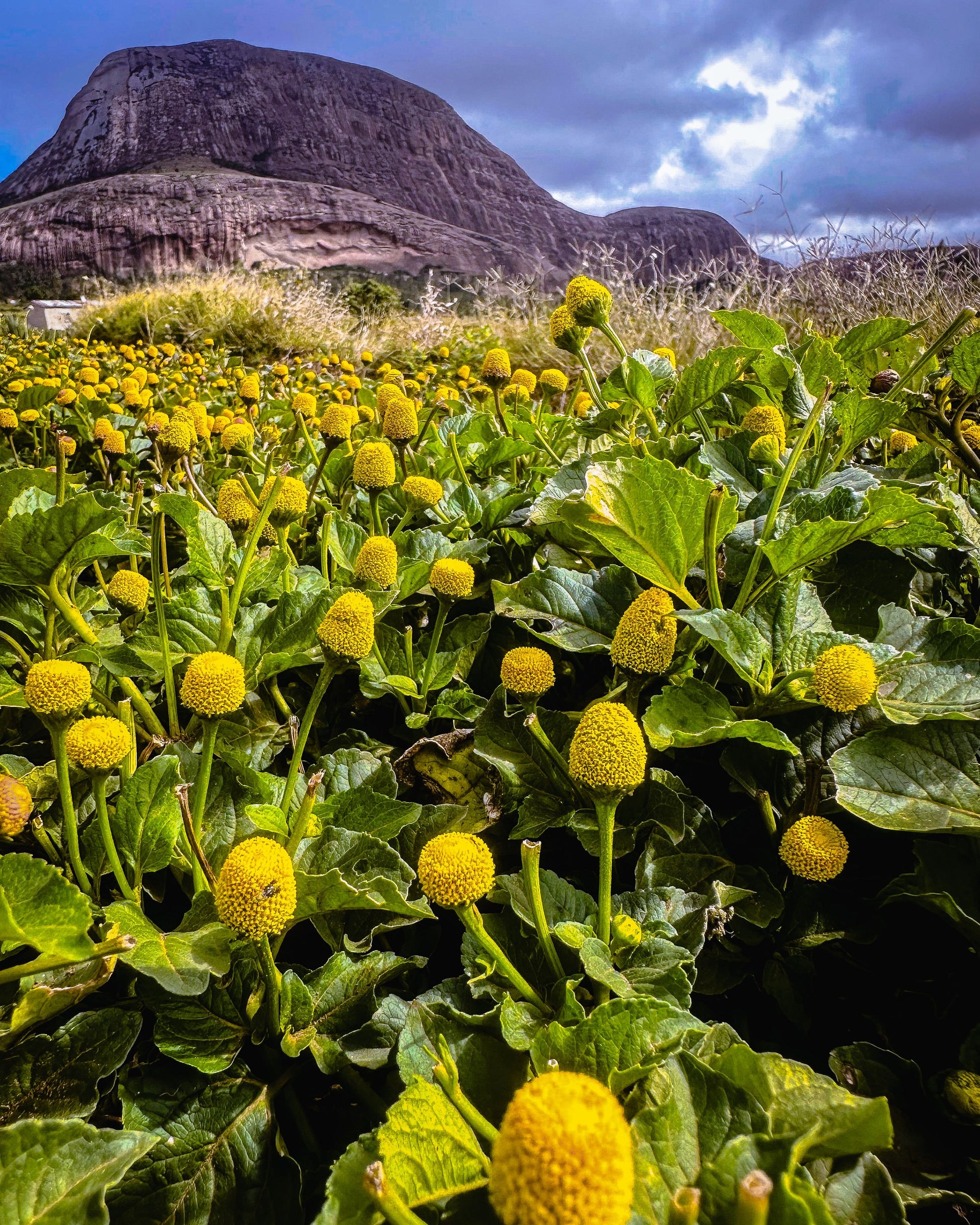
Like other members of the daisy family (Asteraceae), what appears to be a single flower is actually a composite flower head, made up of many tiny individual florets.
As the flower develops, it progresses through several recognizable stages.
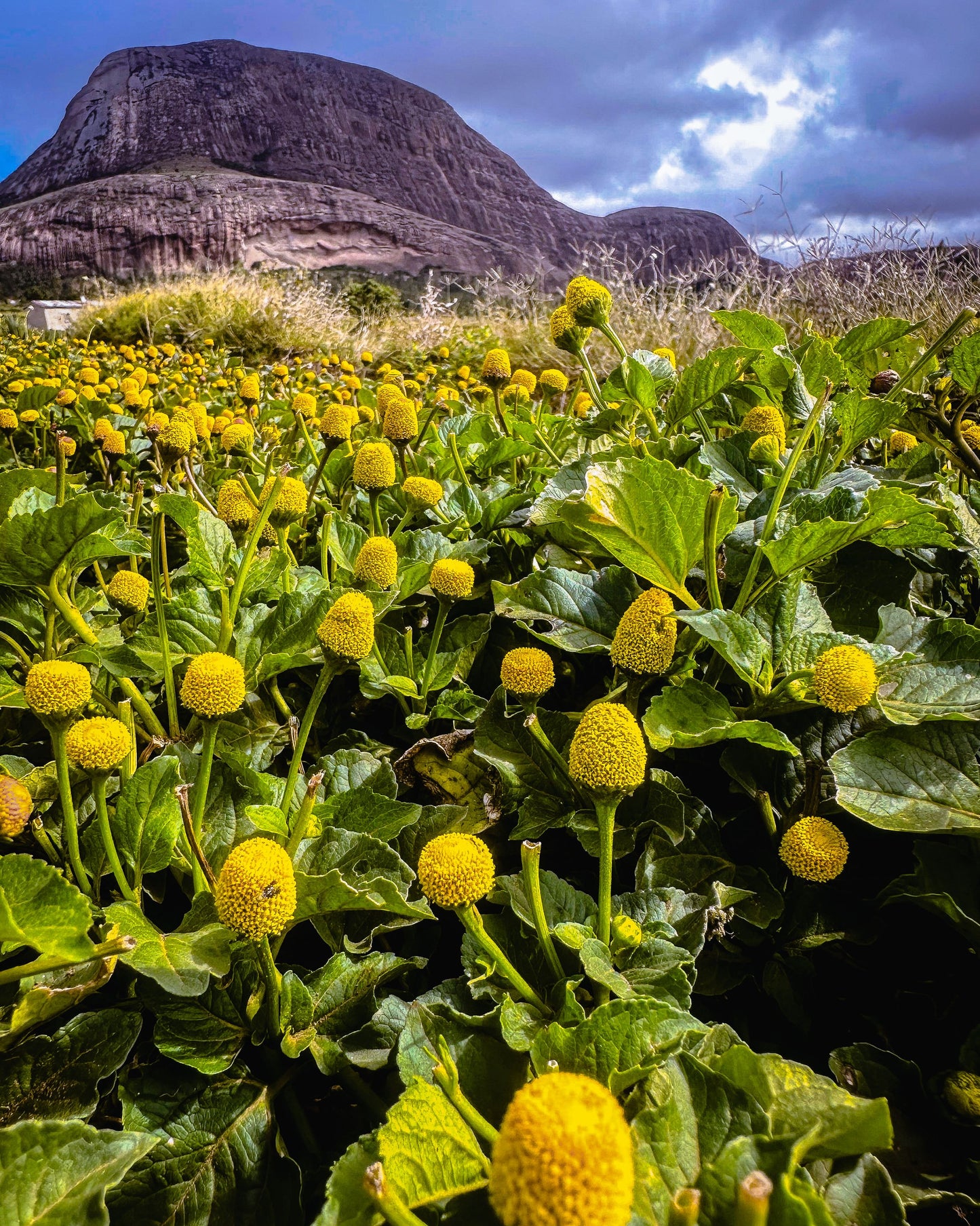
Stage 1 - Flower Bud
The flower head first appears as a small green bud surrounded by protective bracts.
At this stage, it is still actively developing.
Stage 2 - Developing Flower
The flower head begins to enlarge, and its characteristic rounded shape becomes more visible.
Color gradually changes as the flower matures.
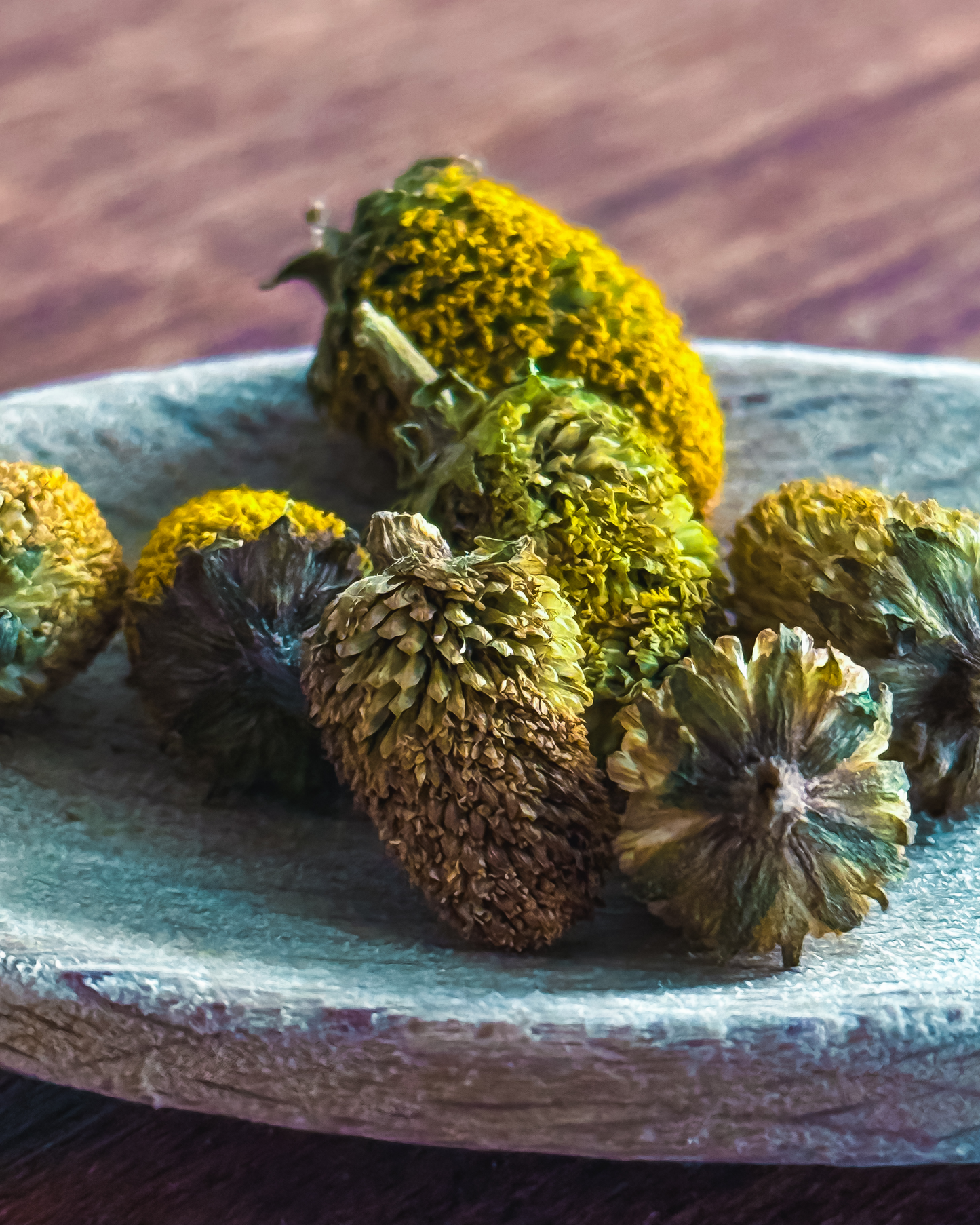
Stage 3 - Mature Flower Head
The flower reaches its characteristic size and appearance.
Healthy flower heads are firm, well formed, and evenly developed.
For many botanical applications, this is generally considered the preferred harvest stage.
Stage 4 - Seed Development
As flowering progresses further, the plant gradually redirects energy toward seed production.
Although this stage is valuable for propagation, growers producing botanical flower heads often prefer to harvest before extensive seed maturation occurs.
Recognizing a Mature Flower
Experienced growers rely on observation rather than the calendar alone.
Several characteristics help indicate when a flower has reached maturity.
A harvest-ready flower typically displays:
- a well-developed, symmetrical flower head
- uniform coloration
- firm structure
- healthy surrounding foliage
- no signs of disease or physical damage
Rather than harvesting every flower simultaneously, growers often harvest individual flower heads as they mature naturally across the field.
Why Harvesting Too Early Is a Mistake
Harvesting immature flowers may seem like a way to increase efficiency, but it often means collecting botanical material before the flower has completed its natural development.
Immature flower heads are typically:
- smaller
- less fully developed
- lighter in weight
- still actively growing
Allowing flowers to reach full maturity helps ensure they have completed their natural growth cycle before harvest.
Why Waiting Too Long Can Also Be a Problem
Waiting indefinitely is not always beneficial.
As flowers continue aging, the plant begins allocating more resources toward seed formation and the later stages of reproduction.
Older flower heads may also become more susceptible to:
- weather damage
- insect feeding
- mechanical injury
- natural aging
For this reason, growers aim to harvest within an appropriate window rather than simply harvesting as late as possible.
Harvest Is About Observation, Not the Calendar
One of the most common questions is:
"Exactly how many days after planting should I harvest?"
Unfortunately, there is no universal answer.
Flower development depends on many interacting factors, including:
- temperature
- sunlight
- rainfall
- soil fertility
- plant genetics
- local climate
- cultivation practices
Two fields planted on the same day may not reach maturity simultaneously.
Experienced growers therefore harvest based on plant development, not simply on the number of days that have passed.
The Madagascar Approach to Harvesting
At Madabuzz, harvesting is carried out with the understanding that every flower develops at its own pace.
Rather than harvesting entire fields indiscriminately, mature flower heads are carefully selected as they reach the appropriate stage of development.
Our cultivation regions in Madagascar provide favorable tropical growing conditions, fertile volcanic-derived soils, and a rich natural environment that supports healthy plant growth.
Combined with traditional farming knowledge and careful field observation, these conditions help produce healthy, well-developed flower heads.
Quality is built through attention to detail, from the moment the flower begins to grow until it reaches the harvest basket.
Flower Development Timeline
| Growth Stage | Harvest Recommendation |
|---|---|
| Flower Bud | Too early |
| Developing Flower | Continue growing |
| Fully Mature Flower | Preferred harvest stage |
| Seed Formation | Generally harvested earlier for botanical flower production |
Key Takeaways
- Harvest timing is one of the most important factors influencing botanical quality.
- Acmella oleracea flower heads should be harvested when they are fully developed and healthy, before significant seed development.
- Experienced growers rely on observation of flower maturity rather than the calendar alone.
- Selective harvesting helps maintain consistency across the harvested crop.
- At Madabuzz, careful harvesting in Madagascar forms part of a broader quality philosophy that combines natural cultivation, traditional farming expertise, and independent laboratory verification.
Harvest Science: How Professional Growers Select Premium Acmella oleracea
Harvesting Acmella oleracea is much more than collecting flowers.
For professional growers, harvesting represents the transition between cultivation and quality assurance.
The objective is not simply to gather as many flower heads as possible, but to carefully select healthy, mature flowers that meet the desired quality standards.
This process requires observation, experience, and an understanding of the plant's natural development.
At Madabuzz, harvesting is carried out as an extension of the cultivation process, not as a separate activity.
Every flower has already been shaped by months of growth, climate, soil conditions, and careful farming before it is finally harvested.
Manual Harvesting vs. Mechanical Harvesting
Many agricultural crops are harvested using machines designed for speed and efficiency.
Acmella oleracea is different.
Because the flower heads mature gradually rather than all at once, selective harvesting is often the preferred approach for premium botanical production.
Hand harvesting allows growers to:
- select only mature flower heads
- leave younger flowers to continue developing
- avoid unnecessary damage to surrounding plants
- maintain greater consistency throughout the harvest
Mechanical harvesting can be suitable for some large-scale agricultural applications, but for premium botanical ingredients, careful manual selection provides a higher level of control over the harvested material.
Why Whole Flower Heads Are Carefully Selected
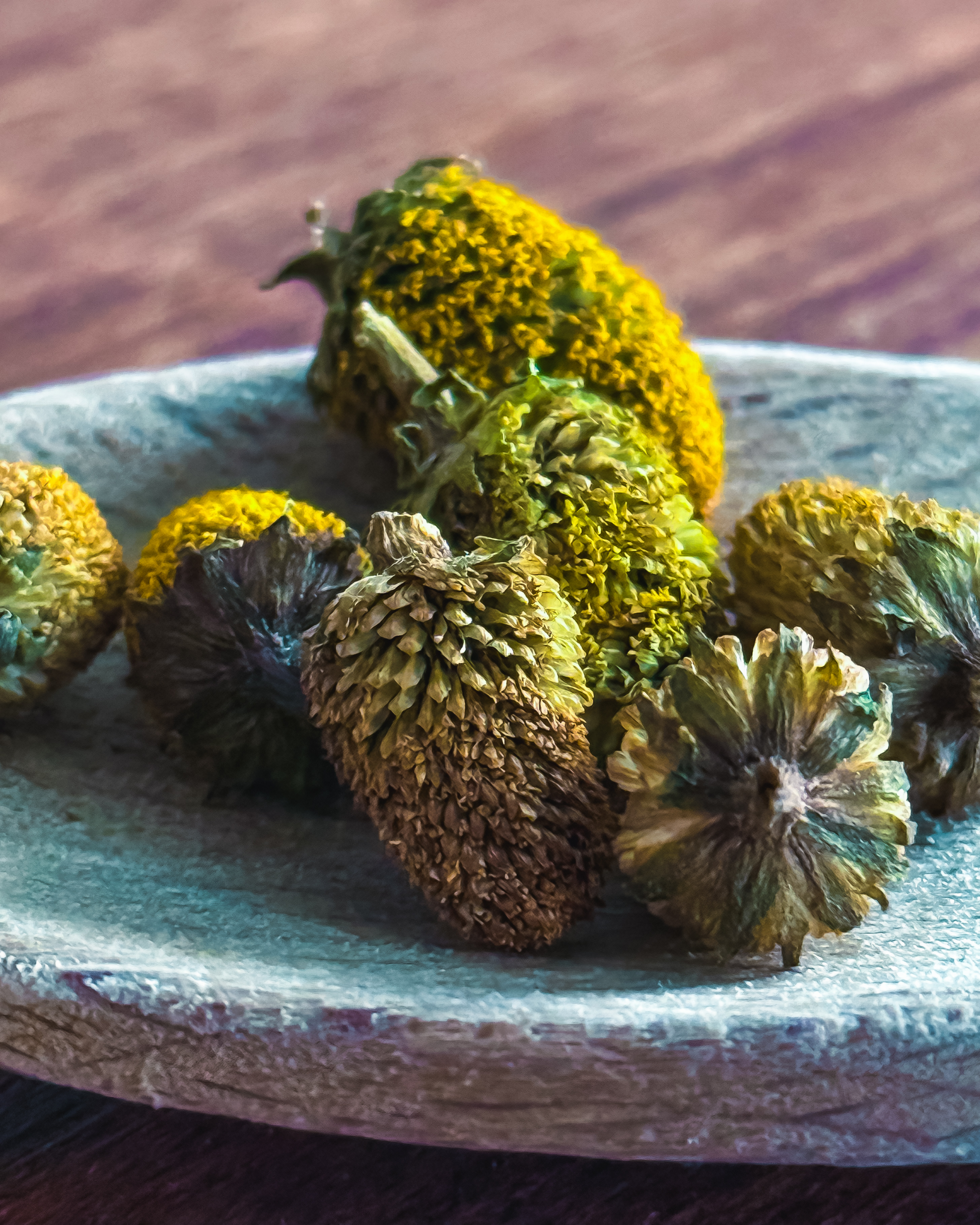
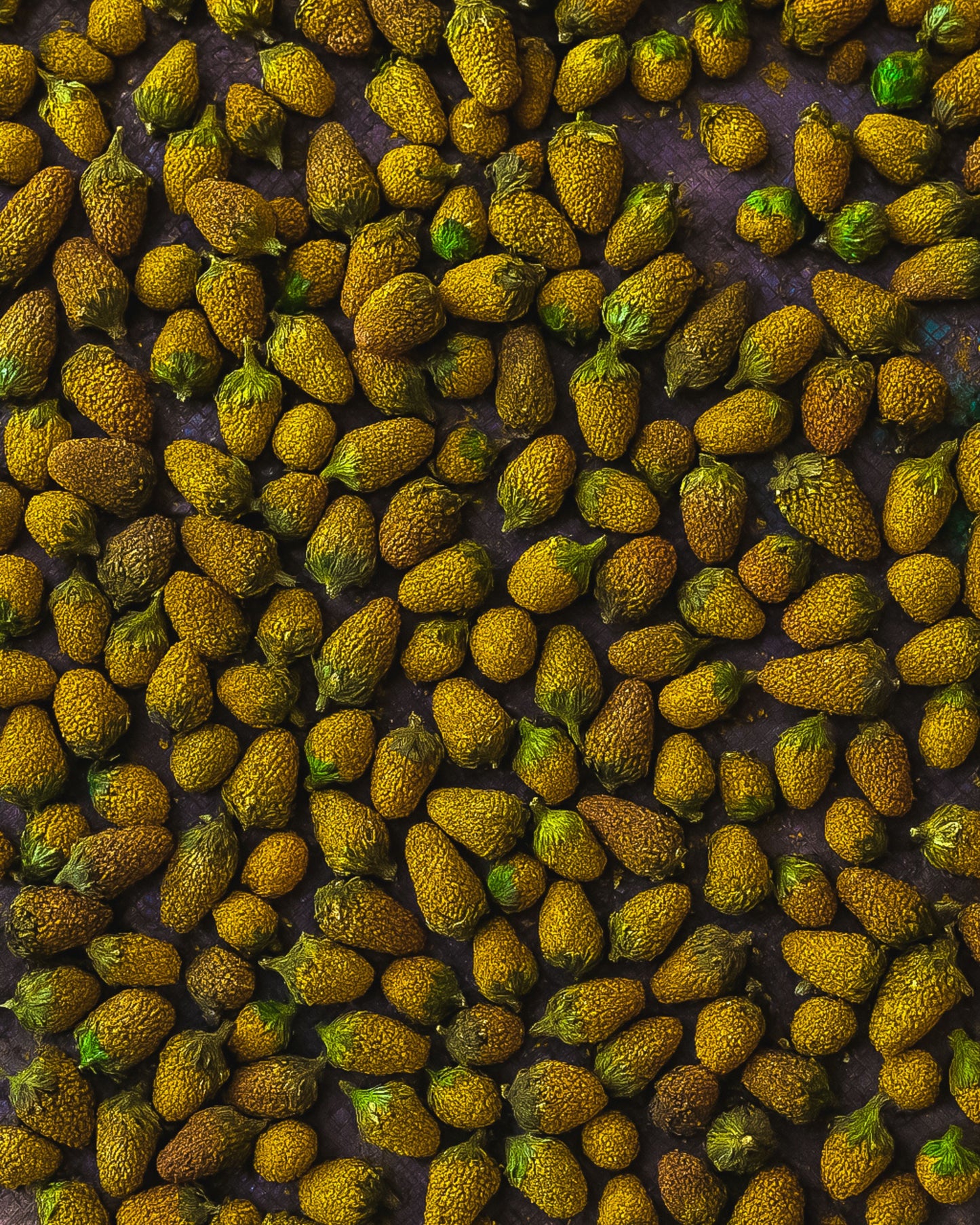
One of the defining characteristics of Madabuzz is our commitment to harvesting whole flower heads only.
Scientific literature consistently indicates that the flower heads are generally the richest source of naturally occurring Spilanthol within the plant.
Rather than harvesting mixed plant material containing stems and leaves, we focus on selecting mature flower heads individually.
This approach offers several important advantages:
- improved botanical consistency
- easier visual quality assessment
- better traceability throughout processing
- preservation of the plant's most valuable botanical structure
Premium botanical ingredients begin with premium botanical selection.
Science in Everyday Life
Harvesting Premium Coffee and Harvesting Acmella
Coffee growers rarely harvest every coffee cherry at once.
Instead, experienced workers walk through the plantation several times, selecting only ripe cherries while leaving immature ones to continue developing.
This selective approach improves consistency and quality.
Harvesting Acmella oleracea follows a similar philosophy.
Each flower head reaches maturity at its own pace.
Rather than treating every flower identically, experienced growers observe the plant and harvest each flower when it is ready.
Why Harvesting Is Often Done in the Morning
Environmental conditions can influence the harvesting process.
Many growers prefer harvesting during the cooler hours of the morning because:
- flowers are generally firmer
- temperatures are lower
- workers can harvest more comfortably
- harvested material is less exposed to intense midday heat
While harvesting schedules vary depending on weather and local conditions, minimizing unnecessary heat exposure after harvest is considered good agricultural practice for many botanical crops.
Weather Conditions Matter
Harvest planning is closely linked to weather.
Heavy rainfall immediately before harvesting may increase surface moisture on the flowers, while extreme heat can place additional stress on freshly harvested plant material.
Professional growers monitor weather forecasts carefully and often adjust harvesting schedules to provide favorable post-harvest conditions.
Good harvesting is therefore not only about the plant, it is also about understanding the environment.
Biodiversity and Healthy Agricultural Ecosystems
Madagascar is internationally recognized as one of the world's richest biodiversity hotspots.
Our cultivation regions are surrounded by diverse natural ecosystems that include birds, insects, native vegetation, and healthy agricultural landscapes.
Biodiversity contributes to sustainable farming in several ways:
- supporting pollinating insects
- encouraging balanced ecological relationships
- promoting healthy soils
- strengthening agricultural resilience
Although many interacting factors influence plant growth and phytochemical composition, including genetics, soil, climate, cultivation practices, and harvest timing, a healthy ecosystem provides an important foundation for sustainable agriculture.
For us, biodiversity is not simply an environmental benefit.
It is part of responsible farming.
Volcanic-Derived Soils and Natural Cultivation
Our Acmella oleracea is cultivated in regions of Madagascar where fertile volcanic-derived soils contribute to productive agricultural landscapes.
These soils are naturally rich in minerals and support healthy plant growth when combined with responsible farming practices.
Rather than relying on intensive agricultural inputs, our cultivation philosophy emphasizes:
- living soils
- organic matter
- balanced ecosystems
- natural crop development
- careful field observation
We do not routinely use synthetic pesticides or herbicides in the cultivation of our Acmella oleracea.
Instead, we believe healthy plants begin with healthy agricultural systems.
Experience Matters More Than Calendars
One of the greatest differences between commercial agriculture and premium botanical cultivation is experience.
No calendar can accurately predict the perfect harvest day for every flower.
Experienced growers evaluate:
- flower maturity
- plant health
- weather conditions
- recent rainfall
- field consistency
- overall crop development
This practical knowledge has been developed through years of observing how Acmella oleracea responds to changing environmental conditions.
In Madagascar, our farming partners combine traditional agricultural knowledge with careful observation, ensuring that harvesting decisions are based on the condition of the plants, not simply the date.
Harvest Consistency
Consistency is one of the defining characteristics of premium botanical ingredients.
Rather than harvesting every available flower at once, selective harvesting allows growers to build batches that are more uniform in appearance and maturity.
This careful approach supports:
- consistent botanical quality
- improved traceability
- better processing efficiency
- more reliable laboratory evaluation
Consistency is not achieved by chance.
It begins in the field.
The Madabuzz Harvest Philosophy
For us, harvesting is about respect.
Respect for the plant.
Respect for nature.
Respect for the people who cultivate it.
Every flower head represents months of growth, supported by Madagascar's tropical climate, fertile volcanic-derived soils, biodiversity, and experienced farming communities.
By combining natural cultivation, careful manual harvesting, and independent laboratory verification, we seek to preserve the botanical integrity of every harvest.
Quality is not created in a laboratory.
The laboratory confirms the quality that has already been built in the field.
Harvest Workflow
| Stage | Purpose |
|---|---|
| Field inspection | Assess flower maturity and crop condition |
| Manual selection | Choose healthy, mature flower heads |
| Careful harvesting | Preserve botanical integrity |
| Initial quality check | Remove damaged or unsuitable material |
| Transfer for drying | Prepare flowers for post-harvest processing |
Harvest at a Glance
| Practice | Why It Matters |
|---|---|
| Manual harvesting | Enables selective picking of mature flowers |
| Whole flower heads | Focuses on the most valuable botanical material |
| Morning harvesting | Helps reduce unnecessary heat exposure |
| Natural cultivation | Supports healthy plant development |
| Field observation | Guides harvest decisions based on maturity |
| Laboratory testing | Independently verifies quality after harvest |
Key Takeaways
- Harvesting is the bridge between cultivation and quality assurance.
- Premium botanical production relies on selecting mature flower heads rather than harvesting indiscriminately.
- Manual harvesting provides greater control over flower selection and consistency.
- Madagascar's tropical climate, fertile volcanic-derived soils, biodiversity, and experienced farming communities support healthy Acmella oleracea cultivation.
- At Madabuzz, harvesting is combined with natural farming practices, careful flower selection, and independent laboratory verification to maintain transparency and quality.
From Harvest to Premium Botanical Quality
Harvesting is an important milestone, but it is not the end of the cultivation process.
Once Acmella oleracea flower heads leave the field, every subsequent step influences how well their botanical quality is preserved.
Drying, storage, traceability, and independent laboratory analysis all contribute to transforming freshly harvested flowers into premium botanical ingredients.
For Madabuzz, quality is never the result of a single step.
It is the outcome of hundreds of careful decisions made throughout the entire journey, from seed to laboratory.

The Importance of Post-Harvest Handling
Freshly harvested flower heads are living botanical materials.
They naturally contain moisture and remain biologically active immediately after harvesting.
If flowers are left exposed to excessive heat, humidity, or poor storage conditions, their overall quality may gradually decline.
This is why post-harvest handling begins immediately after flowers are collected.
Professional botanical production focuses on preserving:
- botanical integrity
- cleanliness
- traceability
- consistency
- overall material quality
Every hour following harvest matters.
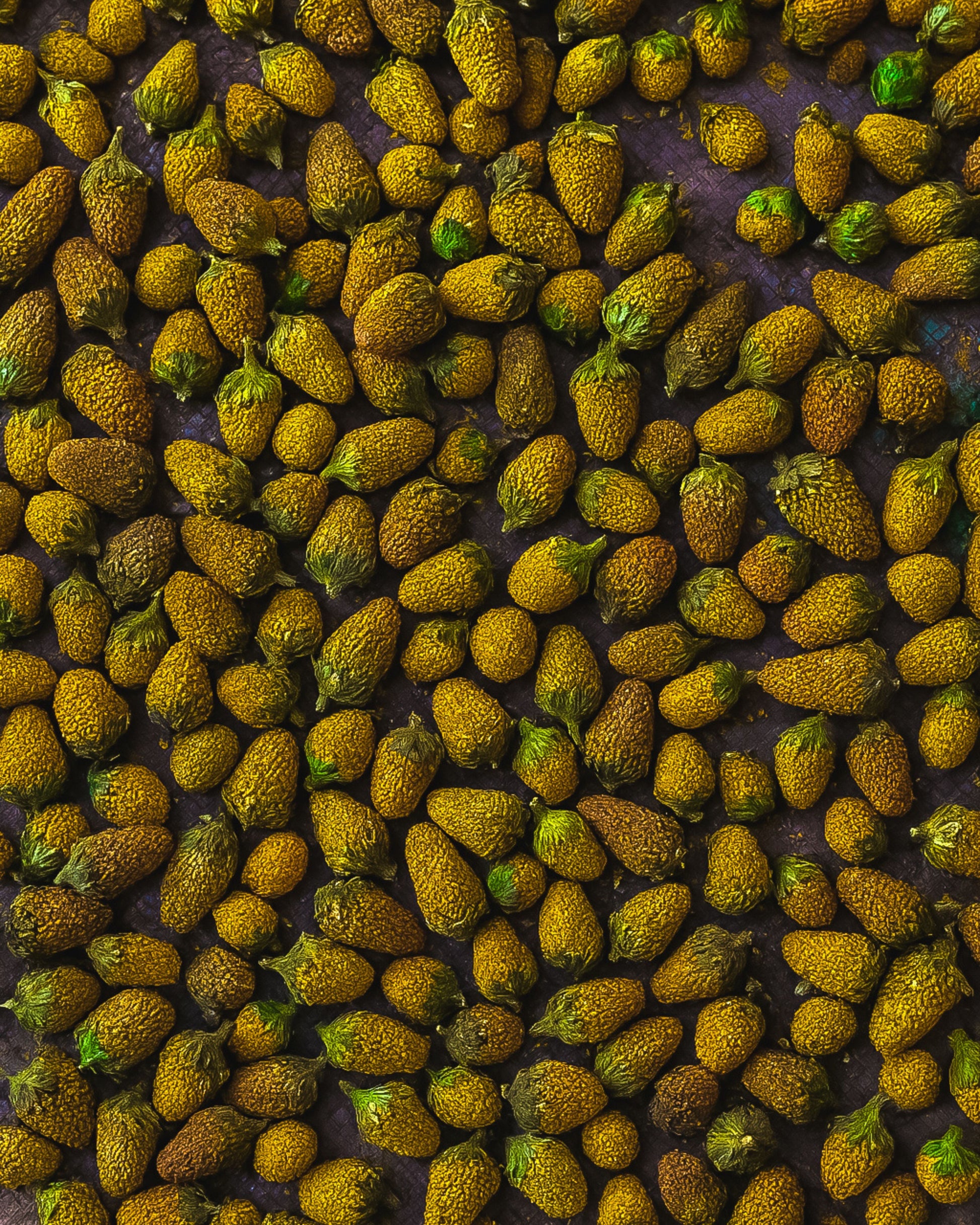
Controlled Drying
Drying is one of the most important stages in preserving botanical ingredients.
The objective is not simply to remove moisture.
It is to reduce water content carefully while maintaining the physical and chemical integrity of the harvested flowers.
A well-managed drying process helps:
- reduce excess moisture
- improve storage stability
- minimize microbial growth
- prepare flowers for long-term preservation
- maintain the natural structure of the flower heads
Drying conditions should always be carefully controlled.
Excessive heat may unnecessarily stress botanical materials, while insufficient drying can increase the risk of deterioration during storage.
Science in Everyday Life
Drying Herbs Is Similar to Preserving Fresh Tea Leaves
Fresh tea leaves cannot simply be placed into storage immediately after harvest.
They first undergo carefully controlled processing to preserve their quality.
Medicinal herbs, aromatic plants, and botanical flowers follow the same principle.
Acmella oleracea flower heads require thoughtful drying to ensure they remain suitable for storage and future processing.
Drying is not simply preservation.
It is part of quality management.
Storage: Protecting the Harvest
After drying, proper storage becomes essential.
Even high-quality flowers can gradually lose quality if stored under unsuitable conditions.
Professional storage generally aims to protect harvested material from:
- excessive humidity
- direct sunlight
- unnecessary heat
- physical damage
- contamination
Appropriate packaging and inventory management also help maintain traceability from harvest through processing.
For premium botanical ingredients, storage is an extension of quality assurance.
Traceability: Knowing the Story Behind Every Batch
One of the most important principles of modern botanical production is traceability.
Traceability means understanding where botanical material comes from and documenting its journey through every stage of production.
A traceable production system helps answer questions such as:
- Where was the crop grown?
- When was it harvested?
- How was it dried?
- How was it stored?
- Which batch did it become?
- Which laboratory analyzed it?
At Madabuzz, traceability is part of our commitment to transparency.
By working directly with farming communities in Madagascar, we maintain close relationships throughout the production process and can follow our botanical ingredients from cultivation to laboratory verification.
From Madagascar Fields to the Laboratory
Growing exceptional plants is only one part of producing exceptional botanical ingredients.
Independent laboratory analysis provides objective information about the finished botanical material.
Rather than relying only on appearance, laboratory testing allows producers to evaluate specific quality parameters using validated analytical methods.
At Madabuzz, laboratory verification complements, not replaces, good agricultural practices.
Our production journey follows a simple philosophy:
Healthy cultivation.
Careful harvesting.
Thoughtful drying.
Responsible storage.
Independent scientific verification.
This combination creates confidence in the quality of every batch.
Why Independent Laboratory Testing Matters
The appearance of a flower cannot reveal everything about its composition.
Two flower heads may look nearly identical while differing in measurable quality parameters.
Independent laboratory analysis helps verify objective characteristics of the harvested material.
Depending on the product and analytical requirements, laboratory evaluation may include:
- identity confirmation
- moisture determination
- microbiological quality
- botanical authentication
- chromatographic analysis
- naturally occurring Spilanthol content
Scientific testing provides measurable data that supports transparency and quality assurance.
It is one of the reasons why Madabuzz independently verifies every production batch.
The Madabuzz Quality Journey
Every flower follows a carefully managed path.
Step 1
Cultivation in Madagascar
↓
Step 2
Healthy plant development
↓
Step 3
Manual selection of mature flower heads
↓
Step 4
Responsible harvesting
↓
Step 5
Controlled drying
↓
Step 6
Careful storage
↓
Step 7
Independent laboratory analysis
↓
Step 8
Premium botanical ingredient
Each stage contributes to preserving botanical quality while maintaining complete traceability throughout production.
Sustainability Beyond the Harvest
For us, sustainability extends beyond agriculture.
It includes the people behind every flower.
Madabuzz works directly with farming communities in Madagascar, supporting long-term partnerships built on transparency, responsible sourcing, and shared success.
We also believe that investing in local communities is part of producing truly sustainable botanical ingredients.
For this reason, 5% of every purchase supports educational projects for schools in Madagascar, helping strengthen opportunities for future generations while preserving traditional agricultural knowledge.
Why Harvest Timing Is Only One Piece of Quality
Harvest timing often receives the most attention.
But premium botanical quality depends on the complete production system.
Healthy flower heads result from:
- suitable genetics
- fertile soils
- tropical climate
- careful cultivation
- biodiversity
- responsible harvesting
- controlled drying
- proper storage
- independent laboratory verification
No single step creates quality.
Quality is built through the entire process.
Scientific Summary
Current botanical knowledge supports several important conclusions.
Well Established
✔ Acmella oleracea should be harvested when flower heads are fully developed and healthy.
✔ Selective harvesting helps maintain consistency across botanical materials.
✔ Proper drying and storage are essential for preserving harvested flowers.
✔ Traceability and laboratory analysis play important roles in modern botanical quality assurance.
✔ Flower heads generally contain the highest concentrations of naturally occurring Spilanthol within the plant.
Areas of Continuing Research
Scientists continue studying:
- cultivation optimization
- environmental influences on phytochemical composition
- sustainable farming systems
- post-harvest preservation
- analytical methods
- botanical standardization
As research evolves, growers continue refining cultivation and quality assurance practices.
Frequently Asked Questions
When should Acmella oleracea be harvested?
Flower heads are generally harvested when they are fully developed, healthy, and before significant seed development begins.
Why are flower heads harvested individually?
Individual harvesting allows growers to select flowers that have reached the appropriate stage of maturity while leaving younger flowers to continue developing.
Why are whole flower heads preferred?
Scientific studies indicate that flower heads generally contain the highest concentrations of naturally occurring Spilanthol, making them the preferred botanical material for many applications.
Why is drying important?
Drying reduces moisture and helps preserve harvested botanical material for safe storage and future processing.
Does Madabuzz use laboratory testing?
Yes.
Every production batch is independently analyzed to help verify quality and support transparency.
Why are Madabuzz flowers grown in Madagascar?
Madagascar provides warm tropical growing conditions, fertile volcanic-derived soils, exceptional biodiversity, and experienced farming communities. Combined with natural cultivation practices and independent laboratory verification, these conditions support the production of premium botanical ingredients.
Is harvesting the most important step?
Harvesting is one of several important steps.
Premium botanical quality also depends on cultivation, drying, storage, traceability, and laboratory verification.
Conclusion
Harvesting Acmella oleracea is much more than collecting flower heads.
It is the point where months of careful cultivation meet the beginning of quality assurance.
Knowing when to harvest,and just as importantly, how to handle the flowers afterward, helps preserve the botanical integrity of the plant and prepares it for future use in research, cosmetics, and botanical products.
At Madabuzz, this journey begins in Madagascar, where fertile volcanic-derived soils, rich biodiversity, experienced farming communities, and natural cultivation practices provide an exceptional environment for growing healthy Acmella oleracea.
From selective hand harvesting to controlled drying and independent laboratory analysis, every stage is designed to maintain transparency, traceability, and consistent quality.
Premium botanical ingredients are not created by chance.
They are cultivated with patience, harvested with care, and verified through science.