

Part 1: Understanding Where Spilanthol Is Found in the Plant
Table of Contents
- Introduction
- What Is Spilanthol?
- Why Spilanthol Distribution Matters
- Which Plant Parts Contain Spilanthol?
- Factors That Influence Spilanthol Distribution
- Conclusion to Part 1
Introduction
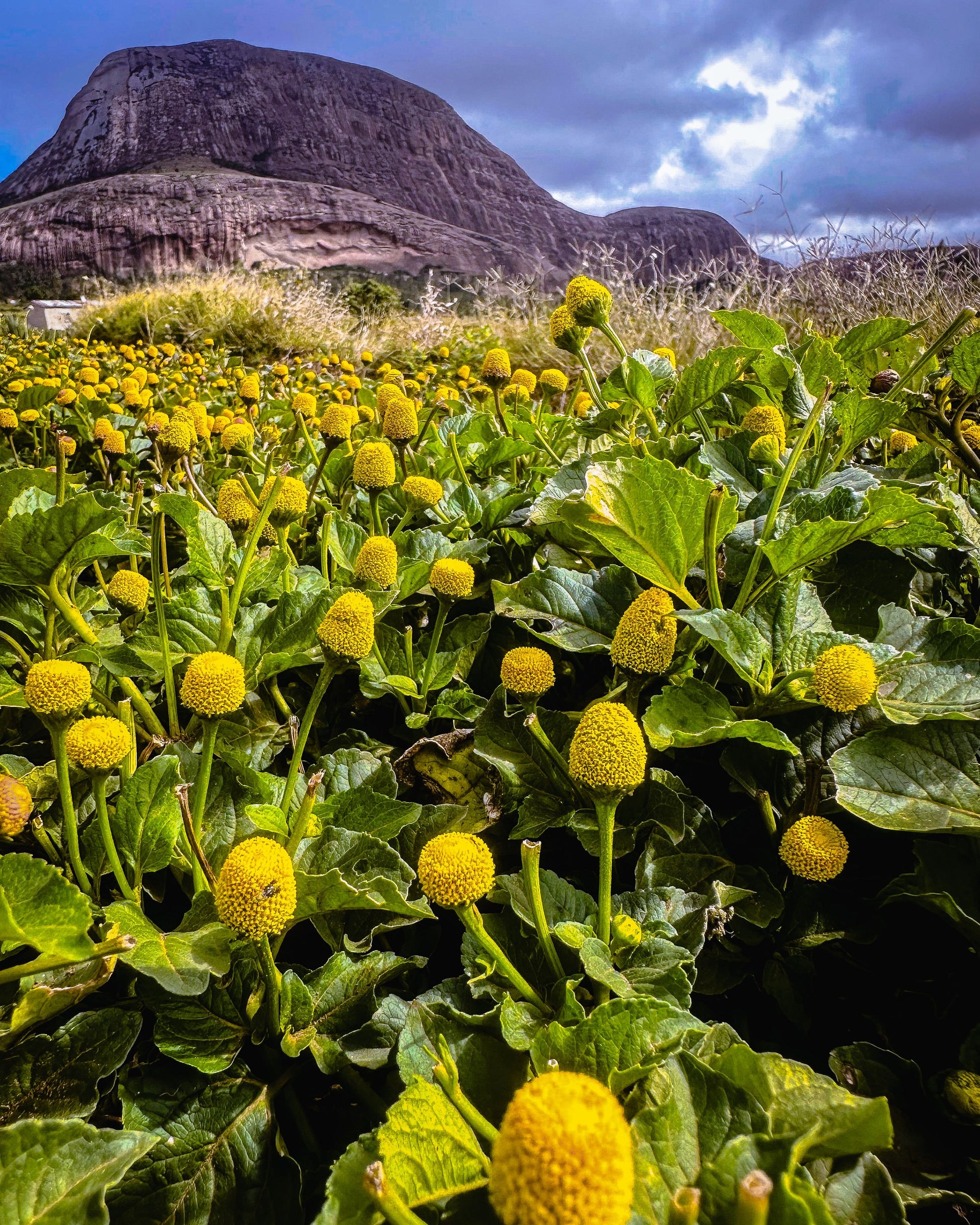
Acmella oleracea has gained worldwide recognition because of its unique bioactive compound, spilanthol. This naturally occurring alkamide is responsible for the characteristic tingling and numbing sensation experienced when chewing the plant's flower heads and has become the focus of increasing scientific interest in cosmetic science, botanical research, natural product chemistry, and functional plant ingredients.
One of the most common questions asked by growers, researchers, and manufacturers is whether every part of Acmella oleracea contains the same amount of spilanthol. The simple answer is no. Although spilanthol can be detected throughout several parts of the plant, its concentration varies naturally between different organs. Flower heads, leaves, stems, and roots each contribute differently to the plant's overall chemical composition.
Understanding where spilanthol accumulates is important for several reasons. It helps growers determine which plant material to harvest, allows researchers to compare studies more accurately, and assists manufacturers in selecting consistent raw materials for extraction and standardisation. However, it is equally important to recognise that concentration alone does not define botanical quality. A flower head with a relatively high spilanthol concentration may still be unsuitable if it has been harvested too early, damaged by insects, affected by disease, or handled improperly after harvest.
Like many secondary plant metabolites, spilanthol concentration is influenced by numerous biological and environmental factors. Genetics, plant maturity, growing conditions, seasonal variation, harvest timing, and post-harvest handling all contribute to the natural variability observed between plants and even between different parts of the same plant.
This guide examines how spilanthol is distributed throughout Acmella oleracea, explains why different plant organs naturally contain different concentrations, and discusses the factors that influence this variation while highlighting the importance of careful cultivation and quality management.
What Is Spilanthol?
Spilanthol is considered the principal bioactive alkamide of Acmella oleracea and one of the compounds most closely associated with the plant's distinctive sensory properties.
Chemically, spilanthol belongs to a group of naturally occurring compounds known as N-alkylamides, which are produced by numerous plant species as part of their specialised metabolism.
Within Acmella oleracea, spilanthol contributes to the familiar tingling, buzzing, and mild numbing sensation experienced when the fresh flower heads or leaves are chewed.
A Secondary Plant Metabolite
Unlike carbohydrates, proteins, or structural fibres, spilanthol is classified as a secondary metabolite.
Secondary metabolites are compounds that are not directly responsible for basic plant growth but are produced through specialised metabolic pathways.
These compounds often vary according to:
- plant species;
- plant organ;
- developmental stage;
- environmental conditions;
- genetic background.
This natural variability explains why spilanthol concentrations differ throughout the plant.
Spilanthol Is Not Evenly Distributed
Although Acmella oleracea produces spilanthol throughout several tissues, the compound is not distributed uniformly.
Scientific studies have identified spilanthol in:
- flower heads;
- leaves;
- stems;
- roots.
However, each plant organ contributes differently to the overall chemical profile.
Why Spilanthol Distribution Matters
Understanding where spilanthol accumulates has practical value for cultivation, harvesting, research, and manufacturing.
Selecting the appropriate plant material improves consistency while supporting more reliable botanical quality.
Harvesting Decisions
Growers may harvest different parts of the plant depending on the intended application.
Possible harvesting strategies include:
- flower heads only;
- leaves and flowers;
- whole aerial parts;
- complete plants including roots for research purposes.
The most appropriate choice depends on the production objective rather than a single universal harvesting method.
Scientific Research
Researchers studying Acmella oleracea should clearly identify which plant organs were analysed.
Comparisons between studies become difficult when different investigators examine:
- flower heads;
- leaves;
- aerial parts;
- whole plants.
Accurate botanical descriptions improve reproducibility and scientific interpretation.
Botanical Standardisation
Manufacturers producing botanical extracts often aim for consistent raw materials.
Understanding natural spilanthol distribution helps support:
- batch consistency;
- reproducible extraction;
- quality control;
- improved documentation.
Careful selection of plant material is one component of successful standardisation.
Which Plant Parts Contain Spilanthol?
Current scientific evidence indicates that spilanthol occurs throughout several parts of Acmella oleracea, although concentrations differ naturally between plant organs.
Flower Heads
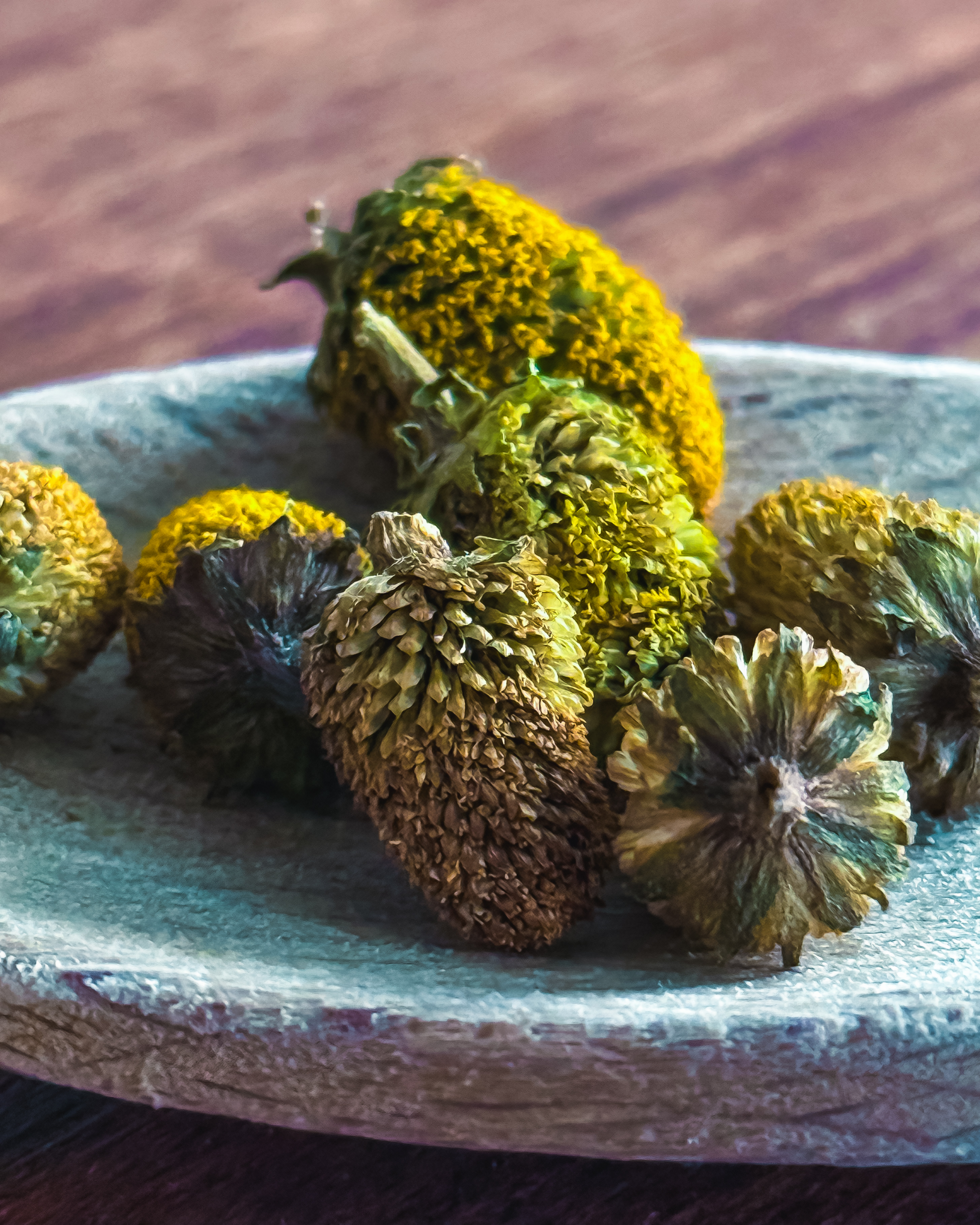
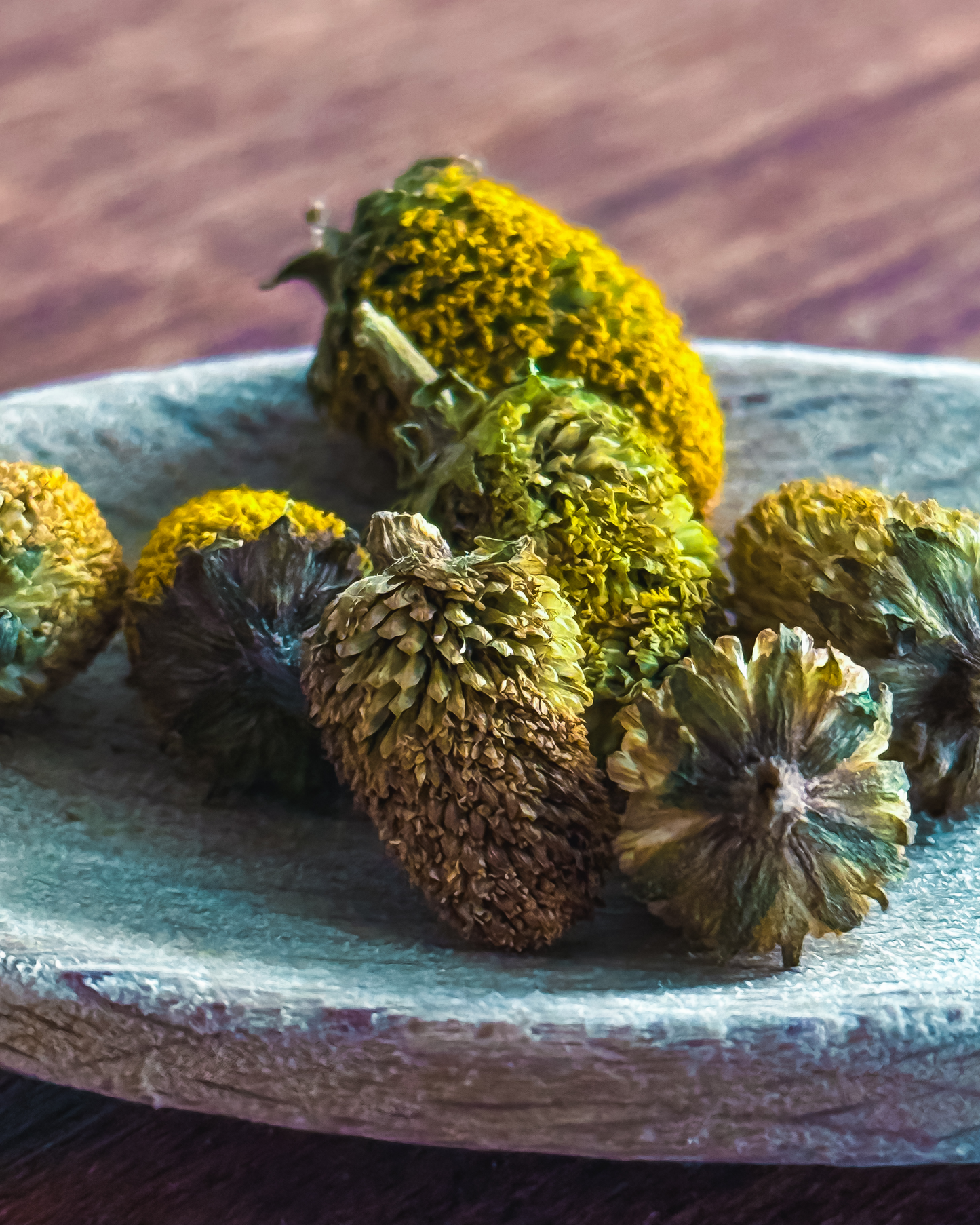
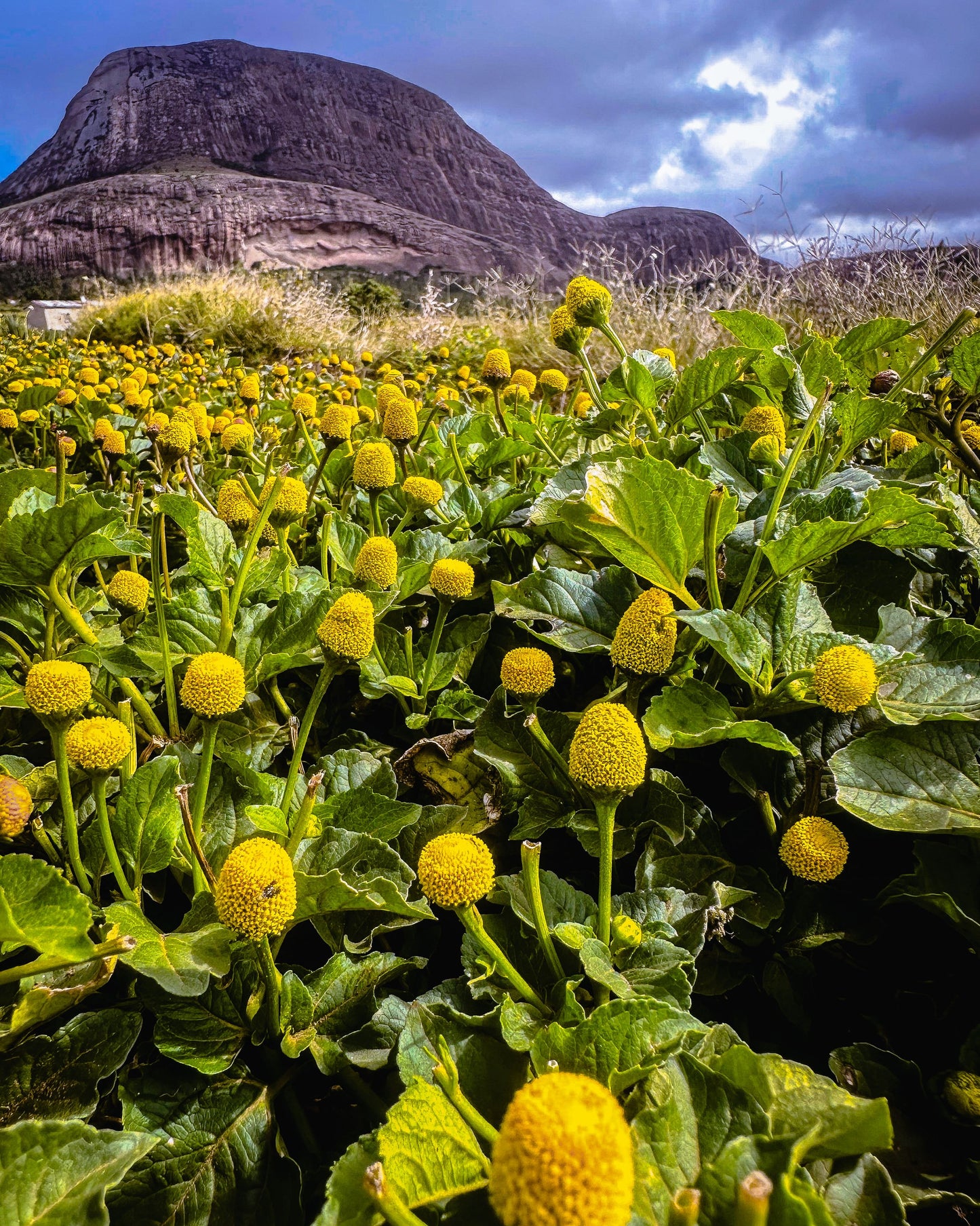
The flower heads are generally regarded as the richest source of spilanthol.
This explains why they are often selected for:
- botanical extraction;
- phytochemical analysis;
- cosmetic ingredient production;
- sensory evaluation.
The characteristic tingling sensation associated with Acmella oleracea is usually most pronounced when the flower heads are tasted.
Leaves
Leaves also low measurable amounts of spilanthol.
Although concentrations are much lower than those found in mature flower heads, leaves remain a good source of botanical material.
Leaf composition may vary according to:
- leaf age;
- growing conditions;
- cultivar;
- harvest timing.
Young and mature leaves may not always share identical chemical profiles.
Stems
Stems typically contain lower concentrations of spilanthol than flower heads or leaves.
Nevertheless, they contribute to the overall composition when:
- whole plants are processed;
- aerial biomass is harvested;
- botanical extracts are produced from mixed plant material.
Their contribution should not be overlooked in studies using complete aerial parts.
Roots
Roots have received considerably less scientific attention than the aerial portions of the plant.
Available research suggests that spilanthol can also be detected in root tissues, although reported concentrations generally differ from those observed in flower heads.
Further investigation continues to improve our understanding of root chemistry within Acmella oleracea.
Factors That Influence Spilanthol Distribution
Even within a single plant, spilanthol concentration is not fixed.
Numerous biological and environmental factors influence where the compound accumulates and how much is produced.
Plant Maturity
As Acmella oleracea develops, its chemical composition changes.
Different growth stages may influence:
- secondary metabolite production;
- flower development;
- overall phytochemical composition.
Harvest maturity therefore plays an important role in botanical quality.
Genetic Variation
Not all Acmella oleracea plants produce identical concentrations of spilanthol.
Natural genetic diversity between cultivars and breeding lines contributes to chemical variation.
Even plants grown under similar conditions may differ because of their genetic background.
Environmental Conditions
Plant metabolism responds continuously to the surrounding environment.
Important factors include:
- temperature;
- sunlight;
- water availability;
- soil conditions;
- seasonal changes.
These environmental influences interact with genetics to shape the plant's final chemical profile.
Harvest Timing
The stage at which flower heads are harvested may influence their composition.
Consistent harvest timing helps improve:
- batch uniformity;
- research reproducibility;
- manufacturing consistency.
Careful harvest planning forms part of effective quality management.
Why Concentration Alone Does Not Define Quality
A common misconception is that botanical quality depends solely on achieving the highest possible spilanthol concentration.
In reality, high-quality Acmella oleracea also depends on:
- healthy cultivation;
- correct plant identification;
- harvesting at the appropriate stage;
- careful post-harvest handling;
- controlled drying;
- suitable storage;
- proper documentation.
Concentration is only one aspect of overall botanical quality.
Conclusion to Part 1
Spilanthol is distributed throughout Acmella oleracea, but it is not present in equal concentrations across every part of the plant. Current scientific evidence indicates that the flower heads generally contain the highest concentrations, while leaves, stems, and roots also contribute to the plant's overall chemical composition to varying degrees. These differences reflect the specialised metabolism of the species and highlight the importance of selecting the appropriate botanical material for cultivation, research, extraction, and commercial applications.
At the same time, spilanthol distribution is influenced by far more than plant anatomy alone. Genetics, maturity, environmental conditions, and harvest timing all contribute to natural variation between plants and between harvests. Understanding these factors allows growers and manufacturers to make more informed decisions while recognising that botanical quality depends on the entire production process, not simply on the concentration of a single compound. In Part 2, we will examine the scientific evidence comparing spilanthol concentrations in different plant organs, explain why flower heads often accumulate the highest levels, and explore how harvesting strategies influence the consistency and quality of botanical raw materials.
Part 2: Comparing Spilanthol Levels in Different Plant Parts
Table of Contents
- Why Flower Heads Usually Contain the Highest Spilanthol Levels
- Comparing Flowers, Leaves, Stems and Roots
- How Plant Maturity Influences Spilanthol Distribution
- Harvesting Strategies for Different Applications
- Common Misconceptions About Spilanthol Distribution
- Conclusion to Part 2
Why Flower Heads Usually Contain the Highest Spilanthol Levels
Scientific studies consistently report that the flower heads of Acmella oleracea generally contain the highest concentrations of spilanthol when compared with other plant organs. Although measurable quantities may also be found in leaves, stems, and roots, mature flower heads are widely recognised as the principal source of this important alkamide.
This pattern is not unique to Acmella oleracea. Many plant species accumulate secondary metabolites in reproductive structures where they contribute to the plant's specialised metabolism.
It is important to remember that "highest concentration" does not mean every flower head contains the same amount. Natural variation exists between individual plants, cultivars, growing locations, and harvest seasons.
Flower Development and Secondary Metabolism
As flower heads mature, their chemical composition changes continuously.
Secondary metabolites such as spilanthol are influenced by:
- flower development;
- genetic factors;
- environmental conditions;
- plant health;
- harvest timing.
This explains why flower heads harvested at different developmental stages may not share identical chemical profiles.
Why Flowers Are Commonly Selected
Because flower heads generally contain higher spilanthol concentrations, they are frequently selected for:
- phytochemical analysis;
- botanical extraction;
- cosmetic ingredient production;
- quality assessment;
- research studies.
Their consistent use also improves comparability between scientific investigations.
Comparing Flowers, Leaves, Stems and Roots
Every plant organ contributes differently to the overall chemistry of Acmella oleracea.
Understanding these differences helps growers and manufacturers choose the most appropriate botanical material for their objectives.
Flower Heads
Flower heads are generally considered the richest source of spilanthol.
Typical characteristics include:
- relatively high spilanthol concentration;
- strong tingling sensation when fresh;
- preferred material for many extraction processes;
- frequent use in analytical studies.
Because of these characteristics, flower heads are often harvested separately from the rest of the plant.
Leaves
Leaves also contain spilanthol, although concentrations are generally lower than those found in mature flower heads.
Leaves provide several practical advantages:
- abundant biomass;
- rapid regrowth during the growing season;
- easier harvesting in some production systems.
Their chemical composition may vary depending on:
- leaf age;
- position on the plant;
- environmental conditions.
Stems
Stems usually contain comparatively lower concentrations of spilanthol.
Nevertheless, stems remain relevant when:
- harvesting whole aerial parts;
- producing mixed botanical extracts;
- processing entire plants.
Although stems contribute less individually, they become part of the final composition whenever complete aerial biomass is used.
Roots
Root tissues have received considerably less scientific attention than aerial organs.
Available evidence indicates that roots may contain detectable amounts of spilanthol, but concentrations generally differ from those observed in mature flower heads.
Further research continues to improve understanding of root phytochemistry.
Relative Distribution Within the Plant
Based on current scientific literature, the general pattern of spilanthol distribution can be summarised as follows:
| Plant Part | Relative Spilanthol Content | Typical Role |
|---|---|---|
| Flower heads | Highest | Primary source for research and extraction |
| Leaves | Moderate | Supplementary botanical material |
| Stems | Lower | Contribute when whole aerial parts are harvested |
| Roots | Variable | Less commonly studied |
This table represents the general trend reported in the literature rather than fixed values for every plant.
How Plant Maturity Influences Spilanthol Distribution
The distribution of spilanthol changes as the plant develops.
Young seedlings, actively growing plants, and mature flowering specimens do not necessarily produce identical phytochemical profiles.
Vegetative Growth
During vegetative development, plants invest resources into producing:
- leaves;
- stems;
- roots;
- new shoots.
Although spilanthol is already present, the overall distribution may differ from that observed during flowering.
Flowering Stage
As flower heads develop, they generally become the dominant location for spilanthol accumulation.
This is one reason why harvest timing is closely linked to botanical quality.
Harvesting before flowers are fully developed may reduce consistency between batches.
Plant Age
Plant age also influences overall composition.
Older plants may differ from younger specimens because of:
- developmental stage;
- environmental exposure;
- cumulative growing conditions.
Consistent harvest timing therefore improves reproducibility.
Harvesting Strategies for Different Applications
Because spilanthol distribution varies naturally, harvesting strategies often depend on the intended use of the botanical material.
Flower Head Harvesting
When the objective is to prioritise plant parts with relatively high spilanthol concentrations, growers commonly focus on harvesting mature flower heads.
Advantages include:
- concentrated botanical material;
- improved batch consistency;
- simplified quality control.
This approach is widely used in research and botanical ingredient production.
Whole Aerial Plant Harvesting
Some production systems harvest the complete aerial portion of the plant.
This includes:
- flower heads;
- leaves;
- stems.
Whole-plant harvesting increases biomass while producing a broader representation of the plant's natural composition.
Repeated Harvesting
Because Acmella oleracea continues producing new flowers throughout the growing season, repeated harvesting is often possible.
Regular harvesting may:
- encourage additional flowering;
- improve production efficiency;
- provide multiple harvest batches.
Maintaining consistent harvest criteria helps reduce variation between batches.
Common Misconceptions About Spilanthol Distribution
Several misunderstandings frequently arise when discussing spilanthol concentration.
"Only the Flower Heads Contain Spilanthol"
This is incorrect.
Although flower heads generally contain the highest concentrations, spilanthol has also been identified in:
- leaves;
- stems;
- roots.
The difference lies in concentration rather than complete absence.
"Bigger Flowers Always Contain More Spilanthol"
Flower size alone is not a reliable indicator of concentration.
Spilanthol content also depends on:
- genetics;
- maturity;
- cultivation conditions;
- environmental influences.
Large flowers are not necessarily chemically superior.
"More Spilanthol Means Better Botanical Quality"
Not always.
High botanical quality also depends on:
- healthy cultivation;
- correct identification;
- proper harvesting;
- careful drying;
- appropriate storage;
- batch consistency.
Concentration represents only one aspect of overall quality.
"Every Plant Has the Same Chemical Profile"
Natural variation exists between individual plants.
Factors influencing composition include:
- genetics;
- location;
- climate;
- cultivation methods;
- harvest timing.
This natural variability explains why botanical standardisation remains important.
Why Standardisation Still Matters
Even when harvesting flower heads, chemical variation remains unavoidable.
Standardisation helps manufacturers achieve greater consistency by:
- selecting appropriate raw material;
- monitoring batch quality;
- documenting production methods;
- controlling processing conditions.
Reliable botanical products depend on the entire production system rather than plant selection alone.
Conclusion to Part 2
Current scientific evidence consistently indicates that mature flower heads are the richest source of spilanthol within Acmella oleracea. Leaves, stems, and roots also contain this important alkamide, but generally at lower or more variable concentrations. These natural differences reflect the plant's specialised metabolism and explain why flower heads are commonly selected for phytochemical research, botanical extraction, and the production of standardised ingredients.
At the same time, spilanthol distribution should never be viewed in isolation. Plant maturity, genetics, environmental conditions, harvest timing, and post-harvest handling all influence the final chemical composition of harvested material. Successful growers and manufacturers therefore focus not only on selecting the appropriate plant parts but also on maintaining consistent cultivation, harvesting, and quality control practices. In Part 3, we will examine how post-harvest handling influences spilanthol preservation, discuss practical implications for growers and manufacturers, answer frequently asked questions, and summarise the key scientific principles behind spilanthol distribution in Acmella oleracea.

Part 3: Harvesting, Quality Preservation and Practical Applications
Table of Contents
- Preserving Spilanthol After Harvest
- Practical Implications for Growers and Manufacturers
- Frequently Asked Questions
- Final Scientific Perspective
- Key Takeaways
Preserving Spilanthol After Harvest
Harvesting flower heads with naturally high spilanthol concentrations is only the first step. Once plant material has been collected, post-harvest handling plays a critical role in preserving its existing chemical profile.
Spilanthol cannot be increased after harvest. Instead, the objective is to minimise unnecessary degradation by following appropriate handling, drying, and storage procedures.
Every stage of the post-harvest process influences the quality of the finished botanical material.
Harvest at the Correct Stage
Harvest timing directly affects the composition of the harvested material.
For consistent botanical quality, growers should harvest:
- healthy flower heads;
- fully developed flowers;
- undamaged plant material;
- flowers free from disease and insect damage.
Maintaining consistent harvest criteria improves uniformity between production batches.
Minimise Delays After Harvest
Freshly harvested flower heads remain biologically active.
Extended delays before processing may contribute to:
- moisture loss;
- continued respiration;
- microbial growth;
- natural tissue deterioration.
Moving harvested material promptly into suitable post-harvest conditions helps preserve quality.
Dry Material Carefully
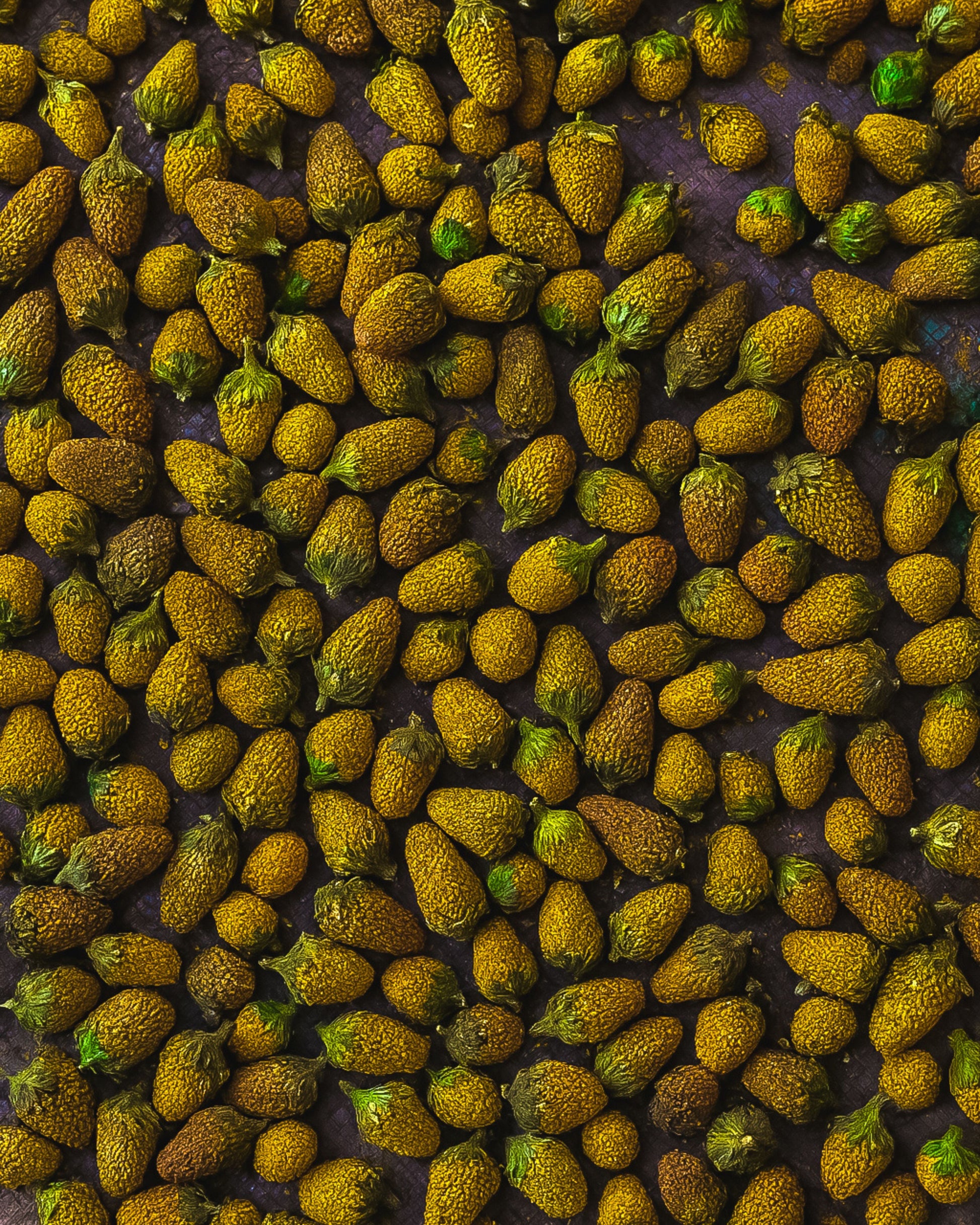
Drying removes moisture while reducing the likelihood of microbial spoilage during storage.
Successful drying depends on:
- good airflow;
- moderate temperatures;
- low humidity;
- protection from direct sunlight;
- clean drying equipment.
Rapid drying under excessive heat may compromise the physical quality of the botanical material.
Store Under Suitable Conditions
Once drying is complete, storage conditions become equally important.
Properly dried Acmella oleracea should be stored in:
- clean containers;
- dry conditions;
- stable temperatures;
- protected environments away from direct light.
Good storage practices help preserve botanical quality over extended periods.
Practical Implications for Growers and Manufacturers
Understanding where spilanthol occurs within Acmella oleracea allows different users to optimise their production systems according to specific objectives.
Although growers, researchers, and manufacturers may have different priorities, they all benefit from selecting consistent, well-documented botanical material.
For Growers
Growers seeking consistent harvests should focus on:
- healthy plant cultivation;
- correct species identification;
- harvesting mature flower heads;
- maintaining consistent harvest timing;
- careful post-harvest handling.
These practices improve crop uniformity and support reliable production.
For Researchers
Scientific investigations require clearly defined botanical material.
Research records should document:
- plant species;
- plant part analysed;
- harvest date;
- cultivation conditions;
- drying method where applicable;
- storage conditions.
Accurate documentation improves reproducibility and allows meaningful comparison between studies.
For Manufacturers
Manufacturers producing botanical ingredients benefit from selecting consistent raw materials.
Quality management may include:
- batch identification;
- botanical authentication;
- standardised harvesting procedures;
- traceability;
- quality inspections.
Consistency throughout the supply chain contributes to more reliable finished products.
Why Standardisation Is Still Essential
Even if only flower heads are harvested, natural variation remains unavoidable.
Plants grown under different conditions may produce different concentrations of secondary metabolites.
Variation may result from:
- genetics;
- climate;
- soil conditions;
- irrigation;
- harvest timing;
- post-harvest handling.
Standardisation helps reduce this variability by combining careful raw material selection with controlled processing and documented quality management.
Looking Beyond a Single Compound
Spilanthol is the best-known compound found in Acmella oleracea, but it is not the only naturally occurring constituent within the plant.
The botanical profile also includes numerous additional compounds that contribute to the plant's overall chemistry.
For this reason, comprehensive botanical quality should never be judged solely by the concentration of one compound.
Instead, quality assessment should also consider:
- botanical identity;
- plant health;
- cultivation practices;
- harvesting methods;
- post-harvest handling;
- storage conditions;
- batch consistency.
A holistic approach provides a more complete understanding of botanical quality.
Frequently Asked Questions
Which part of Acmella oleracea generally contains the highest concentration of spilanthol?
Current scientific evidence indicates that the mature flower heads generally contain the highest concentrations of spilanthol compared with leaves, stems, and roots.
Do the leaves also contain spilanthol?
Yes.
Leaves contain measurable amounts of spilanthol, although concentrations are generally lower than those reported for mature flower heads.
Are stems useful for extraction?
Stems usually contain lower concentrations of spilanthol, but they contribute to the overall chemical composition when whole aerial parts are processed.
Does every flower contain the same amount of spilanthol?
No.
Natural variation occurs because of:
- genetics;
- plant maturity;
- environmental conditions;
- cultivation practices;
- harvest timing.
For this reason, individual flower heads may differ in composition.
Can post-harvest handling increase spilanthol concentration?
No.
Post-harvest handling preserves existing quality but cannot increase the amount of spilanthol naturally present within the harvested plant material.
Why is botanical standardisation important?
Standardisation helps improve consistency by reducing variation between harvest batches through careful selection, documentation, and quality management.
Final Scientific Perspective
Current scientific evidence indicates that spilanthol is distributed throughout several parts of Acmella oleracea, including the flower heads, leaves, stems, and roots. However, this distribution is not uniform. Mature flower heads are generally recognised as containing the highest concentrations, making them the preferred botanical material for many phytochemical studies, extraction processes, and quality assessment programmes. Leaves also contribute meaningful amounts of spilanthol, while stems and roots form part of the plant's broader chemical composition.
At the same time, no single concentration can accurately represent every plant. Spilanthol production is influenced by genetics, developmental stage, environmental conditions, cultivation practices, harvest timing, and post-harvest handling. These interacting factors explain why variation occurs naturally between individual plants, growing locations, and production seasons.
Perhaps the most important conclusion is that high spilanthol concentration alone does not define botanical quality. Quality depends on a combination of accurate species identification, healthy cultivation, appropriate harvesting, careful drying, proper storage, traceability, and consistent quality management. Understanding where spilanthol accumulates helps guide harvesting decisions, but preserving that quality requires attention throughout the entire production chain. By combining sound cultivation practices with effective post-harvest management and standardisation, growers, researchers, and manufacturers can produce more consistent and reliable Acmella oleracea botanical material.
Key Takeaways
- Spilanthol is present throughout Acmella oleracea, but it is not distributed evenly among all plant parts.
- Mature flower heads generally contain the highest concentrations, while leaves, stems, and roots also contain measurable amounts.
- Genetics, plant maturity, environmental conditions, cultivation methods, and harvest timing all influence natural variation in spilanthol concentration.
- Careful harvesting, controlled drying, proper storage, and thorough documentation help preserve existing botanical quality.
- High-quality Acmella oleracea depends on the entire production process rather than the concentration of a single compound alone.