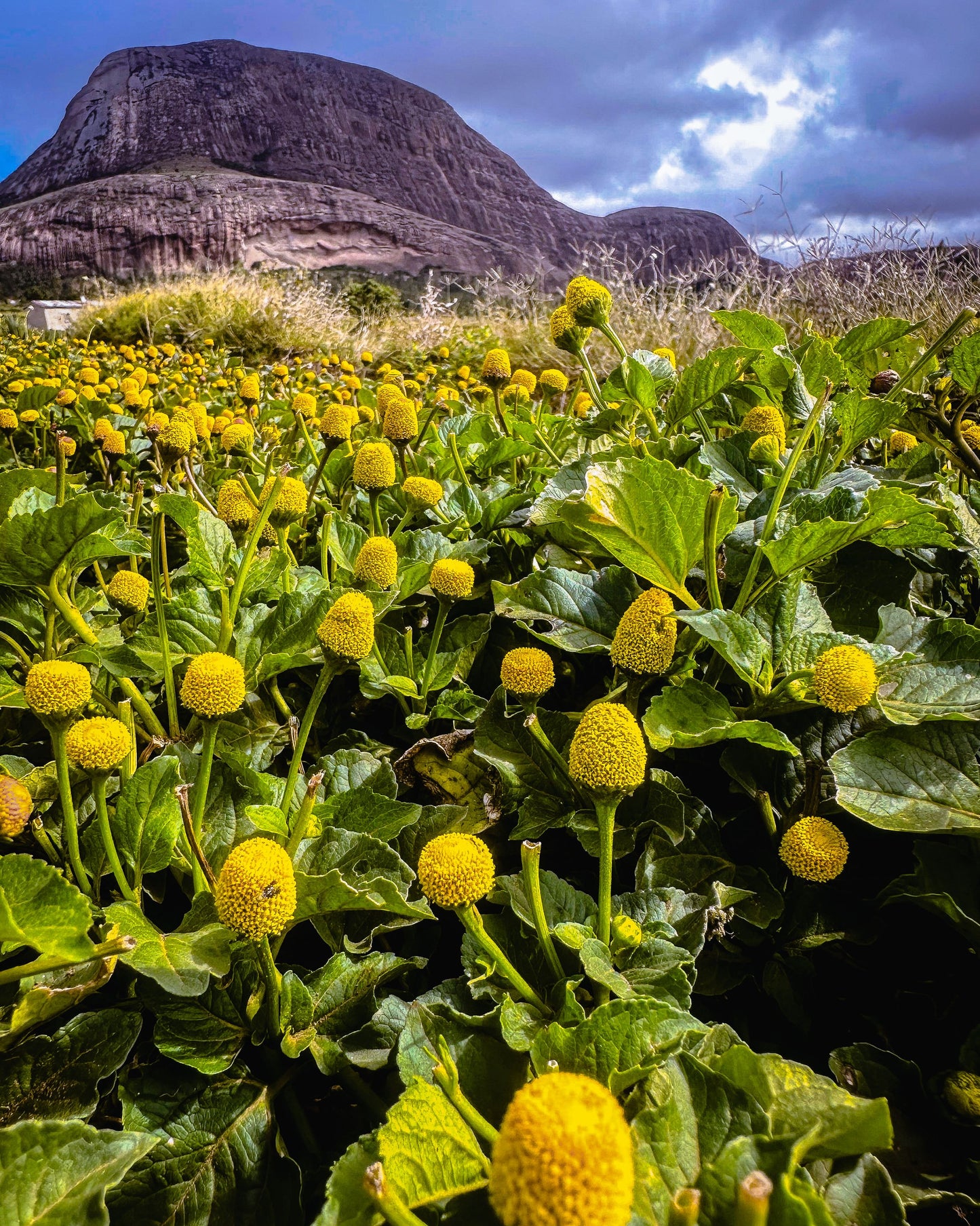


Intent Summary
This guide explains how carrier oils function as both extraction media and active formulation ingredients. Rather than ranking oils, it provides a scientific framework for selecting the most appropriate carrier based on chemistry, stability, cosmetic performance, and the intended botanical extract.
Educational guide with formulation science.
Best Carrier Oils for Botanical Extraction
Part 1: Understanding Carrier Oils
When people first learn about botanical extraction, they often focus on the plant.
For Acmella oleracea, that usually means questions such as:
- Which plant part contains the most Spilanthol?
- Should I use fresh or dried flower heads?
- How long should I macerate them?
These are all important questions.
However, they overlook something equally critical:
The extraction solvent becomes part of the ingredient.
Unlike ethanol, which can often be removed after extraction, a carrier oil usually remains in the final product.
It is therefore much more than a liquid that surrounds the plant material.
It influences:
- extraction efficiency;
- oxidative stability;
- skin feel;
- formulation compatibility;
- shelf life;
- appearance;
- and ultimately the consumer experience.
Choosing a carrier oil is not simply choosing a solvent.
It is choosing one of the main ingredients in the finished cosmetic.
What Is a Carrier Oil?
A carrier oil is a fixed, non-volatile vegetable oil used to dissolve, transport, and deliver lipophilic botanical compounds.
Unlike essential oils, carrier oils do not readily evaporate at room temperature.
They consist primarily of naturally occurring lipids called triglycerides, although some oils, most notably jojoba, have a different chemical structure.
Carrier oils serve several important functions during botanical extraction.
They:
- dissolve oil-compatible plant compounds;
- transport those compounds into the finished formulation;
- protect sensitive molecules from environmental exposure;
- contribute their own fatty acids and minor bioactive constituents;
- influence product texture and absorption;
- and become part of the finished ingredient.
This last point is often overlooked.
When extracting botanicals into a carrier oil, the extractor is creating more than an extract.
They are creating a new cosmetic ingredient whose properties depend on both the plant and the oil.
Carrier Oils Are Ingredients- Not Just Solvents
Imagine preparing two identical Acmella oleracea flower-head macerations.
The only difference is the carrier oil.
One uses extra virgin olive oil.
The other uses MCT oil.
Even if the same amount of Spilanthol were extracted, the finished products would behave differently.
They would differ in:
- color;
- viscosity;
- aroma;
- oxidation resistance;
- skin absorption;
- sensory profile;
- formulation compatibility;
- and consumer perception.
This illustrates an important principle in cosmetic formulation:
The carrier oil helps define the identity of the extract.
The botanical provides one part of the ingredient.
The carrier provides another.
Both deserve careful consideration.
Understanding Fixed Oils
Most carrier oils belong to a group called fixed oils.
The name "fixed" refers to the fact that they do not evaporate easily like essential oils.
Instead, they remain on the skin, gradually spreading across the surface before being absorbed or removed.
Most fixed oils originate from seeds, kernels, nuts, or fruit pulp through:
- cold pressing;
- expeller pressing;
- solvent extraction followed by refining;
- or combinations of mechanical and refining processes.
Each production method influences:
- color;
- odor;
- oxidation stability;
- vitamin retention;
- and the concentration of naturally occurring minor constituents.
For cosmetic formulations, both refined and unrefined oils may have appropriate applications depending on the desired product characteristics.
What Are Triglycerides?
To understand why different carrier oils behave differently, it helps to understand what they are made of.
Most vegetable oils consist primarily of triglycerides.
A triglyceride is a molecule formed from:
- one glycerol molecule;
- attached to three fatty acids.
Those fatty acids largely determine how an oil behaves.
They influence:
- viscosity;
- melting point;
- oxidation resistance;
- spreadability;
- skin feel;
- and compatibility with cosmetic formulations.
The exact mixture of fatty acids varies between oils.
That variation explains why sunflower oil feels different from olive oil, and why Moringa oil behaves differently from grapeseed oil.
Science Box
Think of Triglycerides as a Three-Legged Stool
Imagine a small stool with three legs.
The seat represents glycerol.
Each leg represents a fatty acid.
If the legs are short, long, straight, or bent, the stool behaves differently.
Triglycerides work in much the same way.
Changing the fatty acids changes the behavior of the entire oil.
The overall structure remains similar, but the chemistry, and therefore the cosmetic performance, changes.
Fatty Acids: The Real Personalities of Carrier Oils
Carrier oils are often described using marketing terms such as:
- nourishing;
- lightweight;
- luxurious;
- rich;
- or fast-absorbing.
These descriptions are useful, but they do not explain why an oil behaves that way.
The answer usually lies in its fatty-acid composition.
Although vegetable oils contain dozens of minor compounds, the fatty acids account for most of their physical characteristics.
Some of the most important include:
- oleic acid;
- linoleic acid;
- palmitic acid;
- stearic acid;
- behenic acid;
- and smaller amounts of many others depending on the species.
Different proportions of these fatty acids create dramatically different oils.
Saturated and Unsaturated Fatty Acids
Fatty acids are commonly grouped into two broad categories.
Saturated Fatty Acids
Saturated fatty acids contain no carbon-carbon double bonds.
Their structure is relatively straight, allowing molecules to pack together efficiently.
This often contributes to:
- greater oxidative stability;
- higher melting points;
- thicker textures.
Examples include:
- palmitic acid;
- stearic acid;
- behenic acid.
Unsaturated Fatty Acids
Unsaturated fatty acids contain one or more carbon-carbon double bonds.
These bends prevent tight molecular packing.
As a result, oils rich in unsaturated fatty acids are often:
- more fluid;
- lighter on the skin;
- but potentially more susceptible to oxidation.
Examples include:
- oleic acid;
- linoleic acid;
- alpha-linolenic acid.
This is a general trend rather than an absolute rule.
Minor compounds such as tocopherols (vitamin E), phenolics, and natural antioxidants also influence stability.
Why Fatty-Acid Profiles Matter
No single fatty acid is "best."
Each contributes different properties.
For example:
Oleic Acid
Often associated with:
- smooth spreading;
- elegant skin feel;
- relatively good oxidative stability.
Many premium cosmetic oils contain substantial oleic acid.
Linoleic Acid
Commonly valued because it contributes to:
- lighter textures;
- skin barrier support;
- cosmetic elegance in many formulations.
However, oils rich in linoleic acid may oxidize more rapidly than highly oleic oils if other stabilizing factors are similar.
Palmitic Acid
Often contributes:
- structure;
- body;
- richer sensory characteristics.
Stearic Acid
Associated with:
- creaminess;
- thicker texture;
- formulation structure.
Behenic Acid
Less commonly discussed outside cosmetic science.
Behenic acid contributes to the distinctive feel of certain oils, including Moringa seed oil, where it occurs in relatively higher amounts than in many common vegetable oils. It is one reason Moringa is appreciated for products seeking a rich yet elegant sensory profile, although overall skin feel depends on the complete fatty-acid composition and formulation.
We will explore this in detail later when discussing Moringa oil.
Minor Compounds Matter Too
Fatty acids explain much of an oil's behavior.
They do not explain everything.
Most carrier oils also contain smaller amounts of naturally occurring compounds such as:
- tocopherols (vitamin E family);
- phytosterols;
- carotenoids;
- polyphenols;
- squalene (in selected oils);
- and other unsaponifiable constituents.
Although present in much lower concentrations than triglycerides, these compounds may influence:
- oxidation stability;
- color;
- aroma;
- and cosmetic performance.
Their concentrations depend on:
- plant species;
- growing conditions;
- extraction method;
- refining;
- storage;
- and processing.
This is one reason two oils with similar fatty-acid profiles may still behave differently.
What Makes a Good Carrier Oil?
There is no universally "best" carrier oil.
Instead, formulators evaluate several characteristics simultaneously.
Oxidative Stability
A carrier oil should remain stable throughout storage and normal cosmetic use.
Poor oxidative stability can result in:
- rancid odors;
- discoloration;
- altered texture;
- reduced consumer acceptance.
Oxidation depends on:
- fatty-acid composition;
- oxygen exposure;
- heat;
- light;
- moisture;
- packaging;
- and naturally occurring antioxidants.
Viscosity
Viscosity influences both extraction and application.
Lower-viscosity oils may penetrate plant material differently and often feel lighter on the skin.
Higher-viscosity oils may provide:
- richer sensory characteristics;
- greater cushioning;
- longer massage time.
Neither is universally superior.
Skin Feel
Consumers immediately notice how an oil feels.
Some oils absorb rapidly.
Others leave a more persistent protective film.
This affects:
- facial products;
- massage oils;
- body care;
- and premium cosmetic positioning.
Odor
Some oils are nearly odorless.
Others contribute distinctive aromas.
Depending on the formulation, this may be desirable, or problematic.
Color
Deeply colored oils may influence the appearance of:
- creams;
- balms;
- serums;
- and facial oils.
A naturally golden oil may be attractive in one formulation and unsuitable in another.
Compatibility
The carrier oil must also suit the finished product.
A heavy traditional balm may benefit from a richer oil.
A lightweight facial serum may require something entirely different.
Selecting the carrier after the formulation has been designed is usually more effective than trying to force an unsuitable oil into an existing product.
Does the Carrier Oil Affect Spilanthol Extraction?
This is one of the most common questions.
The answer is nuanced.
Because Spilanthol has substantial lipophilic character, it is reasonable to expect that appropriately selected carrier oils can dissolve it during maceration.
However, this does not mean that every carrier oil extracts identical amounts of Spilanthol or produces equivalent extracts.
Extraction performance depends on numerous interacting variables, including:
- the carrier oil itself;
- flower maturity;
- plant particle size;
- moisture content;
- solvent-to-plant ratio;
- extraction time;
- temperature;
- agitation;
- and the chemical composition of the starting material.
Published studies have demonstrated Spilanthol extraction using various organic solvents, but direct, standardized comparisons between a broad range of cosmetic carrier oils remain limited.
Therefore, it would not be scientifically appropriate to claim that one cosmetic oil universally extracts more Spilanthol than another without controlled comparative testing.
Instead, formulators should evaluate carrier oils as complete systems, considering:
- extraction behavior;
- oxidative stability;
- formulation compatibility;
- sensory properties;
- and analytical verification.
Science Box
Why Doesn't Olive Oil Feel Like MCT?
Although both are oils, their chemistry is different.
Olive oil is rich in long-chain triglycerides dominated by oleic acid.
MCT oil contains shorter medium-chain triglycerides that spread rapidly and feel remarkably light.
The difference is immediately noticeable on the skin.
One is not inherently better.
They are simply designed by nature with different molecular structures.
Is Jojoba Really an Oil?
Interestingly...
Not exactly.
Jojoba is primarily composed of liquid wax esters, not triglycerides.
This unusual chemistry contributes to its remarkable oxidative stability and elegant cosmetic feel.
Although it is universally referred to as a carrier oil, it occupies a unique position among cosmetic lipids.
Its chemistry also explains why formulators often discuss jojoba separately from conventional vegetable oils.
We will explore this in greater detail in Part 2.
Why Formulators Rarely Choose Oils by Price Alone
A low-cost oil may appear attractive at first.
However, if it oxidizes rapidly, changes the sensory profile, or limits the stability of the finished product, it may ultimately increase development costs.
Professional formulators instead balance:
- chemistry;
- stability;
- functionality;
- sustainability;
- sensory characteristics;
- availability;
- traceability;
- and intended product positioning.
The most expensive oil is not necessarily the best.
The least expensive oil is not necessarily the most economical.
The best choice is the one that fulfills the technical objectives of the formulation.
Key Takeaways from Part 1
- Carrier oils are active formulation ingredients, not simply extraction solvents.
- Most carrier oils consist primarily of triglycerides, while jojoba is composed mainly of liquid wax esters.
- Fatty-acid composition strongly influences viscosity, oxidation resistance, texture, and cosmetic performance.
- Minor compounds such as tocopherols, phytosterols, and carotenoids also contribute to an oil's properties.
- There is no universally superior carrier oil for botanical extraction.
- Spilanthol can dissolve into appropriately selected carrier oils, but extraction efficiency depends on multiple processing variables.
- Choosing a carrier oil requires balancing chemistry, stability, formulation goals, and consumer experience.
- Understanding fatty-acid profiles provides a stronger basis for selecting a carrier oil than relying on marketing descriptions alone.

Comparing the World's Most Popular Carrier Oils
Part 1 explained that a carrier oil is much more than a solvent.
Its fatty-acid profile, viscosity, oxidative stability, sensory characteristics, and naturally occurring minor compounds all influence the finished botanical ingredient.
No carrier oil excels in every category.
Some prioritize long shelf life.
Others provide exceptional skin feel.
Some are chosen because they are neutral and inexpensive, while others are valued for their naturally occurring phytochemicals or unique cosmetic properties.
Rather than asking:
Which carrier oil is the best?
Professional formulators usually ask:
Which carrier oil is best suited to this particular extract and formulation?
The following comparison examines some of the most widely used carrier oils in cosmetic botanical extraction.
MCT Oil (Caprylic/Capric Triglyceride)
MCT oil has become one of the most popular cosmetic carrier oils during the past two decades.
Unlike many traditional vegetable oils, it is composed primarily of medium-chain triglycerides, most commonly derived from coconut or palm kernel oil through fractionation.
This gives MCT several distinctive properties.
Fatty Acid Profile
MCT oil is composed predominantly of:
- caprylic acid (C8)
- capric acid (C10)
Unlike conventional vegetable oils, it contains very little oleic or linoleic acid.
This unusual composition contributes to its exceptional oxidative stability.
Cosmetic Characteristics
MCT is appreciated because it is:
- extremely light
- nearly colorless
- almost odorless
- rapidly spreading
- non-greasy
- highly stable
These characteristics make it especially attractive for:
- facial oils
- lightweight serums
- botanical macerates
- luxury skincare
Extraction Considerations
Its relatively low viscosity allows excellent contact with prepared botanical material.
However, there is currently little published evidence demonstrating that MCT universally extracts more Spilanthol than other cosmetic oils.
Its popularity comes primarily from formulation advantages rather than proven extraction superiority.
High-Oleic Sunflower Oil
Sunflower oil remains one of the world's most widely used cosmetic carrier oils.
However, not all sunflower oils are chemically identical.
Modern cosmetic formulations often prefer high-oleic sunflower oil, which differs substantially from conventional high-linoleic sunflower oil.
Why High-Oleic Matters
Oleic acid generally provides greater oxidative stability than linoleic acid.
This often translates into:
- improved shelf stability
- better resistance to oxidation
- reduced rancidity risk
For botanical maceration, high-oleic sunflower frequently represents an excellent balance between:
- performance
- availability
- affordability
- cosmetic elegance
It has become a benchmark carrier oil within the botanical industry.
Olive Oil
Olive oil is perhaps the oldest carrier oil used in botanical maceration.
Traditional herbal preparations throughout the Mediterranean frequently relied on olive oil centuries before modern cosmetic chemistry existed.
Strengths
Olive oil offers:
- relatively high oleic acid
- traditional familiarity
- good oxidative stability
- easy availability
Limitations
Compared with lighter cosmetic oils, olive oil often contributes:
- heavier skin feel
- noticeable aroma
- stronger color
- slower absorption
These characteristics make it excellent for some products but less desirable for ultra-light facial formulations.
Jojoba
Although universally called an oil, jojoba is chemically unique.
Instead of triglycerides, it consists primarily of liquid wax esters.
This difference gives jojoba several remarkable properties.
Why Formulators Love Jojoba
Jojoba offers:
- exceptional oxidative stability
- elegant skin feel
- very long shelf life
- remarkable resistance to rancidity
It also closely resembles some naturally occurring skin surface lipids, making it popular in premium skincare.
Its primary disadvantage is cost.
For large-scale botanical extraction, formulators often reserve jojoba for finished formulations rather than using it as the primary extraction solvent.
Sweet Almond Oil
Sweet almond oil has been used in cosmetics for generations.
It provides:
- pleasant spreadability
- elegant massage characteristics
- mild aroma
- balanced skin feel
Its fatty-acid profile contains substantial oleic acid together with moderate linoleic acid.
Although widely appreciated, sweet almond oil oxidizes somewhat faster than highly stable oils such as jojoba or MCT.
Because it is derived from a tree nut, formulators should also consider allergen labeling requirements where applicable.
Grapeseed Oil
Grapeseed oil is valued primarily because of its exceptionally light texture.
It spreads easily and absorbs quickly.
However, its relatively high linoleic acid content generally makes it more oxidation-sensitive than many oleic-rich oils.
For that reason, formulators frequently combine grapeseed with more oxidation-resistant oils or include antioxidant systems.
Its pleasant sensory profile makes it attractive despite this limitation.
Argan Oil
Argan oil has become synonymous with premium skincare.
Native to Morocco, it has attracted considerable scientific interest because of its:
- oleic acid
- linoleic acid
- tocopherols
- phytosterols
- squalene
- naturally occurring antioxidants
It provides:
- luxurious skin feel
- elegant absorption
- strong consumer recognition
However, its relatively high cost generally limits its use in large-scale botanical extraction.
Instead, it is often incorporated into premium finished formulations.
Sesame Oil
Sesame oil has a long history in traditional botanical medicine throughout Asia.
Its naturally occurring lignans, including sesamin and sesamolin, have attracted scientific interest because they may contribute to oxidative stability alongside tocopherols.
Cosmetically, sesame oil provides:
- medium viscosity
- pleasant spreading
- traditional familiarity
Its characteristic aroma may influence fragrance design in finished products.
Castor Oil
Castor oil occupies a unique position among vegetable oils.
It contains exceptionally high levels of ricinoleic acid, a hydroxylated fatty acid rarely found in such abundance elsewhere.
This gives castor oil:
- unusually high viscosity
- glossy appearance
- strong film-forming properties
Rather than serving as the primary carrier for delicate facial oils, castor is frequently blended into:
- lip products
- cleansing oils
- hair formulations
- thick botanical preparations
Its texture is simply too heavy for many applications when used alone.
Coconut Oil
Virgin coconut oil remains extremely popular among home herbalists.
Its semi-solid consistency comes from its high proportion of saturated fatty acids.
Advantages include:
- excellent oxidative stability
- pleasant consumer familiarity
- rich texture
Limitations include:
- solidification in cooler environments
- heavier sensory profile
- reduced suitability for lightweight facial products
Fractionated coconut oil largely overcomes these limitations and is therefore often preferred in cosmetic extraction.
Moringa Oil
Among all botanical carrier oils, Moringa seed oil is one of the most scientifically interesting.
Sometimes called Ben Oil, it has been valued for centuries across parts of Africa and Asia for its remarkable stability and elegant cosmetic properties.
Today, it is increasingly attracting attention from cosmetic formulators, not because it is exotic, but because of its chemistry.
Fatty Acid Composition
Moringa oil is dominated by oleic acid, which typically accounts for approximately 65–80% of its fatty-acid profile, depending on origin and processing. It also contains smaller amounts of palmitic, stearic, arachidic, and the notably higher behenic acid content that historically gave it the name "Ben Oil." Research consistently describes this oleic-rich composition as a key reason for its stability and cosmetic appeal.
Why Behenic Acid Is Interesting
Behenic acid receives far less attention than oleic or linoleic acid.
Yet it contributes significantly to Moringa's distinctive sensory profile.
It helps create:
- smooth application
- elegant glide
- rich but not overly greasy texture
- pleasant skin conditioning
These characteristics make Moringa particularly attractive for luxury botanical formulations.
Naturally Occurring Minor Compounds
Cold-pressed Moringa oil also contains naturally occurring:
- tocopherols (vitamin E family)
- phytosterols
- sterols
- phenolic compounds
These contribute to its overall cosmetic profile, although their concentrations vary with cultivar, climate, extraction method, and refining.
They should not be interpreted as guarantees of specific skin benefits.
Oxidative Stability
One of Moringa oil's greatest strengths is its excellent oxidative stability.
Its oleic-rich composition makes it considerably more resistant to oxidation than many highly polyunsaturated oils.
This characteristic has made it increasingly attractive for:
- botanical maceration
- premium facial oils
- luxury serums
- antioxidant-conscious formulations
Skin Feel
Formulators frequently describe Moringa oil as:
- silky
- elegant
- smooth
- conditioning
- medium-light
Its sensory profile explains why it is increasingly selected for high-end skincare despite remaining less widely known than argan or jojoba.
Baobab Oil
Few botanical oils carry such a strong connection to the African landscape as Baobab seed oil.
Extracted from the seeds of Adansonia species, Baobab has been traditionally valued across many African communities for culinary, cosmetic, and personal-care applications.
Modern cosmetic science has become increasingly interested in Baobab because of its balanced fatty-acid composition and naturally occurring minor constituents.
Fatty Acid Composition
Baobab oil typically contains a balance of:
- oleic acid
- linoleic acid
- palmitic acid
- smaller quantities of stearic acid
This creates a profile that differs noticeably from highly oleic oils such as Moringa.
Rather than emphasizing one dominant fatty acid, Baobab provides a more balanced composition.
Naturally Occurring Minor Compounds
Baobab oil contains naturally occurring:
- tocopherols
- phytosterols
- sterols
- minor antioxidant compounds
As with other botanical oils, concentrations vary naturally.
These constituents contribute to the oil's cosmetic identity but should not be interpreted as therapeutic claims.
Cosmetic Characteristics
Baobab is often appreciated for its:
- smooth application
- relatively quick absorption
- balanced skin feel
- pleasant texture
It occupies an interesting position between lighter oils and richer traditional oils.
Oxidative Stability
Although generally less oxidation-resistant than highly oleic oils such as Moringa, Baobab still demonstrates good cosmetic stability when properly processed and stored.
This balance between stability and sensory elegance makes it attractive in premium botanical formulations.
Why Moringa and Baobab Are Becoming More Popular
For many years, cosmetic formulators focused primarily on:
- olive
- sunflower
- almond
- jojoba
- argan
Today, interest is expanding toward African botanical oils.
This shift is driven less by marketing and more by scientific curiosity surrounding:
- unique fatty-acid compositions
- oxidative stability
- naturally occurring minor constituents
- sustainability
- regional biodiversity
Moringa and Baobab are excellent examples of this evolution.
Rather than replacing established oils, they expand the palette available to formulators seeking specific performance characteristics.
Carrier Oil Comparison
| Carrier Oil | Texture | Oxidative Stability | Main Fatty Acid(s) | Typical Cosmetic Use |
|---|---|---|---|---|
| MCT | Very light | Excellent | Caprylic/Capric triglycerides | Facial oils, serums, macerates |
| High-Oleic Sunflower | Light | Very good | Oleic acid | Botanical extraction, creams |
| Olive | Medium-heavy | Good | Oleic acid | Traditional macerates, balms |
| Jojoba | Silky | Excellent | Wax esters | Premium skincare |
| Sweet Almond | Medium | Moderate | Oleic & Linoleic acids | Massage, body care |
| Grapeseed | Very light | Moderate | Linoleic acid | Fast-absorbing skincare |
| Argan | Medium-light | Good | Oleic & Linoleic acids | Luxury skincare |
| Sesame | Medium | Good | Oleic & Linoleic acids | Traditional formulations |
| Castor | Heavy | Excellent | Ricinoleic acid | Lip care, cleansing oils |
| Coconut | Heavy | Excellent | Saturated fatty acids | Balms, body care |
| Moringa | Medium-light | Excellent | Oleic acid | Premium botanical extracts |
| Baobab | Medium | Good to very good | Oleic & Linoleic acids | Botanical skincare |
This table summarizes broad formulation characteristics. Actual performance depends on oil quality, extraction method, refining, storage conditions, and the complete formulation.
Key Takeaways from Part 2
- Every carrier oil brings a unique combination of fatty acids, minor compounds, stability, and sensory properties.
- MCT, jojoba, and high-oleic sunflower are favored for their stability and cosmetic versatility.
- Olive and sweet almond remain valuable traditional choices but provide richer sensory profiles.
- Grapeseed and argan offer elegant textures but require attention to oxidative stability and cost.
- Castor and coconut are specialized oils with distinctive formulation roles.
- Moringa stands out for its high oleic acid content, notable behenic acid, excellent oxidative stability, and refined skin feel.
- Baobab provides a balanced fatty-acid profile, naturally occurring tocopherols and phytosterols, and an appealing cosmetic texture.
- No carrier oil is universally superior; the most appropriate choice depends on the intended extract and finished formulation.
Why Professional Formulators Blend Carrier Oils
After comparing individual carrier oils, an important question naturally follows:
If every oil has strengths and weaknesses, why not combine them?
This is exactly what many professional formulators do.
Rather than searching for one "perfect" carrier oil, they often design a blend that balances multiple objectives simultaneously.
These objectives may include:
- oxidative stability;
- extraction performance;
- skin feel;
- spreadability;
- absorption;
- color;
- aroma;
- formulation compatibility;
- and the overall sensory experience.
In many respects, blending carrier oils is similar to designing a recipe.
Each oil contributes something different.
The goal is not to make one oil stronger than another.
It is to create a more balanced final ingredient.
Why No Single Oil Does Everything
Every carrier oil represents a compromise.
For example:
A highly stable oil may feel heavier on the skin.
A beautifully light oil may oxidize more rapidly.
An oil rich in naturally occurring antioxidants may have a stronger natural aroma.
A nearly odorless oil may contribute relatively few minor phytochemicals.
Professional formulation is therefore an exercise in balancing priorities rather than chasing perfection.
This principle applies equally to botanical extraction.
The Science of Complementary Oils
When two or more carrier oils are combined, each contributes its own chemical profile.
That profile includes:
- triglycerides;
- fatty acids;
- naturally occurring tocopherols;
- phytosterols;
- pigments;
- aroma compounds;
- viscosity;
- and oxidation characteristics.
The resulting blend is not simply the average of its ingredients.
Instead, it becomes a new lipid system with its own formulation behavior.
For this reason, cosmetic chemists often evaluate oil blends as complete ingredients rather than focusing only on their individual components.
What Can Improve Through Blending?
Depending on the oils selected, blending may influence several practical formulation characteristics.
Oxidative Stability
One oil may contribute greater resistance to oxidation, helping support the overall stability of the blend.
This does not mean the blend becomes immune to oxidation.
Storage conditions, packaging, botanical extracts, and manufacturing practices still matter.
Skin Feel
Some oils spread rapidly but disappear quickly.
Others remain longer on the skin, creating a richer sensory profile.
Combining different oils can produce a more balanced feel than either oil alone.
Spreadability
Viscosity affects how an oil moves across the skin.
A blend can often provide smoother application than an extremely thin or extremely heavy oil by itself.
Cosmetic Elegance
Consumers rarely describe products in terms of fatty acids.
Instead they notice whether a product feels:
- silky;
- rich;
- dry;
- light;
- luxurious;
- greasy;
- or elegant.
Oil blending allows formulators to adjust these sensory characteristics with remarkable precision.
Naturally Occurring Minor Constituents
Different botanical oils contain different naturally occurring levels of:
- tocopherols;
- phytosterols;
- carotenoids;
- polyphenols;
- and other unsaponifiable compounds.
Blending oils increases chemical diversity, although it should not be assumed that this automatically creates greater biological activity.
The final composition depends entirely on the selected oils and their proportions.
Does Blending Improve Botanical Extraction?
This is a fascinating question.
Unfortunately, it currently has no universal scientific answer.
Because Spilanthol has lipophilic characteristics, it can dissolve into suitable carrier oils during maceration.
However, there is currently very little published research directly comparing:
- individual carrier oils;
- blended carrier oils;
- and resulting Spilanthol concentrations under identical extraction conditions.
For that reason, it would be inappropriate to claim that blending oils universally extracts more Spilanthol than using a single oil.
Instead, formulators usually choose blended oils because they improve the characteristics of the finished ingredient, not because they are guaranteed to improve extraction yield.
Beyond Extraction: The Carrier Remains
Unlike ethanol, which can often be removed after extraction, the carrier oil normally remains part of the finished botanical ingredient.
This changes the formulation philosophy completely.
The extractor is not only choosing:
- an extraction solvent;
they are also choosing:
- the future skin feel;
- the oxidation profile;
- the visual appearance;
- the compatibility with creams and balms;
- and the identity of the finished ingredient.
That makes carrier-oil selection one of the most influential decisions in botanical extraction.
Moringa and Baobab: A Complementary Pair
Among the many available carrier oils, Moringa and Baobab provide an interesting example of how two botanically different oils may complement one another.
They are not identical.
Nor are they intended to perform the same role.
Instead, they offer different characteristics that can be combined thoughtfully within a formulation.
What Moringa Contributes
As discussed in Part 2, Moringa seed oil is characterized by:
- a high proportion of oleic acid;
- naturally occurring behenic acid;
- excellent oxidative stability;
- smooth sensory characteristics;
- and naturally occurring tocopherols and phytosterols.
These features make it attractive when formulators seek an elegant, oxidation-resistant carrier with a refined skin feel.
What Baobab Contributes
Baobab seed oil offers a different profile.
Its balanced fatty-acid composition provides:
- oleic acid;
- linoleic acid;
- palmitic acid;
- naturally occurring tocopherols;
- phytosterols;
- and other minor constituents.
Many formulators appreciate Baobab because it combines pleasant skin feel with a balanced lipid composition.
Rather than competing with Moringa, it complements it.
Why Their Chemistry Is Complementary
When viewed together, these oils illustrate an important formulation principle.
One oil does not need to replace another.
Instead, different oils can contribute different strengths.
For example:
Moringa may contribute:
- excellent oxidative stability;
- elegant glide;
- oleic-rich composition;
- characteristic behenic acid content.
Baobab may contribute:
- broader fatty-acid diversity;
- additional linoleic acid;
- naturally occurring tocopherols;
- distinctive sensory balance.
Neither oil becomes "better" simply because it is blended.
Rather, the formulation gains access to characteristics from both botanical sources.
A Case Study in Formulation Philosophy
One interesting example is the approach adopted by Madabuzz.
Rather than selecting a conventional cosmetic carrier, the goal was to keep the entire botanical story rooted in Madagascar.
That philosophy extends beyond cultivating Acmella oleracea.
It also influenced the choice of carrier oils.
Instead of relying on a single oil, Madabuzz chose a blend of:
- 70% Moringa seed oil
- 30% Baobab seed oil
for its botanical maceration system.
This ratio was selected during formulation to balance several practical considerations, including:
- oxidative stability;
- sensory elegance;
- fatty-acid diversity;
- spreadability;
- and compatibility with the intended finished extract.
It should not be interpreted as a universally optimal ratio.
Different formulators may choose entirely different proportions depending on:
- formulation goals;
- product type;
- desired texture;
- regulatory considerations;
- or manufacturing requirements.
Why Madagascar Matters
Madagascar is internationally recognized as one of the world's most important biodiversity hotspots.
Its diverse climates support the cultivation of numerous botanically significant species, including Acmella oleracea, Moringa, and several species of Baobab.
For Madabuzz, using Madagascan-grown carrier oils was not intended to imply superior extraction performance.
Instead, it reflects a commitment to creating a botanical ingredient whose journey remains connected to a single geographic origin whenever possible.
From cultivation to maceration, the focus is on regional traceability and botanical identity rather than assembling ingredients from multiple continents.
For many consumers, that tells a more coherent story of provenance.
For formulators, it also supports transparency throughout the supply chain.
Double Maceration: A Different Philosophy
Madabuzz also employs a double-maceration approach, which deserves its own detailed discussion in a future article.
Without going into technical detail here, the principle is straightforward:
Instead of viewing the carrier oil as an inert liquid, it becomes an active part of the extraction strategy.
The botanical material and the lipid system are developed together.
This reflects a broader philosophy:
The quality of a botanical extract depends not only on the plant, but also on the environment in which that plant is extracted.
The exact extraction protocol, however, remains only one part of the final ingredient.
Flower quality, drying, moisture control, processing, storage, and analytical verification remain equally important.
How Should You Choose a Carrier Oil?
Instead of asking:
Which oil is the best?
A more useful series of questions would be:
What will the finished product be?
A facial oil?
A balm?
A cream?
A massage oil?
A concentrated botanical ingredient?
Different products require different carriers.
What sensory profile is desired?
Should the oil feel:
- rich?
- silky?
- dry?
- luxurious?
- fast-absorbing?
The answer influences carrier selection as much as chemistry.
How Important Is Oxidative Stability?
Products intended for longer shelf life often benefit from oils with greater natural resistance to oxidation.
However, stability always depends on the complete formulation, packaging, and storage conditions.
Is Regional Traceability Important?
For some brands, local sourcing forms part of their identity.
Others prioritize global ingredient selection.
Neither approach is inherently better.
The choice reflects brand philosophy.
Does the Carrier Fit the Botanical?
A carefully selected flower-head extract deserves an equally thoughtful carrier.
The oil should complement the botanical rather than simply dilute it.
Common Mistakes When Choosing Carrier Oils
Choosing by Price Alone
The least expensive oil may increase formulation challenges later.
Choosing by Popularity
An oil's popularity does not necessarily make it the best choice for every extract.
Ignoring Oxidation
Oxidative stability affects product quality long after extraction is complete.
Ignoring Sensory Properties
Consumers experience texture before they understand chemistry.
Assuming One Oil Does Everything
Professional formulation rarely depends on one ingredient solving every challenge.
Blending often provides greater flexibility.
Frequently Asked Questions
Which carrier oil extracts the most Spilanthol?
There is currently insufficient published comparative research to identify one cosmetic carrier oil as universally superior for Spilanthol extraction. Controlled analytical comparisons would be required to answer this objectively.
Is Moringa oil better than Baobab oil?
Neither is inherently better.
Each possesses a different fatty-acid profile, sensory characteristics, and naturally occurring minor constituents.
The appropriate choice depends on formulation goals.
Why blend carrier oils?
Blending allows formulators to balance stability, skin feel, spreadability, and fatty-acid diversity instead of relying on the strengths of a single oil.
Why is Moringa called Ben Oil?
Historically, Moringa seed oil was known as "Ben Oil" because of its relatively high behenic acid content compared with many common vegetable oils.
Does Baobab oil contain Vitamin E?
Baobab oil naturally contains members of the tocopherol (vitamin E) family, although concentrations vary depending on species, cultivation, extraction method, and refining.
Does blending oils increase vitamin content?
Not necessarily.
Blending combines the naturally occurring constituents present in each oil, but the final composition depends entirely on the selected oils, their quality, and the blend ratio.
Does Madagascar make the oils better?
Madagascar is renowned for its biodiversity and botanical heritage. However, the quality of any carrier oil depends on factors such as plant genetics, cultivation, harvest timing, extraction method, storage, and quality control rather than geographic origin alone.
Is a double maceration always better?
Not automatically.
Double maceration is a formulation strategy rather than a guarantee of higher quality. Its effectiveness depends on how the process is designed, controlled, and verified.
Scientific Summary
Current scientific understanding supports several key principles:
- Carrier oils are active components of botanical extracts, not merely passive solvents.
- Fatty-acid composition strongly influences oxidative stability, texture, and formulation behavior.
- Moringa seed oil is notable for its oleic-rich profile and relatively high behenic acid content.
- Baobab seed oil provides a balanced fatty-acid composition together with naturally occurring tocopherols and phytosterols.
- Professional formulators frequently blend oils to achieve specific sensory and formulation goals.
- There is currently limited comparative research demonstrating that one cosmetic carrier oil consistently extracts more Spilanthol than another under standardized conditions.
- Carrier-oil selection should therefore consider the entire finished ingredient rather than extraction alone.
Conclusion
The search for the "best" carrier oil often begins with a simple question but ends with a more nuanced understanding.
No single oil excels in every situation.
Each brings its own chemistry, texture, stability, and botanical identity.
Professional formulation is therefore less about finding the perfect oil and more about selecting, or blending, the right oils for the intended purpose.
MCT, jojoba, sunflower, olive, sweet almond, grapeseed, argan, sesame, castor, Moringa, and Baobab all deserve their place within botanical extraction.
Their value depends not on popularity, but on how well they support the finished ingredient.
For Madabuzz, this philosophy naturally led to a Madagascar-centered approach: pairing carefully cultivated Acmella oleracea flower heads with a thoughtfully designed blend of Madagascan Moringa and Baobab oils. The objective was not to claim a universally superior formula, but to create a coherent botanical system rooted in traceability, complementary oil chemistry, and respect for the island's remarkable plant diversity.
In the end, the carrier oil is not simply what surrounds the extract.
It becomes part of the extract itself.