

Part 1: Hygiene and Understanding Contamination
Making cosmetics at home can feel surprisingly simple.
Measure a few ingredients. Warm them. Mix them together. Pour the formula into a clean jar.
The finished product may look professional, smell pleasant and feel perfectly normal on the skin.
But none of those observations can confirm that it is microbiologically safe.
For DIY formulators, one of the most important lessons is therefore also one of the least glamorous:
Cosmetic safety begins before the first ingredient enters the beaker.
The cleanliness of the workspace, equipment, hands, ingredients and packaging can all influence the microbial quality of the finished product.
And once water enters a formulation, contamination becomes an especially important consideration.
In Part 1, we will explore what cosmetic contamination actually means, why microorganisms matter, where contamination comes from and how good laboratory hygiene can reduce risk.
1. Why Cosmetic Safety Starts Before Formulation
When beginners think about cosmetic formulation, they often focus on ingredients.
Which oil should I use?
How much botanical extract should I add?
Which emulsifier creates the best texture?
What concentration of an active ingredient should I choose?
These are useful formulation questions.
But before answering them, there is a more basic question:
Under what conditions is the product being made?
Cosmetics can become contaminated during:
- ingredient handling;
- weighing;
- mixing;
- heating and cooling;
- transferring;
- filling;
- storage;
- repeated consumer use.
This means contamination control is not something that happens at the end of formulation.
It is part of the entire process.
Hygiene Is Not the Same as Preservation
This distinction will appear throughout this article.
Good hygiene helps reduce the number of microorganisms introduced into a product.
A suitable preservation system helps control microbial growth during the product's intended life.
Neither should automatically be treated as a replacement for the other.
A preservative should not be used as an excuse for poor manufacturing hygiene.
Likewise, an extremely clean workspace does not automatically remove the need for appropriate preservation in a formulation that can support microbial growth.
A useful way to think about cosmetic safety is as a series of protective layers:
Hygiene → formulation design → preservation → packaging → testing → storage → documentation
Each layer has a different purpose.
2. What Cosmetic Contamination Actually Means
Contamination simply means that something unwanted has entered the product.
In cosmetic formulation, contamination can take several forms.
Microbial Contamination
This involves microorganisms such as:
- bacteria;
- yeasts;
- moulds.
Microbial contamination is a major concern for formulations containing sufficient available water to support microbial growth.
Physical Contamination
Foreign material may enter a formulation during production.
Examples could include:
- dust;
- hair;
- fibres;
- fragments from equipment;
- dirt or plant debris.
Good workspace control helps reduce these risks.
Chemical Contamination
Unwanted chemicals can also enter a product.
This could occur through:
- inappropriate containers;
- contaminated equipment;
- cleaning-product residues;
- cross-contamination between ingredients or batches.
For this article, our main focus is microbial contamination, but a good DIY laboratory should consider all three categories.
3. Bacteria, Yeasts and Moulds Explained
Microorganisms are everywhere.
They can be found in:
- air;
- water;
- soil;
- plants;
- household surfaces;
- human skin;
- equipment.
This does not mean every microorganism is dangerous.
Microorganisms are a normal part of our environment.
The problem arises when an unwanted microorganism enters a cosmetic formulation and the conditions allow it to survive or multiply.
Bacteria
Bacteria are microscopic single-celled organisms.
Different bacterial species have very different environmental requirements.
Some can grow rapidly when suitable nutrients, moisture and environmental conditions are available.
A water-rich cosmetic can potentially provide an environment in which certain microorganisms survive or multiply if contamination control and preservation are inadequate.
Yeasts
Yeasts are fungi, but unlike the moulds people commonly recognise, many yeasts exist primarily as single cells.
Some yeasts can grow in environments that may be challenging for certain bacteria.
This is one reason preservation should not be considered only in terms of bacterial control.
Moulds
Moulds are fungi that can form filamentous structures.
Visible mould growth may eventually appear as coloured or fuzzy patches.
But waiting for visible mould before deciding that a product is contaminated is poor safety practice.
Microbial problems can exist before obvious visible changes develop.
4. Why Contamination Matters
A contaminated cosmetic may undergo changes in:
- smell;
- colour;
- viscosity;
- texture;
- appearance;
- pH.
Microbial activity can also alter the formulation itself.
But the most important point is that visible deterioration is not required for microbial contamination to be present.
A product may appear normal while containing unwanted microorganisms.
This is why sight and smell are not reliable microbial testing methods.
"It Smells Fine" Is Not a Safety Test
This is one of the most important principles for DIY cosmetic formulation.
People naturally use their senses to judge whether food has spoiled.
That habit can carry over into cosmetics.
But statements such as:
"There is no mould."
or
"It still smells fresh."
do not establish microbiological safety.
Visible or sensory changes can certainly be warning signs.
Their absence is not proof that the product is safe.
5. Why Water Changes the Safety Equation
One of the most useful distinctions in DIY cosmetic formulation is between water-containing and water-free products.
Water is essential for microbial growth.
For this reason, adding water or a water-rich ingredient to a formulation can substantially change its microbiological risk profile.
Examples of ingredients that may introduce significant water into a formulation include:
- purified water;
- hydrosols;
- floral waters;
- some botanical juices;
- water-based extracts.
The exact composition of any supplied ingredient should be checked rather than assumed from its name.
Water-Based Formulations
Examples may include:
- lotions;
- creams;
- gels;
- toners;
- water-based serums;
- emulsions;
- some sprays.
These formulations generally require careful attention to microbial control and preservation.
What About Adding "Just a Little Water"?
A small amount of water should not automatically be treated as microbiologically irrelevant.
The safety of a formulation cannot be determined simply by saying:
"There isn't much water in it."
A proper assessment needs to consider the complete formulation and the amount of water that is actually available to microorganisms.
This leads to an important concept:
water activity.
6. Water Activity vs Water Content
Water content and water activity are related, but they are not the same thing.
Understanding this distinction helps explain why preservation cannot be decided from an ingredient list alone.
Water Content
Water content describes how much water a product contains.
A lotion, for example, may contain a large water phase.
Water Activity
Water activity relates to the availability of water for chemical and biological processes, including microbial growth.
It is commonly expressed as aᵥ or aw on a scale extending from 0 towards 1.
Pure water has a water activity close to 1.
As water becomes more strongly associated with other substances in a formulation, its availability can decrease.
Why Water Activity Matters
Two products could theoretically contain similar amounts of total water while presenting different conditions for microbial growth.
Ingredients such as:
- salts;
- sugars;
- glycols;
- other dissolved substances
can influence water activity.
But this does not mean DIY formulators should simply add sugar, salt or glycerine and assume preservation is no longer necessary.
Water activity should be understood as a measurable formulation property, not as a DIY shortcut.
Do Not Guess Water Activity
This point is important.
A formula should not be declared "self-preserving" simply because it:
- feels concentrated;
- contains lots of glycerine;
- contains alcohol;
- contains salt;
- contains sugar;
- has relatively little water.
Whether the formulation adequately restricts microbial growth depends on measurable properties and the complete formulation.
When microbial safety matters, measurement and appropriate testing are more reliable than assumptions.

7. The Hidden Sources of Contamination in a DIY Lab
Contamination does not need to arrive dramatically.
Often it enters through ordinary actions.
A hand touches a lid.
A spoon is placed on the worktop.
A pipette touches the skin.
A container is left open.
A botanical ingredient is handled directly.
These events may seem insignificant, but contamination control is largely about reducing opportunities for microorganisms to enter the formulation.
Hands
Human skin naturally carries microorganisms.
Even hands that look clean are not sterile.
Before formulation, hands should be washed thoroughly.
Depending on the process, suitable clean gloves can also reduce direct contact, but gloves are not magical barriers.
A gloved hand that touches:
- a phone;
- a door handle;
- hair;
- the face;
- an unclean surface
can become contaminated and transfer material to equipment or ingredients.
Gloves therefore need to be managed hygienically.
Phones Are Particularly Easy to Forget
Many DIY formulators use their phones while working.
They might:
- read a recipe;
- operate a timer;
- photograph the process;
- calculate percentages.
But phones are frequently handled objects.
Touching a phone and then immediately returning to formulation can undermine otherwise careful hygiene.
A better approach is to minimise phone handling during production or clean hands or change gloves appropriately after touching potentially contaminated objects.
Work Surfaces
A kitchen counter may look spotless while still carrying microorganisms or residues.
Before formulation, the work area should be appropriately cleaned and prepared.
Food preparation and cosmetic production should ideally not occur simultaneously.
Keep unnecessary objects away from the formulation area.
This includes:
- food;
- drinks;
- dirty dishes;
- pets;
- unrelated household products.
A simpler workspace is easier to control.
Air and Dust
Open containers can collect environmental contamination.
Dust may contain:
- fibres;
- particles;
- microorganisms;
- other debris.
Keeping ingredients and finished products covered whenever practical can reduce unnecessary exposure.
Raw Botanical Materials
For the Madabuzz DIY Lab, this point is particularly relevant.
Plants are natural materials.
They are not naturally sterile.
Fresh or dried botanical material may carry microorganisms from:
- soil;
- harvesting;
- handling;
- drying;
- transport;
- storage.
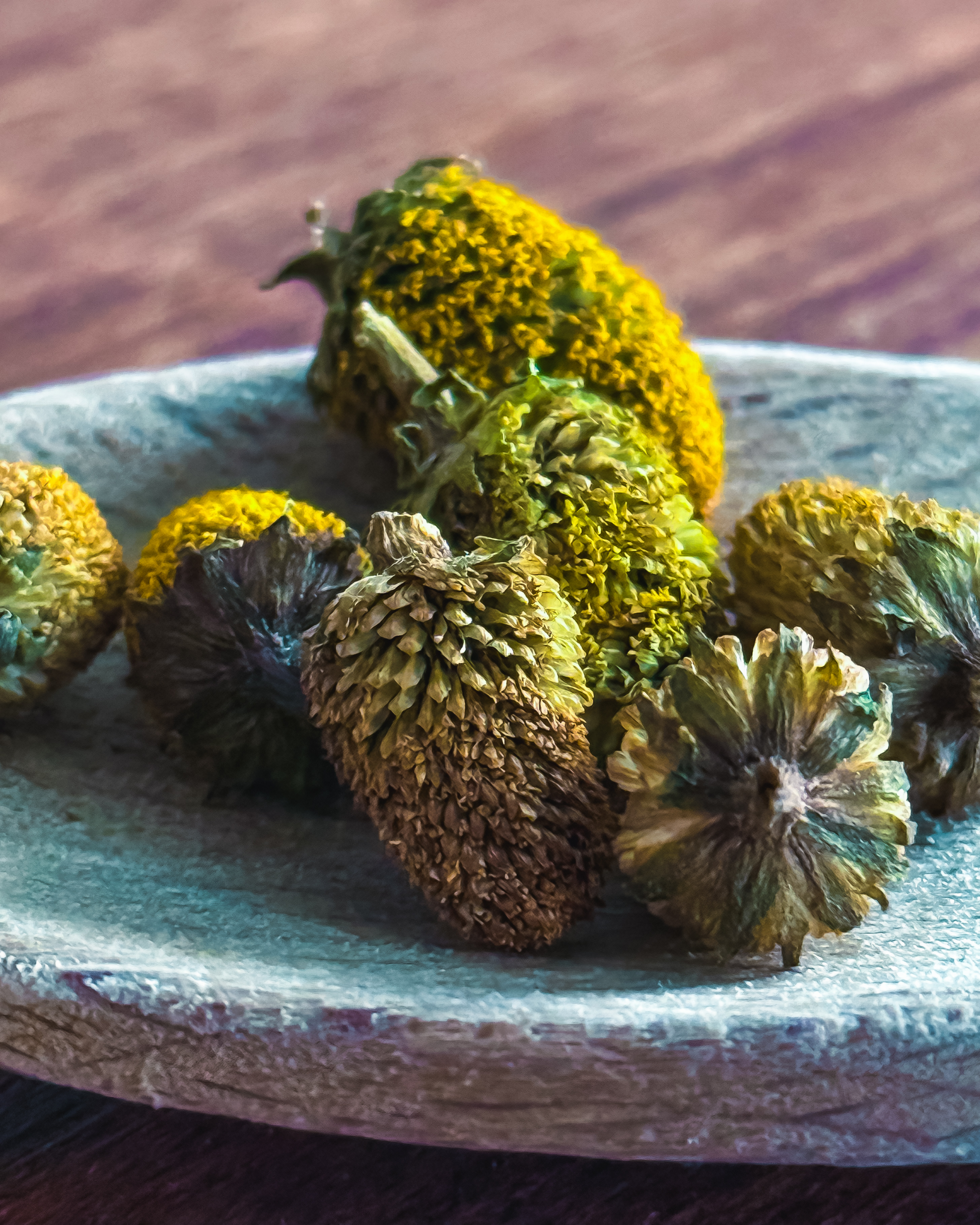
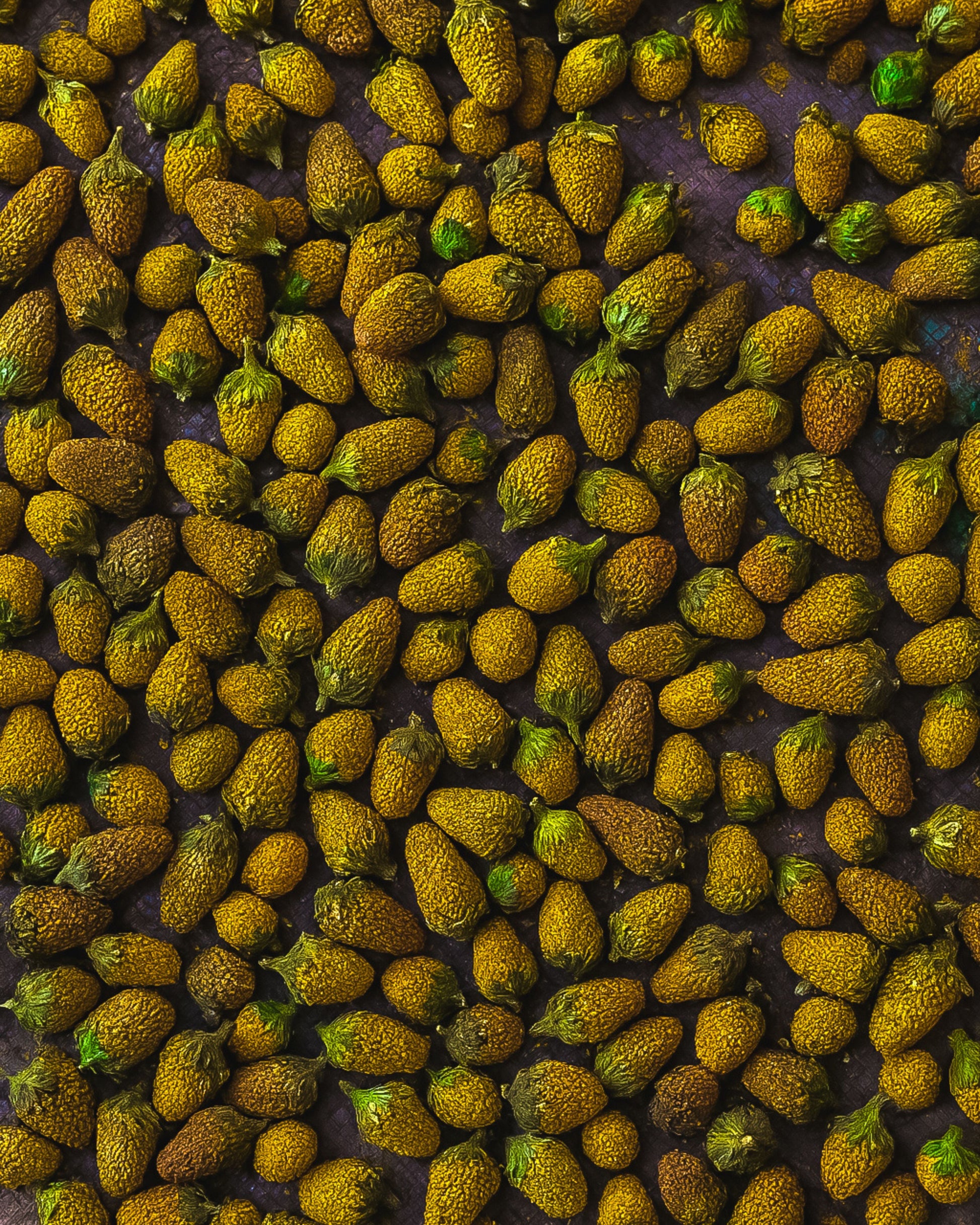
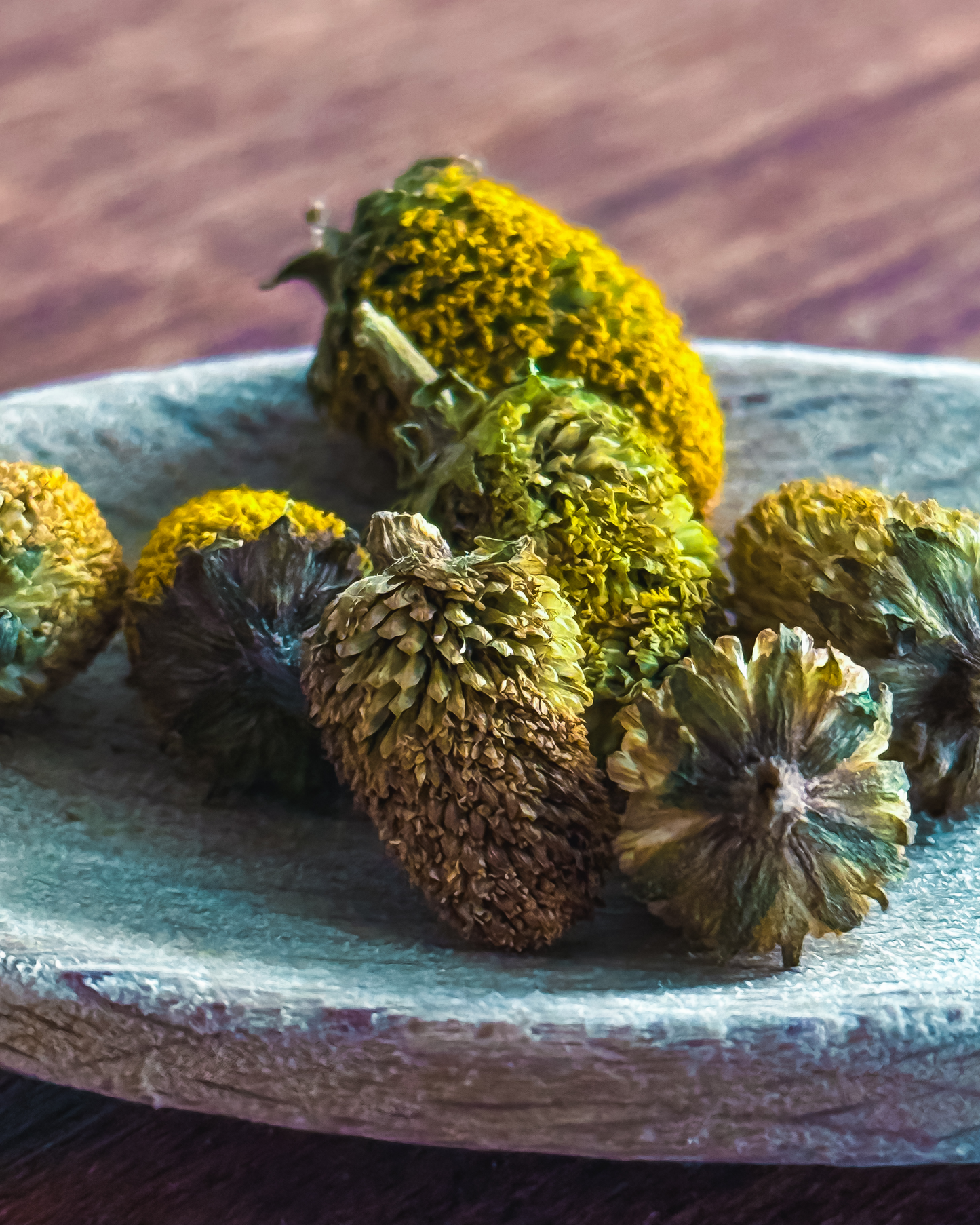
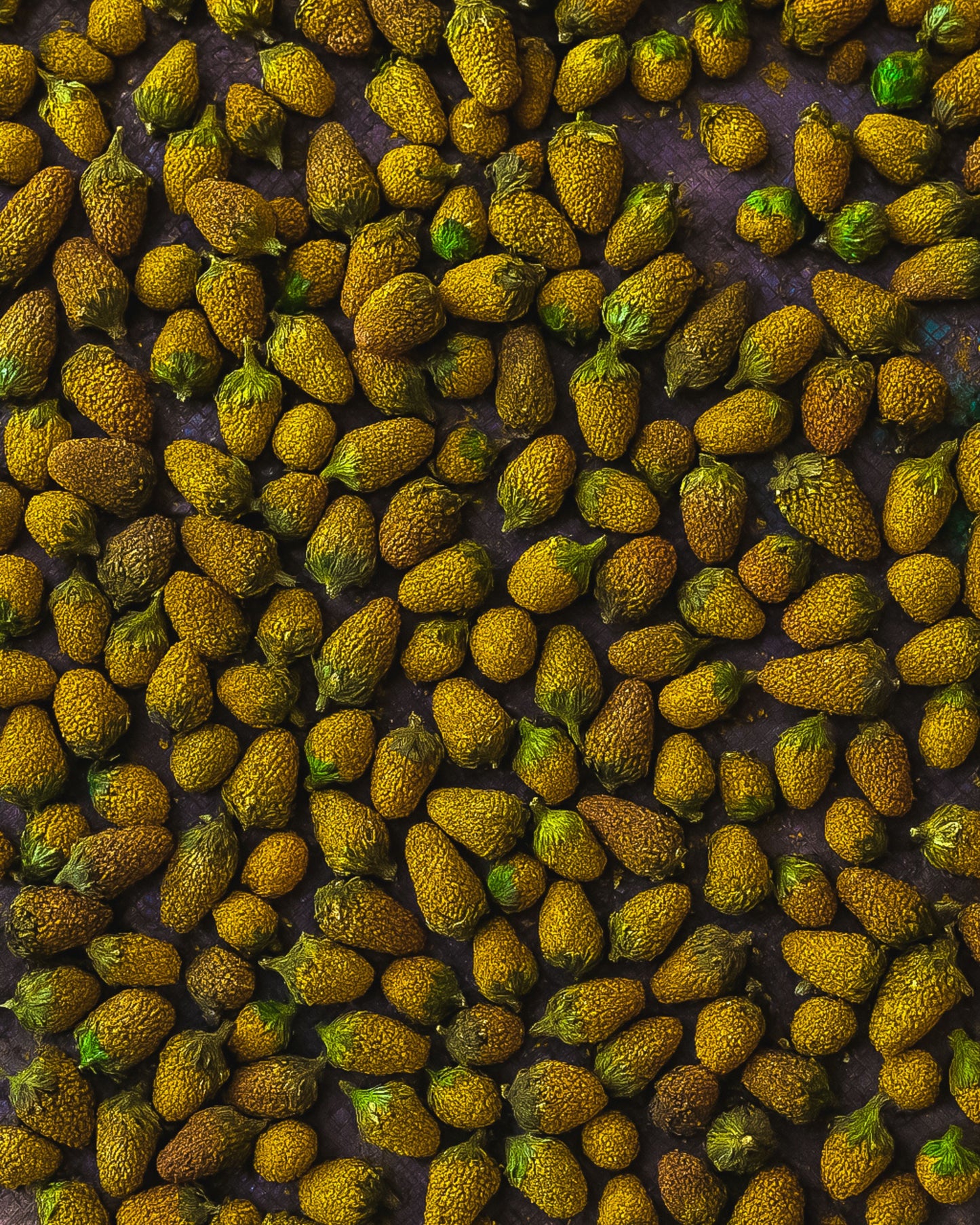
A beautiful dried Acmella oleracea flower is therefore not automatically a microbiologically controlled cosmetic ingredient simply because it looks clean.
Fresh Plants Require Particular Caution
Adding fresh flowers, leaves, fruit or herbs directly to a water-containing cosmetic can introduce:
- water;
- microorganisms;
- plant enzymes;
- organic material.
This can make preservation more challenging.
DIY formulators should therefore avoid assuming that fresh botanical additions are harmless because they are natural.
Water Quality
Water is not simply "water" from a formulation perspective.
Its quality matters.
For cosmetic formulation, the chosen water should be suitable for the intended use and formulation process.
Using water of uncertain microbiological quality can introduce contamination at the beginning of production.
And an important point:
Boiling water is not a complete preservation strategy for the finished cosmetic.
Even if heating reduces microorganisms initially, the product can be contaminated again during:
- cooling;
- mixing;
- transfer;
- filling;
- use.
Preservation concerns continue after the heating step.
8. Cleaning, Sanitising and Disinfecting Are Not the Same
These terms are often used interchangeably in DIY cosmetic discussions.
They should not be.
Cleaning
Cleaning removes visible dirt, residues and other material from a surface.
This is an essential first step.
A surface covered in oils or product residues is harder to treat effectively.
Sanitising
Sanitising generally means reducing microorganisms to an appropriate level under defined conditions.
Disinfecting
Disinfection uses an appropriate method or chemical agent to inactivate many microorganisms on suitable surfaces.
The exact meaning and regulatory use of terms such as "sanitiser" and "disinfectant" can vary by jurisdiction.
For DIY formulation, the practical lesson is straightforward:
Cleaning and microbial control are separate processes.
Why Cleaning Usually Comes First
Imagine a mixing tool covered with dried cream.
Spraying a disinfecting product over the residue does not magically create a clean tool.
Organic residues can interfere with effective surface treatment.
A better sequence is generally:
remove residues → clean → rinse where required → apply an appropriate sanitising or disinfecting process → allow suitable contact/drying according to product instructions
The exact procedure depends on the material, equipment and product being used.
Follow the Product Instructions
DIY advice sometimes presents universal rules such as:
"Spray alcohol and wait ten seconds."
That is not a reliable general standard.
The effectiveness of a disinfecting or sanitising product can depend on:
- active ingredient;
- concentration;
- surface;
- contact time;
- amount applied;
- presence of organic material.
Follow the manufacturer's directions for the specific product being used.
9. Preparing a Safer DIY Workspace
A DIY cosmetic workspace does not need to resemble a pharmaceutical cleanroom.
But it should be organised deliberately.
Before beginning, remove unnecessary objects from the working area.
Then prepare the surfaces and equipment needed for the formulation.
A practical workflow may include:
- Clear the workspace.
- Clean the work surface.
- Apply an appropriate surface hygiene procedure.
- Wash and dry hands thoroughly.
- Prepare clean equipment.
- Organise ingredients before opening them.
- Keep ingredient containers closed when not in use.
- Avoid unnecessary touching during formulation.
- Fill the finished product into appropriately prepared packaging.
- Clean the workspace after production.
Organisation reduces the temptation to leave the controlled area halfway through formulation to find missing equipment.
Avoid Cross-Contamination
Cross-contamination occurs when material is transferred from one source to another.
For example, imagine using a spatula to remove an ingredient from one container.
The same spatula is then inserted into another ingredient container.
Material from the first ingredient can be transferred into the second.
Instead, use clean utensils or suitable dispensing methods for each ingredient.
Do Not Return Excess Ingredient to the Original Container
Suppose you need 20 grams of an ingredient but accidentally weigh 23 grams.
Returning the excess to the original container may introduce contamination from:
- the weighing vessel;
- the spatula;
- the environment;
- other ingredients.
A better laboratory habit is to avoid returning dispensed material to the original stock container.
Accurate weighing reduces waste.
10. Equipment, Containers and Personal Hygiene
The equipment used for cosmetic formulation can influence both formulation quality and contamination risk.
Typical DIY equipment may include:
- precision scales;
- glass beakers;
- spatulas;
- pipettes;
- stirring tools;
- thermometers;
- pH measurement equipment;
- storage containers.
Equipment should be suitable for the ingredients and processes involved.
Dedicated Equipment Is Useful
Where practical, cosmetic formulation equipment should be separated from normal food preparation equipment.
This reduces confusion and potential cross-contamination.
It also makes it easier to maintain consistent cleaning procedures.
Cracks and Damage Matter
Damaged equipment can be difficult to clean properly.
Scratched plastics, cracked containers and damaged seals can create areas where residues accumulate.
Equipment should therefore be inspected regularly.
If something cannot be cleaned effectively, replacing it may be the safer option.
Packaging Is Part of Hygiene
A carefully prepared formulation can still become contaminated during filling.
Packaging should therefore be treated as part of the production process rather than as decoration added at the end.
The container needs to be:
- suitable for the formulation;
- appropriately prepared;
- compatible with the ingredients;
- able to close properly.
The dispensing system can also influence contamination during use.
Jar vs Pump Packaging
Consider a cream stored in an open jar.
Each time the consumer uses it, fingers may enter the container.
That creates repeated opportunities for contamination.
A pump or airless-style dispenser can reduce direct contact with the bulk product.
This does not automatically eliminate the need for preservation.
It simply adds another layer of contamination control.
Droppers Can Become Contaminated Too
Dropper bottles can reduce direct hand contact, but only when used properly.
The pipette tip should ideally not touch:
- fingers;
- facial skin;
- other surfaces.
If it does, returning the dropper to the bottle may introduce contamination.
Packaging design and consumer behaviour therefore work together.
Personal Hygiene Matters
Before formulating:
- wash hands thoroughly;
- tie back long hair;
- wear clean clothing appropriate to the task;
- avoid touching the face and hair;
- cover cuts appropriately;
- avoid formulating over open food or drinks.
If you are coughing or sneezing frequently, postponing formulation may be sensible.
Good hygiene is not about creating an illusion of sterility.
It is about systematically reducing avoidable contamination.
Sterile Is a Strong Word
DIY formulators should be careful with the term sterile.
Sterility has a specific meaning.
A beaker sprayed with a household sanitising product should not automatically be described as sterile.
Similarly:
clean ≠ sanitised ≠ disinfected ≠ sterile
Using accurate terminology prevents false confidence.
What Good Hygiene Cannot Do
After all this discussion, it would be easy to assume that excellent hygiene solves the microbial problem.
It does not.
Hygiene reduces the initial contamination burden.
But if a water-based cosmetic provides suitable conditions for microbial growth, microorganisms introduced later may still multiply.
This can happen during consumer use.
For example:
Day 1: The product is prepared under excellent hygiene conditions.
Day 5: A finger touches the product.
Day 10: The container is repeatedly opened in a humid bathroom.
Day 20: Additional contamination has occurred.
Good production hygiene cannot control every event that happens after manufacture.
This is one reason appropriate preservation is so important.
The Multiple-Hurdle Approach
A useful way to understand cosmetic microbial safety is through multiple protective hurdles.
These may include:
Good hygiene
Reduces initial contamination.
Appropriate formulation design
Can make the environment more difficult for microorganisms.
Effective preservation
Helps control microbial growth.
Suitable packaging
Reduces opportunities for contamination.
Appropriate testing
Provides evidence about how the formulation behaves.
Correct storage
Helps maintain product quality.
None should automatically be considered a universal replacement for the others.
A Note for DIY Formulators Using Acmella oleracea
The same principles apply when experimenting with Acmella oleracea, spilanthol-containing ingredients or other botanical materials.
A botanical ingredient's natural origin does not exempt it from cosmetic safety principles.
If anything, botanical materials make good documentation particularly useful.
Record information such as:
- ingredient name;
- botanical identity where applicable;
- supplier;
- batch or lot information when available;
- date received;
- formulation amount;
- formulation date.
For extracts, useful technical information may also include:
- solvent or carrier;
- recommended use conditions;
- storage requirements;
- relevant specification data.
This makes experiments easier to reproduce and problems easier to investigate.
The Core Principle of Part 1
The most important lesson is simple:
You cannot preserve your way out of poor hygiene, and you cannot clean your way out of a formulation that requires effective preservation.
Both matter.
A well-designed DIY cosmetic process begins by controlling what enters the product.
It then considers what could grow in the product.
That brings us directly to preservation.
11. Conclusion to Part 1
DIY cosmetic safety begins long before a preservative is added.
Microorganisms exist throughout our normal environment, including on hands, plants, surfaces, equipment and packaging. A cosmetic formulation can therefore become contaminated at many points between weighing the first ingredient and using the finished product.
Water-containing products deserve particular attention because available water can support microbial growth. But total water content alone does not determine microbial risk. Water activity, formulation composition, pH, packaging and other factors can all influence the environment microorganisms encounter.
Good hygiene helps reduce contamination at the beginning of production. Cleaning removes residues, while sanitising and disinfecting involve different levels of microbial control. These terms should not be confused with sterility.
Equipment, packaging and personal behaviour matter too. A clean beaker can be contaminated by an unclean spatula. A carefully prepared cream can be exposed repeatedly when fingers enter a jar. A botanical ingredient can introduce microorganisms even when it looks perfectly clean.
Most importantly, a cosmetic does not need to look or smell spoiled to have a microbial problem.
That is why visual inspection alone cannot establish safety.
The foundation of responsible DIY formulation is therefore not fear of microorganisms. It is contamination control based on good hygiene, thoughtful formulation and evidence rather than assumptions.
In Part 2, we will move from contamination prevention to preservation itself. We will examine which DIY cosmetics are particularly vulnerable, how cosmetic preservatives work, what broad-spectrum preservation means, why vitamin E is not a preservative, why essential oils should not be relied upon as universal preservation systems, how pH can influence preservative performance, and why there is no single preservative percentage that can guarantee every DIY cosmetic is safe.
Part 2: Preservation and Formulation Safety
In Part 1, we established that good hygiene reduces the number of unwanted microorganisms introduced during formulation.
But hygiene alone cannot keep every cosmetic microbiologically stable throughout storage and use.
Once a product contains enough available water to support microbial growth, preservation becomes a central part of formulation safety.
This is also where DIY cosmetic advice can become misleading.
You may encounter claims such as:
- "Vitamin E preserves natural cosmetics."
- "Essential oils kill bacteria, so you don't need preservatives."
- "Keep it in the fridge and it will be fine."
- "If the pH is low, nothing can grow."
- "Use this preservative at 1% and the product is automatically safe."
- "Natural products don't need preservatives."
These statements oversimplify a complex subject.
Preservation is not simply about adding one ingredient. It involves the entire formulation, including water activity, pH, packaging, ingredient compatibility, manufacturing hygiene and expected consumer use.
The central principle of Part 2 is therefore:
A preservative is part of a preservation system, not a guarantee of safety by itself.
12. Why Cosmetics Need Preservation
A cosmetic formulation can provide microorganisms with conditions that allow them to survive or multiply.
Water is particularly important, but microorganisms may also encounter nutrients from ingredients within the formulation.
Potential sources include botanical materials, plant extracts and other organic ingredients.
Once microorganisms enter a suitable environment, they may multiply.
A properly designed preservation system helps control this microbial growth during the intended life of the product.
Preservation Has More Than One Purpose
Effective preservation helps protect:
The consumer
Microbial contamination can create safety concerns.
The formulation
Microbial activity may change the product's smell, colour, pH, viscosity or texture.
Product quality
A contaminated product may no longer meet its intended specifications.
Preservation should therefore be treated as a basic element of formulation design rather than an optional extra added at the end.
13. Which DIY Formulations Are Most Vulnerable?
Not all cosmetic formulations present the same microbial environment.
A useful starting distinction is between water-based and anhydrous products.
Higher-Concern Formulations
Products containing substantial available water generally require particular attention.
Examples include:
- creams;
- lotions;
- gels;
- toners;
- water-based serums;
- facial mists;
- emulsions;
- some shampoos and cleansers.
Adding botanical waters, hydrosols or water-based extracts also contributes to the aqueous part of a formulation.
Botanical Ingredients Can Add Complexity
DIY formulators sometimes assume that a botanical product is naturally protected.
The opposite may be true.
Plant-derived materials can introduce additional organic material and microbial contamination.
Fresh botanical ingredients deserve particular caution.
Putting fresh Acmella oleracea flowers directly into a homemade water-based cream, for example, does not automatically create a safer or more effective botanical cosmetic.
It introduces another biological raw material into an already complex microbial environment.
14. Anhydrous Products vs Water-Based Products
An anhydrous formulation is designed without water.
Examples may include:
- oil blends;
- some balms;
- certain body butters;
- wax-based products.
Because microorganisms generally require available water for growth, genuinely anhydrous products can present a different microbial risk profile from water-rich formulations.
But "water-free" should not be translated into "nothing can ever go wrong".
Water Can Enter During Use
Imagine a body scrub stored in a jar beside a shower.
The formula may originally contain no water.
Then the consumer repeatedly reaches into it with wet fingers.
Water has now been introduced.
This may create local conditions different from those of the original formulation.
Packaging and expected use therefore matter even for anhydrous products.
Anhydrous Does Not Mean Oxidatively Stable
Microbial preservation and oxidation are different issues.
Oils can oxidise even when microbial growth is strongly limited.
This distinction helps explain one of the most common DIY formulation mistakes.
15. What Is a Cosmetic Preservative?
A cosmetic preservative is an ingredient or system used to help inhibit unwanted microbial growth within a cosmetic formulation.
Preservatives may target different groups of microorganisms.
The effectiveness of a preservation system depends on factors including:
- preservative chemistry;
- concentration;
- formulation pH;
- solubility;
- water activity;
- other ingredients;
- manufacturing conditions;
- packaging;
- storage;
- microbial challenge.
This explains why preservative selection should happen during formulation design, not after the product has already been created.
There Is No Universal Preservative
A preservative that works well in one formulation may not be suitable for another.
For example, a preservative may have:
- a particular effective pH range;
- solubility requirements;
- temperature limitations;
- compatibility restrictions;
- supplier-defined use levels.
The manufacturer's technical documentation should therefore be consulted for the specific preservative system being used.
16. Broad-Spectrum Preservation Explained
The phrase broad-spectrum preservative is common in cosmetic formulation.
Broad-spectrum preservation generally refers to protection across relevant categories of microorganisms rather than targeting only one narrow group.
That commonly means considering:
- Gram-positive bacteria;
- Gram-negative bacteria;
- yeasts;
- moulds.
This matters because a formulation that suppresses one group may still be vulnerable to another.
"Antibacterial" Is Not the Same as "Preserved"
This distinction is particularly important when evaluating DIY ingredients.
An ingredient may demonstrate antibacterial activity under certain experimental conditions.
That does not automatically mean it can adequately preserve a cosmetic against the broader range of microorganisms relevant to product contamination.
Likewise:
antifungal activity ≠ complete preservation
and:
antibacterial activity ≠ broad-spectrum cosmetic preservation
The performance of the complete preservation system matters.
17. Why Essential Oils Are Not Reliable Preservatives
Essential oils are frequently discussed in natural cosmetic communities because some contain compounds that demonstrate antimicrobial activity in laboratory experiments.
That observation is scientifically interesting.
But it does not justify the conclusion:
"Essential oils can replace cosmetic preservatives."
Laboratory Antimicrobial Activity Is Not the Same as Product Preservation
An essential oil may inhibit a microorganism under a particular laboratory test.
A cosmetic product presents a much more complex environment.
Performance can be influenced by:
- concentration;
- solubility;
- emulsion structure;
- pH;
- other ingredients;
- microorganism type;
- distribution through the formulation.
A concentration that demonstrates antimicrobial activity in one experimental system may also be unsuitable for leave-on cosmetic use.
More Essential Oil Is Not Automatically Better
Increasing the essential-oil concentration in an attempt to improve preservation can create other concerns, including skin compatibility and fragrance exposure.
The correct question is therefore not:
"Which essential oil kills bacteria?"
It is:
"Has this preservation system been demonstrated to protect this finished cosmetic under relevant conditions?"
Unless appropriate evidence supports that conclusion, essential oils should not be relied upon as a universal substitute for a properly designed preservation system.
18. Why Vitamin E Is Not a Preservative
This is another widespread DIY misconception.
Vitamin E is frequently added to oil-based cosmetic formulations.
It can function as an antioxidant.
That is not the same as functioning as an antimicrobial preservative.
Antioxidant vs Preservative
An antioxidant helps slow oxidative processes.
In oils, oxidation can contribute to:
- rancid odours;
- changes in flavour or scent;
- deterioration of oil quality.
An antimicrobial preservative addresses microorganisms.
These are different mechanisms.
A simple distinction is:
Vitamin E helps address oxidation.
A cosmetic preservative helps address microbial growth.
Adding vitamin E to a water-containing cream does not automatically make that cream microbiologically preserved.
Why the Confusion Happens
In everyday language, "preserve" can simply mean keeping something in good condition.
In cosmetic science, however, antioxidant protection and antimicrobial preservation need to be distinguished.
A formula may need both.
19. pH and Preservative Performance
pH is another important variable in cosmetic preservation.
It describes how acidic or alkaline an aqueous environment is.
Some preservative systems work effectively only within particular pH ranges.
Outside those conditions, their antimicrobial performance may decline.
This means formulators should not choose a preservative without considering the intended pH of the finished formulation.
Measure Rather Than Guess
A formula containing acidic ingredients is not automatically at a specific pH.
Likewise, adding a small amount of citric acid does not tell you the final pH.
The finished formulation should be measured using a method appropriate for the product.
For DIY work where pH is important, a properly maintained and calibrated pH meter can provide more useful quantitative information than simply guessing from the ingredients.
pH Can Change
Another important consideration is that pH may shift over time.
Changes can occur because of:
- ingredient interactions;
- degradation;
- storage;
- formulation instability.
This is one reason stability monitoring matters.
Can Low pH Replace Preservation?
Not as a universal rule.
Very acidic or otherwise hostile environments can restrict many microorganisms, but different microorganisms tolerate different conditions.
A product should not be declared safe simply because it has a relatively low pH.
The complete formulation still needs to be considered.
20. Packaging and Contamination Risk
Packaging is one of the most underestimated parts of cosmetic preservation.
A formulation does not remain inside a laboratory beaker.
Eventually it enters a container and is repeatedly exposed to consumer behaviour.
Compare three examples.
Open jar
The user repeatedly puts fingers into the product.
Pump bottle
The bulk formulation may have less direct contact with fingers.
Airless-style dispenser
Depending on its design, exposure of the bulk product to the external environment may be reduced further.
These formats create different contamination opportunities.
Packaging Supports Preservation
Good packaging can reduce contamination pressure.
But packaging should not be used as an excuse to ignore preservation requirements.
An airless container does not magically sterilise the formula inside it.
Packaging is another hurdle in the overall system.
21. Preservative Compatibility and Manufacturer Use Levels
One of the most dangerous shortcuts in DIY formulation is copying a preservative percentage from an unrelated recipe.
For example:
"I saw someone use 1%, so I always use 1%."
That approach ignores the chemistry of both the preservative and the formulation.
Different preservative systems have different:
- recommended use ranges;
- pH requirements;
- temperature requirements;
- solubility characteristics;
- compatibility considerations;
- regulatory restrictions.
The correct amount therefore depends on the actual preservative system and intended formulation.
Follow Technical Documentation
When purchasing a cosmetic preservative, formulators should consult reliable supplier or manufacturer documentation.
Useful information may include:
- recommended use range;
- effective pH range;
- incorporation method;
- temperature limits;
- solubility;
- known incompatibilities;
- storage recommendations.
Do not assume that two products marketed as "natural preservatives" behave identically.
Trade names can represent very different chemical systems.
Why We Are Not Giving a Universal Percentage
You may notice that this article does not say:
"Add X% preservative to every DIY cream."
That omission is deliberate.
Such a recommendation would create false confidence.
Even if a preservative is used within its recommended concentration range, that alone does not prove the finished formulation is adequately protected.
Actual performance depends on the complete product.
22. Common DIY Preservation Mistakes
Several mistakes appear repeatedly in homemade cosmetic formulation.
Understanding them can prevent false assumptions about safety.
Mistake 1: "Vitamin E Is My Preservative"
Vitamin E is primarily used for antioxidant purposes.
It should not be treated as a substitute for appropriate antimicrobial preservation in a water-containing product.
Mistake 2: "Essential Oils Preserve It Naturally"
Some essential oils show antimicrobial activity under particular conditions.
That does not establish broad-spectrum preservation of a finished cosmetic.
Mistake 3: "I Keep It in the Fridge"
Refrigeration may slow the growth of some microorganisms.
It does not reliably eliminate microbial contamination.
A refrigerator is not a preservation system.
Mistake 4: "I Used Distilled Water, So It Is Safe"
Starting with suitable-quality water is good formulation practice.
But the product can become contaminated during:
- mixing;
- cooling;
- filling;
- storage;
- use.
Water quality at the beginning does not guarantee product safety throughout its life.
Mistake 5: "I Boiled Everything"
Heating may reduce microbial levels under certain conditions.
But heating is not equivalent to providing ongoing protection against contamination after the product cools.
Mistake 6: "It Hasn't Grown Mould"
Visible mould is a clear reason to discard a cosmetic.
But absence of visible mould does not establish microbiological safety.
Bacteria and yeasts may not produce obvious visible changes.
Mistake 7: "It Smells Normal"
Smell is not a microbial assay.
A contaminated product may not immediately smell unusual.
Mistake 8: "I Made a Tiny Batch"
Small batch size can reduce how long a product remains in use.
It does not prevent contamination.
Mistake 9: "The pH Is Low"
pH can contribute to microbial control and preservative performance.
It is not a universal substitute for appropriate preservation.
Mistake 10: "The Preservative Is Natural, So It Must Be Safer"
"Natural" does not automatically mean safer, gentler or more effective.
Preservatives should be assessed according to their:
- identity;
- concentration;
- intended use;
- compatibility;
- performance;
- supporting safety information.
Origin alone cannot answer these questions.
Botanical Extracts and Preservation
This is particularly relevant when working with Acmella oleracea.
Suppose you want to formulate an experimental facial serum containing an Acmella extract.
Before thinking about spilanthol concentration, ask:
What type of extract is it?
Is it:
- oil-based;
- water-based;
- glycerine-based;
- alcohol-containing;
- supplied in another carrier?
The carrier can significantly affect how the ingredient behaves in the formula.
Next ask:
Does the supplied extract itself contain a preservative system?
Then:
What happens when it is diluted into the finished formulation?
A preservative present in a raw material does not automatically preserve the entire final cosmetic after dilution.
Preserved Raw Material ≠ Preserved Finished Product
This deserves emphasis.
A supplier may provide a water-based botanical extract that has been preserved for storage.
That means the supplier has addressed the microbial stability of that raw material under its intended conditions.
If you then add 5% of that extract to a homemade lotion, you cannot automatically assume its preservative system will protect the entire lotion.
The finished product is a new formulation.
It needs to be evaluated as such.
Preservation and Spilanthol Are Separate Questions
For Madabuzz DIY Lab experiments, it is useful to separate two objectives.
Active ingredient question
How much spilanthol or Acmella oleracea extract is appropriate for the intended experimental formulation?
Microbial safety question
Does the complete formulation have an appropriate preservation strategy?
Solving one does not solve the other.
A perfectly standardised botanical extract does not make an inadequately preserved water-based product microbiologically safe.
Likewise, a well-preserved cosmetic does not automatically demonstrate that its active ingredient is effective.
Preservatives Are Not a Substitute for Hygiene
We now return to the principle established in Part 1.
Imagine making a cream in a dirty container using poorly cleaned equipment and repeatedly touching the product with bare hands.
Adding a preservative afterwards should not be treated as permission for poor hygiene.
Preservation systems have practical limits.
Reducing initial contamination makes the preservation challenge more manageable.
This is why professional cosmetic manufacturing applies good manufacturing practices rather than simply relying on preservatives.
Preservation Is a System
The most useful way to think about preservation is not as a bottle of preservative sitting on the laboratory shelf.
Think of it as a system:
Clean production
↓
Controlled raw materials
↓
Thoughtful formulation
↓
Appropriate preservative system
↓
Suitable pH
↓
Protective packaging
↓
Appropriate testing
↓
Controlled storage and use
Each element contributes to microbial risk management.
Why Testing Still Matters
At this point, a reasonable question is:
If I use good hygiene, select the correct preservative, measure the pH and choose good packaging, how do I know the product is actually protected?
That question brings us to the limits of theoretical formulation.
You can calculate ingredient percentages.
You can measure pH.
You can review supplier documentation.
You can follow good hygiene.
But none of these alone tells you exactly how the finished formulation responds when challenged by microorganisms.
That requires testing.
And this is where the difference between a DIY experiment and a validated cosmetic product becomes particularly important.
23. Conclusion to Part 2
Preservation is one of the most important and most misunderstood parts of DIY cosmetic formulation.
Water-containing products generally deserve particular attention because available water can support microbial growth. But preservation cannot be determined simply by looking at how much water appears in a recipe.
The complete formulation matters.
Preservative performance can depend on pH, concentration, water activity, solubility, ingredient compatibility, manufacturing hygiene, packaging and storage.
Several popular DIY shortcuts are therefore unreliable.
Vitamin E is an antioxidant, not a substitute for antimicrobial preservation.
Essential oils may demonstrate antimicrobial activity under specific experimental conditions, but this does not automatically make them reliable broad-spectrum cosmetic preservatives.
Refrigeration can slow some microbial processes, but it does not replace preservation.
Boiling does not protect a product from later contamination.
A low pH can contribute to microbial control but does not universally eliminate the need for preservation.
And a preservative used at a supplier-recommended percentage does not, by itself, prove that the finished cosmetic is adequately protected.
The strongest approach uses several protective hurdles together:
good hygiene + intelligent formulation + appropriate preservation + suitable packaging + testing
This is especially important when formulating with botanical ingredients such as Acmella oleracea. A plant's natural origin does not make the finished product self-preserving, and a preservative contained within a supplied extract should not automatically be assumed to protect the complete formulation after dilution.
Ultimately, preservation is not proven by how a cosmetic looks, smells or feels.
It is evaluated through evidence.
In Part 3, we will examine how that evidence is generated. We will look at microbial testing, preservative efficacy or challenge testing, stability testing, batch documentation, shelf life, storage, warning signs, responsible disposal, and the important difference between experimenting with DIY cosmetics for personal use and manufacturing products intended for sale.
Part 3: Testing, Storage and Responsible DIY Formulation
In Parts 1 and 2, we established two foundations of DIY cosmetic safety.
First, good hygiene reduces contamination but does not replace preservation.
Second, adding a preservative does not automatically prove that a finished cosmetic is adequately protected.
That leaves an important question:
How do we know whether a formulation is actually stable and microbiologically controlled?
This is where testing becomes important.
A DIY cream can look beautiful, smell normal and remain perfectly smooth while still having problems that cannot be detected with the senses alone.
Likewise, a product can remain microbiologically acceptable while developing other stability problems, such as separation, colour changes or changes in viscosity.
Testing therefore needs to answer different questions.
In Part 3, we will examine microbial testing, preservative efficacy testing, stability assessment, batch documentation, shelf life and storage. We will also explore the important boundary between experimenting at home and manufacturing cosmetics for other people.
24. Why You Cannot Reliably Judge Safety by Sight or Smell
One of the most persistent misconceptions in DIY cosmetics is that contamination will always announce itself.
Sometimes it does.
A contaminated product may eventually develop:
- visible mould;
- an unusual smell;
- colour changes;
- gas formation;
- altered texture;
- changes in viscosity.
These signs should never be ignored.
But their absence does not establish safety.
Microorganisms Are Microscopic
Bacteria and yeasts can be present without producing visible colonies.
A product may therefore look completely normal while containing microorganisms.
The same principle applies to smell.
Microbial contamination does not necessarily produce an obvious unpleasant odour at the moment it becomes relevant.
This gives us one of the core rules of DIY cosmetic safety:
Your eyes and nose can detect some signs of failure, but they cannot confirm microbiological safety.
"Looks Fine" Is an Observation, Not a Test Result
There is nothing wrong with monitoring appearance, colour, odour and texture.
These observations are useful.
The problem begins when they are treated as proof.
For example:
"I made this lotion three months ago and it still smells fine, so the preservative works."
That conclusion goes beyond the evidence.
What you actually know is:
No obvious sensory deterioration has been detected.
You do not necessarily know what the microbial population is.
25. What Is Microbial Testing?
Microbial testing uses laboratory methods to investigate microorganisms associated with a product.
Depending on the purpose of the test, laboratories may examine the microbial quality of:
- raw materials;
- water;
- bulk formulations;
- finished products.
Testing can help determine whether unwanted microorganisms are present or whether microbial counts remain within relevant criteria.
This provides information that visual inspection cannot.
Microbial Testing Answers a Specific Question
A microbiological examination of a sample essentially asks:
What is present in this sample at the time it is tested?
That is useful.
But another question is equally important:
What happens if microorganisms are deliberately introduced into the product?
That is the purpose of preservative efficacy testing.
26. What Is a Preservative Efficacy or Challenge Test?
A preservative efficacy test, commonly called a challenge test, evaluates how effectively a formulation controls selected microorganisms under defined test conditions.
The general concept is straightforward.
A finished product is deliberately challenged with specified microorganisms.
Samples are then evaluated over defined intervals to determine how the microbial populations change.
The exact procedure, organisms, acceptance criteria and timing depend on the test method and applicable standard.
Why Deliberately Add Microorganisms?
It may sound strange to intentionally contaminate a cosmetic.
But the purpose is to test the preservation system under controlled conditions.
During real-world use, a product can encounter microorganisms through:
- fingers;
- air;
- packaging;
- bathroom environments;
- repeated opening;
- applicators.
A challenge test creates a controlled way to investigate whether the preservation system can respond to microbial stress.
What Does a Successful Challenge Test Tell Us?
A successful result provides evidence that the tested formulation met the criteria of the particular method used.
That is far more informative than saying:
"I added preservative, so it should be fine."
But even challenge testing needs context.
The result applies to the formulation tested.
If you significantly change the formula, the original result may no longer adequately represent the new product.
Small Changes Can Matter
Imagine a lotion passes appropriate preservation testing.
Later, the formulator changes:
- the botanical extract;
- preservative concentration;
- pH;
- water phase;
- packaging;
- emulsifier;
- another important ingredient.
It may be tempting to assume that the original test still covers the revised formula.
That should not automatically be assumed.
Changes in formulation can affect microbial robustness.
27. Stability Testing vs Microbial Testing
Stability and microbial testing are sometimes discussed as though they were the same thing.
They are not.
Stability Testing
Stability testing examines how a product changes over time and under defined environmental conditions.
Depending on the formulation and test programme, researchers or manufacturers may monitor:
- appearance;
- colour;
- odour;
- pH;
- viscosity;
- phase separation;
- packaging compatibility;
- other relevant physical or chemical properties.
The purpose is to understand whether the formulation remains acceptably stable.
Microbial Testing
Microbial testing investigates microorganisms.
Challenge Testing
Challenge testing specifically examines the effectiveness of the preservation system when the formulation is exposed to defined microbial challenges.
These tests provide different information.
A product can be physically stable yet microbiologically inadequate.
A product can also be microbiologically controlled but physically unstable.
For example, a preserved lotion that separates into oil and water phases has a stability problem even if microbial testing is acceptable.
Stability Does Not Equal Safety
A cream that remains beautifully white and perfectly emulsified for six months has demonstrated something about its physical appearance.
It has not automatically demonstrated microbiological safety.
Likewise, a successful challenge test does not automatically prove that every other aspect of the product is stable, compatible or suitable.
The evidence needs to match the question.
28. Batch Records and Traceability at Home
Documentation may sound unnecessary when making a 50-gram experimental serum at home.
In reality, it is one of the easiest ways to improve DIY formulation.
If a formula works well, you want to know exactly how you made it.
If it fails, you want to know what changed.
What Should a DIY Batch Record Include?
A simple formulation record could include:
- product or experiment name;
- batch number;
- date;
- complete ingredient list;
- ingredient percentages;
- actual weights;
- supplier information;
- relevant lot numbers where available;
- processing temperatures;
- mixing procedure;
- measured pH where relevant;
- preservative used;
- packaging;
- observations.
You can also record changes during storage.
For example:
Day 1: smooth white emulsion, pH recorded.
Week 2: no visible separation.
Week 4: slight colour change.
Week 8: viscosity noticeably lower.
These observations can help identify patterns.
Why Batch Numbers Matter
Even a simple home laboratory can benefit from batch identification.
Instead of labelling a bottle:
Acmella Serum
use something such as:
Acmella Serum, Batch AS-01, 12 March
The exact numbering system is less important than consistency.
If you later compare several formulations, you can identify which sample belongs to which formulation record.
Traceability and Botanical Ingredients
Traceability becomes particularly useful when experimenting with Acmella oleracea extracts.
Suppose two batches of serum behave differently.
Without records, you may not know whether the difference came from:
- the extract;
- concentration;
- carrier;
- pH;
- processing;
- packaging;
- another ingredient.
Recording the raw material batch and relevant specifications makes investigation much easier.
For standardised extracts, analytical information such as measured spilanthol content can also help distinguish ingredient batches.
But remember:
A Certificate of Analysis supports ingredient characterisation. It does not replace finished-product safety or preservation testing.
29. Storage, Shelf Life and Responsible Labelling
How a cosmetic is stored can influence its quality.
Potential environmental stresses include:
- heat;
- light;
- oxygen;
- moisture;
- repeated temperature changes.
The importance of each factor depends on the formulation and packaging.
Cool and Dark Does Not Mean Forever
"Store in a cool, dark place" is useful advice for many ingredients and formulations.
It is not a shelf-life guarantee.
Storage conditions can help protect a product, but they cannot compensate for inadequate formulation or preservation.
Refrigeration Is Not a Universal Solution
Refrigeration is frequently recommended online for inadequately preserved DIY products.
Lower temperatures can slow the growth of some microorganisms.
But refrigeration does not reliably sterilise a cosmetic.
Some microorganisms can tolerate low temperatures, and contamination may already have occurred.
The product also experiences repeated temperature changes when removed from and returned to the refrigerator.
Refrigeration should therefore not be treated as a substitute for appropriate preservation.
How Long Does a Homemade Cosmetic Last?
There is no scientifically responsible universal answer such as:
"All homemade creams last three months."
Shelf life depends on factors including:
- formulation;
- raw materials;
- preservation;
- packaging;
- manufacturing process;
- storage;
- physical and chemical stability;
- microbial stability.
A meaningful shelf-life assignment requires supporting evidence.
For DIY experiments without such evidence, avoid pretending that an arbitrary date has been scientifically validated.
"Use Within 30 Days" Does Not Solve the Problem
Another common approach is to give an inadequately preserved product a very short shelf life.
For example:
"There is no preservative, but use it within one week."
Time alone does not establish microbial safety.
Contamination can occur quickly if the conditions are favourable.
A short shelf life can reduce exposure duration, but it should not be used as a universal substitute for proper preservation.
30. When a DIY Formula Should Be Discarded
Some warning signs are straightforward.
A DIY cosmetic should not continue to be used when obvious deterioration or contamination is present.
Warning signs may include:
- visible mould;
- unexpected gas formation;
- major colour changes;
- unusual odours;
- unexplained separation;
- substantial texture changes;
- damaged or compromised packaging;
- unexpected persistent irritation during use.
But remember the principle from the beginning of this section:
No visible warning sign does not equal proven safety.
Do Not Scoop Out the Mould
If visible mould appears on the surface of a cream, removing the visible patch does not restore the product.
The contamination may extend beyond what can be seen.
The appropriate response is to discard the product.
Do Not "Fix" a Failed Batch by Adding More Preservative Later
Another risky idea is to add preservative after a product has already shown signs of microbial failure.
Preservatives are intended to be incorporated as part of a properly designed formulation.
They should not be treated as a method for rescuing a product that is already visibly contaminated.
When microbial failure is suspected, discard the batch and investigate why it failed.
31. Making Products for Yourself vs Selling Them
There is an important distinction between experimenting with a formulation for personal learning and placing a cosmetic product on the market.
When you sell or otherwise commercially supply cosmetics, additional legal responsibilities can apply.
Exact requirements depend on the jurisdiction.
They may concern areas such as:
- cosmetic safety;
- manufacturing practices;
- ingredient restrictions;
- product documentation;
- labelling;
- claims;
- notification or registration;
- responsible persons or entities;
- safety assessment.
DIY experience does not remove these obligations.
"Handmade" Does Not Mean Exempt
A cosmetic does not automatically escape regulatory requirements because it is:
- handmade;
- natural;
- botanical;
- produced in small batches;
- made at home.
The rules depend on the market in which the product is supplied.
Anyone intending to sell cosmetics should therefore consult the current requirements for the relevant jurisdiction rather than relying solely on general DIY guidance.
32. When DIY Formulation Becomes Professional Cosmetic Manufacturing
There is no problem with learning formulation at home.
It can be an excellent way to understand:
- emulsions;
- botanical extracts;
- ingredient compatibility;
- pH;
- sensory properties;
- formulation percentages.
But making a product for consumers introduces a different level of responsibility.
The question changes from:
"Can I make this cream?"
to:
"Can I demonstrate that this product is appropriately formulated, manufactured, tested, documented and compliant for its intended market?"
That is a much higher standard.
Scaling Up Changes the Problem
A formula that behaves well in a 100-gram beaker may behave differently when produced at larger scale.
Scaling can affect:
- heating;
- cooling;
- mixing;
- shear;
- ingredient incorporation;
- filling;
- process time.
Commercialisation therefore involves more than multiplying every ingredient by 100.
Professional Testing Is Not a Failure of DIY
Sending a formulation to a laboratory for appropriate testing does not mean the formulator has failed.
It means certain questions require laboratory evidence.
A microscope on a kitchen table does not automatically provide the same information as validated microbiological testing.
Knowing where DIY observation ends and professional testing begins is part of responsible formulation.
A Practical DIY Safety Workflow
The principles from all three parts can now be combined into a single workflow.
1. Design the formula
Determine whether the product contains water and consider its likely microbial risk.
2. Understand every ingredient
Know the function, supplier recommendations and relevant technical specifications.
3. Plan preservation early
Do not wait until the formula is finished to think about microbial control.
4. Prepare the workspace
Clean and organise equipment, surfaces and packaging.
5. Manufacture carefully
Reduce unnecessary contamination and follow a consistent process.
6. Measure relevant parameters
For example, measure pH when it affects formulation or preservative performance.
7. Record the batch
Document ingredients, percentages, process and observations.
8. Choose suitable packaging
Consider how the consumer will interact with the product.
9. Monitor stability
Observe physical and chemical changes relevant to the formula.
10. Obtain appropriate testing where required
Especially when safety, shelf life or commercial supply depends on evidence rather than assumption.
This creates a much stronger approach than relying on a single "magic" preservative.
33. Frequently Asked Questions
Can I tell whether a homemade cosmetic is contaminated by looking at it?
Not reliably. Visible mould, unusual odours or major changes can indicate failure, but a product can contain unwanted microorganisms without obvious visible signs.
Does a preservative guarantee that my cosmetic is safe?
No. Preservative performance depends on the complete formulation, concentration, pH, water activity, ingredients, packaging, hygiene and other factors. Finished-product testing may be needed to demonstrate adequate preservation.
What is a cosmetic challenge test?
A preservative efficacy or challenge test evaluates how effectively a formulation controls specified microorganisms introduced under defined laboratory conditions.
Is challenge testing the same as stability testing?
No. Challenge testing focuses on preservation performance against microorganisms. Stability testing examines how relevant physical, chemical and sometimes other product properties change over time and under defined conditions.
Can I use vitamin E instead of a preservative?
Vitamin E is primarily used as an antioxidant. It should not be treated as a substitute for antimicrobial preservation in a water-containing cosmetic.
Can essential oils preserve homemade cosmetics?
Some essential oils demonstrate antimicrobial activity under particular laboratory conditions. This does not automatically mean they can provide reliable broad-spectrum preservation in a finished cosmetic.
Can I keep an unpreserved cream in the refrigerator?
Refrigeration may slow some microbial growth, but it does not replace an appropriate preservation strategy.
How long does a homemade cream last?
There is no universal shelf life. It depends on the formulation, preservation system, manufacturing process, packaging, storage and supporting stability and microbiological evidence.
Can I rescue a mouldy cosmetic by removing the mould?
No. A visibly contaminated cosmetic should be discarded rather than repaired by removing the visible growth.
Do I need testing if I want to sell homemade cosmetics?
Commercial cosmetic requirements vary by jurisdiction, but products placed on the market may be subject to specific safety, manufacturing, documentation, testing, labelling and regulatory requirements. Current local rules should be checked before selling.
34. Final Scientific Perspective
DIY cosmetic formulation sits at an interesting intersection between creativity and science.
It is easy to make something that looks like a cosmetic.
Creating a product whose safety, stability and preservation are supported by evidence is more demanding.
That difference matters.
A successful emulsion does not automatically mean a safe emulsion.
A pleasant smell does not demonstrate microbial quality.
A natural ingredient does not provide automatic protection against contamination.
A preservative does not compensate for poor hygiene.
And a clean workspace does not remove the need for preservation when the formulation can support microbial growth.
Instead, responsible formulation uses multiple protective layers:
Hygiene → formulation design → preservation → packaging → testing → storage → documentation
No single layer should be expected to do everything.
This approach is particularly relevant when experimenting with botanicals such as Acmella oleracea. Botanical materials can be scientifically interesting ingredients, but their natural origin does not exempt them from normal cosmetic safety principles.
The same applies to spilanthol-containing extracts.
Knowing the spilanthol concentration can help characterise an ingredient.
It does not tell us whether a water-based serum is adequately preserved.
Those are different questions requiring different evidence.
Perhaps the most important principle of the entire article is therefore this:
Cosmetic safety should be demonstrated where possible, not assumed because a product looks clean, contains natural ingredients or includes a preservative.
For DIY formulators, that does not mean abandoning experimentation.
It means understanding its limits.
Make careful formulas. Keep good records. Control contamination. Follow technical information. Measure what can be measured. Test what needs to be tested. And when a question requires professional laboratory evidence, recognise that observation alone cannot answer it.
35. Key Takeaways
- A cosmetic can appear and smell normal while still being microbiologically compromised.
- Visual inspection is useful for detecting obvious failure but cannot confirm microbial safety.
- Microbial testing, preservative efficacy testing and stability testing answer different questions.
- A challenge test evaluates how a finished formulation responds to defined microbial challenges.
- Passing preservation testing applies to the tested formulation and should not automatically be extended to substantially modified versions.
- Physical stability does not prove microbiological safety.
- Good batch records improve reproducibility and traceability, even in a DIY laboratory.
- Botanical identity, supplier and batch information are worth documenting when working with Acmella oleracea extracts.
- A Certificate of Analysis does not replace finished-product preservation or safety testing.
- Refrigeration is not a substitute for an appropriate preservation strategy.
- Arbitrary short shelf lives cannot guarantee that an inadequately preserved product is safe.
- Visible mould means the product should be discarded rather than repaired.
- Adding more preservative is not an appropriate way to rescue an already contaminated batch.
- Handmade, natural and small-batch cosmetics are not automatically exempt from applicable cosmetic regulations.
- Products intended for sale require a different level of safety, documentation and regulatory responsibility from personal DIY experiments.
- Responsible cosmetic formulation combines hygiene, formulation design, preservation, packaging, testing, storage and documentation rather than relying on any single safety measure.