

Summary
This guide explains the science of double maceration in botanical oil extraction. It explores how the process works, why formulators may choose to repeat an extraction, and how it differs from traditional single maceration. Rather than making unsupported claims, the article examines the principles of diffusion, solvent capacity, and formulation science behind the technique.
Scientific educational guide.
Double Maceration Explained
Part 1: Understanding Double Maceration in Botanical Oil Extraction
When people think about botanical extracts, they often focus on the plant itself.
Whether it is lavender, calendula, chamomile, or Acmella oleracea, the spotlight usually falls on the botanical ingredient.
Yet the quality of a botanical extract depends just as much on how the extraction is performed as on the plant being extracted.
Extraction is not simply a matter of placing herbs into oil and waiting.
Every decision, including the choice of carrier oil, the condition of the plant material, extraction time, temperature, and filtration, helps determine the composition of the finished extract.
Among the many extraction techniques used in natural skincare, double maceration has become increasingly popular for premium botanical oils. Although the term appears on product labels and marketing materials, it is rarely explained in scientific detail.
Understanding what double maceration is, and what it is not, provides a clearer picture of how botanical oils are developed and why some formulators choose this additional step.
What Is Maceration?
Maceration is one of the oldest and simplest methods of botanical extraction.
It is a passive extraction process in which plant material is immersed in a liquid solvent for an extended period, allowing naturally occurring compounds to move from the plant into the surrounding liquid.
The choice of solvent determines which types of compounds can be extracted.
For example:
- Water extracts water-soluble compounds.
- Alcohol extracts both water-soluble and many alcohol-soluble compounds.
- Carrier oils primarily extract lipophilic (oil-soluble) constituents.
When producing cosmetic oil infusions, the solvent is usually a carefully selected carrier oil rather than water or alcohol.
Over time, oil-soluble compounds gradually diffuse from the botanical material into the surrounding oil until an equilibrium begins to develop.
Unlike aggressive extraction techniques that rely on heat or chemical solvents, maceration is generally regarded as a gentle process that preserves the natural characteristics of both the botanical and the carrier oil.
More Than "Soaking Herbs in Oil"
Maceration is often described as simply soaking herbs in oil.
While technically correct, this description overlooks the science taking place throughout the extraction.
Inside every piece of botanical material are countless microscopic plant cells containing naturally occurring compounds.
When dried botanical material is immersed in oil, these compounds do not instantly enter the carrier.
Instead, they gradually migrate from areas of higher concentration inside the plant tissues toward the surrounding oil, where their concentration is initially much lower.
This movement is driven by diffusion, one of the fundamental processes behind botanical extraction.
The longer appropriate conditions are maintained, the greater the opportunity for oil-soluble compounds to move into the carrier oil.
However, extraction is never unlimited.
The process gradually slows as the concentration of dissolved compounds in the oil increases, a concept that will become important when we discuss double maceration later in this article.
Why Carrier Oils Matter
A common misconception is that the carrier oil acts merely as a neutral transport medium.
In reality, the oil plays an active role in determining the character of the finished extract.
Different carrier oils possess different:
- fatty-acid profiles;
- viscosities;
- oxidative stability;
- sensory characteristics;
- and affinities for lipophilic compounds.
For example, a botanical extracted into MCT oil will produce a different finished ingredient than the same botanical extracted into Moringa or Baobab oil, not necessarily because one extracts "more," but because each carrier contributes its own chemistry and formulation characteristics.
The carrier oil therefore becomes part of the final ingredient rather than simply serving as a temporary extraction solvent.
Single Maceration: The Traditional Approach
The vast majority of botanical oil infusions are produced using single maceration.
Although individual methods vary between manufacturers, the basic workflow follows a familiar sequence.
Step 1: Botanical Preparation
The botanical material is carefully selected, cleaned if necessary, and typically dried to reduce its moisture content.
Drying is an important step because excessive water can encourage microbial growth and reduce the stability of the finished oil.
Step 2: Immersion in Carrier Oil
The dried botanical material is submerged in a suitable carrier oil.
The choice of carrier depends on the intended formulation and the characteristics desired in the finished extract.
Step 3: Extraction Period
The mixture is left to macerate under controlled conditions for a defined period.
During this time, oil-soluble constituents gradually diffuse into the surrounding oil.
Some manufacturers gently agitate the mixture periodically to improve contact between the plant material and the carrier.
Step 4: Filtration
Once the extraction period is complete, the botanical material is removed by filtration.
The infused oil is then ready for use as an ingredient or may undergo additional processing depending on the final product.
For many botanical oils, this single extraction cycle provides an effective and practical balance between quality, production time, and cost.
What Is Double Maceration?
Double maceration builds upon the traditional process rather than replacing it.
The first extraction is carried out exactly as in a standard single maceration.
Once that initial extraction is complete, the spent botanical material is removed through filtration.
At this point, most producers would bottle or use the infused oil.
With double maceration, however, the process continues.
Instead of ending the extraction, the same infused oil is combined with an entirely new batch of freshly prepared dried botanical material.
A second maceration cycle is then performed under controlled conditions.
After the second extraction is complete, the oil is filtered once again to remove the second batch of botanical material.
The result is an oil that has been exposed to two successive batches of botanical material, rather than one.
Importantly, the carrier oil is retained throughout the process.
It is the botanical material, not the oil, that is replaced.
Why Repeat the Extraction?
At first glance, repeating an extraction may seem unnecessary.
If the oil has already been infused once, why expose it to fresh plant material?
The answer lies in the principles of extraction chemistry.
Fresh botanical material contains a new supply of oil-soluble compounds.
Introducing this fresh material into an already infused oil creates another opportunity for additional compounds to diffuse into the carrier, provided the oil still has the capacity to dissolve them.
This concept does not mean that a second extraction automatically produces a stronger or more effective botanical oil.
Instead, it represents a formulation strategy intended to increase botanical contact and potentially enrich the composition of the infused oil.
Whether this results in measurable increases in specific compounds depends on many variables, including the botanical species, the extraction conditions, the carrier oil, and the remaining solvent capacity.
These topics will be explored in Part 2.
Why Premium Formulators Use Double Maceration
Double maceration requires:
- more botanical material;
- more production time;
- additional filtration;
- increased quality control;
- and higher manufacturing costs.
For these reasons, it is generally reserved for products where formulation quality is prioritized over production efficiency.
Many artisan and premium cosmetic manufacturers choose double maceration because it aligns with a philosophy of maximizing botanical contact through a gentle, solvent-free process rather than relying on elevated temperatures or synthetic extraction aids.
The decision is therefore as much about formulation philosophy as it is about extraction.
Double Maceration Is Not the Same as Double Strength
One of the most common misconceptions is that double maceration automatically produces a "double-strength" botanical extract.
Scientific evidence does not support such a simple conclusion.
Extraction is governed by complex interactions between:
- the chemistry of the botanical;
- the chemistry of the carrier oil;
- extraction time;
- temperature;
- diffusion;
- solvent capacity;
- and numerous other variables.
Repeating the extraction process may increase exposure to fresh botanical compounds, but it does not guarantee that every compound, or any specific compound, will be extracted in proportionally greater amounts.
Only analytical testing, such as chromatographic analysis, can determine the concentration of individual constituents within a finished extract.
For this reason, responsible formulators describe double maceration as an extraction method, not as proof of superior potency.
Laying the Foundation for Deeper Science
Double maceration appears deceptively simple.
In practice, it is built upon several important scientific principles.
Questions naturally arise.
Why does extraction gradually slow down?
Can a carrier oil become saturated?
Why does replacing the botanical material matter?
How do diffusion, equilibrium, and solubility influence the process?
Answering these questions requires looking beyond the extraction vessel and into the molecular interactions occurring throughout the maceration.
These principles form the scientific foundation of double maceration and explain why the process is considerably more sophisticated than simply repeating an infusion.
Key Takeaways from Part 1
- Maceration is a gentle extraction technique that transfers oil-soluble compounds from botanical material into a carrier oil over time.
- Single maceration is the most common method used to produce botanical oil infusions.
- Double maceration repeats the extraction using the same infused oil but a fresh batch of dried botanical material.
- The carrier oil remains unchanged throughout the process; only the botanical material is replaced.
- Double maceration is intended to increase botanical contact rather than guarantee higher concentrations of specific compounds.
- The outcome depends on many interacting factors, including solvent capacity, botanical quality, extraction conditions, and formulation design.

The Science Behind Double Maceration
At first glance, double maceration appears to be nothing more than repeating the same extraction twice.
From a scientific perspective, however, the process is far more interesting.
Every stage of botanical extraction is governed by physical chemistry. Molecules move, concentrations change, equilibrium develops, and the carrier oil gradually becomes enriched with oil-soluble constituents.
Understanding these processes helps explain why some formulators choose double maceration, and why simply repeating an extraction does not automatically produce a "stronger" botanical oil.
Diffusion: The Driving Force Behind Maceration
The fundamental mechanism behind botanical maceration is diffusion.
Diffusion is the natural movement of molecules from an area where they are more concentrated to an area where they are less concentrated.
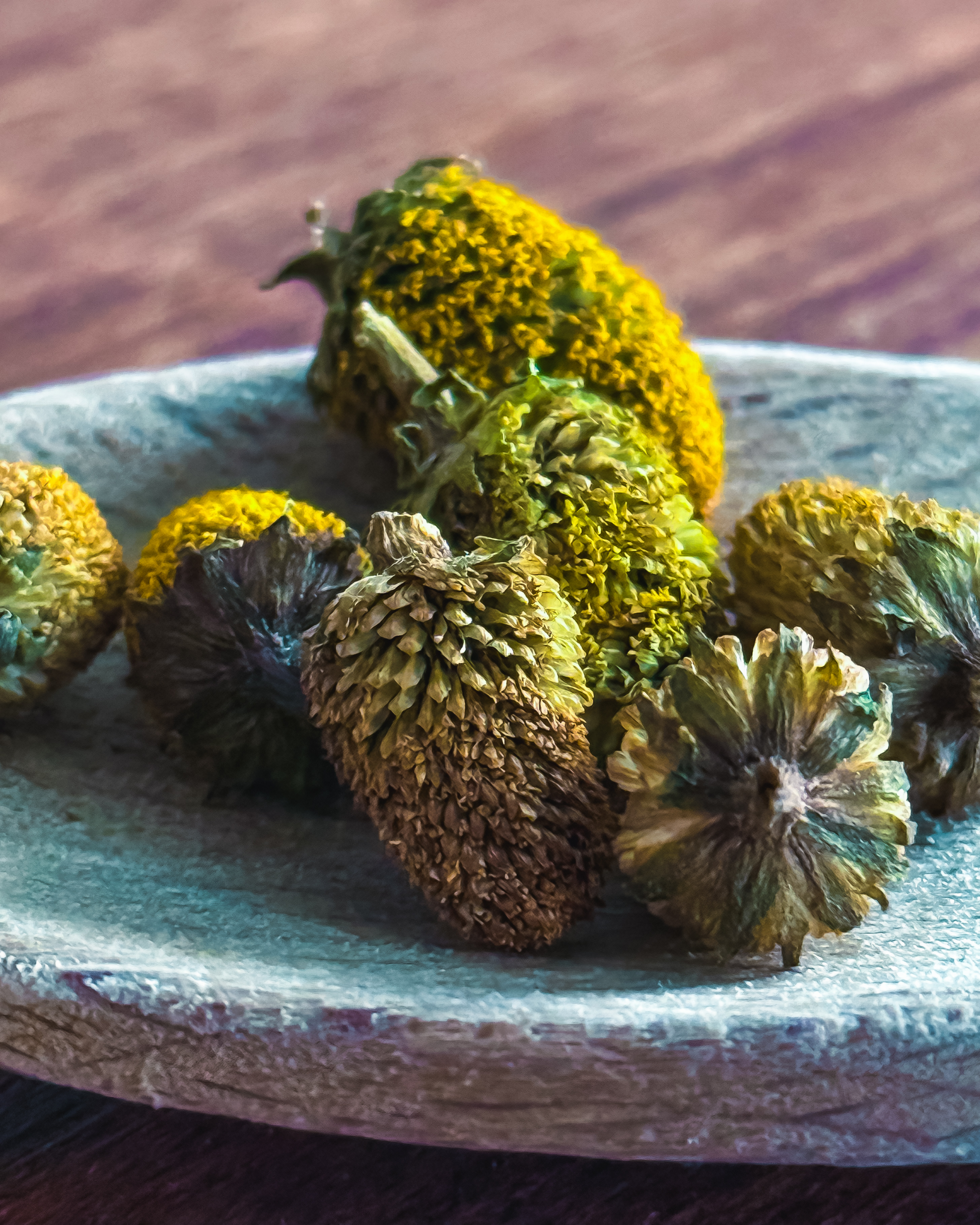
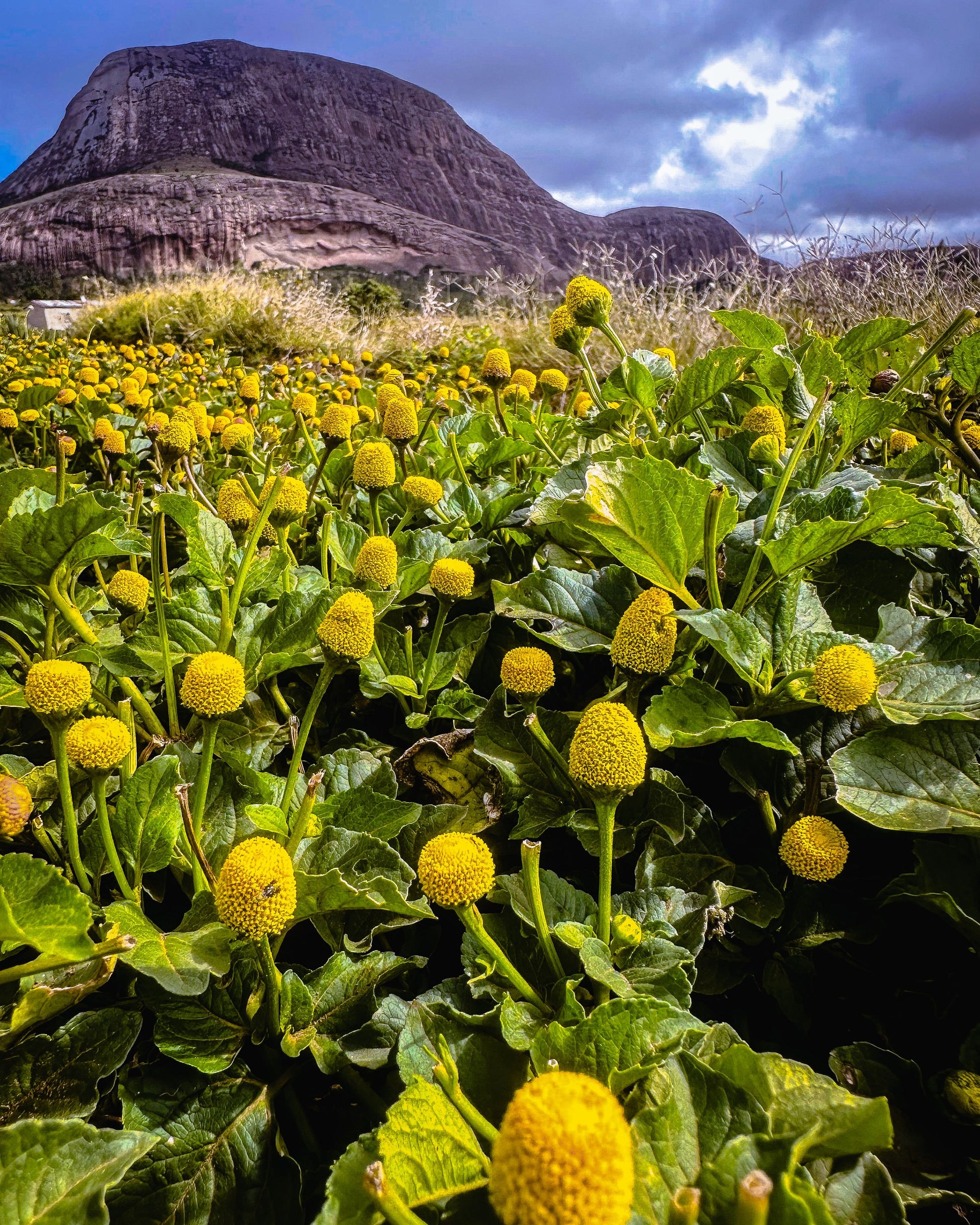
Inside every dried Acmella oleracea flower head are microscopic plant cells containing numerous naturally occurring compounds, including lipophilic constituents such as Spilanthol.
When the botanical material is immersed in carrier oil, the surrounding oil initially contains little or none of these compounds.
This creates a concentration gradient.
Because the concentration inside the plant tissue is much higher than in the surrounding oil, molecules begin migrating outward.
This movement continues gradually until the concentration difference becomes much smaller.
The process is entirely passive.
No pumps, pressure, or aggressive solvents are required.
Nature simply seeks balance.
Visualizing Diffusion
Imagine placing a drop of natural food coloring into a glass of still water.
At first, the color remains concentrated in one location.
Gradually, the pigment spreads throughout the glass until the color becomes evenly distributed.
Botanical extraction behaves in a similar way.
The difference is that instead of pigments moving through water, oil-soluble plant molecules gradually migrate through a carrier oil.
The process is much slower, but the underlying principle is the same.
Why Dry Botanical Material Is Used
Fresh plants contain significant amounts of water.
While this is essential for the living plant, it presents challenges during oil extraction.
Water and oil do not readily mix.
Excess moisture may:
- reduce extraction efficiency;
- encourage microbial growth;
- shorten product stability;
- complicate filtration;
- increase the risk of spoilage.
For this reason, premium botanical oils are commonly produced using carefully dried botanical material.
Drying reduces moisture while preserving many of the lipophilic compounds that carrier oils are designed to extract.
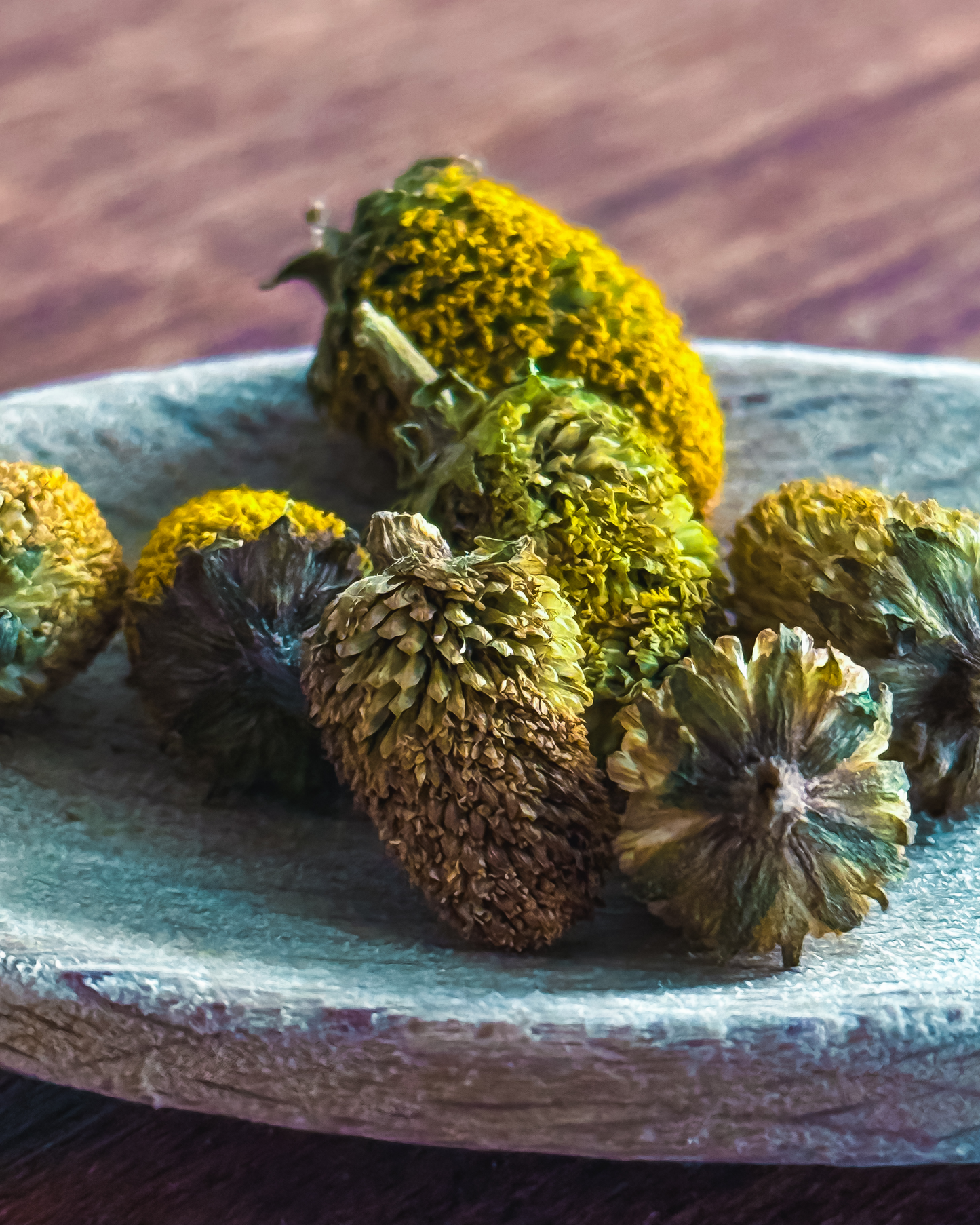
For Acmella oleracea, properly dried flower heads provide a more stable starting material for controlled oil maceration.
Solubility Determines What Can Be Extracted
One of the most misunderstood aspects of botanical extraction is the assumption that every beneficial plant compound dissolves equally well in every solvent.
In reality, solubility determines what enters the extract.
Carrier oils are excellent solvents for lipophilic (oil-soluble) compounds.
Water, on the other hand, dissolves hydrophilic (water-soluble) compounds.
Alcohol occupies a middle ground, dissolving many compounds that neither oil nor water alone can efficiently extract.
This is why different extraction methods produce chemically different extracts, even when they begin with the same botanical.
In the case of Acmella oleracea, Spilanthol is highly lipophilic, making carrier oils a suitable medium for its extraction.
However, many water-soluble compounds naturally present in the plant remain largely unavailable to the oil.
An oil infusion is therefore not intended to reproduce the complete chemical profile of the living plant.
Instead, it selectively captures compounds that are compatible with the chosen solvent.
Extraction Is Not Infinite
A common misconception is that leaving herbs in oil for longer will continue extracting compounds indefinitely.
Extraction does not work this way.
As more molecules dissolve into the carrier oil, the concentration difference between the plant and the oil gradually decreases.
Eventually, the driving force behind diffusion becomes much weaker.
The extraction slows.
This phenomenon is known as equilibrium.
Understanding Equilibrium
Equilibrium does not mean extraction has completely stopped.
Rather, it means that the rate at which molecules leave the plant becomes very similar to the rate at which molecular movement occurs in the opposite direction.
At this stage, the oil has already incorporated much of what it can readily dissolve under the existing conditions.
Continuing the extraction may produce only small additional changes.
For formulators, recognizing equilibrium is important because it illustrates why extraction time alone cannot guarantee progressively higher concentrations.
Eventually, diminishing returns begin to appear.
Can a Carrier Oil Become Saturated?
This is one of the least discussed topics in botanical extraction.
In practical terms, every solvent has a finite capacity to dissolve particular compounds.
Carrier oils are no exception.
Whether true saturation is reached depends on:
- the botanical species;
- the compounds being extracted;
- temperature;
- oil chemistry;
- extraction duration;
- and the concentration of dissolved constituents.
In many cosmetic macerations, the oil may never reach complete saturation.
Instead, formulators often work within a practical range where extraction efficiency gradually declines as equilibrium develops.
This distinction is important.
Double maceration does not assume that the oil has become fully saturated after the first extraction.
Instead, it recognizes that additional extraction may still be possible under suitable conditions.
Why Fresh Botanical Material Matters
This is where double maceration begins to differ from a conventional infusion.
After the first extraction cycle, the original botanical material has already released part of its oil-soluble constituents.
Its concentration of extractable compounds is now lower than when the process began.
Replacing that exhausted botanical material with a fresh batch of dried flowers introduces plant tissue that once again contains high concentrations of oil-soluble molecules.
This effectively creates a new concentration gradient.
Once again, diffusion becomes possible because the fresh botanical contains compounds that are present at much higher concentrations than those already dissolved in the carrier oil.
This does not guarantee dramatic increases in every constituent.
It simply creates another opportunity for additional extraction.
Double Maceration Does Not Reset the Oil
An important point is often overlooked.
During double maceration, the oil is not replaced.
Only the botanical material changes.
The carrier already contains dissolved botanical compounds from the first extraction.
This means the second extraction begins under different chemical conditions than the first.
Instead of extracting into fresh oil, the new botanical is extracting into an oil that has already been partially enriched.
Whether further extraction occurs depends on the remaining solvent capacity and the specific compounds involved.
Understanding this distinction helps explain why double maceration is more nuanced than simply performing two identical extractions.
The Variables That Influence Double Maceration
No two botanical extractions are identical.
Even when using the same plant species, small changes in processing can influence the final composition of the extract.
Key variables include:
Botanical Quality
Healthy, properly harvested plant material provides a more consistent starting point than damaged or poorly stored botanicals.
Drying Method
Drying temperature, airflow, and duration influence both moisture content and the preservation of sensitive compounds.
Particle Size
Smaller particles generally expose more surface area to the carrier oil, although excessively fine material can complicate filtration.
Carrier Oil Selection
Different oils possess different fatty-acid compositions, viscosities, and oxidative stability, all of which influence formulation characteristics.
Botanical-to-Oil Ratio
The amount of botanical material relative to the volume of carrier oil affects the overall extraction environment.
Extraction Time
Longer extraction periods allow more opportunity for diffusion, although extraction eventually approaches equilibrium.
Temperature
Moderate temperatures may accelerate diffusion, while excessive heat risks degrading both botanical compounds and the carrier oil.
Many premium cosmetic macerations therefore favor gentle, low-temperature processing.
Agitation
Occasional mixing can improve contact between the oil and botanical material, reducing localized concentration differences.
Oxygen Exposure
Minimizing unnecessary exposure to oxygen helps preserve both the carrier oil and the extracted compounds.
Does Double Maceration Extract More Spilanthol?
This is perhaps the most important question surrounding the process.
From a theoretical perspective, introducing fresh Acmella oleracea flower heads into an already infused carrier oil may provide additional opportunities for oil-soluble compounds such as Spilanthol to diffuse into the oil, provided sufficient solvent capacity remains.
However, theory alone is not proof.
At present, published comparative studies specifically measuring Spilanthol concentrations after single versus double maceration are limited.
As a result, it is not scientifically appropriate to state that double maceration always produces higher Spilanthol concentrations.
The only reliable way to determine this would be through analytical techniques such as:
- High-Performance Liquid Chromatography (HPLC)
- Gas Chromatography–Mass Spectrometry (GC-MS)
- other validated quantitative analytical methods
Until such comparative data are available, double maceration should be viewed as a formulation strategy designed to maximize botanical contact, rather than a guaranteed method of increasing any specific compound.
This distinction reflects responsible scientific communication and aligns with evidence-based cosmetic formulation.
The Science Is About Probability, Not Promises
Perhaps the greatest strength of double maceration is not that it guarantees a particular outcome.
Rather, it demonstrates a deliberate attempt to optimize extraction through a deeper understanding of chemistry.
By recognizing diffusion, concentration gradients, equilibrium, and solvent behavior, formulators can design extraction processes that are thoughtful, reproducible, and aligned with the intended characteristics of the finished botanical oil.
Science rarely deals in absolutes.
Instead, it seeks to understand the variables that influence outcomes, and to verify those outcomes through careful measurement.
Double maceration is no exception.
Key Takeaways from Part 2
- Diffusion is the primary mechanism that drives botanical oil maceration, allowing oil-soluble compounds to move from plant tissue into the carrier oil.
- Properly dried botanical material improves extraction stability by reducing moisture and minimizing the risk of microbial growth.
- Carrier oils selectively extract lipophilic compounds, while many water-soluble constituents remain unavailable to the oil.
- As extraction progresses, equilibrium develops and the rate of diffusion gradually slows.
- Double maceration introduces fresh botanical material to re-establish a concentration gradient, creating another opportunity for extraction.
- Current scientific evidence does not confirm that double maceration consistently produces higher Spilanthol concentrations than single maceration; analytical testing is required to verify such claims.
When Is Double Maceration Worth It?
Double maceration is neither the fastest nor the least expensive method of producing a botanical oil.
It requires more raw material, more production time, additional filtration, and greater attention to quality control.
For many manufacturers, a well-executed single maceration provides an excellent balance between efficiency and product quality.
So why would a formulator choose to repeat the process?
The answer lies not in marketing, but in formulation philosophy.
Double maceration represents a deliberate decision to expose the carrier oil to two successive batches of fresh botanical material, giving the extraction process another opportunity to dissolve lipophilic compounds before the oil becomes a finished ingredient.
Rather than seeking shortcuts, the process emphasizes patience, consistency, and careful ingredient handling.
When Formulators May Choose Double Maceration
Double maceration is most commonly associated with products where craftsmanship and ingredient quality take priority over production speed.
Examples include:
- premium facial oils;
- botanical concentrates;
- artisan skincare;
- luxury cosmetic formulations;
- small-batch manufacturing;
- specialty botanical extracts.
These products often justify the additional production time because the extraction process itself forms part of the product's identity.
The Practical Advantages
Although the exact outcome depends on the botanical species and extraction conditions, double maceration offers several practical advantages from a formulation perspective.
Extended Botanical Contact
Replacing the original botanical material with a fresh batch increases the total amount of plant material that interacts with the carrier oil.
This provides an additional opportunity for oil-soluble compounds to diffuse into the extraction medium.
Greater Botanical Loading
Because two successive batches of botanical material are used, the finished oil represents contact with a larger overall quantity of plant material than a conventional single maceration.
This should not be confused with a guaranteed increase in any specific compound.
Instead, it reflects a greater cumulative botanical input during the extraction process.
Gentle Processing
Unlike extraction methods that rely on aggressive solvents or elevated temperatures, double maceration maintains the same gentle principles as traditional oil infusion.
When performed under controlled conditions, the process preserves the natural characteristics of both the carrier oil and the botanical material.
Flexible Formulation
Double maceration can be adapted to different botanicals, carrier oils, extraction times, and production scales.
Rather than representing a rigid formula, it is a flexible extraction strategy that can be adjusted according to formulation objectives.
The Limitations of Double Maceration
Scientific integrity requires discussing not only the benefits but also the limitations.
Double maceration is not automatically the best choice for every botanical or every formulation.
Longer Production Time
Repeating the extraction extends manufacturing considerably.
For commercial production, this affects scheduling, storage, and inventory management.
Higher Raw Material Requirements
Because two batches of botanical material are used, more plant material is required than for a comparable single maceration.
This increases both production cost and supply-chain demands.
Additional Quality Control
Each extraction cycle introduces another opportunity for variability.
Maintaining consistency requires careful monitoring of:
- botanical quality;
- drying;
- moisture;
- extraction conditions;
- filtration;
- storage.
Oxidation Management
Although many premium carrier oils possess good oxidative stability, prolonged processing still requires careful protection from:
- oxygen;
- excessive heat;
- direct light;
- contamination.
Good manufacturing practices remain essential throughout the extraction.
Not Every Botanical Benefits Equally
Different plants contain different chemical compositions.
Some release their oil-soluble compounds readily during a single extraction.
Others may respond differently to repeated maceration.
Consequently, extraction protocols should be developed for each botanical rather than assuming that one method suits every species.
Double Maceration Is a Process- Not a Quality Guarantee
Perhaps the most important principle to understand is this:
Double maceration describes how an extract is produced.
It does not automatically describe the quality of the finished extract.
A poorly controlled double maceration can produce an inferior product.
Conversely, a carefully executed single maceration may produce an outstanding botanical oil.
Quality depends on the entire production system, including:
- botanical selection;
- drying;
- carrier oil quality;
- processing conditions;
- filtration;
- storage;
- and analytical verification where appropriate.
Extraction technique is only one part of a much larger quality framework.
A Madagascar Case Study
One example of this formulation philosophy is found in the production approach used by Madabuzz.
Rather than relying on a single infusion, the botanical extract undergoes a carefully controlled double maceration process using dried Acmella oleracea flower heads and a proprietary blend of Madagascan carrier oils.
The process follows four broad stages.
Stage 1: Initial Maceration
Carefully dried Acmella oleracea flower heads are immersed in a blend of Madagascan Moringa and Baobab seed oils under controlled conditions.
During this period, oil-soluble constituents gradually diffuse into the carrier oil.
Stage 2: Filtration
After the first extraction cycle is complete, the spent botanical material is removed through filtration.
At this stage, the carrier oil has already become an infused botanical extract.
Stage 3: Second Maceration
Rather than bottling the infused oil immediately, a fresh batch of dried Acmella oleracea flower heads is introduced into the same carrier oil.
A second maceration cycle is then carried out under carefully controlled conditions.
This creates another opportunity for interaction between fresh botanical material and the partially enriched carrier oil.
Stage 4: Final Filtration
Following completion of the second extraction, the botanical material is removed through final filtration.
The finished oil is then prepared for incorporation into the final cosmetic formulation.
Why Madabuzz Uses Double Maceration
Madabuzz does not present double maceration as proof of superior potency.
Instead, it reflects a formulation philosophy centered on careful ingredient selection, gentle processing, and botanical integrity.
The process was chosen to support several formulation goals, including:
- increasing overall botanical contact with the carrier oil;
- maintaining a solvent-free oil extraction process;
- preserving the natural characteristics of the carrier oils;
- utilizing a complementary blend of Madagascan Moringa and Baobab oils;
- maintaining ingredient traceability from botanical sourcing through extraction.
Rather than relying on high temperatures or synthetic extraction aids, the process emphasizes time, controlled conditions, and carefully selected natural ingredients.
Why Not Use Alcohol Instead?
A common question is why an oil extraction is used at all when alcohol is widely recognized as an effective botanical solvent.
The answer lies in formulation objectives.
Alcohol and carrier oils extract different groups of compounds because they possess different solvent properties.
Carrier oils selectively extract lipophilic compounds, making them particularly suitable for oil-based cosmetic formulations.
Alcohol extracts a broader spectrum of botanical constituents, including many compounds that oils cannot efficiently dissolve.
Neither method is universally superior.
They simply produce different types of extracts.
The appropriate extraction method depends on the intended product.
For skincare formulations where the finished ingredient will remain in an oil phase, oil maceration often provides a logical and elegant approach.
Looking Toward Analytical Verification
Modern cosmetic science increasingly emphasizes measurable evidence.
While traditional extraction methods remain valuable, analytical techniques now allow formulators to evaluate extraction performance with far greater precision.
Methods such as:
- High-Performance Liquid Chromatography (HPLC);
- Gas Chromatography–Mass Spectrometry (GC-MS);
- and other validated analytical procedures
can quantify specific botanical constituents within finished extracts.
As research into Acmella oleracea continues, comparative studies may provide deeper insight into how single and double maceration influence compounds such as Spilanthol.
Until then, responsible formulators should distinguish between scientifically verified measurements and theoretical expectations.
Frequently Asked Questions
What is double maceration?
Double maceration is a botanical extraction technique in which an infused carrier oil is filtered after the first extraction and then exposed to a second batch of fresh botanical material before final filtration.
Is double maceration better than single maceration?
Not necessarily. Double maceration is an extraction strategy rather than a quality guarantee. Whether it offers advantages depends on the botanical, the carrier oil, the extraction conditions, and the intended formulation.
Does double maceration extract more Spilanthol?
Current extraction theory suggests that additional extraction may occur when fresh botanical material is introduced into an already infused oil, provided sufficient solvent capacity remains. However, published comparative studies specifically measuring Spilanthol concentrations after single versus double maceration are limited, so analytical testing is needed to verify any increase.
Why are dried flower heads used?
Drying reduces moisture, improves storage stability, minimizes microbial risk, and creates more suitable conditions for oil-based maceration.
Can any botanical be double macerated?
Many botanicals can be processed using double maceration, but the suitability of the technique depends on the chemistry of the plant and the goals of the formulation.
Why does Madabuzz use Moringa and Baobab oils?
Madabuzz combines Madagascan Moringa and Baobab oils to create a carrier system that balances oxidative stability, complementary fatty-acid composition, sensory characteristics, and regional ingredient traceability.
Is double maceration a cold extraction?
It can be. Many formulators perform double maceration at low or ambient temperatures to preserve the characteristics of both the carrier oil and the botanical material, although extraction conditions vary by manufacturer.
Scientific Summary
Current cosmetic science supports several important conclusions:
- Double maceration is an extension of traditional botanical oil infusion rather than a fundamentally different extraction method.
- Replacing spent botanical material with fresh material creates a new opportunity for diffusion by re-establishing a concentration gradient.
- Extraction efficiency is influenced by many interacting variables, including solvent properties, botanical quality, drying, time, temperature, and processing conditions.
- Double maceration should be viewed as a formulation strategy rather than proof of greater potency.
- There is currently insufficient published comparative evidence to conclude that double maceration consistently produces higher concentrations of Spilanthol in Acmella oleracea than single maceration.
- Analytical techniques such as HPLC and GC-MS remain the most reliable methods for evaluating extraction outcomes.
Conclusion
Double maceration demonstrates that botanical extraction is not simply about placing herbs in oil and waiting.
It is a carefully considered process shaped by chemistry, formulation objectives, and manufacturing philosophy.
By exposing the same carrier oil to two successive batches of dried botanical material, formulators create another opportunity for oil-soluble compounds to diffuse into the extraction medium while maintaining the gentle principles of traditional oil maceration.
This approach requires additional time, raw materials, and quality control, making it best suited to formulations where craftsmanship and ingredient integrity are prioritized over production efficiency.
For Madabuzz, double maceration forms part of a broader commitment to thoughtful formulation. Combined with a carrier system based on Madagascan Moringa and Baobab oils and carefully selected Acmella oleracea flower heads, the process reflects a philosophy centered on botanical provenance, gentle extraction, and scientific transparency rather than exaggerated performance claims.
Ultimately, the value of double maceration lies not in promising miraculous results, but in demonstrating how a deeper understanding of extraction science can guide the creation of carefully designed botanical ingredients.