

Summary
This guide introduces readers to DIY botanical oil serums through the lens of cosmetic formulation rather than home crafting. It explains what a face serum is, why oil-based serums are ideal for botanical extracts like Acmella oleracea, and how selecting the right carrier oils creates the foundation for a stable, elegant skincare product.
Educational DIY formulation guide.
DIY Face Serum with Acmella oleracea
Part 1: Understanding Botanical Oil Serums
Making your own skincare products can be both rewarding and educational.
With access to high-quality botanical ingredients, many people are discovering that creating a simple facial serum is less about following internet recipes and more about understanding the ingredients themselves.
A well-designed oil serum contains relatively few components, yet each one contributes to the product's texture, stability, and overall performance.
This simplicity makes oil serums one of the most approachable starting points for anyone interested in cosmetic formulation.
Rather than relying on dozens of ingredients, a thoughtfully crafted botanical serum focuses on selecting compatible oils and high-quality botanical extracts that work together naturally.
In this guide, we'll explore how to formulate a DIY facial serum using oil-based botanical ingredients, including Acmella oleracea extract, while explaining the science behind every step.
What Is a Face Serum?
A face serum is a concentrated skincare product designed to deliver selected ingredients directly to the skin.
Unlike traditional moisturizers, which often contain significant amounts of water, waxes, and emulsifiers, serums are generally lighter and more focused in their formulation.
However, not all serums are the same.
In cosmetic science, the term serum describes a category of products rather than a single type of formulation.
Different serums are designed using different formulation systems depending on the ingredients they contain and the intended sensory experience.
The Four Main Types of Face Serums
Understanding these categories helps explain why botanical extracts behave differently depending on the formulation.
Water-Based Serums
Water-based serums are among the most common products found in modern skincare.
Their primary ingredient is water, often combined with humectants, thickeners, preservatives, and water-soluble active ingredients.
These formulations are typically lightweight and fast-absorbing but require careful preservation because microorganisms can grow in water-containing products.
Gel Serums
Gel serums are built upon water-based systems but use gelling agents to create a thicker texture.
They provide a fresh, lightweight skin feel and are commonly used for ingredients that dissolve readily in water.
Like all water-based cosmetics, they require appropriate preservatives and careful manufacturing.
Emulsion Serums
Emulsion serums combine oil and water into a single stable product using emulsifiers.
These formulations can deliver both oil-soluble and water-soluble ingredients simultaneously.
Although highly versatile, they are considerably more complex to formulate than purely oil-based products.
Oil-Based Serums
Oil serums are composed entirely of oils and oil-soluble ingredients.
They typically contain:
- carrier oils;
- botanical extracts;
- oil-soluble vitamins;
- antioxidants;
- and, where appropriate, carefully selected essential oils.
Because they contain no added water, they do not require preservatives designed to control microbial growth in aqueous systems.
However, they still require careful attention to oxidation, cleanliness, and storage.
This article focuses exclusively on anhydrous botanical oil serums.
Why Choose an Oil-Based Serum?
For beginners, oil serums offer one of the simplest ways to explore cosmetic formulation.
Without water, emulsifiers, or complex stabilizing systems, the formulator can concentrate on understanding the properties of individual botanical ingredients.
Oil serums also provide an excellent medium for incorporating lipophilic botanical extracts, making them particularly well suited to ingredients such as Acmella oleracea oil extracts.
Their simplicity does not mean they are simplistic.
Every carrier oil contributes unique characteristics that influence:
- texture;
- absorption;
- oxidative stability;
- sensory feel;
- and overall formulation performance.
Learning how these oils behave is one of the most valuable skills in botanical skincare formulation.
Why Acmella oleracea?
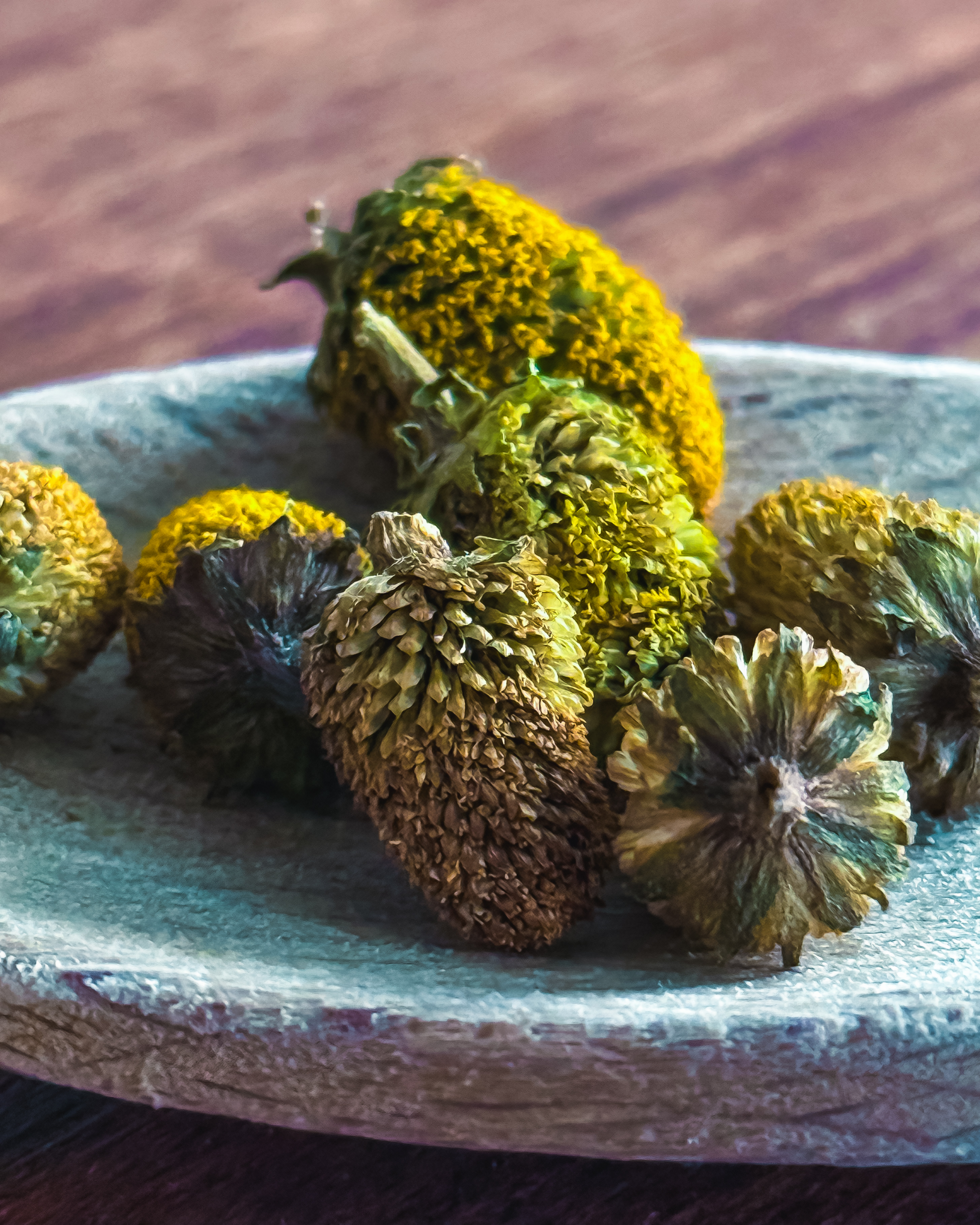
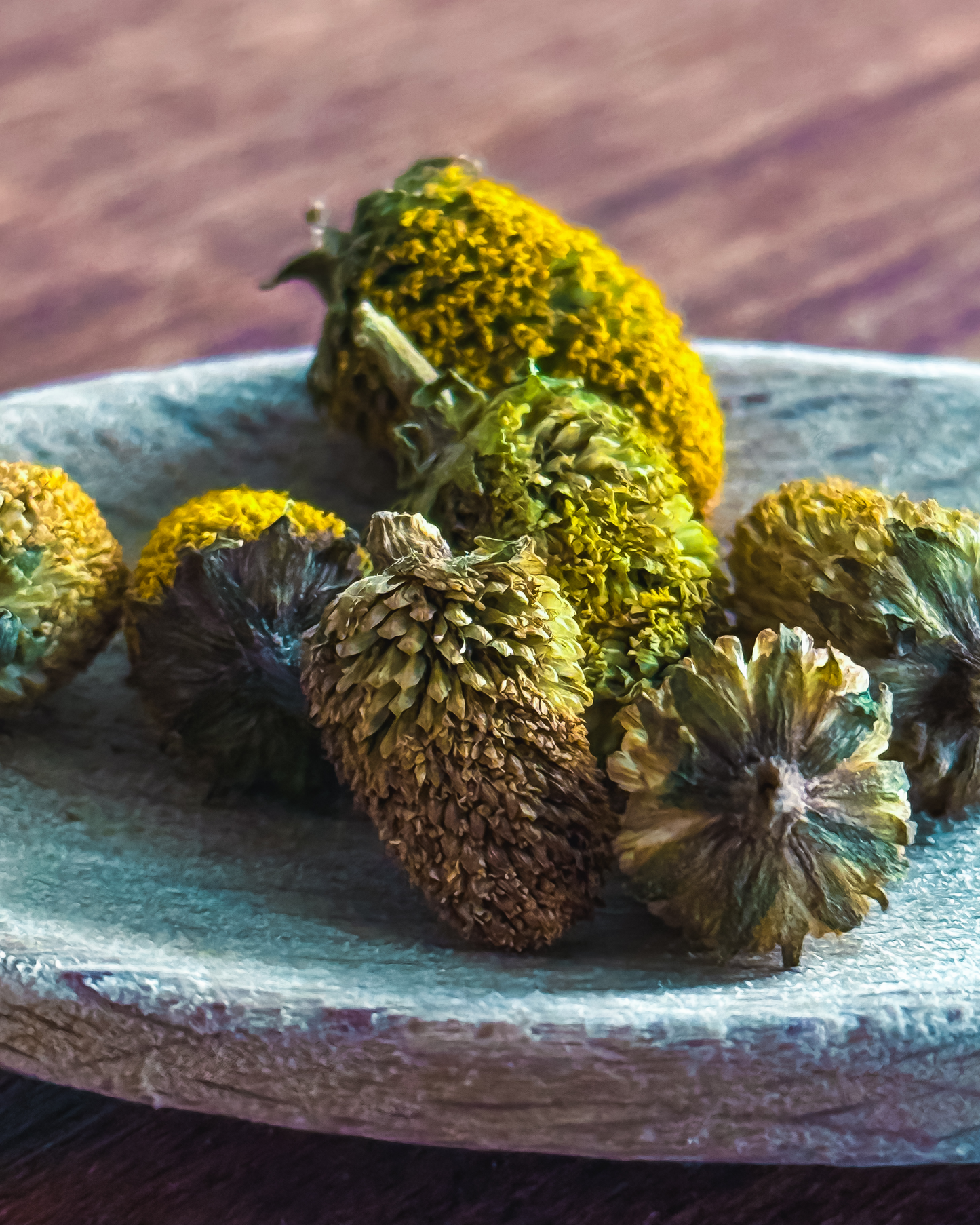
Among botanical ingredients used in natural skincare, Acmella oleracea has attracted growing interest because of its naturally occurring lipophilic compound, Spilanthol.
Traditionally cultivated in tropical regions and increasingly recognized within modern cosmetic research, the plant has become a popular ingredient in premium botanical formulations.
One important characteristic of Acmella oleracea is that its principal oil-soluble compounds integrate naturally into oil-based carrier systems.
This makes oil maceration a logical extraction method and allows the finished extract to blend directly into an anhydrous serum without requiring emulsifiers.
Rather than adding dried flowers directly to a skincare product, formulators typically work with a professionally prepared botanical extract in a compatible carrier oil.
This approach provides greater consistency, improved handling, and a more refined finished formulation.
Choosing the Right Carrier Oil
Selecting a carrier oil is one of the most important decisions in any oil serum.
The carrier does far more than dilute active ingredients.
It becomes part of the finished formulation.
Different oils contribute different fatty-acid profiles, textures, and sensory characteristics.
Understanding these differences allows formulators to design products that match specific formulation goals.
Moringa Oil
Moringa oil is valued for its:
- high oleic acid content;
- excellent oxidative stability;
- silky sensory profile;
- elegant spreadability.
Its luxurious skin feel has made it increasingly popular in premium facial oils.
Baobab Oil
Baobab oil offers a more balanced fatty-acid composition.
It contributes:
- comfortable skin feel;
- pleasant conditioning;
- natural versatility;
- and excellent compatibility with other botanical oils.
Jojoba
Although commonly referred to as an oil, jojoba is technically a liquid wax ester.
Its remarkable oxidative stability and elegant texture make it a frequent ingredient in facial serums.
High-Oleic Sunflower Oil
High-oleic sunflower oil provides an excellent balance between stability, affordability, and cosmetic elegance.
It is widely used in both artisan and commercial formulations.
Squalane
Plant-derived squalane is prized for its exceptionally lightweight feel and outstanding oxidative stability.
It is often incorporated into premium serums to improve spreadability and reduce perceived richness.
Simplicity Is Often Better
One of the biggest misconceptions in DIY skincare is that more ingredients automatically produce a better serum.
In reality, experienced formulators often follow the opposite philosophy.
A simple formulation allows each ingredient to perform a clear function.
Adding unnecessary oils, extracts, fragrances, and essential oils can make a formulation more complicated without necessarily improving its quality.
For beginners, mastering a formulation with only a few carefully selected ingredients provides a stronger foundation than attempting to combine dozens of fashionable actives.
In cosmetic science, simplicity often reflects confidence rather than limitation.
Before Mixing Anything
Before measuring the first ingredient, it is important to understand one fundamental concept.
Professional cosmetic formulators rarely formulate using teaspoons, tablespoons, or "a few drops."
Instead, they formulate using percentages.
Working with percentages allows formulations to be:
- accurately reproduced;
- easily scaled;
- consistently balanced;
- and properly documented.
Learning this approach transforms DIY skincare from following recipes into understanding formulation.
It is the single most valuable skill for anyone interested in creating their own botanical serums.
Key Takeaways from Part 1
- Face serums can be water-based, gel-based, emulsified, or oil-based, each with different formulation requirements.
- This guide focuses on anhydrous botanical oil serums, which are particularly well suited to oil-soluble plant extracts.
- Acmella oleracea extract integrates naturally into oil-based formulations because its key cosmetic constituents are lipophilic.
- Carrier oils are active formulation ingredients that influence texture, stability, absorption, and sensory experience.
- Simplicity often leads to more elegant and reproducible formulations than combining numerous ingredients.
- Understanding formulation by percentages provides the foundation for creating professional-quality DIY skincare.

Building Your DIY Face Serum
Understanding the ingredients is only the first step.
The next stage is learning how professional formulators actually create a serum.
Many DIY recipes begin with instructions such as:
"Add 10 drops of this."
"Mix one teaspoon of that."
Although simple, these measurements are difficult to reproduce accurately.
The size of a drop varies between bottles.
Different oils have different viscosities.
Even room temperature can influence drop size.
Professional formulation avoids these inconsistencies by working with percentages rather than household measurements.
Once you understand percentages, you can formulate almost any serum, whether you are making 30 mL for personal use or scaling the same formula to several liters.
Why Cosmetic Formulators Use Percentages
Every cosmetic formulation is simply a recipe where all ingredients together equal 100%.
Each ingredient occupies a proportion of that total.
For example:
| Ingredient | Percentage |
|---|---|
| Carrier oils | 90% |
| Botanical extract | 9% |
| Vitamin E | 1% |
| Total | 100% |
The beauty of percentages is that the formulation never changes.
Only the batch size changes.
Whether preparing:
- 30 mL
- 50 mL
- 100 mL
- 1 liter
the ingredient proportions remain identical.
This approach provides:
- reproducibility;
- consistency;
- easier troubleshooting;
- professional documentation.
Converting Percentages Into Real Quantities
Let's use a practical example.
Suppose you want to prepare 30 mL of an oil serum.
Using the formulation above:
| Ingredient | Percentage | Approximate Amount |
|---|---|---|
| Carrier oils | 90% | 27 mL |
| Botanical extract | 9% | 2.7 mL |
| Vitamin E | 1% | 0.3 mL |
This is much more reliable than attempting to count drops.
For even greater precision, professional formulators often work by weight (grams) using digital laboratory scales, since density varies slightly between different oils.
A Beginner-Friendly Example Formula
The following formulation is intended as an educational example.
It is not presented as the ideal or only formulation.
Example Botanical Facial Serum
| Ingredient | Percentage | Purpose |
|---|---|---|
| Carrier oil blend | 90% | Forms the base of the serum |
| Acmella oleracea botanical extract | 9% | Provides the botanical ingredient |
| Mixed Tocopherols (Vitamin E) | 1% | Helps protect the oils from oxidation |
This simple three-ingredient system illustrates one of the strengths of oil-based skincare.
Each ingredient has a clearly defined role.
Nothing is added simply for marketing.
Choosing Your Carrier Oil Blend
The carrier oil base is where formulators can personalize a serum.
Different combinations create different textures and sensory experiences.
For example:
Lightweight Serum
- Squalane
- Jojoba
- High-Oleic Sunflower
Produces:
- fast absorption;
- light skin feel;
- elegant finish.
Rich Botanical Serum
- Moringa
- Baobab
Produces:
- silky texture;
- excellent glide;
- luxurious sensory profile.
Balanced Everyday Serum
- Moringa
- Baobab
- Jojoba
Offers a balance between stability, spreadability, and absorption.
There is no universally correct blend.
The appropriate choice depends on the desired formulation.
Why Vitamin E Is Included
Vitamin E is frequently misunderstood in DIY skincare.
Many people believe it is added primarily because it benefits the skin.
In oil formulations, its most important role is often much simpler.
Mixed tocopherols help protect the oils themselves from oxidation.
They function as antioxidants within the formulation, helping preserve oil quality during storage.
Vitamin E does not replace good manufacturing practices.
Proper packaging, storage, and ingredient quality remain essential.
Equipment You Actually Need
One advantage of oil serums is that they require very little specialized equipment.
A basic setup includes:
- precision digital scale;
- small glass beaker;
- glass stirring rod;
- disposable pipettes;
- amber or frosted glass bottle;
- dropper or treatment pump;
- nitrile gloves;
- paper towels or lint-free wipes.
Everything should be clean and completely dry before formulation begins.
Because the serum contains no water, introducing moisture unnecessarily can reduce product stability.
Step-by-Step Mixing Process
Step 1
Sanitize the workspace and ensure all equipment is clean and dry.
Step 2
Weigh the carrier oils into a clean glass beaker.
If using multiple carrier oils, combine them first.
Step 3
Add the Acmella oleracea botanical extract.
Stir gently until the oils become completely uniform.
Step 4
Add the Vitamin E.
Mix slowly to ensure even distribution throughout the serum.
Step 5
Transfer the finished serum into a clean amber glass bottle.
Using dark-colored glass helps reduce light exposure during storage.
Step 6
Label the bottle with:
- formulation name;
- production date;
- batch number (if applicable).
Even hobby formulators benefit from maintaining simple records.
Packaging Matters
The container becomes part of the formulation.
Poor packaging can shorten the useful life of an otherwise excellent serum.
Good packaging should:
- reduce oxygen exposure;
- minimize light penetration;
- protect against contamination;
- allow controlled dispensing.
Amber or opaque glass bottles with treatment pumps or droppers are commonly used because they balance convenience with product protection.
Storing Your Serum
Storage influences every botanical oil formulation.
For best stability:
- keep the bottle tightly closed;
- store away from direct sunlight;
- avoid excessive heat;
- minimize unnecessary air exposure;
- keep water away from the product.
An oil serum does not usually require refrigeration, although cool, stable storage conditions are generally preferred.
How Long Will It Last?
One of the most common questions in DIY skincare is:
How long will my serum last?
There is no single answer.
Shelf life depends on numerous factors, including:
- carrier oil stability;
- freshness of the ingredients;
- inclusion of antioxidants;
- packaging;
- oxygen exposure;
- storage temperature;
- cleanliness during formulation.
For this reason, responsible formulators avoid assigning fixed shelf lives without appropriate stability testing.
Instead, they design formulations that maximize stability through thoughtful ingredient selection and good manufacturing practices.
Why Oil Serums Are Ideal for Botanical Extracts
One of the major advantages of using a professionally prepared botanical extract is simplicity.
When Acmella oleracea has already been extracted into a compatible carrier oil, it integrates directly into the serum.
No additional extraction is required.
No filtration is necessary.
No emulsifier is needed.
The extract simply becomes another oil-phase ingredient within the formulation.
This is one reason professionally prepared botanical extracts are so popular among both artisan formulators and commercial cosmetic manufacturers.
Less Is Often More
Beginning formulators often feel tempted to include every fashionable ingredient in a single bottle.
A few drops of ten different oils may sound impressive.
In practice, it usually creates unnecessary complexity.
Professional cosmetic formulation often follows the opposite philosophy.
Each ingredient should have a clear purpose.
If an ingredient does not improve the formulation, it probably does not belong in it.
A carefully balanced three-ingredient serum frequently performs more elegantly than a complicated blend containing twenty different oils.
Simplicity is not a limitation.
It is often a sign of thoughtful formulation.
Key Takeaways from Part 2
- Cosmetic formulations are built using percentages rather than household measurements.
- Percentage-based formulation allows recipes to be reproduced accurately at any batch size.
- A simple oil serum may require only a carrier oil blend, a botanical extract, and Vitamin E.
- Carrier oil selection influences texture, absorption, stability, and the overall sensory profile of the serum.
- Clean equipment, careful weighing, and appropriate packaging are just as important as the ingredients themselves.
- Professional botanical extracts simplify formulation by integrating directly into the oil phase without additional extraction.
Customizing Your DIY Face Serum Safely
Creating your first facial serum is an exciting milestone.
Once the basic formulation is complete, many people immediately begin asking:
- Should I add essential oils?
- Can I mix in hyaluronic acid?
- What about vitamin C?
- Can I make the serum "stronger" by adding more ingredients?
These questions are completely natural.
However, they also illustrate one of the biggest differences between DIY skincare and cosmetic formulation.
Professional formulators rarely ask:
"What else can I add?"
Instead, they ask:
"Does this ingredient actually belong in this formulation?"
Understanding ingredient compatibility is one of the most valuable skills a formulator can develop.
Can You Add Essential Oils?
The short answer is:
Yes, but carefully.
Essential oils are highly concentrated aromatic plant extracts.
Unlike carrier oils, they are composed primarily of volatile compounds that can significantly influence both the fragrance and sensory profile of a formulation.
Because they are extremely concentrated, they are normally used at very low concentrations.
For facial products, many formulators choose either:
- no essential oils at all; or
- very conservative concentrations.
This approach reduces the likelihood of irritation while allowing the botanical ingredients themselves to remain the focus.
If essential oils are included, they should always be selected with both cosmetic compatibility and skin safety in mind.
Patch testing remains a sensible precaution whenever introducing a new skincare product.
Can You Add Hyaluronic Acid?
This is one of the most common DIY skincare misconceptions.
The answer is:
Not directly.
Hyaluronic acid is water-soluble.
An oil serum contains no water.
Because oil and water are chemically incompatible without an emulsifier, hyaluronic acid powder will not dissolve in a purely oil-based formulation.
Instead, it remains suspended or forms visible particles.
This does not mean hyaluronic acid cannot be part of a skincare routine.
It simply belongs in a water-based product, such as:
- hydrating serum;
- toner;
- essence;
- or gel serum.
Many skincare routines successfully combine a water-based hyaluronic acid serum followed by an oil-based botanical serum.
Each product performs a different function within the routine.
What About Vitamin C?
Vitamin C is another ingredient frequently misunderstood in DIY skincare.
There is no single form of Vitamin C.
Instead, cosmetic chemistry includes numerous Vitamin C derivatives, each with different chemical properties.
Some are primarily water-soluble.
Others are oil-soluble.
This distinction is important.
A water-soluble Vitamin C ingredient cannot simply be stirred into an oil serum.
Conversely, certain oil-soluble derivatives may be appropriate for anhydrous formulations when used correctly.
Selecting the correct derivative requires understanding its compatibility with the formulation rather than relying solely on the ingredient's name.
Should You Add More Active Ingredients?
It can be tempting to build a serum containing:
- peptides;
- botanical extracts;
- vitamins;
- essential oils;
- coenzymes;
- antioxidants;
- and dozens of fashionable ingredients.
More ingredients do not necessarily create a better formulation.
Every additional component introduces new considerations, including:
- compatibility;
- stability;
- sensory changes;
- oxidation;
- cost;
- and manufacturing complexity.
Professional formulations are often surprisingly simple because every ingredient has a clearly defined purpose.
If an ingredient does not improve the formulation, there is little reason to include it.
Common DIY Serum Mistakes
Learning what not to do is just as valuable as learning the correct formulation process.
Measuring by Drops
Drops vary in size depending on:
- bottle design;
- oil viscosity;
- temperature;
- dispensing angle.
Percentages or weights provide far greater consistency.
Using Kitchen Spoons
A teaspoon is not a laboratory measurement.
Professional formulation relies on precision rather than approximation.
Adding Water to an Oil Serum
Oil and water do not remain mixed on their own.
Introducing water also changes the microbiological requirements of the formulation.
Once water is added, preservation becomes a much more important consideration.
Using Dirty Equipment
Small amounts of contamination can reduce product quality.
Always begin with clean, dry equipment.
Ignoring Oxidation
Even the finest botanical oils gradually oxidize.
Good formulation includes:
- selecting stable carrier oils;
- minimizing oxygen exposure;
- using appropriate antioxidants where suitable;
- storing products correctly.
Buying Poor-Quality Ingredients
A well-designed formulation cannot compensate for poor-quality raw materials.
Whenever possible, choose ingredients that are:
- fresh;
- traceable;
- properly stored;
- and intended for cosmetic use.
Building a Simple Botanical Routine
A facial serum is only one part of a complete skincare routine.
One example of a simple botanical routine might look like this:
Morning
- Gentle cleanser
- Water-based hydrating product (optional)
- Botanical oil serum
- Moisturizer (if desired)
- Broad-spectrum sunscreen
Evening
- Gentle cleanser
- Botanical oil serum
- Moisturizer or facial oil if additional nourishment is desired
The exact routine depends on individual skin preferences and the products being used.
Rather than applying every available active ingredient at once, many formulators encourage a consistent, uncomplicated routine.
Example: Using a Professionally Prepared Botanical Extract
One advantage of professionally prepared botanical extracts is their convenience.
For example, the Madabuzz Double Macerated Acmella oleracea Extract is already supplied in a carefully selected oil phase based on Madagascan Moringa and Baobab oils.
Because the botanical has already undergone extraction, it can be incorporated directly into an anhydrous facial serum without:
- additional maceration;
- filtration;
- emulsifiers;
- or further botanical processing.
This allows formulators to focus on designing the finished serum rather than preparing the botanical extract itself.
The extract therefore functions as a ready-to-use botanical ingredient within the formulation rather than a complete serum on its own.
Frequently Asked Questions
Can beginners make an oil serum?
Yes. Oil-based serums are among the simplest cosmetic formulations because they do not contain water or require emulsifiers.
Do oil serums need preservatives?
Purely anhydrous oil serums generally do not require preservatives designed to control microbial growth in water-based products. However, they still benefit from good manufacturing practices, clean equipment, and careful storage.
Why is Vitamin E included?
Vitamin E primarily helps protect the oils themselves from oxidation rather than acting as a preservative.
Can I use only Moringa oil?
Yes. A serum may be formulated using a single carrier oil or a blend, depending on the desired sensory characteristics and formulation goals.
Why combine Moringa and Baobab?
Blending carrier oils allows formulators to balance fatty-acid composition, oxidative stability, and skin feel.
Can I add essential oils later?
Yes, although any additions should be carefully measured because changing the formulation also changes the final composition of the product.
Should I refrigerate my serum?
Most oil serums do not require refrigeration. Cool, dry storage away from direct sunlight is generally appropriate for maintaining oil quality.
Can I make my serum stronger by adding more extract?
Not necessarily.
Increasing the concentration of any ingredient changes the formulation and should be approached thoughtfully. More is not always better, and every formulation should balance efficacy, stability, sensory performance, and compatibility.
Scientific Summary
Current cosmetic formulation principles support several important conclusions:
- Oil-based serums are among the most approachable formulations for beginners because they avoid the complexity of emulsions.
- Ingredients should be selected according to their chemical compatibility rather than their popularity.
- Water-soluble ingredients such as hyaluronic acid cannot simply be incorporated into an anhydrous oil serum.
- Vitamin C exists in multiple forms, and only compatible oil-soluble derivatives belong in oil-based formulations.
- Simple formulations with carefully selected ingredients are often more elegant and reproducible than highly complex recipes.
- Clean manufacturing practices, thoughtful ingredient selection, and proper storage contribute as much to product quality as the formulation itself.
Conclusion
Creating a DIY face serum is about more than mixing oils in a bottle.
It is an introduction to cosmetic formulation, a process that combines ingredient knowledge, careful measurement, and an understanding of how different materials interact.
By working with compatible carrier oils, professionally prepared botanical extracts, and percentage-based formulations, even beginners can produce elegant oil serums that reflect sound formulation principles rather than guesswork.
As your understanding grows, you may choose to experiment with different carrier oils, sensory profiles, and botanical ingredients. The most successful formulations, however, rarely become more complicated. Instead, they become more intentional, with every ingredient serving a clear purpose.
For Madabuzz, this philosophy begins with a double-macerated Acmella oleracea extract prepared in a carefully selected blend of Madagascan Moringa and Baobab oils. Rather than asking users to perform complex extractions at home, the extract provides a professionally prepared botanical ingredient that can be incorporated directly into an anhydrous serum, allowing formulators to focus on creating a balanced, elegant finished product.
Ultimately, the best DIY serum is not the one with the longest ingredient list, it is the one designed with a clear understanding of formulation science, ingredient compatibility, and thoughtful simplicity.