

Part 1: Understanding Water Activity, Available Water and Microbial Risk
Water is one of the most important ingredients in cosmetic formulation.
It is also one of the most misunderstood.
A DIY formulator may look at two products and reason:
"This one contains more water, so it must have the greater microbial risk."
That conclusion can be too simple.
The amount of water in a cosmetic product matters, but microorganisms do not respond only to the total percentage of water listed in a formula. What also matters is how available that water is within the product.
This is where water activity, usually written as aᵥ or aw, becomes important.
Water activity helps explain why:
- two products with similar water contents can behave differently
- some products with relatively little water can still support microbial growth
- some products containing considerable water may have reduced water availability
- an anhydrous product is not automatically sterile
- adding glycerine or other water-binding ingredients can change water activity
- preservation decisions cannot be made from water percentage alone
For DIY skincare formulators, water activity is particularly useful because it corrects a common misconception:
Water content tells you how much water is present. Water activity helps describe how available that water is for processes including microbial growth.
The two concepts are related, but they are not interchangeable.
1. What Is Water Content?
Water content describes the amount of water present in a material.
Suppose a hypothetical cosmetic formula contains:
| Ingredient | Percentage |
|---|---|
| Water | 70% |
| Glycerine | 5% |
| Oils | 15% |
| Emulsifier | 6% |
| Botanical extract | 3% |
| Preservative | 1% |
| Total | 100% |
At first glance, we might describe this as a product containing a large aqueous phase.
That information is useful.
But it does not completely describe how the water behaves inside the finished product.
2. What Is Water Activity?
Water activity is a thermodynamic property related to the availability or energetic state of water in a material.
In practical terms, it helps us understand how available the water is to participate in processes such as microbial growth.
Water activity is expressed on a scale from:
0 to 1
Pure water has a water activity close to:
1.0
under defined conditions.
3. Water Activity Is Not a Percentage
This distinction is important.
A product with:
aw = 0.80
does not mean that the product contains:
80% water.
Water activity and water content are different measurements.
4. Why the Confusion Happens
Both concepts involve water.
But they answer different questions.
Water content asks:
How much water is present?
Water activity asks:
What is the thermodynamic availability of that water under the measurement conditions?
For cosmetic preservation, the second question can be highly relevant.
5. An Everyday Analogy
Imagine two rooms containing the same number of chairs.
In one room, nearly every chair is available.
In the other, many chairs are occupied.
The total number of chairs is the same.
Their availability is different.
The analogy is imperfect, but it illustrates the central idea:
quantity and availability are not necessarily the same thing.
6. Water Can Interact with Other Ingredients
Water in a cosmetic formulation does not exist independently of everything else.
It interacts with:
- glycerine
- glycols
- salts
- sugars
- proteins
- polymers
- botanical constituents
- surfactants
- other dissolved materials
These interactions can influence water activity.
7. Why Microorganisms Care About Available Water
Bacteria, yeasts and moulds require suitable environmental conditions to grow.
Water availability is one of those conditions.
Other factors include:
- temperature
- pH
- nutrients
- oxygen conditions
- antimicrobial substances
- microbial species
Therefore, water activity is important, but it is not the only factor controlling microbial growth.
8. Water Activity Is Not a Microbial Count
A water-activity measurement does not tell you how many microorganisms are currently present.
A product could have:
low contamination
or:
high contamination
and water activity alone would not directly count those organisms.
Microbiological testing answers different questions.
9. Water Activity Is Not a Preservative Test
Similarly, measuring aw does not prove that a preservative system works.
Preservative performance depends on the finished formulation and the organisms being considered.
A preservative challenge test addresses preservative efficacy much more directly.
10. Why Water Activity Is Still Valuable
If water availability is sufficiently restricted, the ability of many microorganisms to multiply can be reduced.
This makes water activity a useful formulation and risk-assessment parameter.
But it must be interpreted correctly.
11. Total Water Can Be Misleading
Consider two hypothetical products.
Product A
Contains substantial free-flowing water.
Product B
Contains water together with high concentrations of ingredients that strongly affect water availability.
Even if their total water percentages were similar, their measured water activities might differ.
Therefore:
water percentage alone cannot predict aw reliably across different formulations.
12. You Cannot Calculate aw from the Ingredient List Alone
This is an important limitation.
A formulator may be tempted to look at a formula and say:
"It contains 20% glycerine, so its water activity must be X."
That is not a reliable universal calculation.
Water activity depends on the complete system.
Measurement is the stronger approach when the actual aw matters.
13. Glycerine and Water Activity
Glycerine is hygroscopic and interacts strongly with water.
At sufficiently high concentrations, it can reduce water activity.
This is one reason glycerine-rich systems can behave differently from simple water-based products.
But this does not mean:
"Glycerine is a preservative, so no preservation is required."
That would be an unsafe simplification.
14. Concentration Matters
A small amount of glycerine used as a humectant does not automatically reduce water activity enough to prevent microbial growth.
The effect depends on:
- concentration
- complete formulation
- temperature
- other dissolved substances
This is why a measured value is more useful than guessing from one ingredient.
15. Humectant Does Not Automatically Mean Preservative
Humectants include ingredients used to help attract or retain water.
Examples can include:
- glycerine
- certain glycols
- other hygroscopic materials
Some may influence water activity.
But their cosmetic function as a humectant should not automatically be confused with antimicrobial preservation.
16. Why This Matters in DIY Skincare
DIY formulas often include:
- water
- hydrosols
- aloe-based ingredients
- botanical infusions
- glycerine
- botanical extracts
A formulator may see several "natural" ingredients and underestimate how much microbiologically available water the finished product contains.
Natural origin does not make water microbiologically inactive.
17. Hydrosols Are Water-Rich Ingredients
A hydrosol may sound more specialised than plain water.
But it remains a water-rich raw material.
Replacing:
50% water
with:
50% hydrosol
does not automatically turn a water-containing formulation into a low-water-activity product.
Preservation still needs appropriate consideration.
18. Botanical Infusions Are Also Water-Based
Suppose you steep botanical material in water.
The resulting infusion may contain:
- water
- extracted plant compounds
- nutrients
- suspended material
It should not be assumed to be self-preserving simply because the plant itself is associated with antimicrobial activity in laboratory studies.
19. Laboratory Antimicrobial Activity Is Not Finished-Product Preservation
This distinction is especially important for botanical ingredients.
A plant extract may demonstrate antimicrobial effects under certain experimental conditions.
That does not prove that:
- the concentration in your cosmetic is sufficient
- the same organisms are controlled
- the effect persists throughout shelf life
- the complete product is adequately preserved
Finished-product preservation requires finished-product evidence.
20. Acmella oleracea Is No Exception
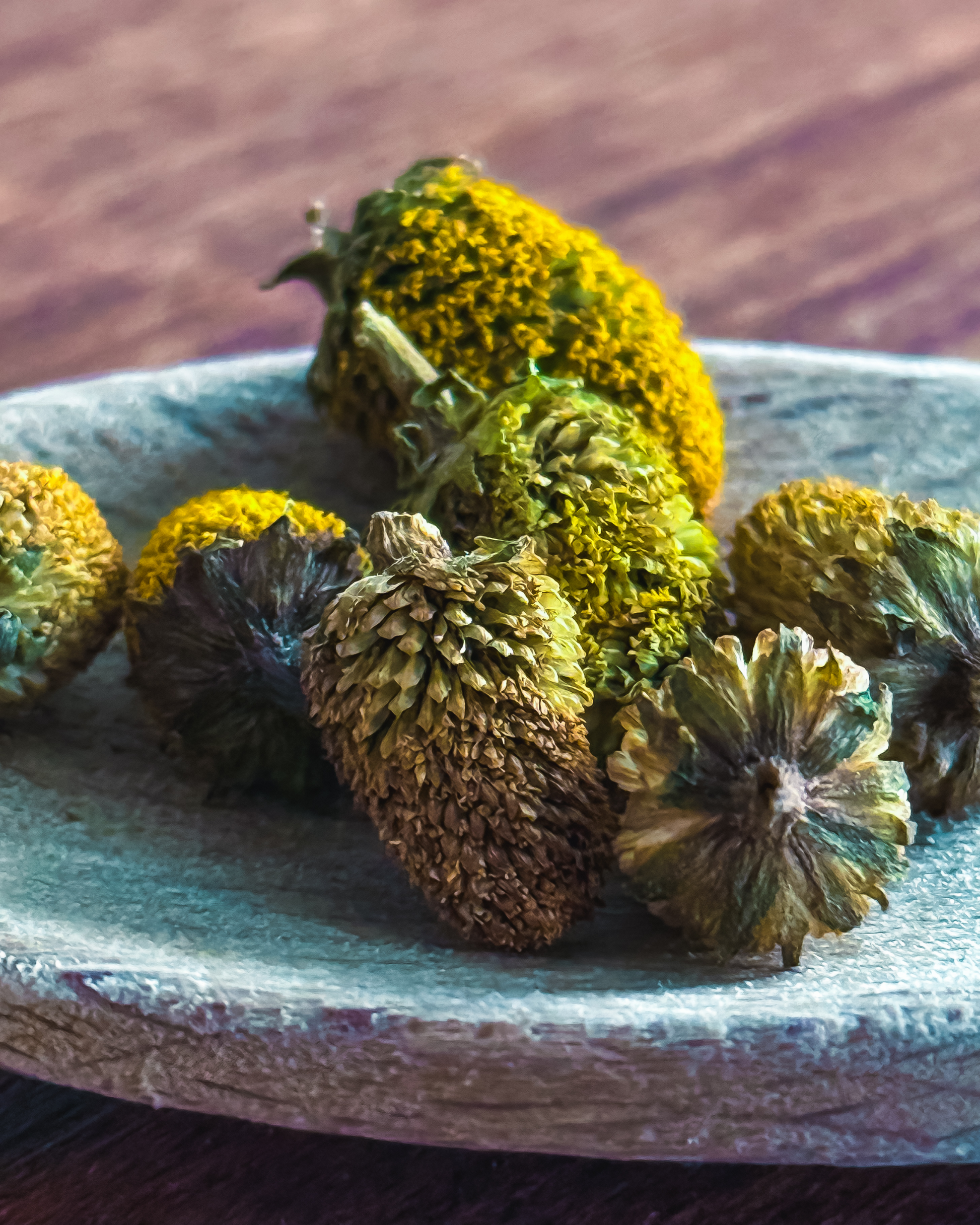
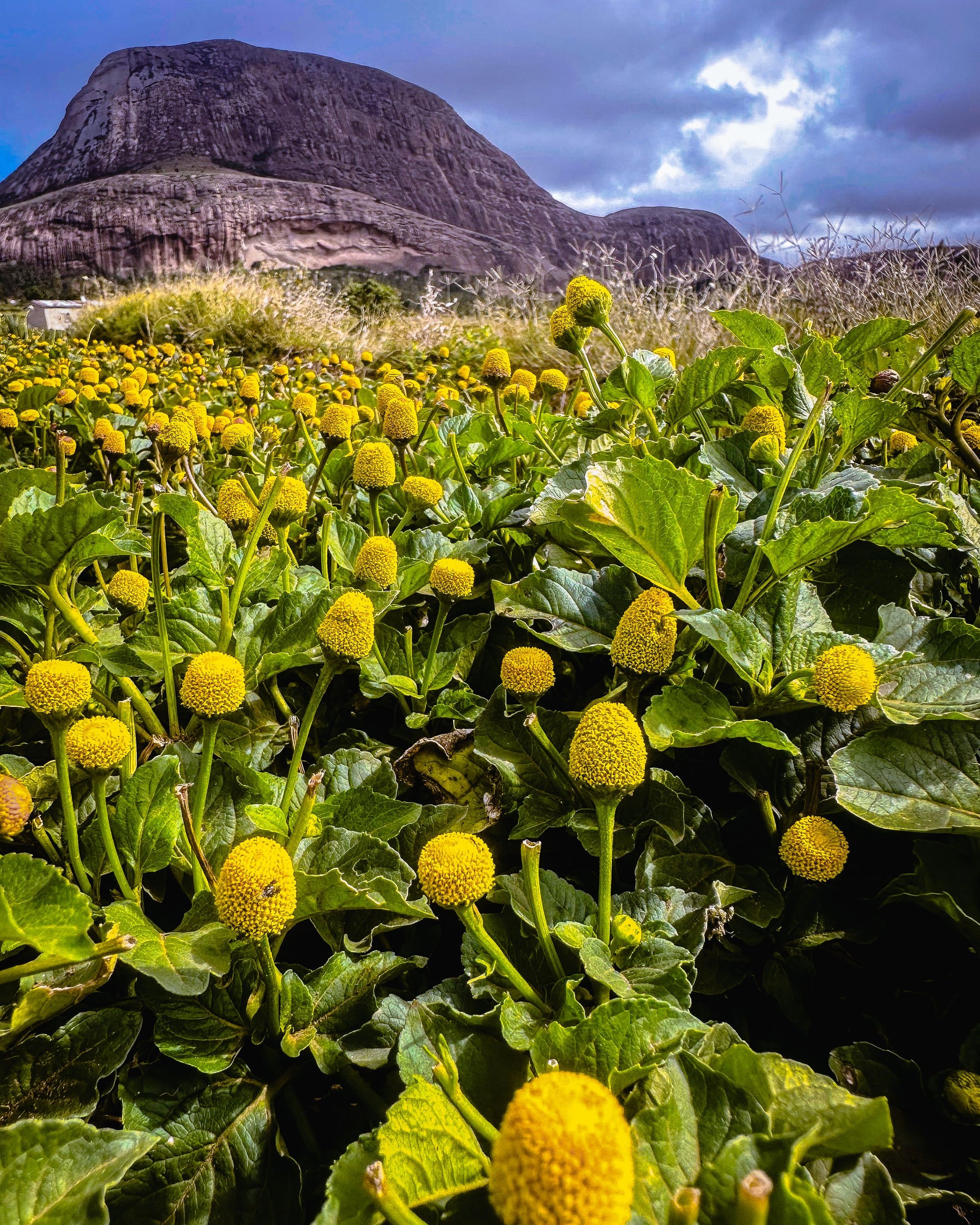
Acmella oleracea contains bioactive constituents, including alkamides such as spilanthol.
That botanical chemistry does not mean an Acmella-containing cream or serum is automatically protected against microbial contamination.
A botanical active and a preservation system perform different functions.
21. A Preserved Acmella Extract Does Not Preserve the Whole Formula
Suppose an Acmella raw material contains its own preservative system.
You use that extract at:
5%
in a facial cream.
The preservative contained in the extract is diluted when the raw material enters the finished formula.
You cannot assume that the extract's preservative protects the entire product.
22. Example of Dilution
Suppose, purely as a mathematical example, a botanical raw material contains:
1% of Ingredient P.
The botanical extract is used at:
5%
of the finished product.
The theoretical contribution of Ingredient P is:
5 × 1 ÷ 100
= 0.05%
That calculation does not establish whether Ingredient P is an appropriate preservative or whether the finished product is adequately preserved.
23. Water Activity Helps Explain Concentrated Products
Water activity becomes especially interesting in concentrated products such as:
- high-solids formulations
- some glycerine-rich products
- some sugar-rich products
- certain salt-rich systems
These can contain water while having lower water availability than a simple aqueous solution.
24. But "Concentrated" Does Not Mean Safe
A product can look:
- thick
- sticky
- syrupy
- concentrated
without having sufficiently low water activity to prevent relevant microbial growth.
Texture is not a water-activity measurement.
25. Viscosity Is Not Water Activity
A thick cream can have relatively high water activity.
A thin liquid can have lower water activity under a different formulation architecture.
Viscosity describes resistance to flow.
Water activity describes something different.
Never use thickness as a substitute for aw measurement.
26. Oil Does Not Simply "Bind" All the Water
An emulsion contains both:
- aqueous phase
- oil phase
Adding more oil does not automatically make the water microbiologically unavailable.
In an oil-in-water emulsion, microorganisms may still encounter a continuous aqueous environment.
Preservation decisions therefore require more than calculating the oil percentage.
27. Oil-in-Water Emulsions
Many lotions and creams are oil-in-water emulsions.
Microscopic oil droplets are dispersed through a continuous water phase.
These products can feel rich and oily while still containing a substantial continuous aqueous phase.
Their sensory richness does not imply low microbial risk.
28. Water-in-Oil Emulsions
In a water-in-oil emulsion, water droplets are dispersed through a continuous oil phase.
This changes the physical architecture of the product.
But it should not automatically be interpreted as:
preservative unnecessary.
Microbiological risk depends on the complete system.
29. Product Architecture Matters
Compare:
- facial mist
- aqueous serum
- gel
- oil-in-water lotion
- water-in-oil cream
- biphasic product
- balm
- facial oil
Their water distributions differ dramatically.
Water content alone does not capture all these structural differences.
30. What About Anhydrous Cosmetics?
Anhydrous means formulated without intentionally added water.
Examples may include:
- facial oils
- oil serums
- balms
- some cleansing oils
These products generally present a different microbial environment from water-rich products.
But:
anhydrous does not mean sterile.
31. Microorganisms Can Still Be Present
A product may contain microorganisms without supporting significant multiplication under its current conditions.
This distinction matters.
Low water activity can limit growth without meaning that every microorganism has been destroyed.
32. Low Water Activity Is Not Sterilisation
A low-aw product is not automatically sterile.
Water activity control works by limiting environmental conditions required for microbial growth.
It does not mean every organism has been killed.
33. Water Can Enter During Consumer Use
Consider a jar of anhydrous balm used in a bathroom.
The consumer may introduce water through:
- wet fingers
- condensation
- shower spray
- damp applicators
The local environment inside the product can change.
34. Packaging Matters
A narrow pump bottle and a wide-mouth jar expose products differently to:
- fingers
- air
- water
- environmental contamination
Packaging is therefore part of microbiological risk management.
It does not replace an appropriate preservation strategy.
35. "No Water Added" Can Be Misleading
A formulation may contain no ingredient named simply:
Water
while still receiving water from:
- hydrosols
- aloe preparations
- botanical extracts
- aqueous solutions
- premixes
Always examine the complete composition of raw materials.
36. Example: Hidden Water Contribution
Suppose a formula contains:
20% botanical extract.
If that extract is supplied in a water/glycerine carrier, the formula receives both:
- botanical constituents
- carrier components
The ingredient cannot be treated as 20% pure plant material.
37. Carrier Composition Matters
This principle applies directly to Acmella extracts.
An Acmella ingredient might be:
- oil-based
- water-based
- water/glycerine based
- hydroalcoholic
- another extraction format
These raw materials behave differently in a formulation.
38. Equal Acmella Percentages Are Not Equal Formulations
Suppose two creams each contain:
5% Acmella extract.
Cream A uses an oil-based extract.
Cream B uses a water/glycerine extract.
Both contain 5% Acmella raw material by weight.
But their:
- water contribution
- oil contribution
- solvent composition
- formulation behaviour
can differ.
39. Spilanthol Percentage Does Not Tell You Water Activity
Suppose both Acmella extracts are standardised to the same spilanthol concentration.
That still does not mean they have the same:
- carrier
- water activity
- preservation requirements
- physical behaviour
Spilanthol concentration answers a different question.
40. Why Ingredient Specifications Matter
Before formulating with a botanical extract, useful information can include:
- carrier composition
- water content where relevant
- preservative system
- pH
- storage conditions
- botanical identity
- plant part
- marker concentration where applicable
This helps the formulator understand what the raw material contributes to the finished system.
41. Water Activity Is an Equilibrium Concept
Water activity is related to the state of water within a system at equilibrium under defined conditions.
This matters because the value can be influenced by:
- formulation composition
- temperature
- equilibration
- measurement procedure
Therefore, water activity should be measured using an appropriate method rather than estimated casually.
42. The Relationship with Equilibrium Relative Humidity
Under appropriate equilibrium conditions, water activity is related to equilibrium relative humidity.
In simplified form:
aw ≈ ERH ÷ 100
So a material with an aw of approximately:
0.75
would correspond conceptually to an equilibrium relative humidity of approximately:
75%
under the relevant measurement conditions.
This does not mean ordinary room humidity directly tells you the product's water activity.
43. Do Not Use a Room Hygrometer to Measure Cosmetic aw
A standard room humidity meter is not a substitute for a dedicated water-activity instrument.
Water activity measurement requires controlled sample handling and suitable equipment.
44. How Water Activity Is Measured
Dedicated water-activity meters typically assess the vapour-pressure relationship between water in a sample and water in a reference state under controlled conditions.
The exact technology depends on the instrument.
Common approaches may use sensors based on:
- dew point
- capacitance
- other humidity-sensing principles
The method and instrument specifications matter.
45. Sample Preparation Matters
A water-activity result can be affected by poor sampling.
For a cosmetic product, the sample should be reasonably representative of the material being evaluated.
Potential problems include:
- separation
- evaporation
- contamination
- inconsistent sample quantity
- temperature differences
Good measurement begins before the instrument displays a number.
46. Temperature Matters
Water activity is temperature-dependent.
Therefore, an aw value should ideally be interpreted with knowledge of the measurement conditions.
Do not assume a value measured under one condition is universally identical under all conditions.
47. Why Comparing Measurements Requires Consistency
Suppose you compare:
Prototype A
with:
Prototype B.
If one is measured under substantially different conditions from the other, the comparison becomes less useful.
Controlled measurement conditions improve interpretability.
48. Water Activity Can Change During Storage
A formulation is not necessarily chemically or physically static.
Over time, changes can include:
- evaporation
- water migration
- ingredient crystallisation
- phase separation
- packaging interactions
These changes may potentially influence the product environment.
This is another reason formulation assessment extends beyond Day 1.
49. Packaging Can Influence Water Loss
A package with poor moisture-barrier properties may allow water loss over time.
That can change:
- product mass
- texture
- ingredient concentration
- potentially water activity
Packaging is therefore part of stability evaluation.
50. Opening the Package Changes Exposure
Repeated opening can expose a product to:
- environmental humidity
- air
- contamination
- water from consumer use
A product in use may experience conditions that differ from a sealed laboratory sample.
51. Water Activity and Microbial Growth Thresholds
Different groups and species of microorganisms have different minimum water-activity requirements for growth.
In general, many bacteria require relatively high water activity, while some yeasts and moulds can grow at lower values.
However, there is no single aw threshold that describes every microorganism.
52. Why Universal Cut-Offs Need Caution
You may encounter simplified statements such as:
"Below X water activity, no preservative is needed."
That kind of statement needs context.
Actual product safety depends on:
- target organisms
- formulation
- pH
- ingredients
- packaging
- manufacturing hygiene
- intended use
- regulatory context
- supporting testing
A number should not replace risk assessment.
53. Water Activity Can Be One Preservation Hurdle
Modern preservation is often better understood through the concept of multiple hurdles.
A product may use a combination of:
Good manufacturing hygiene
appropriate pH
reduced water activity
preservative system
protective packaging
testing
No single hurdle needs to be treated as magic.
54. Hurdle Technology
The idea behind hurdle technology is that several environmental barriers can work together to make microbial growth more difficult.
For cosmetics, relevant hurdles may include:
- pH
- water activity
- preservative system
- packaging
- ingredient composition
- manufacturing hygiene
The exact strategy depends on the product.
55. Water Activity Does Not Replace Hygiene
Imagine a formulation with relatively low water activity.
If manufacturing equipment is dirty, poor hygiene can still introduce contamination.
Even when growth is limited, contamination control remains important.
Start with clean manufacturing practices.
56. Hygiene Does Not Replace Water-Activity Control Either
The reverse is also true.
A perfectly clean manufacturing process does not mean a water-rich unpreserved cream will remain microbiologically controlled throughout consumer use.
Initial cleanliness and long-term preservation are different problems.
57. Water Activity Does Not Replace pH
pH and water activity describe different aspects of the formulation environment.
A product can have:
low pH
and:
high water activity.
Another can have:
higher pH
and:
lower water activity.
Both parameters can influence microbial behaviour differently.
58. Water Activity Does Not Replace Preservatives
In many water-containing cosmetics, an appropriate preservative system remains important.
Water activity may contribute to the overall preservation strategy, but should not automatically be used as an excuse to omit preservation.
59. Preservatives Do Not Replace Water-Activity Understanding
The reverse is also useful.
Understanding aw can help formulators:
- characterise the product
- compare prototypes
- investigate concentrated systems
- understand why formulations behave differently
- design more informed preservation strategies
Preservation science benefits from multiple measurements.
60. Water Activity Does Not Replace Challenge Testing
A preservative efficacy or challenge test evaluates how a finished product responds when exposed to defined microorganisms under a specified protocol.
Water activity measurement does not do that.
The two tests provide different information.
61. Water Activity Does Not Replace Stability Testing
Stability testing examines changes such as:
- separation
- colour
- odour
- pH
- viscosity
- packaging compatibility
- chemical change
Water activity can be one useful measurement within a broader study, but it does not replace stability testing.
62. Water Activity Does Not Replace Microbiological Testing
A product can have an aw measurement and still require microbiological evaluation.
Microbiological testing may assess:
- microbial counts
- specified organisms
- preservative performance
Water activity cannot provide those results.
63. Four Questions, Four Different Tools
A useful way to separate the concepts is:
| Question | Relevant Approach |
|---|---|
| How much water is present? | Water/moisture content assessment |
| How available is the water? | Water activity measurement |
| What microorganisms are present? | Microbiological testing |
| Does the preservation system resist microbial challenge? | Preservative efficacy/challenge testing |
These questions are related.
They are not interchangeable.
64. What Water Activity Can Tell a DIY Formulator
Water activity can help you understand:
- whether water availability differs between prototypes
- whether a concentrated formulation behaves differently from a simple aqueous one
- how formulation changes affect the water environment
- whether assumptions based solely on water percentage are misleading
This can make formulation decisions more evidence-based.
65. What Water Activity Cannot Tell You
Water activity alone cannot establish:
- cosmetic efficacy
- skin safety
- exact microbial count
- preservative efficacy
- shelf life
- chemical stability
- spilanthol concentration
- botanical identity
Each requires appropriate evidence.
66. Part 1 Takeaway
Water is not adequately described by asking only:
How much is present?
For preservation science, another important question is:
How available is that water within the finished formulation?
That is the role of water activity.
Water content and water activity are related, but they are fundamentally different concepts.
A water-rich product may have its water activity altered by dissolved substances and formulation structure. A product with relatively little water may still have enough available water to support microbial growth. An anhydrous product may have lower microbial growth potential but is not automatically sterile or immune to contamination during use.
Ingredients such as glycerine can influence water activity, but they should not casually be treated as universal preservatives.
The same applies to botanical ingredients. An Acmella oleracea extract may arrive in oil, water, glycerine, alcohol or another carrier. That carrier matters to the finished formulation. A preserved raw material does not automatically preserve the final product, and spilanthol concentration tells us nothing directly about water activity or preservation adequacy.
The core principle is:
Water content tells you how much water is in the product. Water activity helps tell you how available that water is. Neither measurement alone tells you whether a cosmetic is adequately preserved.
Coming in Part 2
Part 2 will examine how formulation ingredients change water activity, including glycerine, glycols, salts, sugars, botanical extracts and emulsions, plus practical examples of high-water and low-water-activity systems, water-activity meters, sampling, interpretation, preservation hurdles and common DIY formulation mistakes.
End of Part 1
Part 2: How Ingredients, Formulation Structure and Measurement Affect Water Activity
Part 1 established an important distinction:
Water content tells us how much water is present. Water activity tells us something different: how thermodynamically available that water is within the formulation.
That distinction becomes much more useful when we begin changing a formula.
A cosmetic product is rarely just water.
It may contain:
- glycerine
- glycols
- salts
- botanical extracts
- surfactants
- emulsifiers
- polymers
- oils
- sugars or sugar-derived ingredients
- proteins
- preservatives
These materials interact with water in different ways.
As a result, two products containing similar percentages of water can have different water activities. Conversely, reducing the water percentage does not automatically reduce water activity to a level that meaningfully controls microbial growth.
This is why water activity cannot be understood by looking at the ingredient list and simply counting the ingredients that contain water.
Part 2 explores how formulation composition changes the water environment, how aw is measured, and how formulators can use the information without overinterpreting it.
The central principle is:
Water activity is a property of the complete formulation, not simply a property of the water ingredient.
67. Start with Pure Water
Pure water provides a useful reference point.
Under defined measurement conditions, its water activity is close to:
aw = 1.0
This represents very high water availability.
Once other substances are dissolved or incorporated into the system, the relationship changes.
68. Dissolved Ingredients Can Change Water Activity
When ingredients interact with water, they can reduce its thermodynamic availability.
The magnitude of that effect depends on factors such as:
- chemical identity
- concentration
- molecular interactions
- formulation composition
- temperature
This is why simply knowing the percentage of water is not enough.
69. Not Every Ingredient Affects aw Equally
Imagine adding the same percentage of three different ingredients to water.
Ingredient A may produce only a small change in water activity.
Ingredient B may produce a larger change.
Ingredient C may behave differently again.
The percentage alone does not determine the effect.
Chemical behaviour matters.
70. Concentration Matters Too
The effect of an ingredient at:
2%
may be very different from its effect at:
20%.
This is especially relevant when discussing ingredients such as:
- glycerine
- glycols
- salts
- sugars
Small amounts used for their normal cosmetic function should not automatically be assumed to create a low-water-activity product.
71. Glycerine as a Useful Example
Glycerine is widely used in skincare as a humectant.
It is:
- water-miscible
- hygroscopic
- strongly associated with water interactions
At sufficiently high concentrations, glycerine can reduce water activity.
This makes it a useful example for understanding the difference between water content and water availability.
72. Glycerine Does Not Make Every Formula Self-Preserving
Consider a typical water-containing cosmetic containing a modest amount of glycerine.
The glycerine may:
- influence sensory feel
- function as a humectant
- influence the water environment
But that does not automatically mean it reduces aw sufficiently to control relevant microbial growth.
The complete formulation must be considered.
73. More Glycerine Is Not Automatically Better
If water-activity reduction is desirable, it may be tempting to keep increasing glycerine.
But formulation design involves more than aw.
High glycerine levels can influence:
- tackiness
- skin feel
- viscosity
- ingredient compatibility
- sensory acceptance
A formulation should not be optimised around one parameter while ignoring everything else.
74. Humectancy and Water Activity Are Related but Different Concepts
A humectant is generally used because of its relationship with water and moisture.
Water activity is a thermodynamic measurement.
An ingredient being classified as a humectant does not tell you the final aw of a cosmetic product containing it.
Again:
ingredient function is not a water-activity measurement.
75. Glycols
Various glycols are used in cosmetic formulation for functions that may include:
- humectancy
- solvent properties
- sensory modification
- formulation support
Depending on identity and concentration, some can also influence water activity.
But different glycols should not be treated as chemically interchangeable.
76. Do Not Generalise from One Glycol to Another
Two ingredients may both be described as glycols while differing in:
- molecular structure
- physical properties
- formulation behaviour
- antimicrobial contribution
- water interactions
Use ingredient-specific technical information rather than assuming that all glycols produce the same aw effect.
77. Water-Activity Reduction Is Concentration-Dependent
An ingredient that strongly influences water activity at a high concentration may have a much smaller effect at a low concentration.
This is why statements such as:
"Ingredient X lowers water activity"
are incomplete without formulation context.
A better question is:
How does Ingredient X affect water activity at the concentration used in this specific formulation?
78. Salts Can Influence Water Availability
Dissolved salts interact with water and can reduce water activity.
This principle is well known in other product categories.
But that does not mean cosmetic formulators should simply add large amounts of salt to preserve products.
79. Salt Changes More Than aw
Salt can influence:
- viscosity
- surfactant systems
- emulsions
- skin feel
- ingredient solubility
- ionic strength
- polymer behaviour
A formulation change intended to affect water activity may destabilise another part of the product.
80. Electrolytes and Emulsions
Botanical extracts and other raw materials may introduce electrolytes into a cosmetic formula.
Some emulsifier or thickener systems are sensitive to electrolytes.
Therefore, changing the dissolved-solids composition can affect both:
water environment
and:
physical stability
These must be evaluated separately.
81. Sugars Can Also Affect Water Activity
Sugars can interact strongly with water.
At sufficiently high concentrations, they can substantially influence water activity.
This principle helps explain the stability of certain concentrated food systems.
But cosmetics should not be treated as food formulations.
82. A Little Sugar Does Not Make a Cosmetic Preserved
A small amount of sugar or sugar-containing botanical material may actually contribute nutrients while failing to reduce water activity enough to control microbial growth.
This is particularly relevant to DIY botanical preparations.
83. Honey Is a Good Example of Why Context Matters
Honey is often discussed as a relatively low-water-activity natural material.
That does not mean:
adding a little honey to a water-based cosmetic makes the finished product self-preserving.
Dilution changes the system.
Once incorporated into additional water, the water activity can increase substantially.
The finished formulation must be assessed, not the starting ingredient alone.
84. Dilution Can Change the Preservation Environment
This principle extends far beyond honey.
A concentrated raw material may have:
- low water activity
- its own preservative system
- limited microbial growth under storage conditions
After dilution into a cosmetic, those properties may change dramatically.
85. Raw-Material Stability Is Not Finished-Product Stability
Suppose a botanical extract remains stable in its original bottle for a year.
You use:
5%
of it in a cream.
The original stability information does not prove that the cream will remain stable for a year.
The raw material has entered a completely different environment.
86. The Same Applies to Preserved Extracts
A botanical extract may be adequately preserved as supplied.
After dilution into:
- water
- cream
- serum
- gel
the preservative concentration and environmental conditions change.
Therefore:
preserved ingredient ≠ preserved finished product.
87. Acmella Extract Example
Imagine an Acmella oleracea extract supplied in a water/glycerine carrier with its own preservation system.
The supplier's preservation strategy is designed for:
that raw material
at:
its supplied composition.
Using 5% of the extract in a cream creates a different product.
88. What Enters the Formula?
If the Acmella extract contains:
- water
- glycerine
- botanical constituents
- preservative
all of those components enter the finished formulation.
This is why carrier composition matters.
89. The Extract Is Not Just "Acmella"
Ingredient labels can encourage simplified thinking.
A formula may say:
Acmella extract 5%
but technically that 5% may include a substantial amount of carrier.
The actual plant-derived solids or marker compounds may represent only part of the raw material.
90. Spilanthol Does Not Determine aw
Spilanthol is one of the principal alkamides associated with Acmella oleracea.
Its concentration may be relevant to extract standardisation and chemical analysis.
It does not tell you the water activity of the finished cosmetic.
These are separate measurements.
91. An Oil-Based Acmella Extract Is Different
Now consider an Acmella extract supplied in oil.
Adding 5% of that material to a cream contributes primarily to the lipophilic portion of the formula rather than adding an aqueous carrier.
The formulation consequences therefore differ from those of a water/glycerine extract.
92. Equal Percentage Does Not Mean Equal Water Contribution
Compare:
Formula A
5% oil-based Acmella extract
Formula B
5% water/glycerine Acmella extract
Both say:
5% Acmella extract
But their contribution to the formulation architecture is different.
This is why raw-material composition matters more than ingredient name alone.
93. Hydroalcoholic Extracts Add Another Variable
An Acmella extract may also use water and alcohol as part of its extraction or carrier system.
Alcohol can influence:
- solvent behaviour
- evaporation
- sensory properties
- formulation compatibility
- microbial environment
The complete carrier composition needs to be considered.
94. Alcohol Does Not Create a Universal Preservation Shortcut
Alcohol can have antimicrobial effects at appropriate concentrations and conditions.
But a small amount introduced through a botanical extract should not automatically be assumed to preserve the entire cosmetic.
Dilution matters.
The complete finished formula matters.
95. Volatile Ingredients Can Change During Storage
If a formulation contains volatile components and the packaging permits their loss, composition may change over time.
This could potentially influence:
- concentration
- sensory properties
- water balance
- preservation conditions
Packaging and stability therefore remain important.
96. What About Oils?
Oils generally do not provide microorganisms with the same water environment as an aqueous phase.
An anhydrous oil serum therefore presents a different microbial growth environment from an aqueous serum.
But adding oil to water does not simply cancel out the water.
97. Why Oil Percentage Is Not a Water-Activity Calculation
Consider a cream containing:
60% water
and:
25% oils.
You cannot subtract the oil percentage from the water percentage and derive water activity.
Water activity is not calculated that way.
The finished system must be evaluated as a whole.
98. Emulsion Structure Adds Complexity
In an emulsion, oil and water exist in separate microscopic domains.
Depending on the emulsion type:
- water may form the continuous phase
- oil may form the continuous phase
The location and accessibility of water matter to product behaviour.
99. Oil-in-Water Emulsions
In an oil-in-water emulsion:
oil droplets
are dispersed through a:
continuous aqueous phase.
This architecture is common in lotions and many creams.
A product can feel creamy and rich while maintaining substantial water availability.
100. Water-in-Oil Emulsions
In a water-in-oil emulsion:
water droplets
are dispersed through a:
continuous oil phase.
This can change how water is physically distributed.
But it should not be assumed that water trapped inside droplets is automatically unavailable to all microorganisms.
101. Physical Entrapment Is Not the Same as Low aw
This is an important distinction.
Water can be physically located within an emulsion structure while still having a water activity compatible with microbial growth.
Physical structure and thermodynamic water availability are related aspects of the formulation, but they are not identical.
102. Thickening Water Does Not Necessarily Make It Unavailable
Suppose you add a polymer and turn a watery serum into a thick gel.
The product now flows differently.
But viscosity alone does not tell you its water activity.
A thick gel can still contain highly available water.
103. Gel Structure Is Not Preservation
This is another common DIY misconception.
A gel may appear:
- dense
- stable
- structured
while remaining microbiologically vulnerable.
Appearance does not establish preservation.
104. Powders Can Complicate the Picture
Dry powders often have relatively limited available water when stored properly.
But when incorporated into a water-containing cosmetic, their environment changes.
A botanical powder that is stable when dry may not remain microbiologically stable once hydrated.
105. Dry Botanical Material Is Not Sterile
Drying can reduce water activity and limit microbial growth.
It does not necessarily eliminate all microorganisms.
Once dry botanical material is rehydrated, surviving microorganisms may encounter more favourable conditions.
106. This Matters for Homemade Botanical Infusions
Imagine adding dried plant material to water to make a DIY infusion.
The dried material may introduce:
- microorganisms
- nutrients
- plant solids
while the water creates a favourable environment.
The fact that the plant was previously dry does not make the infusion shelf-stable.
107. Acmella Infusions Need the Same Logic
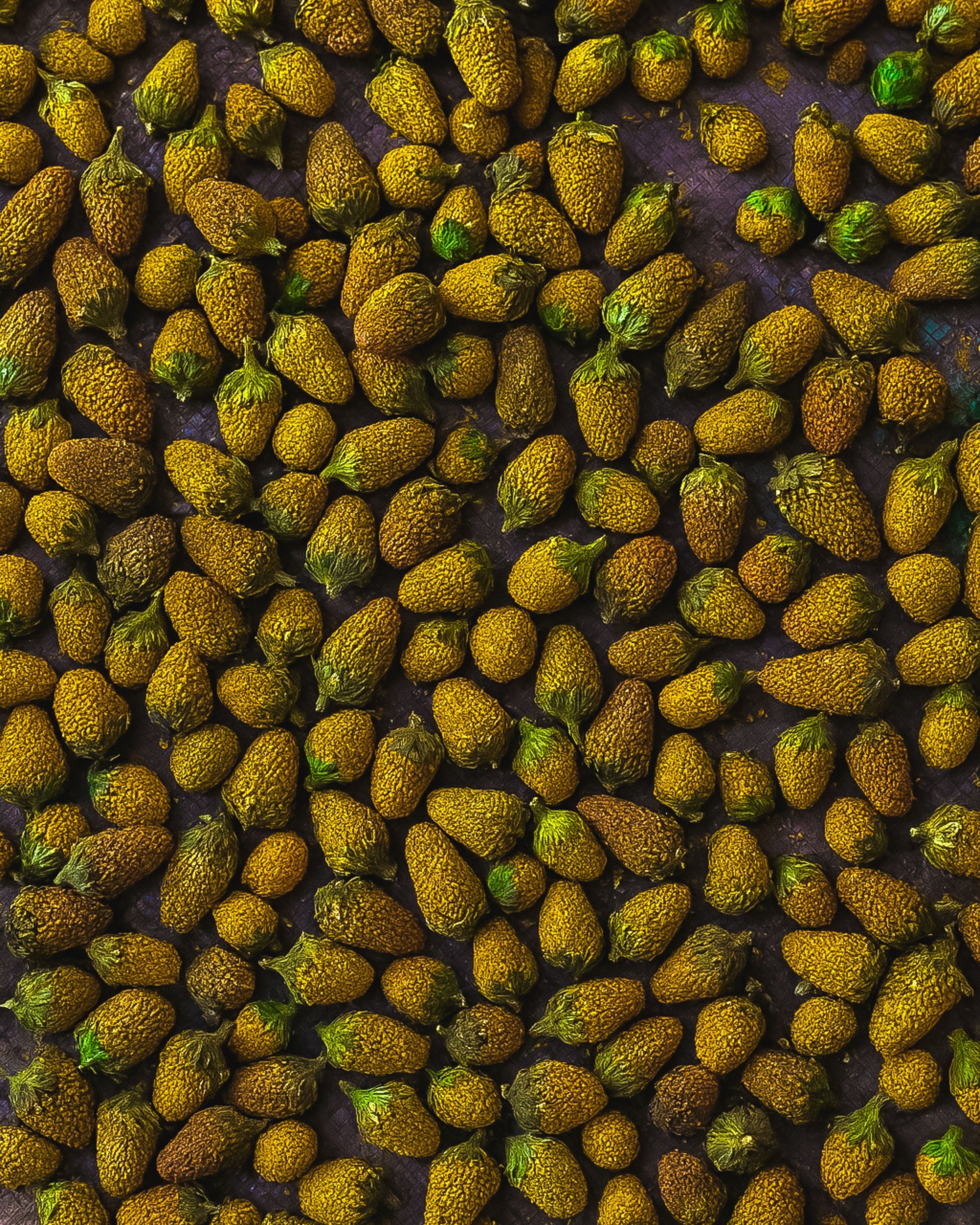
Dried Acmella oleracea flower heads may have relatively little available water compared with fresh flowers.
Once steeped in water, however, the system changes completely.
The resulting infusion should not be treated as self-preserving.
108. Fresh Acmella Is Different Again
Fresh botanical material naturally contains water.
It also carries microorganisms from:
- cultivation
- harvest
- handling
- transport
Fresh plant material is not sterile.
Adding it directly to a water-rich DIY cosmetic can introduce additional microbiological complexity.
109. Water Activity and Fresh Botanicals
Fresh botanical tissue generally provides a very different water environment from properly dried material.
But water activity is only one issue.
Fresh plant material can also contribute:
- enzymes
- nutrients
- microorganisms
- suspended solids
This is why fresh plant additions require careful formulation thinking.
110. Water Activity Can Change After Mixing
Suppose two ingredients have different water activities before formulation.
Once mixed, water can redistribute until the system approaches equilibrium.
The final aw is therefore a property of the resulting system, not simply the average of the starting aw values.
111. Do Not Average Water-Activity Numbers
If Ingredient A has:
aw 0.60
and Ingredient B has:
aw 0.90,
mixing equal quantities does not justify simply saying:
final aw = 0.75.
The relationship is not generally a simple arithmetic average.
Measure the final product.
112. Why Formulation Models Have Limits
In certain well-characterised systems, mathematical models may help estimate water activity.
But complex cosmetics can contain many interacting components.
For DIY formulators, direct measurement is usually more informative than inventing an aw value from an ingredient list.
113. Water-Activity Meters
A dedicated water-activity meter is designed to measure aw under controlled conditions.
A typical workflow involves:
- placing a representative sample in a suitable sample cup
- placing the sample in the instrument
- allowing the measurement environment to equilibrate
- recording the result
Exact procedures depend on the instrument.
114. Follow the Instrument Instructions
Do not assume all water-activity meters work identically.
Different instruments may have different requirements for:
- sample volume
- calibration or verification
- equilibration
- temperature
- cleaning
- volatile ingredients
Follow manufacturer guidance.
115. Sample Cups Matter
The sample should be presented to the instrument in an appropriate container.
Too much sample may:
- contaminate the instrument
- touch components it should not touch
Too little may:
- increase variability
- provide poor representation
Use the instrument's specified procedure.
116. Do Not Fill the Sample Cup to the Top
Water-activity measurement generally requires headspace above the sample.
The exact amount depends on the instrument and sample cup.
More sample is not automatically better.
117. Representative Sampling
Suppose a cream has begun separating.
If you measure only:
the watery layer
or:
the oily layer,
the result may not represent the complete product.
Sampling strategy matters.
118. Homogeneity Matters
For a homogeneous product, representative sampling may be straightforward.
For a:
- biphasic product
- suspension
- separated emulsion
you must consider what exactly you are trying to measure.
The sample should match the question.
119. Do Not Hide Separation Before Testing
If a product separates during stability testing, vigorously remixing it and reporting only the remixed aw can hide an important physical failure.
Record the separation.
Then define clearly what was measured.
Good data require context.
120. Temperature Equilibration
A sample taken directly from:
a refrigerator
and placed into an instrument operating under warmer conditions may need appropriate equilibration.
Temperature differences can affect measurements and potentially create condensation.
Follow instrument procedures.
121. Condensation Is a Measurement Problem
If water condenses inside the measurement chamber or sample environment, it can compromise the result and potentially contaminate equipment.
Temperature control matters.
122. Volatile Ingredients Can Interfere
Some cosmetic formulations contain:
- ethanol
- fragrance components
- essential oils
- volatile solvents
Depending on the measurement technology, volatile compounds may influence sensor behaviour.
Instrument suitability should be checked for the sample type.
123. Cleaning Matters
Residue from one sample can contaminate the next.
This is particularly relevant when measuring:
- fragranced products
- sticky products
- botanical extracts
- volatile formulations
Follow the instrument's cleaning procedure.
124. Verification Matters
A water-activity meter should not simply be trusted forever because it displays a number.
Appropriate verification using suitable standards can help confirm instrument performance.
The required procedure depends on the instrument.
125. Do Not Use Plain Water as the Only Check Without Context
A reading near 1.0 for water may show that the instrument responds to a high-aw sample.
But proper instrument verification may require defined reference standards across relevant parts of the measurement range.
Follow manufacturer guidance.
126. Record Measurement Conditions
Useful water-activity records can include:
- product
- batch
- date
- formula version
- aw result
- measurement temperature where available
- instrument
- sample condition
- relevant observations
A number without context is less useful.
127. Measure More Than Once When Appropriate
Repeated measurements can help assess consistency.
If one result is:
0.72
and another representative sample gives:
0.89,
that discrepancy deserves investigation.
Do not simply choose the value you prefer.
128. Investigate Unexpected Results
Possible causes include:
- non-homogeneous sample
- instrument issue
- contamination
- temperature differences
- sample preparation
- formulation variation
Unexpected data can be informative.
129. Do Not Retest Until You Get the Number You Want
This principle applies to many forms of quality control.
If a result is unexpected, investigate why.
Repeatedly measuring until a desirable result appears is not a scientifically sound approach.
130. Establish a Measurement Plan
Before testing, decide:
- why you are measuring aw
- which batches will be tested
- at what stage
- under what conditions
- how results will be recorded
This makes the measurement more meaningful.
131. Example: Comparing Glycerine Levels
Suppose you make three otherwise controlled prototypes with different glycerine levels.
You might compare:
- water activity
- viscosity
- skin feel
- pH
- physical stability
The experiment can show how changing glycerine affects several properties.
132. Change One Major Variable at a Time
If Prototype A and Prototype B differ in:
- glycerine
- preservative
- oil
- emulsifier
- botanical extract
then a change in aw is difficult to attribute to one factor.
Controlled formulation experiments are easier to interpret.
133. Example: Acmella Extract Carrier Comparison
Imagine two experimental creams.
Cream A
contains an oil-based Acmella extract.
Cream B
contains a water/glycerine Acmella extract.
Even if both use the same raw-material percentage, they are not identical formulas.
The carrier difference needs to be accounted for.
134. Balance the Formula Correctly
If 5% of one extract contributes oil and 5% of another contributes water/glycerine, simply swapping one for the other can change:
- oil phase
- aqueous phase
- emulsification requirements
- sensory properties
- potentially water activity
Ingredient substitution requires reformulation thinking.
135. The Complete Raw Material Matters
This principle extends beyond Acmella.
Whenever you add an extract, ask:
What else is in this ingredient?
Possible carriers include:
- water
- glycerine
- propanediol
- ethanol
- oil
These materials become part of the final product.
136. Water Activity and pH Together
Water activity and pH can both influence microbial growth.
A microorganism may face:
- limited available water
- unfavourable pH
- preservative exposure
Together, these can create multiple hurdles.
But the interaction should be evaluated in the real formulation.
137. Lower pH Is Not Always Better
Do not keep lowering pH simply to make a product "safer".
pH must also be compatible with:
- skin
- preservative
- emulsifier
- active ingredients
- packaging
Formulation is a balancing problem.
138. Lower aw Is Not Always Better Either
Similarly, reducing water activity may require concentrations of ingredients that create unacceptable:
- stickiness
- irritation potential
- crystallisation
- instability
- sensory problems
A cosmetic must function as a complete product.
139. Preservation Is a System
Instead of asking:
What single ingredient will preserve my cream?
a better question is:
How does the entire formulation resist microbial contamination and growth throughout intended use?
That system may include:
- hygiene
- pH
- water activity
- preservative
- packaging
- manufacturing
- testing
140. Challenge Testing Tests the Finished System
A preservative efficacy test challenges the finished product with defined microorganisms under a controlled protocol.
This provides information that cannot be obtained from water activity alone.
Even if aw appears favourable, challenge testing may still be important depending on the product and context.
141. Why aw and Challenge Testing Complement Each Other
Water activity helps characterise the environment.
Challenge testing evaluates how the actual preservation system performs under microbial challenge.
Together, they can provide more useful information than either number alone.
142. Microbial Limits Testing Is Different Again
Microbial enumeration or limits testing examines the microbiological condition of a sample at a particular point.
It does not necessarily tell you whether the product will resist future contamination during use.
This is why microbiological quality and preservative efficacy are distinct concepts.
143. A Clean Result Today Is Not a Shelf-Life Guarantee
Suppose a cream contains very few detectable microorganisms immediately after production.
That is positive information.
But if the preservation system is inadequate, contamination introduced later may multiply.
Initial cleanliness does not establish long-term protection.
144. A Low aw Result Is Not a Shelf-Life Guarantee Either
Shelf life can also be limited by:
- oxidation
- hydrolysis
- colour change
- fragrance loss
- emulsion separation
- packaging failure
- active degradation
Water activity addresses only part of product stability.
145. Physical Stability and Microbial Stability Are Different
A cream can remain perfectly smooth while supporting microbial growth.
Another product can separate physically while remaining microbiologically controlled.
Appearance cannot substitute for microbiological evidence.
146. Chemical Stability Is Different Again
An Acmella cream might maintain:
- appearance
- pH
- viscosity
while a chemical marker such as spilanthol changes over time.
If marker stability matters, analytical testing may be needed.
Water activity cannot measure spilanthol degradation.
147. Four Different Stability Questions
For an Acmella cosmetic, you might ask:
Physical
Does the cream separate?
Chemical
Does spilanthol remain within an expected analytical range?
Microbiological
Does the product maintain acceptable microbial quality?
Packaging
Does the container protect and dispense the product appropriately?
These require different evidence.
148. Water Activity Is One Data Point
It can be valuable.
But it should sit within a larger formulation evidence package.
Think of aw as:
one measurement answering one important question
rather than:
the number that determines whether the product is safe.
149. High-Water Product Example
Consider a simple facial mist built largely from:
- water
- hydrosol
- small amounts of humectants
- botanical extract
It is likely to require serious preservation consideration.
The fact that it contains:
5% glycerine
does not justify assuming that water activity is sufficiently reduced.
150. Concentrated Glycerine System Example
Now imagine a formulation with a much larger proportion of glycerine and other dissolved components.
Its water activity may differ substantially from the facial mist.
But the correct value should be:
measured
rather than guessed.
151. Anhydrous Balm Example
Consider a balm containing:
- oils
- waxes
- oil-soluble antioxidant
- oil-based Acmella extract
with no intentionally added water.
Its microbial growth environment differs substantially from a water-rich cream.
However:
- raw materials are not sterile
- consumer contamination can occur
- water can enter during use
Packaging and use conditions still matter.
152. Bathroom Use Matters
An anhydrous product used with dry hands in a controlled environment is exposed differently from the same product used:
- beside a shower
- with wet fingers
- with a damp applicator
Real consumer behaviour should influence product design.
153. Water Activity Can Be Local
Complex products can contain regions or phases with different compositions.
This raises an important formulation issue:
a single bulk measurement may not always describe every microscopic or separated region perfectly.
Physical stability therefore remains important.
154. Phase Separation Can Change Local Environments
Suppose a cream separates during storage.
One region becomes more water-rich.
Another becomes more oil-rich.
Even if the original product was well characterised, the separated product now presents a different physical environment.
This is another reason stable formulation architecture matters.
155. Do Not Use aw to Excuse a Failed Emulsion
A cream that separates has a physical stability problem.
Even if the measured water activity remains within an expected range, separation still matters.
Different quality attributes should not be used to cancel one another out.
156. DIY Formulators Should Avoid False Certainty
Water activity is scientifically useful, which can make it tempting to attach excessive certainty to the number.
For example:
"My product has aw X, therefore it is completely safe."
That conclusion goes beyond what the measurement demonstrates.
Better wording is:
"The measured water activity provides information about water availability in this batch under the measurement conditions."
157. Measurement Uncertainty Still Exists
Like every analytical measurement, aw has uncertainty.
Results depend on:
- instrument performance
- calibration or verification
- sample handling
- temperature
- repeatability
- product characteristics
Do not treat the final decimal places as perfect truth.
158. Compare Trends Carefully
Water-activity measurements can be especially useful for comparing controlled prototypes.
For example:
Prototype A: base formula
Prototype B: changed humectant level
Prototype C: changed solids concentration
If measured consistently, trends can inform formulation development.
159. But Correlation Does Not Prove Cause
If aw decreases when you change several ingredients simultaneously, you cannot automatically identify which ingredient caused the change.
Controlled experiments are more informative.
160. Part 2 Takeaway
Water activity is influenced by the complete formulation environment.
Ingredients such as:
- glycerine
- glycols
- salts
- sugars
- botanical extracts
can affect water availability, but their effect depends strongly on concentration and the rest of the formulation.
An ingredient being hygroscopic does not automatically make it a preservative.
A concentrated raw material being stable does not mean it will preserve a diluted finished cosmetic.
A thick gel does not necessarily have low water activity.
An oil-rich cream does not automatically have little available water.
And an anhydrous balm is not sterile simply because no water was intentionally added.
For Acmella oleracea, the carrier is especially important. An oil-based extract and a water/glycerine extract used at the same percentage can contribute very different materials to a formula. Spilanthol concentration does not tell us the water activity, preservation adequacy or microbiological quality of the finished product.
When aw matters, direct measurement with an appropriate water-activity meter is stronger than guessing from an ingredient list.
But even a good aw measurement remains only one part of preservation science.
The principle to remember is:
You formulate the complete product, not the water ingredient in isolation. Water activity therefore needs to be understood as a property of the complete system.
Coming in Part 3
Part 3 will complete the guide with practical preservation decisions, interpretation of water-activity results, common myths, water activity versus challenge testing, high-risk DIY scenarios, Acmella formulation examples, troubleshooting, FAQs and a complete water-activity and preservation checklist for DIY cosmetic formulators.
End of Part 2
Part 3: Preservation Decisions, Interpretation, Troubleshooting and Practical Formulation
Parts 1 and 2 established the central distinction behind this guide:
Water content tells us how much water is present. Water activity tells us about the thermodynamic availability of that water.
We also saw that water activity is influenced by the complete formulation, including ingredients such as glycerine, glycols, salts and other dissolved materials.
But knowing what water activity means is only the beginning.
The practical questions are harder:
Can a water-activity result tell you whether a preservative is required?
Does low water activity mean a cosmetic is safe?
Can glycerine make a product self-preserving?
What happens when an anhydrous balm becomes contaminated with water during use?
How should water activity be considered alongside pH, challenge testing, stability testing and packaging?
And what does all of this mean when formulating with botanical ingredients such as Acmella oleracea?
The central principle for Part 3 is:
Water activity is evidence about the environment microorganisms encounter. It is not, by itself, evidence that a finished cosmetic is adequately preserved, safe or stable.
161. Start with the Product, Not a Number
It is tempting to search for one water-activity value that divides cosmetics into:
safe
and:
unsafe.
Real formulation is more complicated.
Before interpreting aw, understand what the product actually is.
162. Define the Product Architecture
Ask whether the product is a:
- facial mist
- aqueous toner
- gel
- serum
- oil-in-water cream
- water-in-oil cream
- biphasic product
- balm
- facial oil
- powder
These formats expose water and microorganisms to very different environments.
163. Identify Every Source of Water
Do not look only for an ingredient named:
Water
Water may also enter through:
- hydrosols
- aloe preparations
- aqueous botanical extracts
- water/glycerine extracts
- premixes
- diluted active ingredients
- other water-based raw materials
The complete composition matters.
164. "No Added Water" Is Not Enough
A formula can contain no separately added water while still receiving substantial water from other ingredients.
For example:
40% hydrosol
20% aloe preparation
10% aqueous botanical extract
is clearly a water-containing formulation even if the ingredient list never contains a line simply called "water".
165. Understand the Raw Materials
For each important ingredient, ask:
- What is it?
- What is its carrier?
- Does it contain water?
- Is it supplied preserved?
- What is its pH?
- What are its storage conditions?
- Does the supplier provide relevant microbiological information?
This is especially important with botanical extracts.
166. Then Consider Water Activity
Once the formulation architecture is understood, water activity becomes a useful additional measurement.
It can help answer:
How available is the water in this particular finished formulation under the measurement conditions?
That is much more useful than guessing from water percentage alone.
167. Do Not Work Backwards from a Desired Result
A poor approach is:
"I want to make a preservative-free cream, so I need to reduce aw until I can call it self-preserving."
This starts with a marketing objective rather than product science.
A better process begins with the product's intended:
- function
- sensory profile
- ingredients
- packaging
- use conditions
and then develops an appropriate preservation strategy.
168. "Preservative-Free" Is Not a Technical Goal by Itself
Removing a conventional preservative does not automatically make a product:
- safer
- gentler
- more natural
- more stable
It simply changes the formulation challenge.
A product still needs adequate microbiological control.
169. Self-Preserving Systems Require Evidence
Some formulations can create environments that strongly restrict microbial growth without relying on a conventional preservation approach.
But "self-preserving" should describe demonstrated formulation behaviour, not wishful thinking.
The evidence needs to relate to the finished product.
170. Water Activity Can Support That Evidence
A sufficiently restrictive water environment can be one important part of a self-preserving strategy.
Other factors may include:
- pH
- formulation composition
- packaging
- hygiene
- antimicrobial ingredients
But aw should not be interpreted in isolation.
171. Why a Universal aw Cut-Off Is Problematic
Different microorganisms have different abilities to grow under restricted water conditions.
Broadly speaking:
- many bacteria require relatively high aw
- many yeasts can tolerate lower aw
- some moulds tolerate lower conditions still
Within each category, species and strains vary.
This makes one universal microbial boundary misleading.
172. Published Growth Limits Need Context
Microbiology references may provide approximate minimum water activities associated with particular organisms.
These values can be useful for scientific interpretation.
They should not automatically be transformed into:
"Below this number, my cosmetic is guaranteed safe."
Real products contain multiple variables.
173. Growth and Survival Are Different
A microorganism may be unable to multiply under particular conditions while remaining viable.
This is critical.
A product that restricts growth is not necessarily sterile.
If conditions later change, surviving organisms may encounter a more favourable environment.
174. Water Introduced During Use Can Change the Situation
Consider an anhydrous balm with a low initial water activity.
A consumer repeatedly uses it with wet fingers.
Small amounts of water enter the jar.
The original measurement may no longer describe every part of the product during use.
175. Localised Water Matters
Water entering a product does not necessarily distribute instantly and uniformly.
A small water-rich region may form locally.
This can create a microenvironment different from the bulk product.
This is one reason real-world use conditions matter.
176. Packaging Can Reduce This Risk
A package that limits direct consumer contact can reduce opportunities for:
- wet fingers
- environmental contamination
- repeated opening
Examples include appropriately designed:
- pumps
- dispensing tubes
- controlled-dose packaging
But packaging does not make preservation unnecessary by itself.
177. Airless Does Not Mean Preservative-Free
"Airless" packaging can reduce certain types of exposure.
It does not mean:
- sterile
- oxygen-free in an absolute sense
- contamination-proof
- automatically self-preserving
The formula still needs appropriate evaluation.
178. Wide-Mouth Jars Create Different Exposure
A jar invites repeated interaction with the product surface.
Consumers may use:
- fingers
- wet fingers
- spatulas
- reusable applicators
This can increase contamination opportunities compared with more protected dispensing formats.
179. Packaging Is One Preservation Hurdle
Think of packaging as part of the system:
Formula + preservation strategy + manufacturing hygiene + packaging + intended use + testing
No single component should be expected to do everything.
180. Water Activity and pH Should Be Kept Separate
Both can influence microbial behaviour.
But they describe different properties.
Water activity
relates to water availability.
pH
describes acidity or alkalinity in the relevant system.
One cannot be calculated from the other.
181. A Low-pH Product Can Still Have High aw
Imagine a highly aqueous acidic toner.
Its pH may create an unfavourable environment for some organisms.
But the product may still contain highly available water.
That means preservation cannot be understood from pH alone.
182. A Lower-aw Product Can Have a Different pH Problem
Conversely, a concentrated formulation may have reduced water activity while its pH falls outside the effective range of a chosen preservative system.
Again, formulation variables must be considered together.
183. Preservative Performance Is Formulation-Dependent
Preservatives can be affected by:
- pH
- concentration
- solubility
- surfactants
- oil-water partitioning
- packaging
- other ingredients
This is why simply weighing the correct preservative percentage does not prove preservation efficacy.
184. Water Activity Can Influence Preservative Strategy
A lower-aw environment may make microbial growth more difficult.
This can contribute to the overall preservation system.
But the appropriate preservative strategy still depends on the complete product.
Do not assume that a modest reduction in aw allows the preservative concentration to be arbitrarily reduced.
185. More Preservative Is Not Automatically Better
The opposite mistake also occurs.
If a product appears microbiologically challenging, adding extra preservative beyond appropriate use conditions is not a scientifically sound universal solution.
Preservatives have:
- defined use conditions
- formulation requirements
- regulatory considerations
- safety considerations
Use them appropriately.
186. More Humectant Is Not Automatically Better Either
Increasing glycerine or another water-binding ingredient solely to reduce aw may make the product:
- sticky
- unpleasant
- physically unstable
- incompatible with other ingredients
Preservation strategy must coexist with cosmetic performance.
187. The Hurdle Approach
A more useful way to think about microbiological control is as multiple hurdles.
For example:
Good hygiene
↓
Appropriate formulation
↓
Controlled pH
↓
Water-activity environment
↓
Suitable preservative strategy
↓
Protective packaging
↓
Finished-product testing
Each contributes different information or protection.
188. Hurdles Are Not Interchangeable
If manufacturing hygiene is poor, simply increasing preservative is not ideal.
If preservation is inadequate, clean manufacturing alone is not enough.
If packaging is unsuitable, good Day 1 test results may not represent consumer use.
The hurdles should reinforce one another.
189. Water Activity vs Challenge Testing
These are frequently confused.
Water-activity testing asks:
How available is water in the product under the measurement conditions?
Challenge testing asks:
How does the finished product respond when deliberately challenged with defined microorganisms under a specified protocol?
These are fundamentally different questions.
190. Why Challenge Testing Is Powerful
A challenge test examines the performance of the complete preservation system.
That system includes interactions among:
- preservative
- pH
- water activity
- ingredients
- product structure
The result is therefore closer to the real finished-product preservation question than aw alone.
191. Water Activity Can Help Explain Challenge Results
Suppose two formulas use the same preservative system but perform differently during challenge testing.
Possible contributing differences could include:
- pH
- aw
- preservative availability
- raw materials
- packaging or test conditions
Water activity can provide one piece of the investigation.
192. But Correlation Is Not Proof
If the better-performing product also has lower aw, that does not automatically prove water activity alone caused the difference.
Formulations contain many interacting variables.
Controlled experiments are required to isolate causes.
193. Water Activity vs Microbial Limits Testing
Microbial limits or enumeration testing asks whether microorganisms are present at detectable levels within the tested sample.
That is a snapshot.
It does not necessarily show how the product would respond to future contamination.
194. A Product Can Pass Microbial Testing and Still Have Weak Preservation
Suppose a freshly manufactured cream has excellent hygiene and very low initial contamination.
A microbiological test may look good.
But if the preservative system is weak, organisms introduced later during consumer use could multiply.
This is why initial microbial quality and preservation efficacy are separate.
195. A Product Can Have Low aw and Still Need Quality Control
Reduced water activity does not eliminate the need for:
- clean manufacturing
- raw-material control
- packaging evaluation
- appropriate microbiological assessment
Low aw should not become an excuse for poor manufacturing practices.
196. Water Activity vs Stability Testing
Stability testing asks whether the product changes over time under defined conditions.
Possible observations include:
- separation
- viscosity change
- colour change
- odour change
- pH drift
- packaging interaction
Water activity can be measured during stability studies, but it does not replace them.
197. Why Measuring aw Over Time Can Be Useful
Suppose a product begins at:
aw X
and later changes.
That trend may indicate a change in the formulation environment.
Possible contributors might include:
- evaporation
- water migration
- crystallisation
- packaging permeability
- phase changes
The result should be investigated alongside other data.
198. Do Not Interpret aw Drift Alone
If water activity changes, also consider:
- product weight
- packaging
- appearance
- pH
- viscosity
- storage condition
Multiple observations make interpretation stronger.
199. Example: Water Loss Through Packaging
Suppose a gel slowly loses water through its package.
Over time:
- total mass may decrease
- viscosity may increase
- dissolved ingredients become more concentrated
- aw may change
These changes are connected.
A water-activity measurement alone cannot explain the mechanism.
200. Example: Crystallisation
A concentrated formulation may develop crystals during storage.
This can alter how ingredients interact with water.
The product may therefore change both physically and thermodynamically.
Again, formulation stability and aw can be linked without being the same measurement.
201. Example: Emulsion Separation
Suppose an oil-in-water cream separates.
A water-rich region becomes visibly distinct.
That is already a physical stability failure.
Measuring the separated regions may provide useful investigative information, but a favourable bulk aw number would not erase the separation problem.
202. High-Risk DIY Scenario: Fresh Botanical Infusion
A common DIY formulation begins with:
"I boiled some herbs in water."
The formulator then adds:
- oil
- emulsifier
- essential oil
- vitamin E
and assumes the product is naturally protected.
This creates several misconceptions at once.
203. Why the Infusion Is Challenging
A water-based botanical infusion can provide:
- abundant water
- extracted plant compounds
- potential nutrients
- microorganisms from raw materials or handling
Boiling may reduce some microbial load but does not create a permanently sterile cosmetic.
Recontamination can occur.
204. Vitamin E Does Not Solve the Problem
Vitamin E, usually referring to tocopherol or related ingredients in DIY discussion, is primarily used for antioxidant purposes.
It can help address oxidation of susceptible lipids.
It is not a broad-spectrum antimicrobial preservative for a water-rich botanical cream.
205. Antioxidants and Preservatives Solve Different Problems
Antioxidant
helps slow oxidative deterioration.
Antimicrobial preservative
helps control microbial deterioration.
A formula may require both.
Neither automatically replaces the other.
206. Essential Oils Are Not a Universal Preservation System
Some essential oils show antimicrobial activity in certain laboratory experiments.
That does not establish reliable broad-spectrum preservation of a finished cosmetic at an appropriate cosmetic concentration.
Do not use fragrance intensity as evidence of preservation.
207. High-Risk DIY Scenario: Aloe Gel Plus Botanical Extract
A formulator combines:
- aloe-based ingredient
- hydrosol
- glycerine
- botanical extract
and says:
"There isn't much plain water, so it should be fine."
But several of those ingredients may themselves be water-rich.
The product can still contain substantial available water.
208. High-Risk DIY Scenario: Preserved Extract in an Unpreserved Serum
Suppose a botanical extract is supplied preserved.
The formulator uses:
10%
of it in:
90% water.
The preservation system in the raw material has now been greatly diluted.
It should not be assumed to preserve the 100% finished serum.
209. High-Risk DIY Scenario: Refrigerator Preservation
Another common assumption is:
"I keep it in the fridge, so I don't need a preservative."
Refrigeration can slow the growth of many microorganisms.
It does not sterilise the product.
It is not a universal substitute for appropriate preservation.
210. Cold Storage Can Also Be Inconsistent
Consumer refrigerators:
- vary in temperature
- are opened repeatedly
- may have warmer zones
- can expose products to contamination
The product may also spend time outside the refrigerator during use.
211. High-Risk DIY Scenario: Tiny Batch
A formulator says:
"I make only enough for one week."
Shorter storage may reduce exposure time.
But a short intended lifespan does not make a contaminated water-rich product inherently safe.
Microbial growth can occur on timescales that depend on the organism and conditions.
Avoid universal "safe for X days" claims without evidence.
212. High-Risk DIY Scenario: Visual Inspection
Another assumption is:
"I throw it away when I see mould."
Visible mould is an obvious reason to discard a product.
But microorganisms do not always create visible changes before becoming relevant.
Appearance alone cannot establish microbiological quality.
213. Smell Is Not Enough Either
Odour changes can reveal deterioration.
But the absence of an unusual smell does not prove that the product is microbiologically controlled.
Your nose is not a microbiological laboratory.
214. High-Risk DIY Scenario: Anhydrous Scrub Used in the Shower
Imagine a jar containing:
- oil
- sugar or salt
- botanical ingredients
with no intentionally added water.
Initially, its water activity may be relatively low.
But the consumer repeatedly scoops it with wet hands.
215. Water Ingress Changes the Product
Water entering the jar may:
- dissolve some solids
- create local aqueous regions
- alter texture
- change aw locally
- support different microbial behaviour
The original anhydrous formulation no longer tells the whole story.
216. Packaging Can Help
A package designed to minimise water entry may reduce this problem.
For example, a dispensing format that avoids repeated wet-finger contact may provide a different use environment from a wide-mouth jar.
Again, packaging is part of formulation design.
217. High-Risk DIY Scenario: "Natural Preservative" Without Definition
The phrase:
natural preservative
can cover very different materials.
Do not assume an ingredient provides broad-spectrum preservation merely because marketing material describes it as natural or antimicrobial.
Look for technical evidence relevant to the finished formulation.
218. Supplier Documentation Matters
Useful preservative information may include:
- recommended use range
- effective pH range
- solubility
- processing temperature
- compatibility
- target organisms
- regulatory information
Use the data for the specific material.
219. Challenge Testing Still Matters
Supplier documentation tells you about the preservative ingredient.
Challenge testing tells you how the preservation system performs in your finished product under the test conditions.
These are complementary forms of evidence.
220. Acmella Formulation Example 1: Aqueous Serum
Imagine a serum containing:
- water
- glycerine
- water/glycerine Acmella extract
- thickener
- other compatible ingredients
This is fundamentally a water-containing formulation.
The Acmella extract does not remove the need to consider preservation.
221. Questions to Ask
For this serum:
- What is the total formulation architecture?
- What carrier does the Acmella extract use?
- What is the pH?
- What preservative system is being used?
- Is that preservative compatible with the formula?
- What is the measured aw if relevant?
- How is the product packaged?
- Has preservation been appropriately evaluated?
These questions are more useful than asking only:
"How much water did I add?"
222. Acmella Formulation Example 2: Oil-Based Serum
Now consider:
- carrier oils
- antioxidant
- oil-based Acmella extract
with no intentionally added aqueous ingredients.
This presents a different microbial environment.
But the product still needs:
- clean manufacturing
- suitable raw materials
- appropriate packaging
- protection from water contamination during use
223. Oxidation Becomes Especially Relevant
An anhydrous oil serum may have relatively low microbial growth potential while being vulnerable to:
- oxidation
- rancidity
- light
- oxygen exposure
An antioxidant may therefore be useful for lipid stability.
This illustrates why:
microbial stability and oxidative stability are different problems.
224. Acmella Formulation Example 3: Emulsion
Consider a cream containing:
- water phase
- oil phase
- emulsifier
- Acmella extract
- preservative
- antioxidant
This product requires multiple layers of formulation control.
225. The Emulsion Questions
You may need to evaluate:
Physical stability
Does it remain emulsified?
Chemical stability
Do relevant ingredients remain chemically stable?
Microbiological quality
Is microbial growth controlled?
Preservation efficacy
Does the preservative system perform adequately?
Packaging compatibility
Does the container protect and dispense the product?
Water activity contributes to only part of this picture.
226. Acmella Formulation Example 4: Glycerine-Rich Gel
Suppose a formulator creates a highly concentrated glycerine-containing Acmella gel.
The high glycerine concentration may reduce aw compared with a simple aqueous gel.
That could be useful information.
But the correct approach is:
measure, evaluate and test.
Not:
assume.
227. Sensory Feel Cannot Measure aw
A glycerine-rich product may feel:
- sticky
- dense
- concentrated
Those sensory properties do not tell you the actual water activity.
Only an appropriate measurement does.
228. Tingling Cannot Measure It Either
An Acmella formulation may produce a tingling sensation associated with its botanical constituents.
The intensity of that sensation does not tell you:
- water activity
- preservation efficacy
- microbial quality
- spilanthol concentration
- stability
Sensory response is not an analytical assay.
229. Troubleshooting: aw Is Higher Than Expected
Suppose you expected a concentrated formula to have relatively low aw, but measurement gives a higher value.
Do not immediately add more preservative or glycerine.
Investigate.
230. Check the Formula
Ask:
- Were the correct ingredient percentages used?
- Was the batch weighed accurately?
- Were raw-material carriers accounted for?
- Was unexpected water introduced?
Start with basic formulation records.
231. Check the Measurement
Ask:
- Was the instrument verified appropriately?
- Was the sample representative?
- Was temperature controlled appropriately?
- Was enough equilibration time allowed?
- Could volatile ingredients interfere?
A surprising result may be real or procedural.
232. Check the Raw Materials
A botanical extract may have a different carrier or composition from what you assumed.
Supplier changes can matter.
Do not rely only on the marketing name.
Review the technical documentation.
233. Troubleshooting: aw Is Lower Than Expected
A lower result may seem desirable.
But investigate that too.
Possible explanations could include:
- higher solids concentration
- water loss
- formulation error
- evaporation during storage
- measurement conditions
Do not automatically celebrate an unexpected result.
234. Compare Product Weight
If aw decreases during storage and the package has also lost mass, water evaporation may be worth investigating.
This is where stability records become valuable.
235. Check for Crystallisation
If dissolved material crystallises, the water environment may change.
Record:
- visible crystals
- texture
- mass
- aw
- temperature history
One measurement rarely tells the whole story.
236. Troubleshooting: Different aw Across Replicates
If repeated samples differ substantially, possible explanations include:
- poor homogeneity
- phase separation
- sampling variation
- instrument instability
- temperature differences
Investigate before averaging everything into one convenient number.
237. An Average Can Hide a Problem
Suppose three measurements are:
0.70
0.71
0.91
The mean may look mathematically tidy.
But the third result deserves investigation.
Do not allow averaging to hide unusual data.
238. Troubleshooting: Product Separates
If an emulsion separates, treat that as a physical stability issue.
Water activity measurement may help characterise the separated material, but it does not solve the emulsion problem.
Investigate:
- emulsifier system
- oil load
- processing
- electrolytes
- pH
- botanical extracts
- temperature exposure
239. Troubleshooting: Product Develops Mould
If visible mould develops:
discard the product.
Do not:
- scrape the mould off
- add more preservative
- reheat the product
- remix it
- use it on the skin
Visible microbial growth indicates a failed product.
240. Do Not Attempt to Rescue Contaminated Cosmetics
Once a cosmetic has developed obvious microbial contamination, trying to "fix" it does not provide reliable control over:
- organisms
- spores
- microbial metabolites
- contamination distribution
Start again and investigate the cause.
241. Possible Causes of Microbial Failure
Potential contributors include:
- inadequate preservative system
- incorrect preservative concentration
- inappropriate pH
- poor hygiene
- contaminated raw materials
- unsuitable packaging
- water ingress
- manufacturing error
Water activity may be one factor among several.
242. Keep Failed Batches as Data, Not Products
A failed prototype can still teach you something.
Record:
- formula
- batch number
- storage conditions
- time to failure
- appearance
- pH where appropriate
- aw where measured
- relevant processing information
Then discard it safely rather than using it.
243. Water Activity and Shelf Life
Can aw tell you exactly how long a cosmetic will last?
No.
Shelf life is influenced by many processes.
244. Microbial Shelf Life Is Only One Dimension
A product may fail because of:
- microbial growth
- oxidation
- colour change
- fragrance degradation
- emulsion separation
- active degradation
- packaging failure
Water activity cannot predict all of these.
245. Avoid "aw Equals X Months" Rules
There is no universal conversion such as:
aw 0.X = 12 months shelf life
That would ignore the rest of the formulation and storage environment.
Shelf-life claims require broader evidence.
246. Water Activity and Home Formulation
Does every DIY formulator need a water-activity meter?
Not necessarily.
The answer depends on the level and purpose of the work.
247. When Measurement Becomes Particularly Useful
Water-activity measurement can be valuable when:
- developing concentrated water-containing systems
- comparing humectant levels
- investigating preservation strategies
- comparing prototypes
- troubleshooting unexpected microbiological behaviour
- developing products commercially
For simple home experiments, it may not always be practical.
248. What to Do Without an aw Meter
If you cannot measure water activity, do not invent a value.
Instead, use conservative formulation reasoning.
For example:
- recognise water-containing products as microbiologically relevant
- use an appropriate preservation strategy
- follow supplier instructions
- maintain good hygiene
- use suitable packaging
- obtain professional testing where necessary
Uncertainty should lead to caution, not fictional precision.
249. Do Not Use Online Calculators as Laboratory Results
An online estimator may be useful educationally for certain defined systems.
It does not automatically establish the aw of a complex botanical cosmetic.
If the actual value matters, measure the actual product.
250. A Better DIY Decision Framework
When evaluating a formulation, work through the following questions:
Step 1
Does the product contain water or water-rich ingredients?
Step 2
What is the complete formulation architecture?
Step 3
What do botanical extracts and premixes contribute?
Step 4
What is the pH?
Step 5
Is water activity relevant and, if so, has it been measured?
Step 6
What preservation strategy is used?
Step 7
How will the product be packaged and used?
Step 8
What testing is appropriate?
This is more reliable than looking for one magic ingredient or number.
251. Water Activity Myth 1
Myth:
"If a product contains water, its aw is automatically 1.0."
Reality:
Dissolved ingredients and formulation composition can reduce water activity below that of pure water.
The actual value depends on the system.
252. Water Activity Myth 2
Myth:
"Low water content means low water activity."
Reality:
Not necessarily.
A relatively small amount of water may still be highly available.
Water content and water activity are different properties.
253. Water Activity Myth 3
Myth:
"High water content always means high water activity."
Reality:
Not necessarily.
Concentrated dissolved materials can reduce water availability even when substantial water remains present.
Measurement is required for the actual formulation.
254. Water Activity Myth 4
Myth:
"Glycerine preserves every water-based cosmetic."
Reality:
Glycerine can influence water activity, especially at sufficiently high concentrations.
A normal humectant level should not automatically be treated as a complete preservation system.
255. Water Activity Myth 5
Myth:
"Anhydrous products cannot grow microbes."
Reality:
Low available water can strongly limit growth, but anhydrous products are not sterile and can be contaminated.
Water can also enter during consumer use.
256. Water Activity Myth 6
Myth:
"If aw is low, I do not need hygiene."
Reality:
Low water activity does not justify contaminated manufacturing.
Good hygiene remains fundamental.
257. Water Activity Myth 7
Myth:
"If aw is low, I do not need any microbiological testing."
Reality:
Testing decisions depend on the complete product, intended use, evidence and regulatory context.
An aw measurement answers only one part of the microbiological question.
258. Water Activity Myth 8
Myth:
"A preserved botanical extract preserves my whole cream."
Reality:
The extract's preservative system is diluted when incorporated into the finished product.
The final formulation requires its own preservation assessment.
259. Water Activity Myth 9
Myth:
"Vitamin E is enough for a water-containing formula."
Reality:
Vitamin E is primarily an antioxidant ingredient.
It is not a substitute for broad-spectrum antimicrobial preservation.
260. Water Activity Myth 10
Myth:
"If the product smells and looks normal, it is microbiologically safe."
Reality:
Microbial contamination may not create obvious visible or sensory changes.
Appearance and smell cannot establish microbiological safety.
261. Water Activity Myth 11
Myth:
"Refrigeration replaces preservatives."
Reality:
Refrigeration can slow many deterioration processes and microbial growth.
It does not sterilise a cosmetic or universally replace an appropriate preservation strategy.
262. Water Activity Myth 12
Myth:
"Water activity and moisture content are the same measurement."
Reality:
They answer fundamentally different questions.
Water content concerns quantity.
Water activity concerns thermodynamic availability.
263. Water Activity Myth 13
Myth:
"A thick product has less available water."
Reality:
Viscosity and water activity are different properties.
A thick gel can still have high aw.
264. Water Activity Myth 14
Myth:
"More oil means less water activity."
Reality:
Increasing oil percentage changes formulation composition, but water activity cannot be derived simply from the oil-to-water ratio.
Measure the finished system when the value matters.
265. Water Activity Myth 15
Myth:
"Spilanthol helps preserve an Acmella cream."
Reality:
The presence of spilanthol does not establish adequate finished-product preservation.
Biological activity observed under particular experimental conditions should not be confused with validated cosmetic preservation.
266. Water Activity Myth 16
Myth:
"Stronger Acmella tingling means the formula is fresher."
Reality:
Sensory intensity is not a measurement of:
- water activity
- microbial quality
- stability
- spilanthol concentration
Do not use sensory response as an analytical shortcut.
267. Practical Acmella Formulation Checklist
Before using an Acmella oleracea ingredient, identify:
☐ Botanical identity
☐ Plant part
☐ Extract type
☐ Carrier composition
☐ Water contribution
☐ Oil contribution
☐ Preservative in raw material, if any
☐ Supplier use guidance
☐ Storage requirements
☐ Marker concentration where relevant
Then evaluate the finished product independently.
268. Water-Activity Measurement Checklist
When measuring aw:
☐ Use an appropriate instrument
☐ Follow manufacturer instructions
☐ Verify instrument performance appropriately
☐ Use a representative sample
☐ Avoid sample contamination
☐ Consider sample temperature
☐ Allow appropriate equilibration
☐ Consider volatile ingredients
☐ Record the batch
☐ Record measurement conditions
☐ Repeat measurements where appropriate
☐ Investigate unusual results
Do not simply record a number without context.
269. Preservation Checklist for DIY Water-Containing Cosmetics
Before using a water-containing DIY product, ask:
☐ Does the formula contain water or water-rich raw materials?
☐ Are all botanical carriers known?
☐ Is the preservative appropriate for the formula?
☐ Is it used within its specified conditions?
☐ Is the pH appropriate?
☐ Has good hygiene been used?
☐ Is packaging suitable?
☐ Could water enter during use?
☐ Has stability been evaluated?
☐ Is microbiological testing appropriate?
☐ Is challenge testing appropriate?
☐ Are claims supported by evidence?
270. A Complete Evidence Framework
For a more controlled cosmetic product, think in layers.
Layer 1: Raw Materials
Identity, composition and quality.
Layer 2: Formulation
Percentages, phases, pH and ingredient compatibility.
Layer 3: Water Environment
Water content and water activity where relevant.
Layer 4: Preservation
Appropriate antimicrobial strategy.
Layer 5: Manufacturing
Hygiene, weighing and process control.
Layer 6: Packaging
Protection during storage and consumer use.
Layer 7: Testing
Stability, microbiological quality and challenge testing where appropriate.
Each layer answers different questions.
271. Why This Framework Matters for Botanical Cosmetics
Botanical ingredients add complexity.
An extract may contribute:
- water
- glycerine
- oil
- ethanol
- salts
- plant solids
- colour
- odour
- marker compounds
- its own preservative system
Calling it simply:
plant extract
hides important formulation information.
272. Acmella Is a Good Example
An Acmella oleracea extract can be relevant because of constituents such as spilanthol.
But the formulator still needs to know:
What is the extract actually supplied in?
An oil-based extract behaves differently from a water/glycerine extract.
The same label percentage does not mean the same formulation contribution.
273. Standardisation Does Not Solve Preservation
Suppose an Acmella ingredient is standardised to a defined spilanthol concentration.
That tells you something valuable about a selected chemical marker.
It does not establish:
- water activity
- microbial quality of the finished cream
- preservative efficacy
- emulsion stability
Standardisation and preservation answer different questions.
274. HPLC Does Not Measure Water Activity
HPLC may be used to quantify selected chemical compounds such as spilanthol when an appropriate analytical method is used.
It does not tell you the water activity of the product.
Likewise, a water-activity meter does not quantify spilanthol.
Use the correct analytical tool for the question.
275. A CoA Does Not Answer Everything
A Certificate of Analysis may provide valuable batch-specific information.
Depending on its scope, it may include:
- identity
- assay
- microbiological results
- other specifications
But a raw-material CoA does not automatically establish that the finished cosmetic is adequately preserved.
276. Formulation Science Is About Connecting Evidence
A stronger approach is:
Raw-material documentation
accurate formulation
appropriate processing
water-activity understanding
preservation strategy
finished-product testing
This produces a more complete picture than any single certificate or measurement.
277. What DIY Formulators Should Remember Most
If you remember only one thing from this article, remember this:
The presence of water is important, but the percentage of water alone does not describe the microbial environment of a cosmetic product.
Water availability matters too.
But even water activity is not the whole story.
278. The Three Questions to Keep Separate
Question 1
How much water is present?
This concerns water content.
Question 2
How available is that water?
This concerns water activity.
Question 3
Is the finished cosmetic adequately protected against microbial contamination and growth?
This concerns the preservation system and supporting microbiological evidence.
Do not collapse these questions into one.
279. Final Takeaway
Water activity is one of the most useful concepts for understanding why cosmetic preservation is more complicated than simply counting how many grams of water are in a formula.
Two cosmetics can contain similar amounts of water and still provide different microbial environments.
Ingredients such as glycerine, glycols, salts and other dissolved materials can alter water availability.
Product architecture matters.
Packaging matters.
Consumer use matters.
pH matters.
Manufacturing hygiene matters.
Preservatives matter.
Testing matters.
And none of these should automatically be substituted for another.
For DIY formulators, this means avoiding simplistic rules such as:
"It contains little water, so it doesn't need preservation."
"It contains glycerine, so it preserves itself."
"It has vitamin E, so microbes cannot grow."
"It's refrigerated, so it is safe."
"It's anhydrous, so contamination is impossible."
"The botanical extract is preserved, so the finished cream is preserved."
Those shortcuts confuse different scientific concepts.
For Acmella oleracea formulations, the same evidence-based approach applies. The extract's carrier must be understood, the complete formulation must be considered, and spilanthol concentration should not be confused with microbiological protection.
Water activity can strengthen formulation knowledge considerably when it is measured and interpreted correctly.
But its value comes from understanding what the number actually means, and what it does not mean.
The principle that ties the complete article together is:
Water content tells you how much water is present. Water activity helps describe how available that water is. Preservation science asks the larger question of whether the complete finished product can remain microbiologically controlled throughout its intended life and use.