

Growing Buzz Buttons for the Kitchen: A Complete Guide to Cultivating Acmella oleracea
Buzz Buttons (Acmella oleracea) are among the most distinctive edible plants used in modern cuisine. Known for their bright yellow flower heads and unique tingling sensation, they have become increasingly popular with chefs, mixologists, and adventurous home cooks looking to add a memorable element to food and drinks.
Originally cultivated in tropical regions of South America, Acmella oleracea is now grown around the world as both an ornamental and culinary plant. Its flowers are used to garnish cocktails, desserts, salads, and seafood dishes, while the young leaves contribute a fresh, slightly peppery flavour to a variety of recipes.
One of the reasons Buzz Buttons have become so popular is that they are surprisingly easy to grow. Whether you have a spacious vegetable garden, a raised bed, a greenhouse, or a sunny balcony, this versatile plant can thrive with relatively simple care.
Growing your own Buzz Buttons also offers several advantages. Fresh flowers are often difficult to find in local markets, and home cultivation allows you to harvest them at their peak quality whenever they are needed. It also provides complete control over cultivation methods, making it easier to produce flowers suitable for culinary use.
In this guide, you'll learn how to create the ideal growing conditions, start plants from seed, care for them throughout the season, and harvest fresh flowers and leaves for use in your own kitchen.
Chapter 1: Meet the Buzz Button Plant
Before planting Buzz Buttons, it helps to understand the fascinating plant behind these unusual edible flowers.
Acmella oleracea belongs to the Asteraceae family, one of the world's largest plant families, which also includes sunflowers, daisies, lettuce, and chamomile.
Although often grown as an annual in temperate climates, it behaves as a short-lived perennial in consistently warm tropical regions.
The plant is prized for two edible parts:
- Flower heads
- Young leaves
Both contribute unique flavours and textures that make the plant valuable in culinary applications.
Unlike many edible flowers grown primarily for appearance, Buzz Buttons offer a genuine sensory experience. Their naturally occurring compound spilanthol creates the characteristic tingling and salivating sensation that has made the flowers famous among chefs and bartenders.
Botanical Characteristics
A healthy Acmella oleracea plant typically develops into a compact, bushy herb.
Typical characteristics include:
- Height: 20 to 50 cm
- Spread: 30 to 60 cm
- Growth habit: Branching and spreading
- Leaves: Bright green, oval to lance-shaped
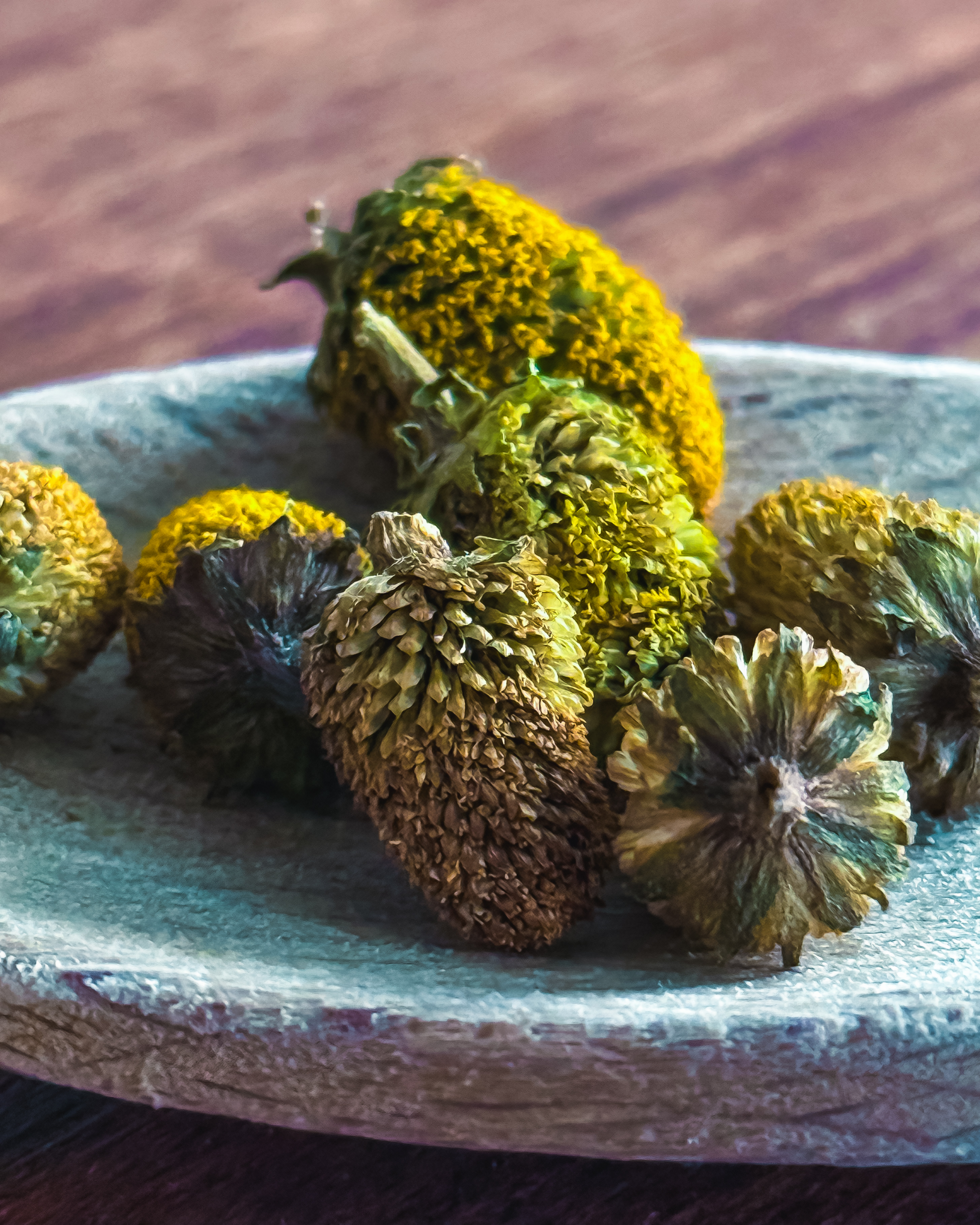
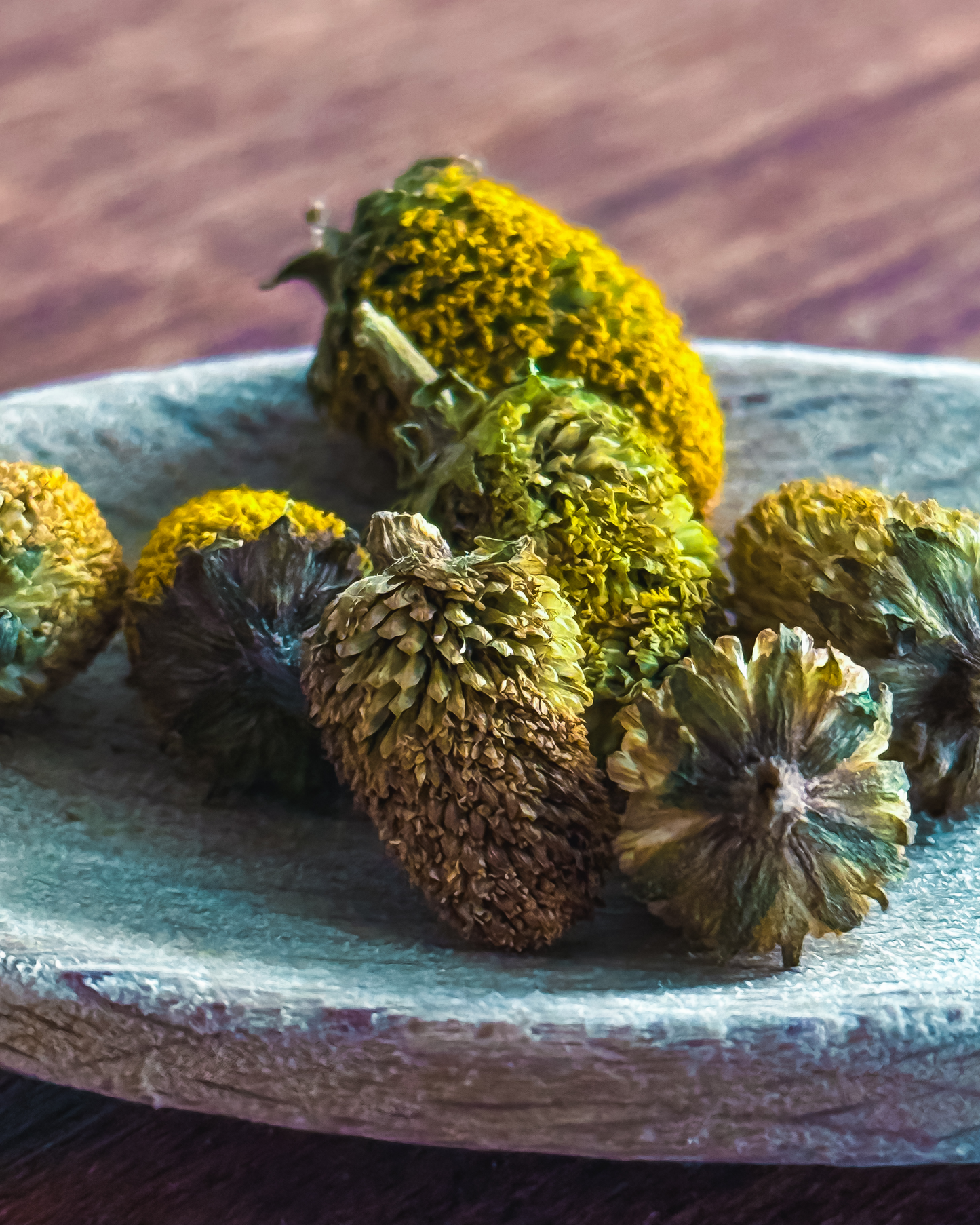
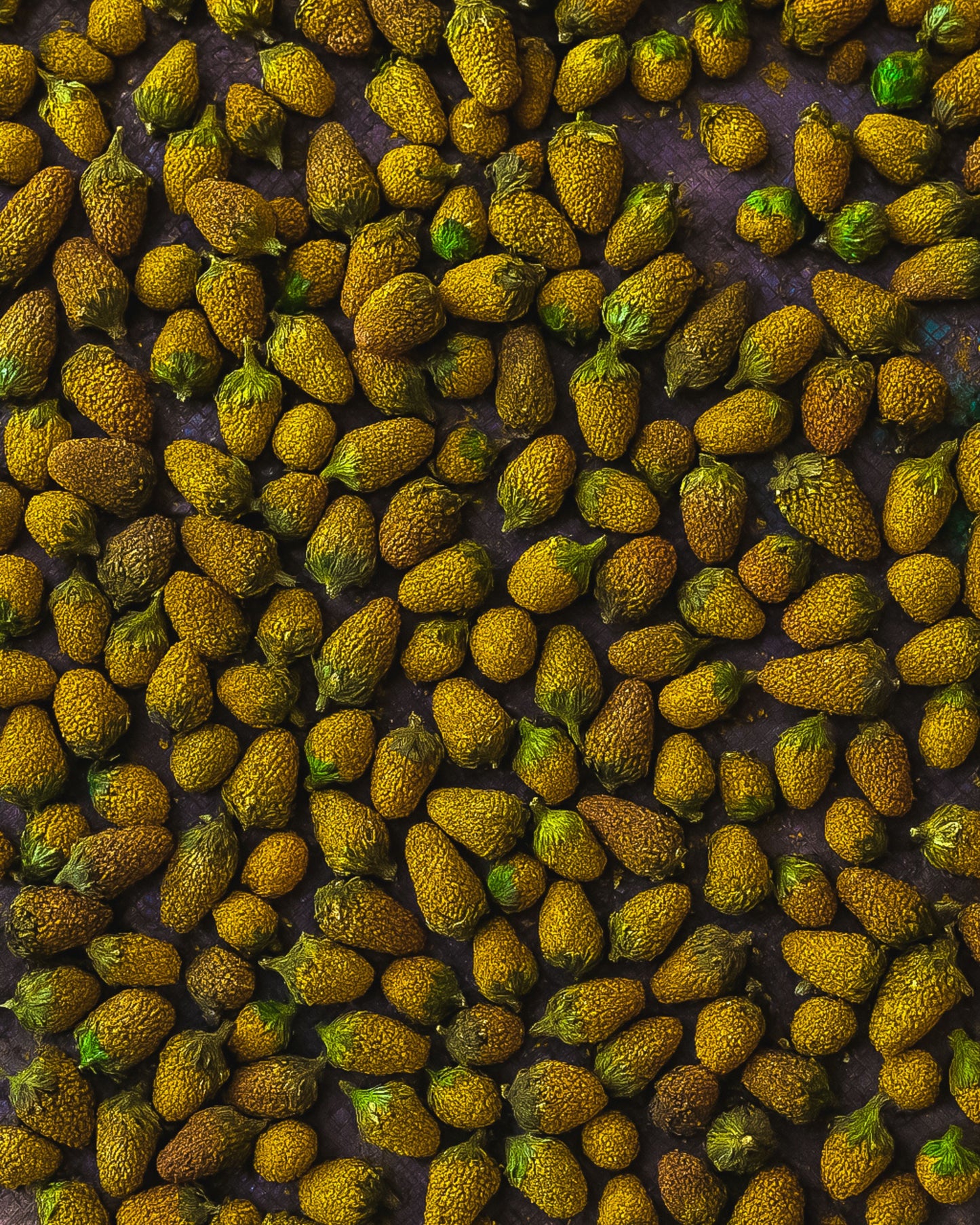
- Flowers: Small, elongated cone-shaped yellow flower heads
- Bloom period: Continuous throughout warm weather
The flowers are perhaps the plant's most recognisable feature.
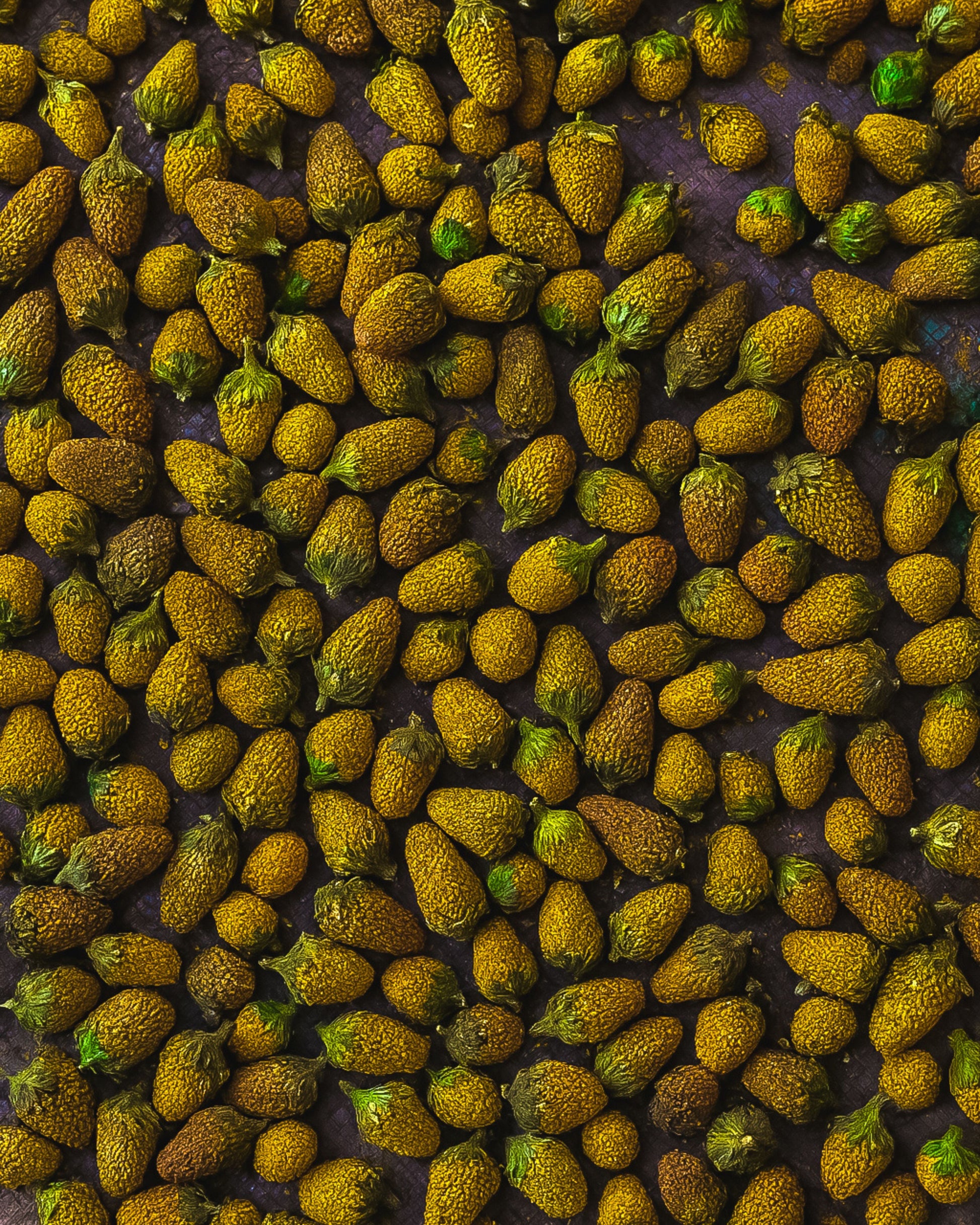
Unlike the rounded flower heads often seen in artistic illustrations, authentic Acmella oleracea flowers are elongated and cylindrical with densely packed yellow florets. Near the tip, mature flower heads often develop a subtle reddish-brown ring, while the base is surrounded by a green involucre.
These distinctive flower heads are both visually attractive and botanically unique.
Inside the Kitchen Garden
More Than an Edible Flower
Buzz Buttons are grown for much more than their appearance.
They provide:
- edible flowers;
- edible leaves;
- attractive ornamental value;
- nectar for pollinators;
- continuous flowering throughout the season.
This combination makes them equally suitable for ornamental borders, herb gardens, edible landscapes, and container gardening.
Why Chefs Love Buzz Buttons
Professional chefs appreciate Buzz Buttons because they offer qualities that few edible flowers can match.
The flowers provide:
- visual appeal;
- an unusual sensory experience;
- versatility across savoury and sweet dishes;
- compatibility with cocktails and mocktails;
- opportunities for creative food presentation.
Rather than overpowering a dish, they create a memorable tasting experience that often becomes a conversation starter.
Because of this, Buzz Buttons have become increasingly common in modern gastronomy, fine dining, and craft mixology.
A Fast-Growing Culinary Plant
Another advantage of Acmella oleracea is its rapid growth.
Under favourable conditions:
- seeds germinate quickly;
- plants establish rapidly;
- flowering begins within a few months;
- harvesting continues over an extended period.
Regular harvesting often encourages the plant to produce even more flowers throughout the growing season.
For home gardeners, this means a relatively small number of plants can provide a steady supply of edible flowers for months.
Suitable for Many Garden Styles
One reason Buzz Buttons have gained popularity is their adaptability.
They grow successfully in:
- kitchen gardens;
- vegetable plots;
- herb gardens;
- raised beds;
- containers;
- patio planters;
- greenhouse borders;
- edible flower gardens.
Even gardeners with limited outdoor space can successfully cultivate them in pots placed on sunny balconies or terraces.
This flexibility makes Buzz Buttons accessible to both experienced gardeners and complete beginners.
Chapter 2: Ideal Growing Conditions
Like every plant, Buzz Buttons perform best when grown in conditions that closely match their natural environment.
Native to warm tropical regions, Acmella oleracea prefers warmth, consistent moisture, fertile soil, and plenty of sunlight.
Fortunately, these conditions are relatively easy to provide in most home gardens during the growing season.
Understanding the plant's basic requirements will greatly improve growth, flowering, and overall productivity.
Climate
Buzz Buttons thrive in warm climates with a long frost-free growing season.
Ideal daytime temperatures range between:
20°C and 30°C
Growth slows considerably below 15°C.
Frost can damage or kill young plants, making it important to wait until all danger of frost has passed before transplanting outdoors.
Sunlight
Sunlight plays a major role in flower production.
For the best results, plants should receive:
- six to eight hours of direct sunlight each day.
In particularly hot climates, light afternoon shade may help reduce heat stress during periods of extreme summer temperatures.
Plants grown in insufficient light often produce:
- fewer flowers;
- longer stems;
- weaker growth.
Temperature
Warm temperatures encourage rapid growth and continuous flowering.
Ideal conditions include:
| Growth Stage | Ideal Temperature |
|---|---|
| Germination | 22 to 26°C |
| Vegetative growth | 20 to 30°C |
| Flowering | 22 to 30°C |
Maintaining stable temperatures helps maximise flower production.
Humidity
As a tropical species, Acmella oleracea appreciates moderate humidity.
However, excessive humidity combined with poor air circulation may encourage fungal diseases.
Providing adequate spacing between plants improves airflow and helps reduce moisture build-up around foliage.
Rainfall and Water
Buzz Buttons prefer evenly moist soil.
They tolerate short dry periods better once established but perform best when soil moisture remains relatively consistent.
Avoid allowing soil to become:
- completely dry for extended periods;
- permanently waterlogged.
Both extremes can reduce flowering.
Ideal Growing Conditions at a Glance
| Factor | Ideal Condition |
|---|---|
| Sunlight | Full sun |
| Soil pH | 6.0 to 7.0 |
| Temperature | 20 to 30°C |
| Soil | Fertile and well-drained |
| Water | Moderate, consistent moisture |
| Frost | Not frost tolerant |
| Humidity | Moderate |
Providing these conditions creates the foundation for healthy, productive plants.
Inside the Kitchen Garden
Healthy Plants Produce Better Flowers
Flower quality begins long before harvest.
Plants receiving sufficient sunlight, balanced nutrition, and consistent watering generally produce:
- more flowers;
- stronger stems;
- healthier foliage;
- longer flowering periods.
Good growing conditions directly influence culinary quality.
Chapter 3: Choosing the Right Soil
Healthy soil is one of the most important factors influencing the growth of Buzz Buttons.
Although Acmella oleracea is relatively adaptable, it performs best in fertile, well-drained soil that retains enough moisture to support continuous growth without becoming waterlogged.
Providing the right growing medium encourages vigorous roots, healthy foliage, and abundant flowering throughout the season.
Well-Drained Soil Is Essential
Buzz Buttons dislike sitting in saturated soil for long periods.
Poor drainage reduces oxygen around the roots and may increase the likelihood of root diseases.
Signs of poorly drained soil include:
- standing water after rain;
- compacted soil;
- slow plant growth;
- yellowing leaves.
Improving drainage before planting helps create healthier growing conditions.
Organic Matter Improves Soil Quality
Incorporating organic matter into the soil provides several benefits.
Compost helps:
- improve soil structure;
- increase water retention;
- enhance drainage;
- support beneficial soil organisms;
- supply slow-release nutrients.
Well-prepared soil creates a stable environment where roots can expand freely.
Soil pH
Buzz Buttons grow well in slightly acidic to neutral soils.
The preferred pH range is:
6.0 to 7.0
Within this range, nutrients remain readily available for healthy plant growth.
Raised Beds
Raised beds provide excellent conditions for growing Buzz Buttons because they offer:
- improved drainage;
- easier soil management;
- warmer spring soil;
- reduced compaction.
They are particularly useful in regions with heavy clay soils or poor natural drainage.
Container Growing Mix
For containers, use a high-quality potting mix that combines:
- compost;
- organic matter;
- coarse materials for drainage.
Avoid using heavy garden soil in pots, as it often becomes compacted and drains poorly.
Inside the Kitchen Garden
Healthy Roots Build Healthy Plants
The flowers may attract attention, but success begins below the surface.
Strong root systems allow Buzz Buttons to absorb water and nutrients efficiently, supporting continuous flowering throughout the growing season.
Chapter 4: Growing Buzz Buttons from Seed
Growing Buzz Buttons from seed is both straightforward and rewarding.
Because the seeds are small, careful handling and gentle watering during the early stages help achieve the best germination rates.
With suitable warmth and moisture, seedlings establish quickly and soon develop into vigorous flowering plants.
Starting Seeds Indoors
In cooler climates, seeds can be started indoors several weeks before the last expected frost.
Fill seed trays or small pots with a fine seed-starting mix and lightly moisten the growing medium.
Scatter the seeds thinly over the surface and gently press them into the compost.
Because the seeds require light to germinate, avoid burying them deeply.
Maintain temperatures between 22°C and 26°C for reliable germination.
Germination
Under favourable conditions, seedlings usually emerge within:
7 to 14 days
Keep the growing medium consistently moist but never saturated.
Once seedlings develop their first true leaves, provide plenty of light to encourage compact, healthy growth.
Transplanting
Young plants should only be transplanted outdoors after the risk of frost has completely passed.
Before planting into the garden, gradually acclimatise seedlings to outdoor conditions over several days.
This process, often called hardening off, reduces transplant shock.
Plant Spacing
Allow approximately:
30 to 40 cm
between plants.
This spacing promotes:
- good airflow;
- healthy branching;
- easier harvesting;
- reduced disease pressure.
Growth Timeline
| Growth Stage | Approximate Time |
|---|---|
| Germination | 7 to 14 days |
| Seedling establishment | 2 to 3 weeks |
| Vigorous growth | 4 to 6 weeks |
| First flower buds | 8 to 10 weeks |
| Continuous flowering | 10 weeks onwards |
Inside the Kitchen Garden
Regular Harvesting Encourages More Flowers
Removing mature flower heads encourages many Buzz Button plants to continue producing fresh buds.
Frequent harvesting therefore benefits both the gardener and the plant.
Chapter 5: Watering and Feeding
Although Buzz Buttons are relatively easy to maintain once established, consistent watering and balanced nutrition help maximise flowering and overall plant health.
Plants that experience prolonged drought or nutrient deficiencies may continue growing but often produce fewer flowers and smaller leaves.
A simple watering and feeding routine can keep plants productive throughout the growing season.
Watering
Buzz Buttons prefer evenly moist soil rather than alternating between very dry and very wet conditions.
A deep watering once or twice each week is generally more beneficial than frequent shallow watering, although the exact schedule depends on climate, soil type, and whether plants are grown in the ground or in containers.
Check the top few centimetres of soil before watering. If the surface feels dry, it is usually time to water.
Aim to moisten the root zone thoroughly while allowing excess water to drain freely.
Avoid Overwatering
Constantly saturated soil can reduce oxygen around the roots and increase the risk of root diseases.
Common signs of excessive watering include:
- yellowing leaves;
- soft stems;
- slow growth;
- poor flowering.
Allowing the soil to drain properly between waterings encourages stronger root development.
Mulching
Applying a layer of organic mulch around the base of the plants helps:
- conserve soil moisture;
- suppress weeds;
- regulate soil temperature;
- gradually improve soil structure as it decomposes.
Keep mulch slightly away from the stems to reduce excess moisture around the crown of the plant.
Feeding
Buzz Buttons are not heavy feeders, but they benefit from fertile soil enriched with organic matter.
A balanced fertiliser or well-rotted compost applied during the growing season can support steady growth and flower production.
Avoid applying excessive nitrogen, as this may encourage abundant leafy growth at the expense of flowers.
For culinary use, many gardeners prefer improving soil naturally with compost rather than relying on frequent applications of synthetic fertilisers.
Inside the Kitchen Garden
Feed the Soil First
Healthy plants begin with healthy soil.
Well-prepared soil rich in organic matter often provides a more stable supply of nutrients than frequent heavy fertiliser applications.
Strong soil biology also improves water retention, nutrient availability, and long-term plant health.
Chapter 6: Growing Buzz Buttons in Containers
One of the greatest advantages of Acmella oleracea is its suitability for container gardening.
Even gardeners without access to a traditional garden can enjoy a steady supply of fresh flowers by growing Buzz Buttons on balconies, patios, terraces, or sunny windowsills.
Container cultivation also makes harvesting particularly convenient, allowing flowers to be picked moments before they are added to salads, desserts, or cocktails.
Choosing the Right Container
Buzz Buttons develop a branching root system that benefits from adequate growing space.
Choose containers that are at least:
- 25 to 30 cm deep
- 25 to 35 cm wide
Larger containers retain moisture more consistently and provide greater stability during hot weather.
Whatever the size, the container should have several drainage holes to prevent excess water from collecting around the roots.
Potting Mix
Use a high-quality, free-draining potting mix enriched with compost or other organic matter.
Avoid filling containers with heavy garden soil, which can become compacted and restrict drainage.
A light, fertile growing medium encourages healthy root development and continuous flowering.
Watering Container Plants
Plants grown in containers usually dry out faster than those planted in the ground.
During warm weather, check soil moisture regularly and water whenever the upper layer of the potting mix begins to dry.
Water thoroughly until excess moisture drains from the bottom of the container, then allow the mix to drain before watering again.
Positioning Your Containers
For the best flower production, place containers where plants receive at least six hours of direct sunlight each day.
If possible, position them close to the kitchen or outdoor dining area for easy harvesting.
Buzz Buttons also combine well with other culinary plants, creating attractive and practical container displays.
Suitable companion plants include:
- basil;
- mint;
- parsley;
- chives;
- edible nasturtiums.
Growing these herbs together creates a convenient culinary garden that is both productive and visually appealing.
Inside the Kitchen Garden
Fresh Flowers Within Reach
Growing Buzz Buttons in containers allows you to harvest flowers exactly when needed.
Freshly picked flower heads retain their appearance and culinary quality better than flowers that have been stored for extended periods, making container gardening an excellent option for home cooks and cocktail enthusiasts.
Next section: Chapters 7 to 13, covering flower development, harvesting, drying, storage, common growing problems, culinary harvesting, sustainability, the conclusion, FAQs, and SEO assets.