

Part 1: What Happens to Buzz Buttons After Harvest
Fresh Buzz Buttons can look remarkably robust while they are still attached to the plant.
Their compact flower heads feel firmer than many delicate edible flowers, and their distinctive yellow-green appearance makes them useful for cocktails, desserts, restaurant dishes and other culinary presentations.
But harvesting changes everything.
Once a flower head is separated from the living Acmella oleracea plant, it no longer receives water and nutrients through the plant's vascular system. At the same time, its cells remain biologically active.
The flower is therefore not instantly "dead" after harvest.
It continues to respire, lose water and undergo biochemical change.
Understanding these processes is the key to storing fresh Buzz Buttons properly.
The central principle of fresh storage is:
Fresh Buzz Button storage is about slowing deterioration, limiting moisture loss and reducing conditions that encourage spoilage, while protecting the flower's natural texture, appearance and sensory character.
Before looking at containers, refrigeration and practical storage methods in Part 2, we first need to understand what happens between harvest and the refrigerator.
1. What Is a Fresh Buzz Button?
"Buzz Button" is a common culinary name generally used for the distinctive flower heads of:
Acmella oleracea (L.) R.K.Jansen
The species belongs to the Asteraceae family.
Other common names associated with Acmella oleracea include:
- Electric Daisy;
- Paracress;
- Toothache Plant;
- Sichuan Button.
Common names are useful in kitchens and bars, but they are not reliable botanical identifiers on their own.
When buying fresh Buzz Buttons, especially for professional culinary use, knowing the botanical identity is preferable to relying only on a common name.
2. What Should a Real Fresh Buzz Button Look Like?
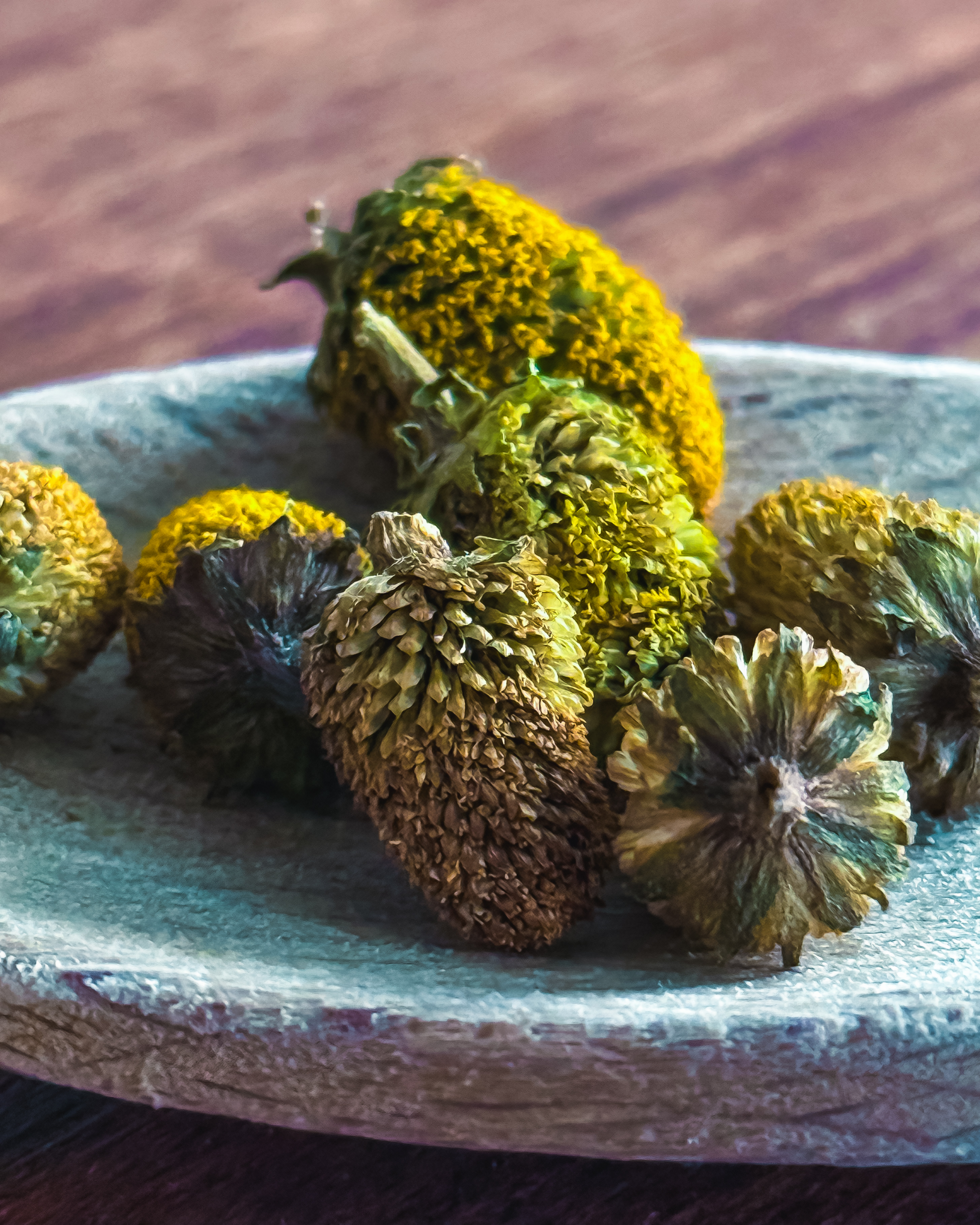
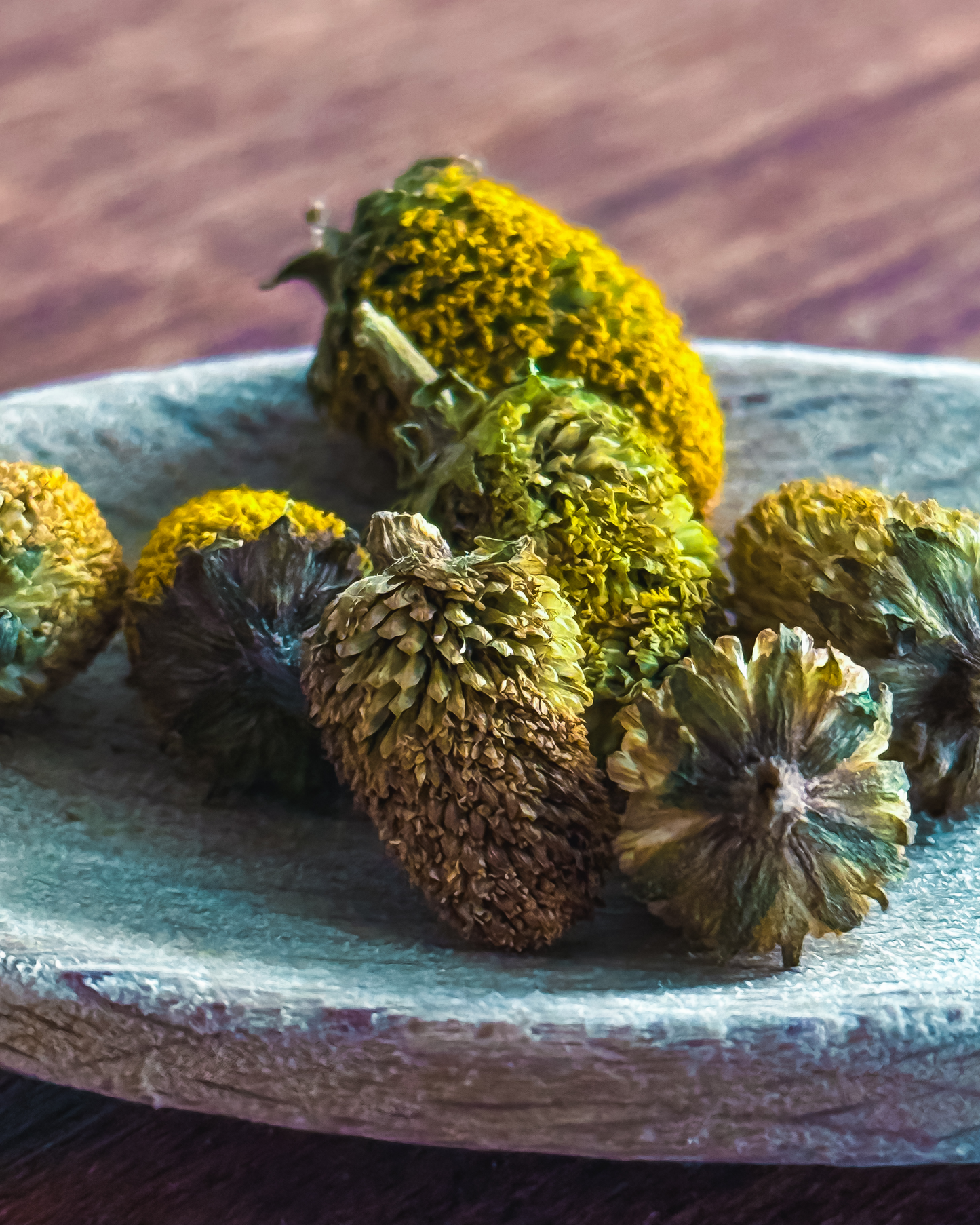
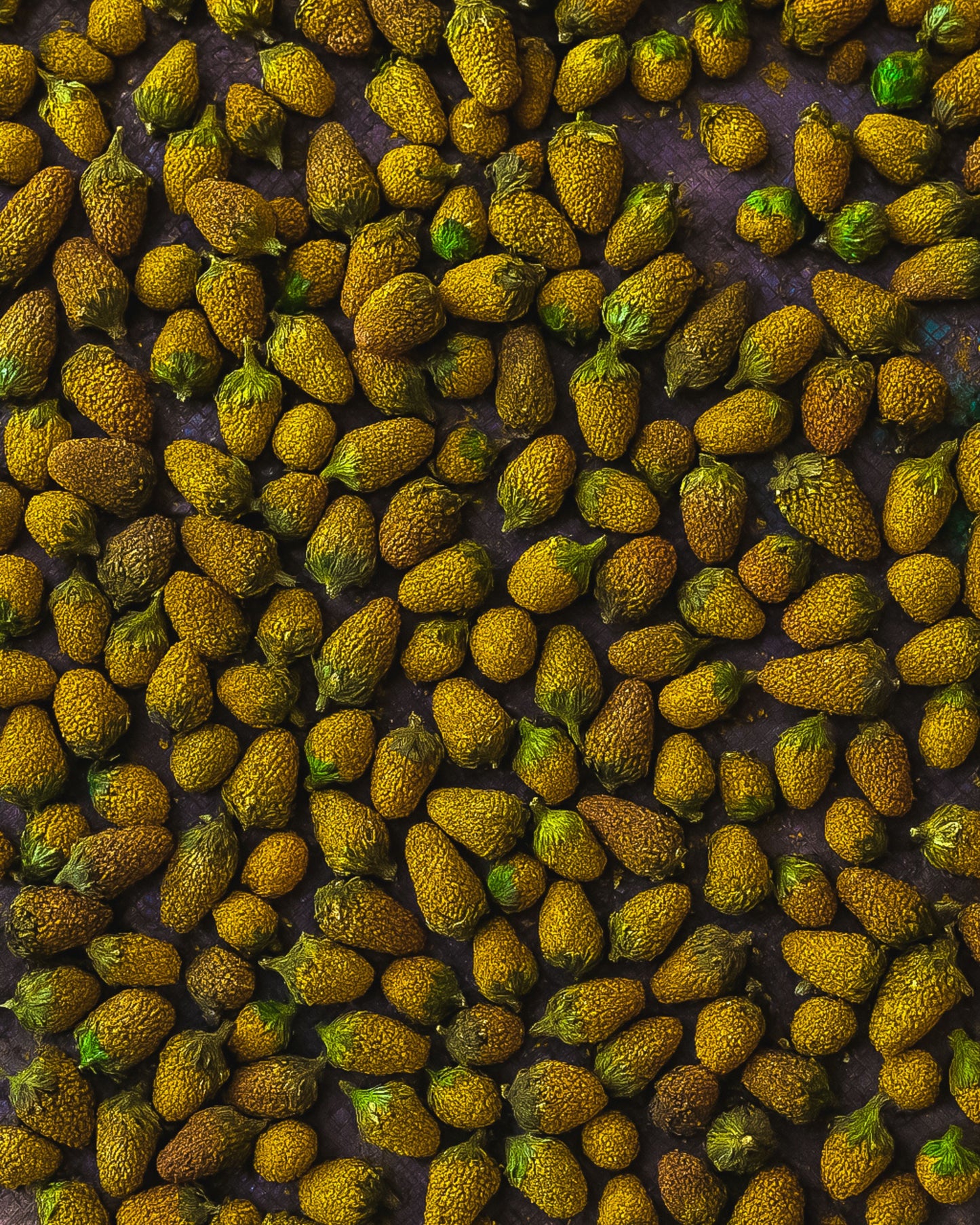
Fresh Acmella oleracea flower heads have a distinctive natural morphology.
They should not be expected to look like perfectly spherical yellow pom-poms.
Depending on maturity and growing conditions, flower heads can be:
- dome-shaped;
- conical;
- elongated;
- somewhat cylindrical.
The surface is made up of numerous small florets, creating a visibly textured appearance.
Colour commonly ranges through yellow and golden-yellow, while green involucral bracts are present beneath the flower head.
Some more mature flowers can show reddish-brown colouration towards the upper part of the head.
Natural variation is normal.
Two genuine fresh Buzz Buttons do not have to be identical.
3. Freshness Does Not Mean Visual Perfection
This distinction matters when sorting fresh botanical material.
Agricultural products vary naturally.
One flower may be:
- longer;
- shorter;
- more yellow;
- slightly greener;
- more mature;
- less mature.
These differences do not automatically indicate poor quality.
A realistic quality assessment distinguishes normal botanical variation from signs of deterioration.
A flower does not need to look like an identical supermarket product to be usable.
4. Harvest Creates a Biological Turning Point
While attached to the plant, a flower is connected to a living system.
Water moves through plant tissues.
Sugars and other compounds are supplied or redistributed.
The plant responds to its environment.
Once harvested, that connection is broken.
The flower still contains living cells, but those cells now have access only to the resources already present within the harvested tissue.
This begins the post-harvest period.
5. Fresh Buzz Buttons Are Still Biologically Active
Harvested plant material continues to undergo biological processes.
One of the most important is respiration.
Plant cells use stored substrates in metabolic reactions that support cellular activity.
In simplified terms, respiration consumes stored resources and releases energy.
After harvest, those resources are no longer being replenished in the same way they were while the flower was attached to the plant.
Over time, this contributes to deterioration.
6. Why Temperature Matters After Harvest
Temperature influences many biological and chemical processes.
Generally, warmer conditions accelerate many processes associated with post-harvest deterioration.
This is one reason refrigeration is widely used for fresh horticultural products.
Cooling can help slow:
- respiration;
- enzymatic activity;
- some microbial growth;
- general deterioration.
But "colder is always better" is not a safe universal rule.
Different plant materials have different sensitivities to low temperatures.
Freezing is also fundamentally different from refrigeration.
7. Cooling Does Not Stop Time
Refrigeration slows many deterioration processes.
It does not stop them completely.
A refrigerated Buzz Button continues to change.
This means refrigeration should be understood as a method for slowing quality loss, not permanently preserving the flower in its harvest condition.
Fresh botanical material remains perishable.
8. Water Loss Is One of the Major Enemies of Freshness
After harvest, flowers can continue losing water to the surrounding environment.
This water loss affects:
- firmness;
- texture;
- appearance;
- weight;
- turgor.
As tissues lose sufficient water, they may begin to soften, shrink or wilt.
This is why humidity becomes important in fresh storage.
9. What Is Turgor?
Plant cells contain water that contributes to internal pressure against their cell walls.
This pressure helps fresh plant tissues maintain firmness.
It is known as turgor pressure.
When enough water is lost, turgor decreases.
The tissue becomes less firm.
For Buzz Buttons, that can mean a flower that originally felt relatively plump and structured becomes softer or visibly shrunken.
10. Why Buzz Buttons Can Shrivel
A fresh flower is constantly interacting with the air around it.
If the surrounding conditions favour water loss, moisture moves from the plant tissue into the environment.
Over time, the flower may become:
- lighter;
- softer;
- wrinkled;
- shrunken.
This does not happen at exactly the same rate for every flower.
The rate depends partly on the storage environment and the condition of the material at harvest.
11. Humidity Creates a Storage Trade-Off
It might seem that the solution is simply to maximise humidity.
But fresh storage is more complicated.
Low humidity can encourage excessive water loss.
Very wet conditions, especially where condensation or free water develops, can favour deterioration and microbial problems.
Therefore, the goal is not:
maximum moisture
but rather:
appropriate moisture management.
This distinction will become important when choosing storage containers in Part 2.
12. Humidity Is Not the Same as Wetness
This is one of the most useful practical distinctions.
Humid air and a visibly wet flower surface are not the same thing.
A storage environment may maintain relatively high humidity without the flower itself being covered in water droplets.
Free moisture on plant surfaces can create local conditions that are favourable to microbial growth and tissue deterioration.
So the objective is usually to reduce dehydration without leaving the flowers unnecessarily wet.
13. Why Condensation Can Become a Problem
Imagine cold Buzz Buttons being removed from refrigeration and exposed to warmer, humid air.
Under suitable conditions, water can condense onto the cold surfaces.
The same thing can happen inside poorly managed containers when temperature changes cause moisture to collect.
You may see:
- droplets on the lid;
- moisture on the sides of the container;
- wet flowers;
- water accumulating at the bottom.
Persistent condensation is a warning that the storage environment may need attention.
14. The Container Creates a Microclimate
Once flowers are placed inside a container, the conditions inside that container can differ from the surrounding refrigerator.
The flowers themselves release moisture and gases.
A tightly closed container may therefore develop a different internal atmosphere and humidity than an open tray.
This is why packaging design matters.
The container is not simply something that keeps the flowers together.
It creates a microclimate around them.
15. Open Storage Has Its Own Problems
Leaving flowers completely exposed inside a refrigerator is not necessarily ideal either.
Refrigerators can have relatively drying airflow.
Unprotected flowers may lose water more rapidly.
They are also more exposed to:
- physical damage;
- contact with other foods;
- contamination;
- strong odours.
The practical challenge is finding a balance between protection, moisture retention and appropriate ventilation.
16. Airflow Can Help and Hurt
Air movement is another variable with two sides.
Some airflow can help prevent stagnant, excessively wet conditions.
But strong airflow across exposed flowers can accelerate moisture loss.
Therefore:
more airflow is not automatically better.
The ideal storage setup manages the flower's immediate environment rather than maximising one variable.
17. Freshness Begins Before Storage
A refrigerator cannot reverse poor harvesting or handling.
If flowers have already been:
- badly bruised;
- overheated;
- crushed;
- contaminated;
- left to deteriorate for too long;
putting them into cold storage does not restore their original condition.
This leads to an important rule:
Storage preserves existing quality more effectively than it creates quality.
18. Harvest Condition Matters
Flowers entering storage in good condition generally provide a better starting point than flowers already showing substantial deterioration.
Relevant characteristics at receiving or harvest can include:
- firmness;
- overall appearance;
- visible damage;
- cleanliness;
- maturity;
- evidence of decay;
- excessive surface moisture.
This starting condition affects how well storage can work.
19. Handle the Flowers Gently
Fresh Buzz Buttons may look compact, but they should still be treated as fresh horticultural material.
Rough handling can:
- crush tissues;
- damage florets;
- break bracts;
- create wounds.
Physical damage can reduce visual quality and may also create vulnerable areas where deterioration progresses more quickly.
20. Why Compression Matters
A common mistake is packing fresh flowers too tightly.
The flowers at the bottom of a deep container may carry the weight of the material above them.
This can cause:
- crushing;
- flattening;
- localised moisture accumulation;
- uneven conditions within the container.
A container full of flowers is not necessarily an efficient container if the lower material is being damaged.
21. Bruising Is More Than a Cosmetic Issue
When plant tissue is damaged, cells can rupture.
This brings cellular components into contact in ways that would not normally occur.
The result may include:
- discolouration;
- texture changes;
- increased susceptibility to deterioration.
For a premium cocktail garnish, bruising is already undesirable visually.
From a post-harvest perspective, preventing damage is also part of preserving quality.
22. Sort Before You Store
Fresh flowers should be assessed before long-term storage.
Obviously damaged or deteriorating material should not simply be mixed into otherwise good flowers.
Sorting can remove material showing problems such as:
- severe physical damage;
- advanced decay;
- visible mould;
- unusual sliminess;
- significant deterioration.
This protects the quality of the stored lot and makes later inspection easier.
23. One Bad Flower Does Not Chemically "Infect" Everything Instantly
It is useful to avoid oversimplification.
A deteriorating flower does not instantly ruin every flower beside it.
However, decaying plant material can create undesirable local conditions and may support microbial growth.
Removing obviously compromised material is therefore sensible storage practice.
24. Microorganisms Are Part of the Fresh-Produce Reality
Fresh plant materials are not sterile.
They may naturally carry microorganisms from:
- soil;
- water;
- air;
- handling;
- equipment;
- packaging;
- transport.
This does not mean every fresh flower is unsafe.
It means fresh botanical foods should be handled using appropriate food-hygiene principles.
25. Refrigeration Is Not Sterilisation
Cold storage can slow the growth of many microorganisms.
It does not sterilise the flowers.
This distinction is essential.
A refrigerated product should not automatically be described as microbiologically safe simply because it has been kept cold.
Storage temperature is one part of food handling, not a substitute for hygiene.
26. Appearance Is Not a Microbiological Test
A flower can look attractive and still carry microorganisms that are invisible to the eye.
Conversely, natural colour variation does not necessarily mean the flower is unsafe.
Visual inspection is useful for detecting obvious deterioration.
It cannot establish microbiological safety by itself.
This gives us three different concepts:
appearance
freshness
food safety
They overlap, but they are not identical.
27. Smell Is Useful but Limited
Unusual or unpleasant odours can be warning signs.
But smell is not a laboratory test either.
The absence of a bad odour does not prove that a food is microbiologically safe.
For professional kitchens and bars, sensory inspection should sit alongside proper sourcing, hygiene, storage and food-safety procedures.
28. Sliminess Is a Warning Sign
Fresh Buzz Buttons should not normally develop a distinctly slimy surface during good storage.
Unusual sliminess can indicate substantial tissue deterioration or microbial activity.
Flowers showing obvious spoilage characteristics should not be served simply because parts of them still look yellow.
29. Visible Mould Is a Clear Reason for Concern
Visible fungal growth is not a normal feature of fresh Buzz Buttons.
If mould is visible, the affected material should not be presented as fresh edible garnish.
Professional food operations should follow their relevant food-safety procedures for handling compromised lots.
Trying to make visibly mouldy flowers acceptable by trimming the obvious spot is not a sound freshness strategy.
30. Colour Changes Need Context
Colour changes can occur as plant material ages.
But not every change has the same meaning.
A mature Acmella oleracea flower can naturally show reddish-brown colouration towards the top.
That should not automatically be mistaken for spoilage.
By contrast, extensive abnormal darkening combined with softening, wet decay or unpleasant odour deserves attention.
Botanical knowledge helps prevent both unnecessary waste and poor-quality service.
31. Normal Maturity vs Deterioration
This is an important distinction for Buzz Buttons.
A naturally mature flower may be:
- slightly larger;
- more elongated;
- deeper in colour;
- marked with some reddish-brown colour near the apex.
A deteriorating flower may show a different combination:
- loss of firmness;
- collapse;
- excessive wetness;
- sliminess;
- abnormal odour;
- visible decay.
Assessment should consider several characteristics together.
32. The Sensory Effect Is Also Part of Quality
Buzz Buttons are unusual because their culinary value is not purely visual.
The characteristic oral sensation is part of the reason they are used.
Spilanthol is one of the principal alkamides associated with this tingling and mouth-watering experience.
For restaurants and mixologists, maintaining botanical quality therefore means thinking beyond appearance.
33. Does Storage Affect Spilanthol?
This question deserves a careful answer.
Plant chemistry can change during post-harvest handling and storage, and factors such as temperature, oxygen, light, moisture and time can influence botanical compounds.
However, it would be too simplistic to claim:
"After X days, Buzz Buttons lose exactly Y% of their spilanthol."
Such a number would depend on the material and experimental conditions.
Storage recommendations should not pretend that one universal degradation curve applies to every Buzz Button.
34. Tingling Is Not a Storage Meter
A flower that produces a strong sensory reaction may appear potent.
But tasting does not provide a precise measurement of spilanthol.
Likewise, a weaker perceived sensation does not prove that storage has destroyed a specific percentage of the compound.
Individual perception varies.
Botanical composition varies.
For precise quantitative claims, analytical testing such as a suitable HPLC method would be required.
35. Sensory Quality Can Change Even When the Flower Looks Acceptable
Visual appearance is only one part of culinary quality.
During storage, changes may occur in:
- texture;
- aroma;
- flavour;
- firmness;
- sensory intensity.
A flower may therefore remain visually usable while no longer providing exactly the same eating experience as it did immediately after harvest.
For high-end culinary service, this matters.
36. Shelf Life Is Not One Universal Number
One of the most common questions is:
How long do fresh Buzz Buttons last?
The tempting answer is a fixed number of days.
But scientifically, shelf life depends on conditions.
Relevant variables include:
- condition at harvest;
- time between harvest and cooling;
- storage temperature;
- temperature fluctuations;
- humidity;
- packaging;
- surface moisture;
- hygiene;
- physical damage;
- flower maturity;
- initial microbial load.
A universal number without these conditions can create false confidence.
37. What Does "Shelf Life" Actually Mean?
Shelf life is also defined by what endpoint matters.
For a bartender, shelf life may mean:
How long does the flower still look attractive enough for a premium garnish?
For a chef:
How long does it retain suitable texture and sensory quality?
For food safety:
Is the product still suitable for consumption under the applicable handling conditions?
These are related but different questions.
38. Commercial Shelf Life vs Home Storage
A professionally managed supply chain may include:
- rapid post-harvest cooling;
- controlled packaging;
- documented storage temperatures;
- cold transport;
- defined handling procedures.
A home refrigerator may provide a much less controlled environment.
Therefore, shelf-life information from one system should not automatically be transferred to another.
39. The Cold Chain
The term cold chain describes maintaining suitable temperature control across multiple stages of handling and distribution.
For fresh Buzz Buttons, this might involve:
Harvest → initial handling → cooling → storage → transport → receiving → refrigerated storage → service
A weakness at one stage can influence the quality observed later.
40. Why Rapid Post-Harvest Handling Matters
Imagine two batches harvested at the same time.
Batch A is moved promptly into appropriate post-harvest handling.
Batch B sits for an extended period in hot conditions before being cooled.
Even if both later enter the same refrigerator, they do not necessarily begin storage in the same condition.
Cooling slows deterioration.
It does not erase the history that came before cooling.
41. Temperature History Matters
This leads to a broader principle:
The current refrigerator temperature tells only part of the story.
A flower's condition can reflect its entire post-harvest temperature history.
Repeated exposure to warmer conditions can accelerate deterioration.
For professional supply chains, temperature management from source to service can therefore matter as much as the final refrigerator setting.
42. Repeated Warming and Cooling
During service, a container may be:
- removed from refrigeration;
- opened;
- left at the bar;
- returned to refrigeration;
- removed again later.
This creates temperature fluctuations.
It can also contribute to condensation.
A better workflow is often to remove only the quantity expected to be needed for the service period while keeping the main stock appropriately stored.
We will explore this further in Part 3.
43. The Refrigerator Door Is Not Always the Same as the Refrigerator Interior
Domestic and commercial refrigerators can have temperature differences between locations.
Door compartments, areas near cooling outlets and crowded zones may behave differently.
This is one reason professional food storage relies on actual temperature management rather than assuming every point inside a refrigerator is identical.
44. Avoid Assuming the Coldest Spot Is Best
Very cold areas can create their own problems.
If plant tissue approaches or crosses its freezing point, ice formation can damage cells.
After thawing, damaged tissues may become:
- soft;
- watery;
- collapsed.
Therefore, refrigeration and freezing should not be confused.
45. What Happens When Plant Tissue Freezes?
Water inside and around cells can form ice.
Ice formation can disrupt cellular structures.
When the tissue thaws, it may no longer maintain its original texture.
For a fresh garnish, this can be undesirable.
Freezing can be useful as an intentional preservation method for some foods, but it does not preserve every fresh plant material in an unchanged state.
46. Frozen Does Not Mean Fresh
This sounds obvious, but it matters for terminology.
A flower that has been intentionally frozen may still be useful for certain culinary preparations.
But it should not be treated as equivalent to a never-frozen fresh flower.
Freezing can change:
- texture;
- structure;
- water distribution;
- appearance.
For cocktail garnish applications, those changes may be particularly noticeable.
47. Light Can Also Matter
Light exposure can contribute to changes in some plant compounds and pigments.
During short refrigerated storage, temperature and moisture management are often more obvious practical concerns, but protecting botanical material from unnecessary intense light is still sensible.
There is little benefit in storing fresh Buzz Buttons under strong light.
48. Oxygen and Plant Quality
Fresh flowers cannot simply be thought of as inert material sitting in air.
Oxygen participates in respiration and various oxidation processes.
Commercial produce packaging sometimes manages gas exchange for this reason.
But that does not mean a home user should create an improvised oxygen-free package.
49. Do Not Assume Airtight Means Better
A completely sealed container can retain moisture.
That may help reduce dehydration.
But it can also encourage condensation and alter the internal atmosphere.
The correct packaging strategy depends on the product, container and storage conditions.
For Buzz Buttons, the practical objective is to protect the flowers while avoiding both excessive drying and persistently wet conditions.
50. Do Not Assume Open Means Better Either
Leaving flowers uncovered can reduce trapped moisture.
But it may also increase:
- dehydration;
- odour transfer;
- contamination exposure;
- physical damage.
Again, storage is a balance.
This is why Part 2 will focus on the practical design of the storage environment rather than promoting one simplistic rule.
51. Washing Before Storage: A More Complicated Question Than It Seems
Should fresh Buzz Buttons be washed immediately before refrigeration?
There is no useful universal answer without considering how the flowers were produced, supplied and intended to be handled.
Introducing water immediately before storage can leave surface moisture that needs to be managed.
On the other hand, food businesses may have established produce-handling procedures that must be followed.
The key principle is:
Do not casually soak fresh flowers and then store them wet.
Any washing or preparation procedure should consider both hygiene and moisture management.
52. Washing Does Not Sterilise the Flower
Another important misconception is that rinsing a botanical ingredient makes it sterile.
It does not.
Washing can remove some surface material under suitable conditions, but it should not be described as sterilisation.
Food safety depends on the complete handling system.
53. Cross-Contamination Matters
Fresh edible flowers should not share uncontrolled contact with:
- raw meat;
- dirty utensils;
- unclean surfaces;
- waste;
- contaminated packaging.
This is ordinary food hygiene.
The unusual appearance of Buzz Buttons does not exempt them from normal food-safety principles.
54. Clean Hands and Tools Matter
If flowers are being portioned for cocktails or plated dishes, repeated handling increases opportunities for contamination and physical damage.
Using clean hands or appropriate clean utensils can help.
For professional service, clean garnish tools can also improve consistency.
55. Storage Odours Can Affect Culinary Quality
Fresh botanicals can be exposed to strong-smelling foods in shared refrigeration.
Even where there is no food-safety problem, unwanted odours can reduce culinary quality.
This matters particularly when Buzz Buttons are used in delicate cocktails or desserts.
Storage protection therefore serves both hygiene and sensory quality.
56. Ethylene: Important Concept, But Avoid Overclaiming
Ethylene is a plant hormone involved in ripening, ageing and senescence in many horticultural products.
Some fruits produce substantial ethylene during ripening, while different flowers and vegetables vary in their sensitivity.
It would be inappropriate to assign Acmella oleracea a precise ethylene sensitivity without adequate species-specific evidence.
As a general fresh-produce practice, avoiding unnecessary storage beside heavily ripening produce can be sensible, but we should not invent an Acmella-specific response that has not been established.
57. Freshness Is a Chain
The final quality of a Buzz Button served in a cocktail may reflect all of these stages:
Growing
↓
Harvest
↓
Sorting
↓
Post-harvest handling
↓
Cooling
↓
Transport
↓
Receiving
↓
Refrigerated storage
↓
Bar mise en place
↓
Service
A problem at one stage can affect what happens later.
58. Storage Cannot Correct Botanical Identity
Good refrigeration can preserve the wrong plant perfectly.
That still does not make it Acmella oleracea.
Botanical identity therefore remains a separate quality requirement.
For professional sourcing, the chain begins with knowing what the ingredient actually is.
59. Storage Cannot Correct Poor Hygiene
Likewise, refrigeration is not a reset button.
If botanical material has been handled under poor hygienic conditions, cooling it afterwards does not automatically remove contamination.
Temperature control and hygiene solve different problems.
Both matter.
60. Storage Cannot Reverse Advanced Deterioration
Once substantial decay has developed, better packaging does not restore freshness.
The same applies to severe dehydration.
A shrivelled flower does not become newly harvested simply because it is placed into a humid container.
Post-harvest management works best when it begins early.
61. Freshness, Quality and Safety: Three Different Questions
When evaluating stored Buzz Buttons, ask three separate questions.
Is It Fresh?
Consider:
- firmness;
- hydration;
- appearance;
- texture.
Is the Culinary Quality Still Suitable?
Consider:
- aroma;
- flavour;
- presentation;
- expected sensory experience.
Is It Suitable to Serve as Food?
Consider:
- sourcing;
- handling;
- storage history;
- hygiene;
- spoilage signs;
- applicable food-safety procedures.
A "yes" to one question does not automatically answer the others.
62. What Freshness Indicators Can Tell You
Visual and tactile inspection is valuable.
A well-preserved flower may retain:
- recognisable natural shape;
- reasonable firmness;
- characteristic colour;
- intact surface structure;
- acceptable aroma.
These observations can help with quality decisions.
But they are not substitutes for appropriate food-safety controls.
63. Warning Signs During Storage
Depending on the situation, reasons to reject flowers can include:
- visible mould;
- pronounced sliminess;
- extensive wet decay;
- severe collapse;
- abnormal unpleasant odour;
- obvious contamination;
- substantial physical deterioration.
Professional food businesses should follow their own applicable food-safety procedures when deciding whether a lot is suitable for service.
64. Slight Shrinkage Is Not the Same as Dried Acmella
Fresh flowers can lose some water during storage.
That does not automatically turn them into properly dried botanical material.
Controlled drying is a preservation process designed to remove substantial moisture.
Accidental dehydration in a refrigerator is simply quality loss unless drying was the intended process.
Fresh, wilted and properly dried Acmella are three different states.
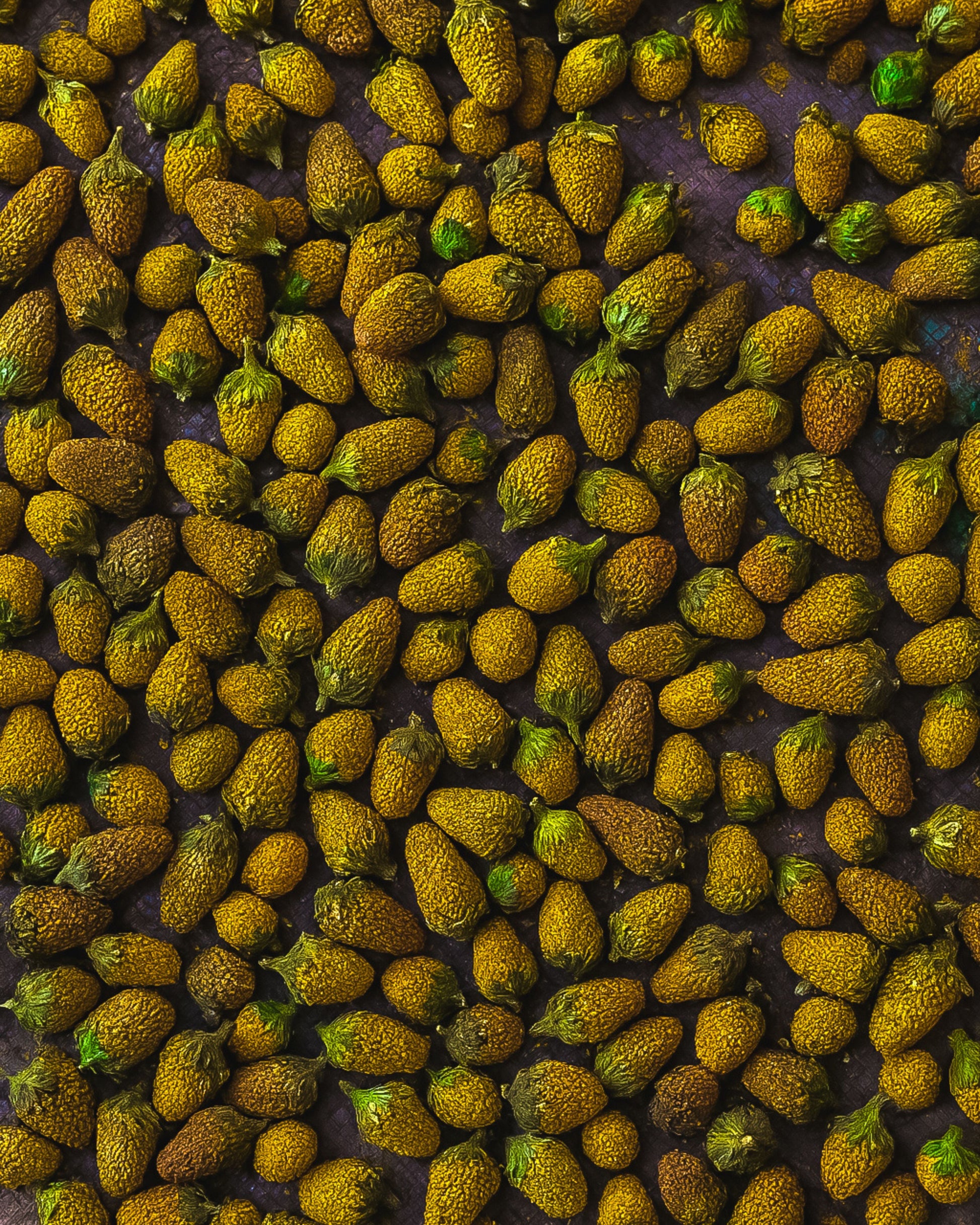
65. What Properly Dried Buzz Buttons Look Like
This distinction is useful because dried Buzz Buttons look very different from fresh ones.
Naturally dried flower heads typically become:
- smaller;
- shrunken;
- wrinkled;
- more compact;
- yellow-brown to brown;
- visibly textured.
They should not be expected to remain plump, bright-yellow fresh flowers.
Nor should they look like perfectly uniform manufactured spheres.
Drying preserves the botanical in a different form.
66. When Fresh Storage Stops Making Sense
Sometimes the better question is not:
How can I keep these flowers fresh for as long as possible?
but:
Should these flowers be preserved in another form?
If fresh appearance and texture are no longer required, drying may offer a more appropriate storage route for suitable material.
Fresh storage and drying serve different culinary goals.
We will compare them in Part 3.
67. Why Madabuzz Storage Starts With the Ingredient
For Madagascan Acmella oleracea, post-harvest quality should be understood as part of the wider ingredient chain.
The flower served by a chef or bartender reflects more than the final hours in a refrigerator.
It reflects:
- botanical identity;
- harvest condition;
- handling;
- transport;
- storage;
- preparation.
Where documented sourcing and batch information are available, they help connect the culinary ingredient back to its origin and handling history.
That creates a stronger quality story than simply describing a flower as "fresh".
68. The Most Important Principle Before Refrigeration
If there is one idea to remember from Part 1, it is this:
A refrigerator slows deterioration. It does not reverse it.
Good fresh storage therefore begins before the container enters the refrigerator.
Start with correctly identified, suitable culinary material.
Handle it gently.
Remove obviously compromised flowers.
Protect it from contamination.
Limit unnecessary heat exposure.
Then create a storage environment that balances moisture retention with protection from excessive wetness.
That is the foundation of successful Buzz Button storage.
69. Part 1 Key Takeaways
- Fresh Buzz Buttons are the flower heads of Acmella oleracea.
- Real flower heads naturally vary in shape, size, colour and maturity.
- Harvested flowers remain biologically active for a period after separation from the plant.
- Respiration continues after harvest.
- Fresh flowers also continue to lose water.
- Water loss reduces turgor and can cause softening, shrinkage and wilting.
- Refrigeration slows many deterioration processes but does not stop them completely.
- Refrigeration is not sterilisation.
- Very cold storage and freezing are not the same thing.
- Accidental freezing can damage fresh plant tissue and alter texture.
- Humidity helps control water loss, but excessive surface wetness can create other problems.
- Humidity and visible wetness are not the same thing.
- Condensation should be managed rather than ignored.
- Storage containers create their own microclimates.
- Completely open and completely sealed storage can each have disadvantages.
- Physical damage during harvesting, transport and storage can reduce quality.
- Flowers should be sorted before storage.
- Fresh edible botanicals are not sterile.
- Appearance, freshness and food safety are related but different concepts.
- A flower looking attractive does not prove microbiological safety.
- Smell and sensory inspection are useful but cannot establish food safety by themselves.
- Visible mould, pronounced sliminess and advanced wet decay are important warning signs.
- Natural reddish-brown colouration on mature Acmella flowers should not automatically be confused with spoilage.
- Storage conditions may influence botanical chemistry, but there is no responsible universal claim that Buzz Buttons lose a fixed percentage of spilanthol after a fixed number of days.
- Tingling intensity is not an analytical measurement of spilanthol.
- Shelf life depends on the starting material and its complete post-harvest history.
- The cold chain matters from harvest through transport, receiving, storage and service.
- Repeated warming and cooling can complicate storage and encourage condensation.
- Washing should not be confused with sterilisation.
- Cross-contamination must be prevented just as with other edible produce.
- Fresh, wilted and intentionally dried Buzz Buttons are different product states.
- Storage preserves existing quality more effectively than it creates quality.
In Part 2: How to Store Fresh Buzz Buttons Properly, we will turn this biology into a practical storage method. We will cover what to do immediately after receiving or harvesting the flowers, sorting, washing considerations, containers, moisture management, refrigeration, condensation, daily inspection and the best way to keep fresh Buzz Buttons ready for cocktails, desserts and restaurant service.