

Quick Answer
Spilanthol is considered reasonably stable when stored and formulated appropriately, but like many naturally occurring botanical compounds, it can gradually degrade when exposed to oxygen, ultraviolet (UV) light, elevated temperatures, and unsuitable storage conditions. Modern cosmetic formulations help protect Spilanthol through carefully selected carrier oils, packaging, antioxidants, and manufacturing practices designed to preserve its chemical integrity over time.
At a Glance
| Property | Spilanthol |
|---|---|
| Chemical Stability | Moderate to good under appropriate conditions |
| Oxygen Sensitivity | Moderate |
| Light Sensitivity | Moderate |
| Heat Sensitivity | Moderate |
| Preferred Storage | Cool, dry, protected from light |
| Common Formulations | Botanical oils, serums, emulsions |
| Laboratory Verification | HPLC analysis commonly used |
Table of Contents
- Introduction
- What Does Stability Mean?
- Why Stability Matters
- Is Spilanthol Chemically Stable?
- Understanding Oxidation
- Chemistry Explained
- Stability Scorecard
- Key Takeaways
Introduction
Every botanical ingredient begins its journey inside a living plant.
From that moment onward, its chemical composition is constantly influenced by its environment.
Harvesting.
Drying.
Extraction.
Storage.
Formulation.
Packaging.
Even after becoming part of a finished cosmetic product, botanical compounds continue to respond to oxygen, light, heat, and time.
This natural process is why stability is one of the most important concepts in cosmetic chemistry.
Without sufficient stability, an ingredient may gradually lose its original chemical profile, affecting consistency, quality, and performance.
Spilanthol is no exception.
As the principal bioactive alkylamide found in Acmella oleracea, Spilanthol has attracted increasing interest in botanical skincare and natural product research. Yet one important question is often overlooked:
How stable is Spilanthol?
The answer is more nuanced than a simple yes or no.
Spilanthol is neither exceptionally fragile nor permanently unchanged.
Like many naturally occurring lipophilic compounds, its stability depends on the environment in which it is processed, formulated, stored, and used.
Understanding these factors helps researchers, formulators, and consumers appreciate why careful production methods are essential for maintaining botanical quality.
What Does "Stability" Mean?
In chemistry, stability refers to a molecule's ability to maintain its chemical structure over time.
A stable compound remains chemically consistent under defined storage and handling conditions.
An unstable compound may gradually change through reactions with its environment.
These changes can include:
- oxidation
- photodegradation (light-induced changes)
- hydrolysis
- thermal degradation
- reactions with other ingredients
For botanical extracts, stability is particularly important because natural products often contain hundreds of different compounds, each with its own chemical behavior.
Scientists therefore study stability to understand how botanical ingredients change during:
- harvesting
- drying
- extraction
- manufacturing
- packaging
- storage
- transportation
The goal is not to prevent all chemical change, an impossible task, but to minimize unnecessary degradation and preserve the desired phytochemical profile.
Why Stability Matters
Imagine purchasing fresh coffee beans.
Immediately after roasting, they contain a rich mixture of aromatic compounds responsible for their distinctive flavor.
Over time, exposure to oxygen and moisture slowly changes this chemistry.
The coffee remains recognizable, but some of its original characteristics gradually diminish.
Many botanical ingredients behave in a similar way.
Spilanthol does not suddenly disappear after extraction.
Instead, prolonged exposure to unfavorable conditions may gradually alter its chemical composition.
For formulators, this matters because consistency is essential.
Consumers expect every bottle of a botanical oil or serum to perform consistently from the first application to the last.
Maintaining chemical stability helps make this possible.
Science in Everyday Life
Why Stability Matters
Imagine slicing an apple.
Within minutes, the cut surface begins to turn brown.
The apple has not become a different fruit.
Instead, oxygen has started changing some of its natural compounds through oxidation.
Many botanical ingredients undergo similar chemical changes over time.
Although Spilanthol behaves very differently from the compounds responsible for apple browning, it can also be affected by prolonged exposure to oxygen, light, and heat.
This is why cosmetic chemists carefully design formulations and packaging that help slow these natural processes.
The objective is not to "stop chemistry."
It is to manage it.
Is Spilanthol Chemically Stable?
Current evidence suggests that Spilanthol is reasonably stable when handled and stored under appropriate conditions.
Its lipophilic character contributes to its compatibility with oil-based formulations, but this does not make it immune to degradation.
Like many naturally occurring plant compounds, Spilanthol may gradually change when exposed to environmental stressors over extended periods.
Scientists studying botanical stability generally consider factors such as:
- oxygen exposure
- ultraviolet light
- elevated temperatures
- formulation composition
- solvent system
- storage conditions
- packaging
Rather than asking whether Spilanthol is simply "stable" or "unstable," cosmetic scientists evaluate how each of these variables influences long-term chemical integrity.
This more nuanced approach provides a realistic understanding of botanical quality.
Understanding Oxidation
Among the many processes that influence botanical stability, oxidation is one of the most important.
Oxidation occurs when molecules react with oxygen or oxygen-derived reactive species.
Over time, these reactions can gradually alter the structure of sensitive plant compounds.
Not every molecule oxidizes at the same rate.
Some compounds remain stable for years.
Others change much more rapidly.
The rate depends on factors such as:
- molecular structure
- temperature
- light exposure
- oxygen availability
- formulation
- presence of antioxidants
For lipophilic botanical compounds like Spilanthol, minimizing unnecessary oxygen exposure is one of the key principles of formulation science.

Chemistry Explained
Why Does Oxidation Matter?
Imagine leaving a freshly polished piece of iron outdoors.
Over time, moisture and oxygen slowly transform the shiny metal into rust.
The iron hasn't disappeared, it has undergone a chemical reaction.
Botanical compounds experience similar chemical processes, although through very different mechanisms.
Instead of forming rust, sensitive plant molecules may slowly change their structure when exposed to oxygen.
These changes are often gradual rather than immediate.
For cosmetic chemists, understanding oxidation helps guide decisions about extraction methods, packaging materials, antioxidant systems, and recommended storage conditions.
The goal is to preserve the botanical ingredient's original chemical profile for as long as reasonably possible.
Stability Scorecard
This scorecard summarizes the relative importance of common environmental factors affecting botanical stability. It reflects general formulation principles and current scientific understanding rather than fixed degradation rates for Spilanthol.
| Stability Factor | Relative Influence | Can It Be Controlled? |
|---|---|---|
| Oxygen Exposure | 🔴 High | ✅ Yes |
| UV Light | 🔴 High | ✅ Yes |
| Heat | 🟠 Moderate–High | ✅ Yes |
| Moisture | 🟠 Moderate | ✅ Yes |
| Packaging Quality | 🟢 Highly Protective | ✅ Yes |
| Formulation Design | 🟢 Highly Protective | ✅ Yes |
The encouraging message is that many of the most important factors influencing stability can be managed through thoughtful formulation and proper storage.
Evidence Confidence Table
| Topic | Current Evidence |
|---|---|
| General Stability Principles | Strong |
| Oxidation Chemistry | Strong |
| Packaging Best Practices | Strong |
| Botanical Formulation Science | Strong |
| Published Stability Data Specific to Spilanthol | Moderate |
| Long-Term Stability Studies | Limited–Moderate |
This distinction is important because it separates well-established principles of chemistry from areas where additional research on Spilanthol itself is still developing.
Key Takeaways
- Stability describes a compound's ability to maintain its chemical structure over time.
- Spilanthol is generally considered reasonably stable when stored and formulated appropriately.
- Oxygen, light, heat, and formulation design are among the most important factors influencing botanical stability.
- Oxidation is a natural chemical process that cosmetic scientists work to slow, not eliminate.
- Stability is essential for maintaining consistency, quality, and confidence in botanical products.
What Affects the Stability of Spilanthol?
No botanical compound exists in complete isolation.
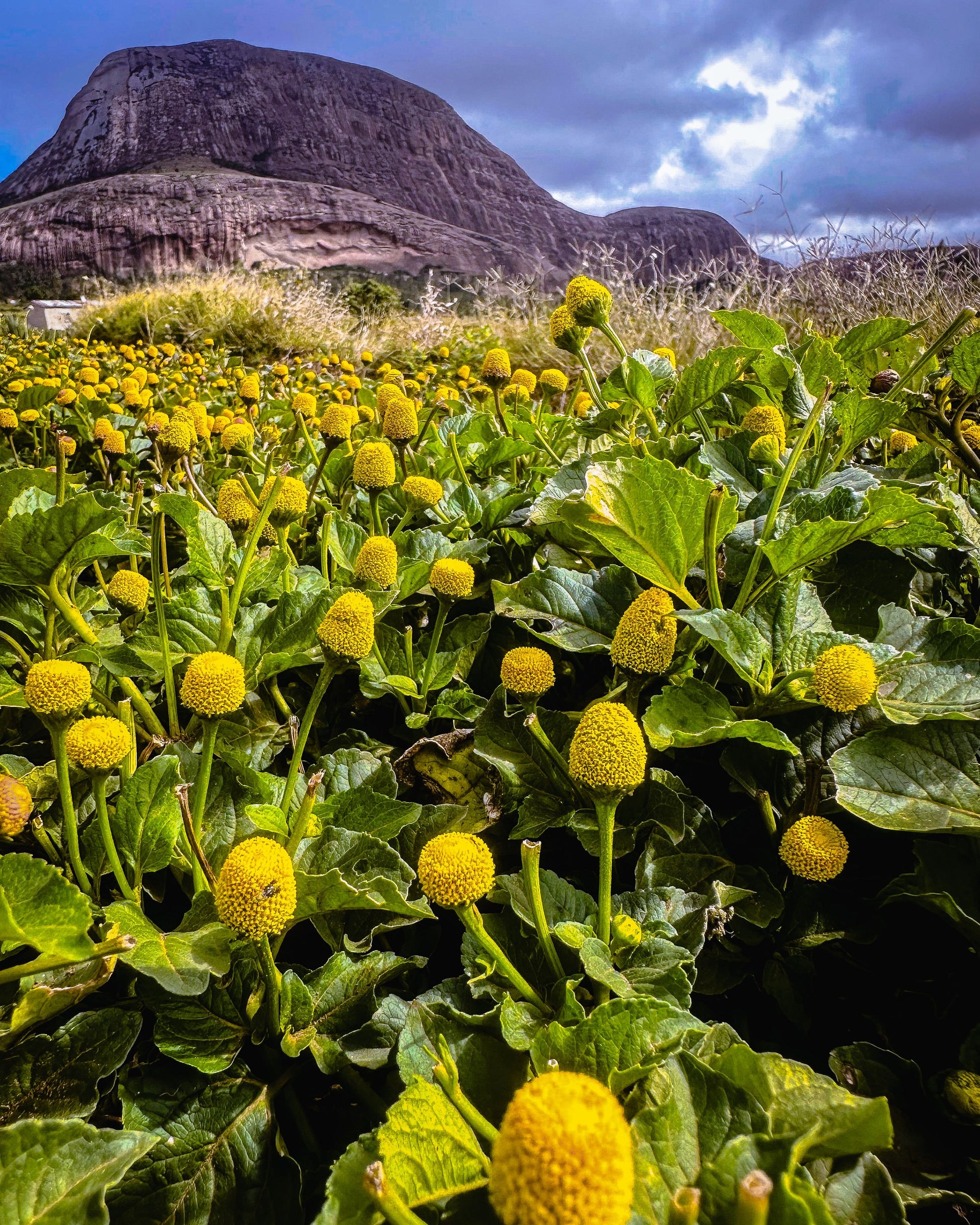
From the moment Acmella oleracea is harvested, its naturally occurring phytochemicals begin interacting with the surrounding environment.
Temperature changes.
Oxygen.
Sunlight.
Humidity.
Storage conditions.
Even the packaging used for the finished product can influence how well sensitive botanical compounds are preserved over time.
For cosmetic chemists, understanding these environmental factors is essential for developing products that remain consistent, effective, and chemically stable throughout their intended shelf life.
Oxygen: The Most Important Stability Challenge
Among all environmental factors, oxygen is one of the primary drivers of chemical change in botanical ingredients.
Oxygen is essential for life, but it also participates in many natural chemical reactions.
Over time, oxygen can react with sensitive plant molecules through oxidation, gradually altering their chemical structure.
The rate of oxidation depends on several variables, including:
- oxygen exposure
- temperature
- light
- formulation composition
- presence of antioxidants
- packaging design
For lipophilic compounds such as Spilanthol, reducing unnecessary exposure to air is one of the most effective ways to help preserve chemical integrity.
Modern cosmetic formulations therefore aim to minimize repeated oxygen exposure during both manufacturing and consumer use.
Why Air Inside the Bottle Matters
Many people assume oxidation occurs only when a bottle is first opened.
In reality, every time a container is opened, fresh oxygen enters the headspace above the product.
Over weeks or months of repeated use, this exposure can gradually contribute to oxidation.
This is one reason premium botanical products often use packaging designed to reduce contact between the formulation and surrounding air.
Examples include:
- airless pump systems
- bottles with minimal headspace
- tightly sealed containers
- controlled filling processes during manufacturing
These design choices help slow natural oxidation without changing the botanical ingredient itself.
UV Light and Photodegradation
Sunlight contains ultraviolet (UV) radiation capable of triggering chemical reactions in many naturally occurring compounds.
This process is known as photodegradation.
Not every botanical ingredient responds to UV light in the same way, but prolonged exposure may gradually alter the composition of sensitive plant extracts.
For this reason, formulators commonly protect botanical ingredients from unnecessary light exposure through thoughtful packaging.
Common approaches include:
- amber glass bottles
- opaque containers
- UV-resistant packaging materials
- storage away from direct sunlight
Protecting a formulation from excessive light helps maintain consistency throughout its shelf life.
Chemistry Explained
Why Amber Bottles Are So Common
Have you ever wondered why many botanical oils and cosmetic serums are sold in amber or dark-colored glass bottles?
The color isn't chosen for aesthetics alone.
Amber glass filters a significant portion of incoming light, reducing the amount of ultraviolet radiation that reaches the formulation inside.
Less UV exposure means fewer opportunities for light-driven chemical reactions to occur.
Although no packaging can completely eliminate degradation, selecting appropriate containers is one of the simplest and most effective ways to improve long-term stability.
Heat and Temperature
Temperature influences the speed of most chemical reactions.
As a general principle of chemistry, higher temperatures increase molecular movement, making many reactions occur more rapidly.
This does not mean that brief exposure to warmth immediately damages Spilanthol.
Instead, prolonged storage under elevated temperatures may accelerate natural degradation processes over time.
For this reason, manufacturers generally recommend storing botanical products under cool, stable conditions and avoiding unnecessary exposure to excessive heat.
Examples of less suitable storage locations include:
- windowsills in direct sunlight
- vehicles during summer
- areas near radiators or heaters
- bathrooms with frequent temperature fluctuations
Consistent storage conditions are usually preferable to environments with repeated heating and cooling cycles.
Moisture and Humidity
Although Spilanthol itself is lipophilic, moisture can still influence the overall stability of botanical formulations.
Humidity may affect:
- packaging integrity
- microbial growth in susceptible formulations
- emulsion stability
- other water-sensitive ingredients present in the product
Professional cosmetic formulations address these considerations through appropriate preservation systems, manufacturing practices, and packaging choices.
Moisture management is therefore part of maintaining overall product quality rather than simply protecting one individual compound.
Why Packaging Is More Important Than Most People Realize
Packaging is often viewed as a marketing decision.
In reality, it is also an important component of formulation science.
The container surrounding a botanical product acts as the first line of defense against environmental stress.
An appropriate package helps reduce exposure to:
- oxygen
- ultraviolet light
- moisture
- contamination
- unnecessary temperature fluctuations
Choosing suitable packaging is therefore part of preserving botanical quality rather than merely improving appearance.
Packaging Comparison
| Packaging Type | Oxygen Protection | Light Protection | Suitability for Botanical Oils |
|---|---|---|---|
| Clear Glass Bottle | ⭐⭐☆☆☆ | ⭐☆☆☆☆ | Moderate |
| Amber Glass Bottle | ⭐⭐⭐⭐☆ | ⭐⭐⭐⭐⭐ | Excellent |
| Opaque Bottle | ⭐⭐⭐⭐☆ | ⭐⭐⭐⭐⭐ | Excellent |
| Airless Pump | ⭐⭐⭐⭐⭐ | ⭐⭐⭐⭐☆ | Excellent |
| Dropper Bottle | ⭐⭐⭐☆☆ | ⭐⭐⭐⭐☆ | Good |
No single packaging system is ideal for every product, but reducing unnecessary exposure to air and light generally supports better long-term stability.
The Protective Role of Carrier Oils
Carrier oils are often discussed only in terms of skin feel or extraction efficiency.
However, they also play an important role in formulation stability.
A carefully selected carrier oil may influence:
- oxidative stability
- compatibility with botanical compounds
- texture
- spreadability
- shelf life of the finished formulation
Different oils possess different fatty acid compositions and natural antioxidant profiles.
Some are naturally more resistant to oxidation than others.
This is one reason formulators evaluate carrier oils not only for sensory characteristics but also for their long-term stability within a formulation.
Antioxidants in Cosmetic Formulation
To help preserve sensitive botanical ingredients, cosmetic chemists sometimes incorporate antioxidants into formulations.
Antioxidants are ingredients that can help slow certain oxidative reactions within the product itself.
Examples commonly used in cosmetic science include:
- tocopherols (vitamin E)
- rosemary extract
- ascorbyl derivatives (depending on formulation)
- other formulation-specific antioxidant systems
Their role is not to make a product "last forever."
Instead, they help support formulation stability under appropriate storage conditions.
The choice of antioxidant depends on the formulation, ingredient compatibility, and regulatory considerations.
Madabuzz Botanical Insight
At Madabuzz, we believe stability begins long before an extract reaches a bottle.
It begins in the field.
Healthy plants harvested at the appropriate stage, carefully dried, stored under controlled conditions, and processed thoughtfully provide a stronger foundation for quality than any packaging innovation alone.
Our approach emphasizes:
- direct sourcing from Madagascar
- whole flower heads
- careful post-harvest handling
- controlled extraction
- independent laboratory verification
Stability is not created by a single step.
It is the result of consistent attention to quality throughout the entire botanical supply chain.

Stability Risk Matrix
| Environmental Factor | Potential Influence | Can It Be Managed? |
|---|---|---|
| Oxygen | 🔴 High | ✅ Yes |
| UV Light | 🔴 High | ✅ Yes |
| Elevated Temperature | 🟠 Moderate–High | ✅ Yes |
| Moisture | 🟠 Moderate | ✅ Yes |
| Packaging Choice | 🟢 Protective | ✅ Yes |
| Formulation Design | 🟢 Protective | ✅ Yes |
| Carrier Oil Selection | 🟢 Supportive | ✅ Yes |
This matrix illustrates an important principle of cosmetic science: while environmental factors can influence stability, many of them can also be effectively managed through thoughtful formulation, packaging, and storage.
Key Takeaways
- Oxygen, light, heat, and moisture are among the most important environmental factors affecting botanical stability.
- Appropriate packaging helps reduce unnecessary exposure to these stressors.
- Carrier oils contribute to more than extraction, they also influence formulation stability.
- Antioxidants may help support long-term product integrity when used appropriately.
- Stability is determined by the entire production process, from harvesting and extraction to packaging and storage.
How Do Scientists Measure the Stability of Spilanthol?
Understanding stability is only part of the story.
The next question is equally important:
How do scientists know whether Spilanthol has remained stable over time?
Unlike changes in color or aroma, many chemical changes cannot be detected simply by looking at a botanical extract.
Instead, researchers rely on analytical chemistry to evaluate whether the molecular composition of an extract remains consistent during storage and formulation.
This is where laboratory testing becomes essential.
High-Performance Liquid Chromatography (HPLC)
One of the most widely used analytical techniques for botanical compounds is High-Performance Liquid Chromatography (HPLC).
HPLC allows scientists to separate, identify, and quantify individual compounds within complex botanical extracts.
For Spilanthol-rich extracts, HPLC can be used to:
- verify the presence of Spilanthol
- measure its concentration
- compare different production batches
- monitor changes during storage
- support quality control
Rather than relying on appearance or aroma alone, HPLC provides objective chemical data that helps researchers evaluate consistency.
Why Batch-to-Batch Consistency Matters
No two botanical harvests are perfectly identical.
Unlike synthetic ingredients produced under tightly controlled industrial conditions, botanical materials naturally vary.
Factors such as:
- genetics
- climate
- soil composition
- rainfall
- harvest timing
- drying methods
- storage
can all influence the phytochemical profile of Acmella oleracea.
This natural variation makes laboratory testing especially important.
Quality botanical suppliers aim to understand and document this variability rather than assume that every harvest is chemically identical.
For formulators, consistent analytical testing supports more predictable product development and manufacturing.
Shelf Life: What Does It Really Mean?
Consumers often interpret shelf life as the point at which a product suddenly becomes ineffective.
In reality, shelf life is more nuanced.
For cosmetic products, shelf life generally refers to the period during which the product is expected to remain within its intended quality specifications when stored under recommended conditions.
This includes considerations such as:
- chemical stability
- physical stability
- microbiological quality
- appearance
- texture
- odor
For botanical ingredients, shelf life reflects the combined stability of the entire formulation, not just one individual compound.
Spilanthol is therefore only one part of a much larger formulation system.
Chemistry Explained
Why Shelf Life Isn't an Expiration Switch
Imagine buying a new book.
On the day it is printed, the pages are bright white.
Years later, if stored in direct sunlight and humid conditions, the paper may gradually yellow.
The book is still the same book.
The changes happen slowly over time.
Botanical chemistry behaves in a similar way.
Spilanthol does not suddenly disappear on a specific date. Instead, its chemical profile may gradually change depending on formulation, packaging, storage conditions, and environmental exposure.
This gradual perspective is why cosmetic scientists study stability over months or years rather than expecting a single "expiration moment."
Common Myths About Spilanthol Stability
As interest in botanical skincare grows, simplified advice often spreads online.
Understanding the science helps separate fact from misconception.
Myth 1
"If a botanical ingredient is natural, it doesn't need stability testing."
Reality
Natural ingredients are often more chemically complex than synthetic compounds.
This complexity is one reason stability studies and laboratory analysis are so important.
Myth 2
"Refrigeration always improves stability."
Reality
Cool storage may benefit some formulations, but refrigeration is not universally required or beneficial.
Rapid temperature fluctuations and condensation may introduce new challenges depending on the formulation.
Always follow the manufacturer's storage recommendations.
Myth 3
"Amber glass completely prevents degradation."
Reality
Amber glass significantly reduces exposure to ultraviolet light, but it cannot eliminate all environmental influences.
Oxygen, heat, repeated opening, and formulation design continue to play important roles.
Myth 4
"Stable ingredients never change."
Reality
All chemical compounds change over time.
The goal of formulation science is to slow unwanted chemical changes, not eliminate chemistry itself.
Myth 5
"Every bottle contains exactly the same amount of Spilanthol."
Reality
Botanical ingredients naturally vary.
Responsible manufacturers verify composition through analytical testing rather than relying solely on production assumptions.
Scientific Summary
Current scientific understanding supports several conclusions with a high degree of confidence.
Well Established
✔ Spilanthol is a predominantly lipophilic botanical alkylamide.
✔ Oxygen, light, and elevated temperatures influence botanical stability.
✔ Packaging plays an important role in protecting sensitive formulations.
✔ HPLC is an established analytical technique for measuring Spilanthol.
✔ Appropriate formulation helps preserve botanical quality.
Areas of Continuing Research
Researchers continue investigating:
- long-term stability under different formulation conditions
- optimized extraction methods
- advanced delivery systems
- interactions with other botanical ingredients
- improved packaging technologies
- sustainable preservation strategies
As analytical techniques continue to evolve, our understanding of Spilanthol stability is expected to become even more refined.
Evidence Confidence Table
| Topic | Current Evidence |
|---|---|
| General Chemical Stability Principles | Strong |
| Oxidation Chemistry | Strong |
| HPLC Quality Control | Strong |
| Packaging Best Practices | Strong |
| Cosmetic Formulation Science | Strong |
| Published Stability Studies Specific to Spilanthol | Moderate |
| Long-Term Stability Under Diverse Formulations | Limited–Moderate |
Presenting evidence in this way helps distinguish well-established scientific knowledge from areas where further research remains valuable.
Key Takeaways
- Spilanthol is generally stable when properly extracted, formulated, packaged, and stored.
- Oxygen, ultraviolet light, heat, and repeated exposure to air are among the most important environmental factors influencing botanical stability.
- Laboratory techniques such as HPLC are essential for verifying composition and monitoring consistency over time.
- Shelf life reflects the stability of the complete formulation rather than a single ingredient.
- High-quality botanical products combine good agricultural practices, thoughtful formulation, appropriate packaging, and analytical quality control.
Frequently Asked Questions
Is Spilanthol chemically stable?
Yes. Current evidence suggests that Spilanthol is reasonably stable under appropriate formulation and storage conditions, although like many botanical compounds it can gradually change when exposed to oxygen, light, or excessive heat.
Does sunlight affect Spilanthol?
Prolonged exposure to ultraviolet light may contribute to degradation of sensitive botanical compounds. Protective packaging helps reduce unnecessary light exposure.
Does oxygen damage Spilanthol?
Oxygen is one of the primary factors influencing oxidation in botanical formulations. Cosmetic packaging and formulation strategies are often designed to minimize unnecessary exposure.
Should Spilanthol products be refrigerated?
Not necessarily. Appropriate storage depends on the formulation. Many cosmetic products are designed for storage at normal room temperature under cool, dry conditions away from direct sunlight.
How is Spilanthol stability tested?
Researchers commonly use analytical techniques such as High-Performance Liquid Chromatography (HPLC) to monitor Spilanthol concentration and evaluate consistency over time.
Does carrier oil affect stability?
Yes. Carrier oils differ in their own oxidative stability and chemical composition, which can influence the stability of the overall formulation.
Why does packaging matter?
Packaging helps reduce exposure to oxygen, light, moisture, and contamination, all of which can influence long-term botanical stability.
Does every botanical extract contain the same amount of Spilanthol?
No. Natural variation occurs between harvests. Laboratory analysis is the most reliable way to verify composition.
Conclusion
Spilanthol's stability cannot be summarized with a simple statement such as "stable" or "unstable."
Like many naturally occurring botanical compounds, its behavior depends on the environment in which it is harvested, extracted, formulated, packaged, and stored.
Current scientific understanding indicates that Spilanthol can remain chemically stable under appropriate conditions, particularly when supported by thoughtful formulation, protective packaging, and careful quality control.
Equally important, this article illustrates a broader principle of botanical science: ingredient quality is never determined by chemistry alone. Agricultural practices, extraction methods, formulation design, storage conditions, and analytical verification all contribute to the integrity of the finished product.
As research continues to evolve, the combination of traditional botanical expertise and modern analytical science will remain essential for understanding and preserving compounds such as Spilanthol.
Continue Exploring
Spilanthol Chemistry
- What Is Spilanthol?
- Is Spilanthol Water Soluble?
- The Chemistry of Spilanthol
- How Is Spilanthol Extracted?
- How Does HPLC Measure Spilanthol?
- What Is the Molecular Structure of Spilanthol?
Botanical Science
- Complete Guide to Acmella oleracea
- Where Is Spilanthol Found Naturally?
- Why Madagascar Produces Premium Acmella oleracea
Formulation Science
- Understanding Carrier Oils
- Oil-Based vs. Water-Based Formulations
- How Cosmetic Emulsions Work