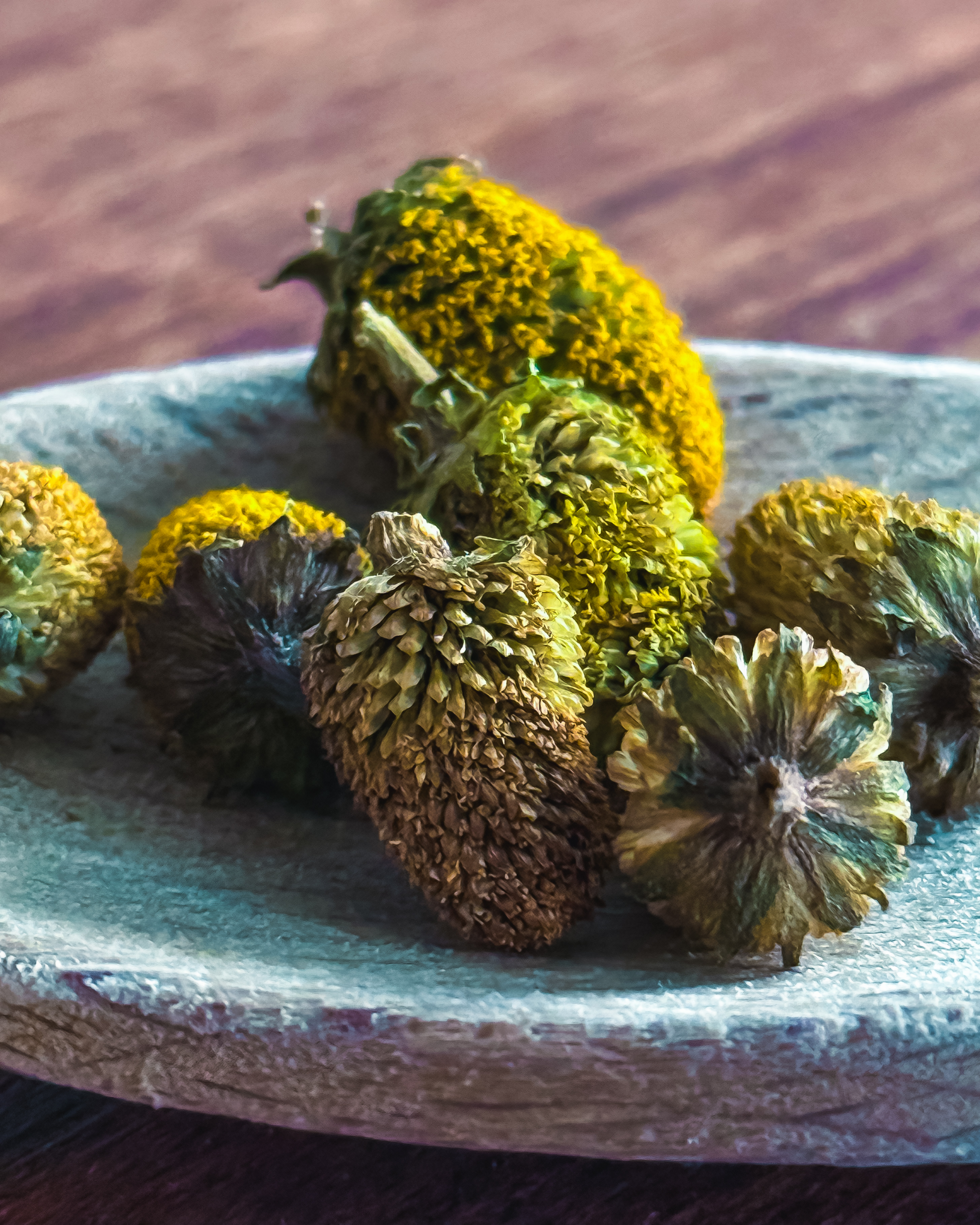
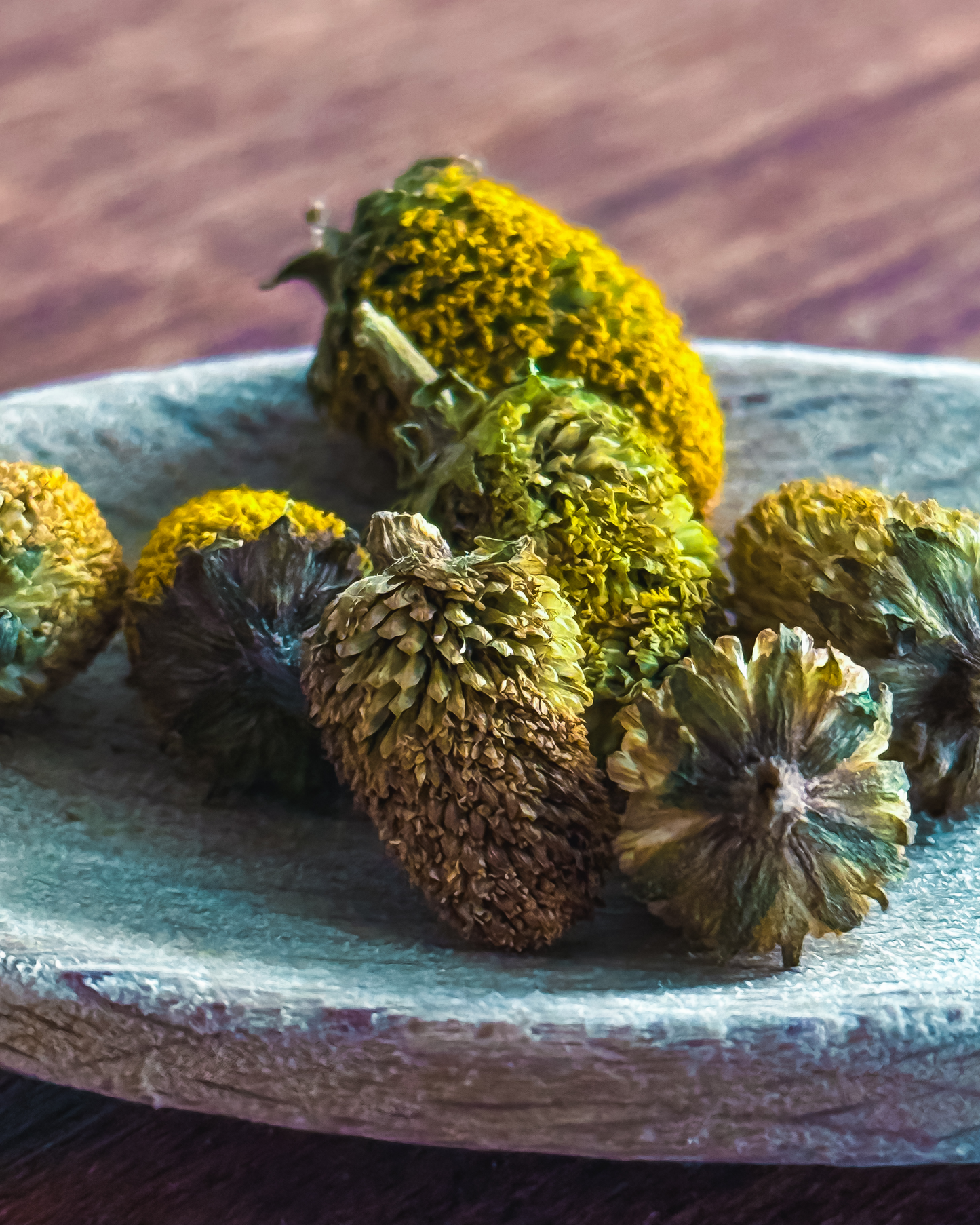
Part 1: Understanding Extraction Yield
Table of Contents
- Introduction: What Does Extraction Yield Really Mean?
- The Chemistry of Spilanthol and Why It Matters
- Plant Material: The Foundation of Extraction Yield
- Particle Size and Extraction Efficiency
- Conclusion to Part 1
Introduction: What Does Extraction Yield Really Mean?
Every botanical extraction begins with a simple objective: transfer valuable compounds from plant material into a suitable solvent. While this sounds straightforward, extraction science is considerably more complex than simply soaking dried flowers in oil or alcohol.
For Acmella oleracea, the primary compound of interest is spilanthol, a naturally occurring alkylamide that has attracted growing attention in cosmetic science, botanical research, and specialty food applications. Yet obtaining high-quality spilanthol extracts depends on far more than selecting the right plant. The amount of spilanthol recovered during extraction, commonly referred to as the extraction yield, is influenced by numerous interacting variables.
Two producers may begin with the same species of plant but obtain noticeably different results because of differences in cultivation, harvest timing, drying methods, solvent selection, particle size, extraction temperature, duration, or analytical quality control.
Understanding these variables is essential for anyone interested in botanical extraction, whether they are researchers, cosmetic formulators, manufacturers, or growers seeking to optimise raw material quality.
This article explores the scientific principles that influence extraction yield and explains why successful extraction depends on balancing multiple factors rather than maximising a single variable.
Extraction Yield Is Often Misunderstood
The word yield is frequently used in botanical extraction, but it can describe different measurements depending on the context.
In practice, scientists distinguish between:
- total extract yield;
- concentration of active compounds;
- extraction efficiency;
- recovery of specific marker molecules.
These values are related but are not interchangeable.
For example, producing a large volume of botanical extract does not necessarily indicate that the extract contains a high concentration of spilanthol.
Likewise, a smaller quantity of extract may contain a greater proportion of the desired active compound.
Understanding these differences is fundamental when evaluating botanical ingredients.
Total Extract Yield Versus Spilanthol Yield
One of the most common misconceptions is assuming that extraction yield and spilanthol yield describe the same outcome.
In reality, they measure different aspects of the extraction process.
Total extract yield refers to the overall amount of material transferred from the plant into the solvent.
This includes:
- plant oils;
- waxes;
- pigments;
- aromatic compounds;
- fatty acids;
- naturally occurring secondary metabolites.
Spilanthol yield, by contrast, refers specifically to the amount of spilanthol recovered from the plant material.
A formulation may therefore achieve:
- high total extraction yield;
- moderate spilanthol yield;
or
- moderate extract yield;
- relatively high spilanthol concentration.
Professional extraction focuses on recovering the desired compounds efficiently rather than simply producing the greatest volume of extract.
Why Yield Matters
Extraction yield influences several aspects of botanical production.
These include:
- raw material efficiency;
- manufacturing consistency;
- formulation design;
- analytical quality;
- production costs.
For manufacturers producing standardised botanical extracts, improving extraction efficiency may reduce waste while increasing consistency between production batches.
However, achieving maximum yield should never come at the expense of ingredient quality.
Maintaining chemical integrity remains equally important.
The Chemistry of Spilanthol and Why It Matters
Successful extraction begins with understanding the chemistry of the target molecule.
Every compound behaves differently depending on its molecular structure, and those properties determine how it interacts with solvents during extraction.
For spilanthol, several characteristics strongly influence extraction efficiency.
Spilanthol Is an Alkylamide
Spilanthol belongs to a naturally occurring family of compounds known as alkylamides.
These molecules are found in several plant species and possess physicochemical characteristics that distinguish them from many other botanical constituents.
Understanding this chemical family helps explain why spilanthol responds differently to extraction conditions than water-soluble plant compounds.
Lipophilic Behaviour
One of the defining properties of spilanthol is its lipophilic nature.
Lipophilic molecules dissolve more readily in oils and certain organic solvents than in water.
This characteristic explains why oil-based extraction methods and selected organic solvents are commonly used when producing botanical extracts containing spilanthol.
Rather than dissolving uniformly in all liquids, spilanthol exhibits preferential compatibility with solvents that match its chemical properties.
Understanding solvent compatibility forms one of the foundations of efficient extraction.
Molecular Diffusion
Extraction depends upon molecular movement.
Spilanthol molecules must diffuse from plant tissues into the surrounding solvent.
Several variables influence this process, including:
- solvent compatibility;
- temperature;
- extraction time;
- particle size;
- concentration gradients.
Diffusion occurs gradually and slows as equilibrium develops between the plant material and the extraction medium.
Professional extraction methods seek to optimise this natural process while preserving molecular stability.
Solubility Determines Extraction Potential
Solubility establishes the theoretical limit for how much spilanthol can dissolve in a given solvent under particular conditions.
A solvent with poor compatibility may leave significant quantities of spilanthol within the plant material.
Conversely, an appropriate solvent provides greater opportunity for efficient recovery.
Because solubility depends on molecular chemistry rather than marketing claims, solvent selection remains one of the most important scientific decisions in botanical extraction.

Plant Material: The Foundation of Extraction Yield
No extraction method can compensate for poor-quality raw material.
The composition of the harvested plant determines the maximum amount of spilanthol that can potentially be recovered.
For this reason, cultivation and harvesting represent the first stages of extraction optimisation.
Flower Heads
Research consistently identifies the flower heads of Acmella oleracea as the richest source of spilanthol.
Consequently, many premium botanical extracts focus primarily on harvesting mature flower heads rather than processing the entire plant.
Using carefully selected plant material improves extraction efficiency before the extraction process even begins.
Leaves and Stems
Leaves and stems also contain naturally occurring phytochemicals.
However, their chemical composition differs from that of mature flower heads.
Depending on the intended application, some manufacturers may process the whole plant, while others selectively harvest individual plant parts.
The choice depends upon product objectives rather than a universally correct approach.
Plant Maturity
Harvest timing significantly influences botanical composition.
Immature flower heads may differ chemically from fully developed flowers.
Professional growers therefore determine harvest schedules according to:
- flower development;
- plant health;
- environmental conditions;
- production objectives.
Consistent maturity improves reproducibility between harvests.
Fresh Versus Dried Material
One of the most frequently discussed questions in botanical extraction concerns whether fresh or dried plant material should be used.
Each approach offers different advantages.
Fresh material contains substantially more moisture, while drying reduces water content and concentrates plant constituents by weight.
Drying also changes the physical characteristics of plant tissues, potentially influencing solvent penetration during extraction.
The optimal approach depends on the extraction method, processing objectives, and overall manufacturing strategy.
Moisture Content
Moisture plays an important role in extraction science.
Excessive moisture may influence:
- solvent behaviour;
- extraction efficiency;
- microbial stability;
- storage characteristics.
Professional manufacturers typically monitor moisture content carefully before extraction begins.
Controlling moisture improves both extraction consistency and raw material preservation.
Particle Size and Extraction Efficiency
After selecting suitable plant material, one of the next variables is particle size.
Reducing plant material into smaller particles increases the surface area available for solvent contact.
However, smaller is not always better.
Successful extraction requires balancing increased accessibility with practical handling considerations.
Whole Flower Heads
Whole flower heads preserve the natural structure of the plant.
Although extraction may proceed more slowly, whole material generally produces fewer fine particles during filtration.
This approach is commonly used for traditional maceration methods.
Coarsely Crushed Material
Crushing flower heads increases exposed surface area while maintaining relatively simple filtration.
Many professional extraction protocols utilise coarse grinding because it balances solvent penetration with manageable processing.
Finely Ground Powder
Grinding plant material into fine powder dramatically increases surface area.
Potential advantages include:
- faster solvent penetration;
- shorter extraction time;
- improved contact between solvent and plant tissue.
However, extremely fine powders may also introduce practical challenges.
These include:
- more difficult filtration;
- increased sediment;
- greater solvent retention within plant residues;
- slower clarification.
Professional manufacturers therefore select particle sizes appropriate for both extraction and downstream processing.
Surface Area and Diffusion
Surface area plays a central role in molecular diffusion.
Increasing exposed plant tissue allows solvent to contact more cells simultaneously.
This generally improves mass transfer during extraction.
Nevertheless, extraction efficiency depends on multiple variables working together.
Surface area alone cannot compensate for poor solvent selection, low-quality plant material, or inadequate process control.
Conclusion to Part 1
Extraction yield begins long before plant material is placed into a solvent. The quality of the harvested Acmella oleracea, the maturity of the flower heads, moisture content, particle size, and the fundamental chemistry of spilanthol all establish the conditions that determine how efficiently the compound can be recovered. Understanding the distinction between total extract yield and spilanthol yield is particularly important, as a larger quantity of extract does not necessarily indicate a higher concentration of the target molecule.
Successful extraction relies on the interaction of multiple scientific principles rather than any single variable. Spilanthol's lipophilic nature, its diffusion from plant tissues, and its compatibility with different solvents all influence recovery, while careful preparation of the raw material provides the foundation for consistent results. These early decisions have a lasting impact on both extraction efficiency and the quality of the finished botanical extract.
In Part 2, we will examine the extraction process itself, exploring how solvent selection, temperature, extraction time, and agitation influence spilanthol recovery. We will also discuss why optimising these variables requires balancing extraction efficiency with the preservation of botanical quality rather than simply maximising the amount of material extracted.
Part 2: The Variables That Control Extraction Yield
Table of Contents
- Choosing the Right Solvent
- Temperature and Extraction Efficiency
- Extraction Time: Finding the Balance
- Agitation and Mass Transfer
- Conclusion to Part 2
Choosing the Right Solvent
Selecting an appropriate solvent is one of the most important decisions in botanical extraction. The solvent acts as the medium that dissolves and transports spilanthol from the plant tissue into the extract. Its chemical properties largely determine which compounds are extracted, how efficiently they are recovered, and the characteristics of the final product.
No solvent is universally ideal for every application. Instead, the choice depends on the intended use of the extract, regulatory considerations, formulation goals, manufacturing processes, and the balance between extraction efficiency and product quality.
Professional extraction therefore begins by matching the solvent to the chemistry of the target compound rather than selecting a solvent based solely on convenience or tradition.
Why Solvent Chemistry Matters
Extraction follows one of chemistry's most fundamental principles:
Compounds dissolve most readily in solvents with similar chemical characteristics.
Because spilanthol is primarily lipophilic, solvents capable of interacting with non-polar or moderately non-polar molecules generally provide more favourable extraction conditions than water alone.
However, extraction is rarely limited to recovering only spilanthol.
Every solvent also extracts many additional plant constituents, including:
- pigments;
- aromatic compounds;
- lipids;
- waxes;
- flavonoids;
- other naturally occurring alkylamides.
Consequently, solvent selection influences the entire chemical profile of the finished extract.
Botanical Oils
Vegetable oils remain among the most widely used extraction media for cosmetic applications.
Examples include:
- moringa oil;
- baobab oil;
- sunflower oil;
- jojoba oil;
- medium-chain triglyceride (MCT) oil.
Oil extraction offers several advantages:
- direct cosmetic compatibility;
- gentle processing;
- simple formulation;
- avoidance of solvent removal after extraction.
Oil extracts are particularly attractive for skincare products because the extraction medium often becomes part of the finished cosmetic formulation.
However, oil extraction generally produces different chemical profiles than alcohol-based or laboratory extraction techniques.
Ethanol
Ethanol is widely used in botanical extraction because it dissolves a broad spectrum of plant compounds.
Its advantages include:
- relatively rapid extraction;
- broad phytochemical recovery;
- compatibility with tinctures;
- laboratory familiarity.
Following extraction, ethanol can also be removed through controlled evaporation when concentrated extracts are required.
The final extract obtained with ethanol may differ significantly from one produced with botanical oils, reflecting the different chemical properties of the solvent.
Glycerin
Vegetable glycerin is commonly used for botanical extracts intended for water-containing cosmetic formulations.
Compared with ethanol or oils, glycerin possesses different solvent characteristics and therefore extracts a different range of naturally occurring compounds.
Glycerin-based extracts are often selected for products where alcohol-free processing is preferred.
As with every extraction medium, the resulting phytochemical profile depends on both the solvent and the extraction conditions.
Supercritical Carbon Dioxide (CO₂)
Supercritical carbon dioxide extraction represents one of the most sophisticated technologies used in botanical processing.
Under carefully controlled pressure and temperature, carbon dioxide enters a supercritical state in which it exhibits properties of both a liquid and a gas.
This technique offers several potential advantages:
- highly selective extraction;
- minimal solvent residues;
- precise process control;
- adjustable operating conditions.
Because specialised equipment is required, supercritical CO₂ extraction is primarily used in industrial and research environments.
Laboratory Solvents
Scientific research sometimes employs specialised laboratory solvents to investigate extraction efficiency or isolate individual compounds.
These solvents are valuable analytical tools but are not necessarily appropriate for commercial cosmetic products.
Research findings therefore must always be interpreted within the context of the extraction method used.
Temperature and Extraction Efficiency
Temperature influences nearly every aspect of botanical extraction.
Increasing temperature generally accelerates molecular movement, allowing solvent molecules to penetrate plant tissues more rapidly while improving diffusion of dissolved compounds into the surrounding liquid.
However, faster extraction does not automatically result in a better extract.
Professional extraction seeks an appropriate balance between improved efficiency and preserving the integrity of sensitive botanical constituents.
Temperature Accelerates Diffusion
Heat increases molecular motion.
As temperature rises:
- solvent molecules move more rapidly;
- diffusion becomes faster;
- extraction proceeds more efficiently;
- equilibrium may be reached sooner.
These principles explain why controlled heating is frequently incorporated into professional extraction protocols.
Higher Temperature Is Not Always Better
Although increased temperature often accelerates extraction, excessive heat may influence the stability of sensitive plant constituents.
Potential concerns include:
- oxidation;
- evaporation of volatile compounds;
- changes in colour;
- altered aroma;
- degradation of thermally sensitive molecules.
Professional extraction therefore carefully controls temperature rather than simply maximising it.
Extraction Temperature Depends on the Solvent
Different solvents behave differently under changing temperatures.
For example:
- botanical oils;
- ethanol;
- glycerin;
- supercritical carbon dioxide;
each possess distinct physical and chemical properties that influence extraction conditions.
The appropriate operating temperature depends upon the complete extraction system rather than the target compound alone.
Industrial Process Control
Professional extraction facilities typically monitor temperature continuously throughout production.
Controlled heating contributes to:
- process consistency;
- reproducible extraction;
- improved quality control;
- reduced batch variability.
Maintaining stable processing conditions is often more important than achieving the highest possible extraction temperature.
Extraction Time: Finding the Balance
Time represents another critical extraction variable.
Immediately after plant material contacts the solvent, spilanthol begins diffusing into the surrounding liquid.
Initially, extraction proceeds relatively quickly because the concentration difference between the plant tissue and the solvent is large.
As extraction continues, this difference gradually decreases.
Eventually, the system approaches equilibrium, where relatively little additional transfer occurs.
Understanding this process helps explain why extending extraction indefinitely does not necessarily improve yield.
Early Extraction
During the initial stages:
- solvent rapidly penetrates plant tissue;
- readily accessible compounds dissolve;
- extraction efficiency is relatively high.
This period often contributes a substantial proportion of the final extraction yield.
Slowing Extraction
As concentration differences decrease, diffusion naturally slows.
The solvent becomes progressively enriched with extracted compounds while the remaining plant material contains lower concentrations available for transfer.
This gradual reduction in extraction rate is a normal characteristic of diffusion.
Diminishing Returns
Eventually, extending extraction time may provide progressively smaller improvements in recovery.
This phenomenon is known as diminishing returns.
Professional extraction protocols therefore seek an extraction duration that balances efficiency with manufacturing practicality.
Longer processing times may increase production costs without proportionally improving extraction performance.
Equilibrium
Extraction ultimately approaches equilibrium, where the concentration of dissolved compounds becomes relatively stable under the prevailing conditions.
Although absolute equilibrium is rarely achieved in commercial production, understanding this concept helps explain why extraction cannot continue indefinitely with the same efficiency.
Agitation and Mass Transfer
Even when suitable solvents and temperatures are selected, molecular diffusion remains limited if fresh solvent does not continuously contact plant surfaces.
Agitation improves extraction by enhancing mass transfer between the plant material and the surrounding solvent.
Why Agitation Helps
Without movement, a concentrated layer of dissolved compounds gradually develops around the surface of the plant material.
This layer slows further diffusion.
Agitation continuously replaces this localised solvent with fresh extraction medium, maintaining favourable concentration gradients.
As a result:
- solvent penetration improves;
- diffusion continues more efficiently;
- extraction becomes more uniform.
Mechanical Stirring
Mechanical stirring is widely used in both laboratory and industrial extraction.
Proper stirring promotes:
- uniform solvent distribution;
- improved temperature consistency;
- enhanced contact between solvent and plant material.
Excessive agitation, however, may create unnecessary processing difficulties, including foaming or increased suspended particles.
Shaking
Traditional maceration methods often employ periodic shaking rather than continuous stirring.
Regular agitation redistributes plant material and renews solvent contact without requiring complex equipment.
This approach remains common in small-scale botanical extraction.
Ultrasonic Extraction
Ultrasonic extraction uses high-frequency sound waves to enhance solvent penetration and mass transfer.
The rapid formation and collapse of microscopic bubbles creates localised movement that can improve extraction efficiency.
Ultrasonic techniques are widely investigated in botanical research because they may reduce extraction time while increasing compound recovery.
Circulation Systems
Industrial extraction facilities sometimes employ continuous circulation systems in which solvent flows through the plant material.
These systems help maintain fresh solvent contact while improving process consistency across larger production volumes.
Conclusion to Part 2
Once high-quality plant material has been selected, the efficiency of spilanthol extraction depends on carefully controlling the extraction process itself. Solvent chemistry determines which compounds are dissolved, temperature influences the rate of molecular diffusion, extraction time governs how closely the system approaches equilibrium, and agitation improves mass transfer by maintaining contact between fresh solvent and plant tissues. Each of these variables contributes to the final extraction yield, yet none operates independently.
Professional extraction is therefore an exercise in optimisation rather than maximisation. Higher temperatures, longer extraction times, or more aggressive processing do not automatically produce superior results and may introduce unnecessary challenges. Instead, manufacturers seek conditions that provide efficient recovery while preserving the chemical integrity and quality of the botanical extract.
In Part 3, we will explore the final stage of extraction optimisation, including the scientific principles behind double maceration, how filtration and processing losses influence yield, the importance of HPLC analysis and Certificates of Analysis, and why analytical verification is essential for producing consistent, high-quality spilanthol extracts.
Part 3: Optimising Extraction Yield Through Science
Table of Contents
- Double Maceration: Why a Second Extraction Can Improve Yield
- Filtration, Handling and Processing Losses
- Measuring Extraction Success
- Final Scientific Perspective
- Key Takeaways
Double Maceration: Why a Second Extraction Can Improve Yield
One of the most effective techniques for improving botanical extraction efficiency is double maceration. Rather than relying on a single extraction, this approach uses fresh solvent in a second extraction cycle to recover compounds that remain within the plant material after the first maceration.
The scientific principle behind double maceration is straightforward. During the initial extraction, spilanthol diffuses from the plant tissue into the surrounding solvent. As the concentration of spilanthol increases within the solvent, the concentration gradient that drives diffusion gradually becomes smaller.
Eventually, the extraction approaches equilibrium, meaning the transfer of additional spilanthol slows considerably.
Replacing the partially saturated solvent with fresh solvent restores a much larger concentration gradient, allowing diffusion to continue more efficiently.
This principle is widely recognised in extraction science and explains why multiple extraction stages are often more efficient than a single prolonged extraction.
Understanding Concentration Gradients
Extraction is fundamentally driven by concentration differences.
At the beginning of the process:
- plant tissues contain relatively high concentrations of spilanthol;
- the solvent contains none.
This large concentration difference promotes rapid diffusion.
As extraction proceeds:
- solvent concentration increases;
- plant concentration decreases;
- diffusion naturally slows.
Introducing fresh solvent effectively resets this process, allowing additional spilanthol to move from the plant into the extraction medium.
Why Longer Extraction Is Not Always Better
A common misconception is that leaving plant material in the same solvent for longer periods will continue increasing extraction indefinitely.
In reality, once equilibrium is approached, extending extraction time often provides only modest improvements.
A second extraction with fresh solvent may recover additional compounds more efficiently than simply extending the first extraction.
This demonstrates why extraction efficiency depends on process design rather than extraction duration alone.
When Double Maceration May Be Useful
Double maceration is particularly valuable when:
- premium botanical quality is required;
- maximum recovery is desired;
- high-value raw materials are being processed;
- analytical consistency is important.
Because each manufacturing process differs, producers evaluate whether the additional processing time and solvent use align with their production objectives.
Quality Before Quantity
Although double maceration may improve extraction efficiency, maximising yield should never compromise quality.
Professional extraction aims to recover spilanthol while preserving:
- chemical integrity;
- botanical profile;
- formulation suitability;
- batch consistency.
The objective is a balanced extraction rather than the highest possible numerical yield.
Filtration, Handling and Processing Losses
Even after extraction has finished, the overall yield may still be influenced by downstream processing.
Every manufacturing step presents opportunities for small losses that collectively affect the amount of extract ultimately recovered.
Professional extraction therefore extends well beyond the extraction vessel itself.
Solvent Retained in Plant Material
One of the largest unavoidable losses occurs because plant material retains a portion of the extraction solvent.
After filtration, spent botanical material often contains:
- absorbed solvent;
- dissolved botanical compounds;
- residual extract.
Recovering every remaining drop is generally impractical without introducing additional processing complexity.
Manufacturers therefore balance recovery efficiency with production practicality.
Filtration Efficiency
Filtration removes plant particles from the extract while producing a clear, stable liquid suitable for further processing.
However, filtration also presents opportunities for material loss.
Factors influencing filtration include:
- particle size;
- filter pore size;
- extract viscosity;
- filtration method;
- processing time.
Professional manufacturers optimise filtration to minimise unnecessary losses while achieving the required product quality.
Adsorption
Certain compounds may adhere to filtration materials, processing equipment, or storage containers.
This phenomenon, known as adsorption, may contribute to small reductions in recoverable extract.
Although generally limited, adsorption is considered during process optimisation, particularly in analytical laboratories where precise measurements are required.
Evaporation
Some extraction processes involve solvent removal through controlled evaporation.
Variables influencing evaporation efficiency include:
- temperature;
- pressure;
- processing duration;
- equipment design.
Carefully controlled evaporation helps preserve extract quality while producing concentrates suitable for formulation or further analysis.
Process Consistency
Professional manufacturers document every stage of production.
Standardised procedures improve:
- reproducibility;
- batch consistency;
- quality assurance;
- traceability.
Consistent handling often contributes as much to reliable extraction as the extraction method itself.
Measuring Extraction Success
Producing an extract is only part of the process.
Determining whether the extraction achieved its intended objective requires analytical evaluation.
Modern botanical manufacturing therefore relies on laboratory testing rather than visual inspection alone.
Total Extraction Yield
One measurement commonly reported is total extraction yield.
This represents the overall quantity of extract recovered relative to the starting plant material.
Although useful for evaluating manufacturing efficiency, total yield does not indicate how much spilanthol is present.
Consequently, additional analytical methods are required.
Spilanthol Concentration
Determining the concentration of spilanthol provides considerably more useful information than measuring extract quantity alone.
Two extracts with identical yields may differ substantially in spilanthol concentration.
Analytical chemistry therefore focuses on quantifying the target compound rather than relying solely on extraction volume.
High-Performance Liquid Chromatography (HPLC)
High-Performance Liquid Chromatography (HPLC) remains one of the most widely used analytical techniques for evaluating botanical extracts.
HPLC allows scientists to:
- identify spilanthol;
- measure concentration;
- compare production batches;
- monitor extraction consistency;
- support quality assurance.
Because HPLC produces objective analytical data, it forms an important component of professional quality management.
Reproducibility
Scientific extraction should produce consistent results under identical conditions.
Reproducibility demonstrates that:
- raw materials are consistent;
- extraction procedures are controlled;
- analytical methods are reliable;
- manufacturing quality is maintained.
Without reproducibility, comparing batches or validating manufacturing processes becomes considerably more difficult.
Certificates of Analysis
Many premium botanical manufacturers provide a Certificate of Analysis (CoA) for each production batch.
These documents may include:
- botanical identification;
- batch number;
- analytical results;
- spilanthol concentration;
- quality specifications.
A Certificate of Analysis supports traceability and provides documented evidence that the material has undergone analytical evaluation.
Final Scientific Perspective
Extraction yield is the result of a carefully balanced scientific process rather than a single manufacturing variable. The chemistry of spilanthol, the quality of the plant material, solvent selection, particle size, temperature, extraction time, agitation, and downstream processing all contribute to the amount of spilanthol that can ultimately be recovered. Each factor influences the others, making extraction optimisation a multidisciplinary challenge that combines botanical science, chemistry, engineering, and analytical testing.
One of the most important concepts in extraction science is that greater yield does not necessarily mean better quality. A large quantity of botanical extract may contain relatively low concentrations of the target compound, while a smaller, carefully produced extract may provide a more concentrated and consistent spilanthol profile. For this reason, professional manufacturers focus not only on extraction efficiency but also on preserving chemical integrity, maintaining reproducibility, and producing extracts suitable for their intended cosmetic or research applications.
Modern extraction processes increasingly rely on evidence-based optimisation. Techniques such as double maceration, controlled temperature management, appropriate solvent selection, and careful process documentation help improve consistency, while analytical methods such as High-Performance Liquid Chromatography (HPLC) verify the concentration of spilanthol within the finished extract. Certificates of Analysis and batch-to-batch quality control further strengthen confidence in the reliability of botanical ingredients.
Ultimately, successful extraction is not achieved by maximising one variable but by understanding how every stage of the process contributes to the final result. By combining high-quality Acmella oleracea with sound scientific principles, controlled manufacturing, and rigorous analytical verification, producers can consistently obtain botanical extracts that meet the demanding standards of modern cosmetic formulation and botanical research.
Key Takeaways
- Extraction yield refers to both the amount of extract recovered and the concentration of spilanthol, which are related but distinct measurements.
- Plant quality, harvest timing, particle size, solvent selection, temperature, extraction time, and agitation all influence extraction efficiency.
- Double maceration improves extraction by restoring concentration gradients with fresh solvent, often increasing recovery more effectively than simply extending extraction time.
- Downstream processing, including filtration, solvent retention, adsorption, and evaporation, can significantly influence the final amount of extract recovered.
- HPLC analysis, reproducible manufacturing, and Certificates of Analysis are essential tools for verifying spilanthol concentration and ensuring consistent, high-quality botanical extracts.