

Quick Answer
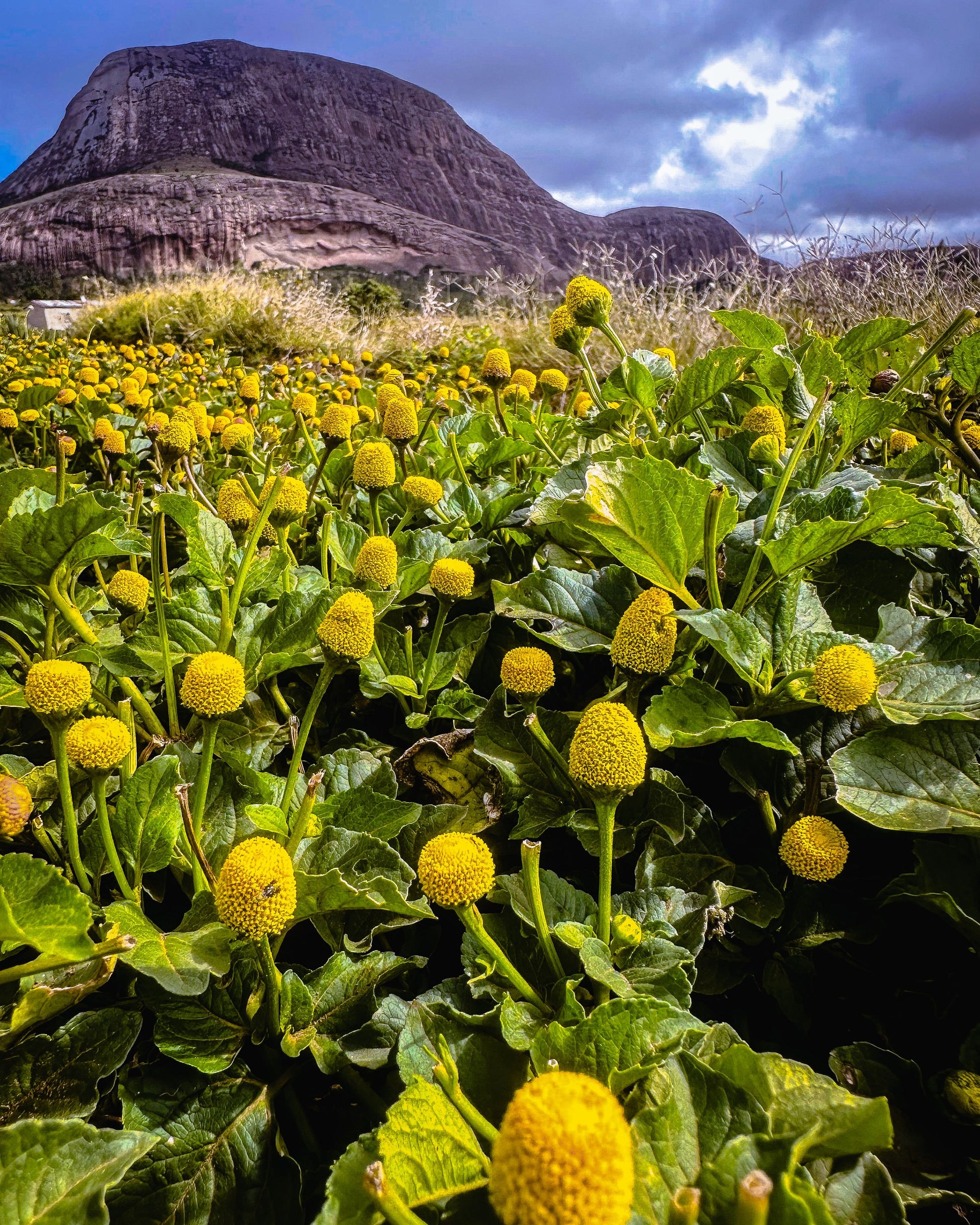
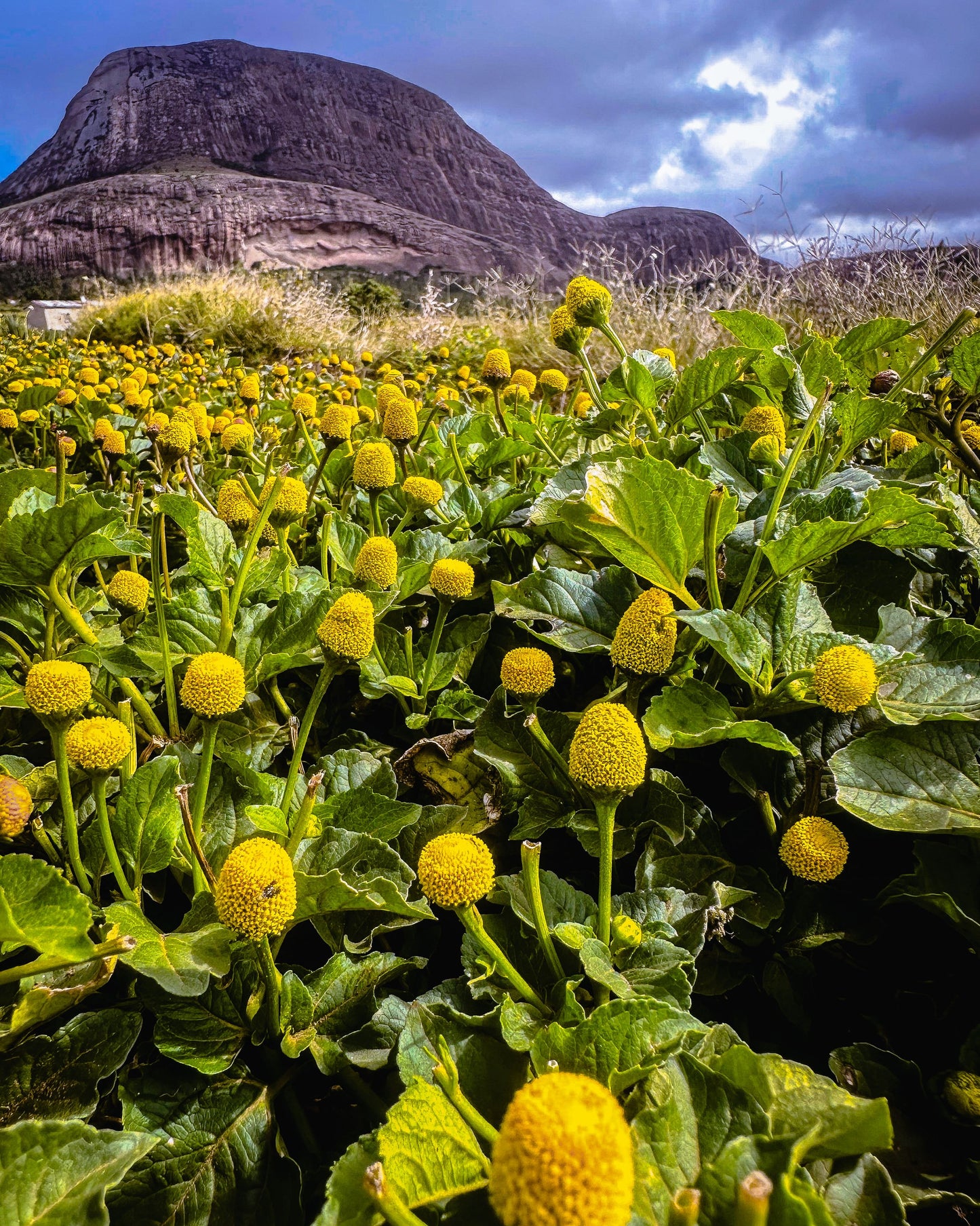
Madagascar offers an exceptional environment for cultivating Acmella oleracea thanks to its tropical climate, fertile volcanic-derived soils, seasonal rainfall, abundant sunshine, and extraordinary biodiversity. Combined with responsible cultivation, careful flower-head harvesting, and independent laboratory verification, these conditions support the production of premium botanical ingredients.
Introduction
Some of the world's finest agricultural products are closely associated with the places where they are grown.
Champagne comes from France.
Matcha is closely linked with Japan.
Vanilla is famously connected to Madagascar.
The environment in which a plant grows often shapes its development, influencing everything from its health to the consistency of the harvested botanical material.
Acmella oleracea is no different.
While this remarkable plant can be cultivated in many tropical and subtropical regions around the world, Madagascar provides a unique combination of environmental conditions that make it particularly well suited for responsible cultivation.
For Madabuzz, Madagascar is much more than a sourcing location.
It is home to our farming partners, the foundation of our cultivation philosophy, and the beginning of every premium flower head we produce.
Why Geography Matters
Plants do not grow in isolation.
Every species responds continuously to its surrounding environment.
Temperature influences growth.
Rainfall affects development.
Sunlight powers photosynthesis.
Soil provides nutrients.
Microorganisms support healthy root systems.
Together, these environmental factors shape the growing conditions in which plants develop.
This is why botanists and agricultural scientists often study both the plant and the ecosystem in which it grows.
Understanding the habitat is part of understanding the plant itself.
Science in Everyday Life
Great Coffee Begins with Great Mountains
Coffee grown in the mountains of Ethiopia develops under very different conditions than coffee grown in lowland tropical regions.
Neither plant changes species.
But climate, altitude, rainfall, and soil all influence how the crop develops.
The same principle applies to Acmella oleracea.
The environment surrounding the plant helps create the conditions that support healthy growth throughout its life cycle.
Nature and agriculture work together.
Madagascar: One of the World's Great Biodiversity Hotspots
Madagascar is unlike anywhere else on Earth.
Separated from mainland Africa for millions of years, the island has evolved an extraordinary collection of plants and animals found nowhere else.
Scientists recognize Madagascar as one of the world's most important biodiversity hotspots.
Its ecosystems include:
- tropical forests
- grasslands
- wetlands
- highland regions
- coastal environments
- fertile agricultural landscapes
This remarkable ecological diversity supports rich interactions between plants, insects, birds, soil organisms, and local farming systems.
For agriculture, biodiversity contributes to healthy and resilient ecosystems.
Tropical Climate: Ideal for Acmella oleracea
Acmella oleracea naturally prefers warm temperatures and abundant sunlight.
Madagascar provides many of these favorable growing conditions throughout much of the year.
Typical conditions include:
- warm tropical temperatures
- long daylight hours
- seasonal rainfall
- good air circulation
- extended growing seasons
These conditions allow the plants to develop naturally while producing healthy foliage and abundant flower heads.
Rather than forcing growth through artificial environments, cultivation works alongside the island's natural climate.
Fertile Volcanic-Derived Soils
One of Madagascar's agricultural strengths lies beneath the surface.
Many cultivation regions benefit from volcanic-derived soils, which are naturally fertile and rich in minerals.
Healthy soil provides:
- structural support for roots
- mineral nutrients
- water retention
- drainage
- habitat for beneficial microorganisms
Living soil is far more than dirt.
It is an active biological ecosystem that supports healthy plant development from the moment seeds begin to germinate.
Healthy soils do not guarantee a particular phytochemical profile, but they provide an excellent foundation for vigorous plant growth.
Sunshine, Rainfall & Natural Growth Cycles
Successful cultivation depends on balance.
Too much rain can create challenges.
Too little rainfall can stress plants.
Similarly, sunlight drives photosynthesis, but excessive heat may also affect plant growth.
Madagascar's seasonal climate provides natural cycles that support the healthy development of Acmella oleracea.
Throughout the growing season, plants respond continuously to:
- sunlight
- rainfall
- humidity
- temperature
- soil moisture
These natural rhythms allow plants to mature gradually before harvest.
Healthy Ecosystems Support Healthy Agriculture
Modern agriculture increasingly recognizes that farms function as ecosystems rather than isolated production units.
Birds, insects, soil organisms, fungi, and surrounding vegetation all contribute to ecological balance.
Madagascar's remarkable biodiversity provides an environment where these natural relationships continue to play an important role.
Although current scientific evidence does not support attributing a specific Spilanthol concentration to biodiversity alone, healthy ecosystems are widely recognized as an important component of resilient and sustainable agriculture.
For Madabuzz, protecting biodiversity is not only environmentally responsible, it is part of maintaining healthy agricultural landscapes for future generations.
Why Acmella oleracea Thrives in Madagascar
No single environmental factor explains the success of Acmella oleracea in Madagascar.
Instead, it is the combination of many favorable conditions working together.
These include:
- tropical temperatures
- fertile volcanic-derived soils
- seasonal rainfall
- abundant sunshine
- healthy biodiversity
- experienced farming communities
- responsible cultivation practices
Together, these factors create an environment well suited for producing vigorous plants and healthy flower heads.
Nature provides the foundation.
Careful cultivation builds upon it.
Madagascar at a Glance
| Natural Advantage | Why It Matters |
|---|---|
| Tropical climate | Supports healthy year-round plant growth |
| Volcanic-derived soils | Provide fertile growing conditions |
| Seasonal rainfall | Encourages balanced plant development |
| Abundant sunshine | Supports photosynthesis and flowering |
| Rich biodiversity | Helps maintain resilient agricultural ecosystems |
| Experienced farmers | Apply traditional knowledge alongside modern quality practices |
Key Takeaways
- Madagascar provides a unique combination of environmental conditions well suited for cultivating Acmella oleracea.
- Tropical temperatures, volcanic-derived soils, seasonal rainfall, and abundant sunshine support healthy plant development.
- Biodiversity contributes to resilient agricultural ecosystems, although plant chemistry depends on many interacting factors.
- Responsible cultivation works alongside nature rather than replacing it.
- For Madabuzz, Madagascar is not simply the origin of our plants, it is the foundation of our quality philosophy.

The People Behind Premium Acmella oleracea
Exceptional botanical ingredients do not begin in a laboratory.
They begin with people.
Behind every Acmella oleracea flower head is a farmer who has spent months preparing the soil, monitoring the plants, observing seasonal changes, and carefully selecting the right moment to harvest.
While Madagascar provides remarkable natural growing conditions, it is the knowledge, patience, and dedication of local farming communities that help transform those conditions into consistently high-quality botanical ingredients.
For Madabuzz, quality is a partnership between nature and people.
Generations of Agricultural Knowledge
Agriculture in Madagascar has long been shaped by close observation of nature.
Farmers understand that healthy crops depend on respecting seasonal cycles rather than trying to force them.
They observe:
- rainfall patterns
- soil moisture
- flowering stages
- plant health
- local biodiversity
- changing weather conditions
Rather than relying only on calendars, experienced growers learn to "read the field."
This traditional knowledge is passed from one generation to the next and remains one of the greatest strengths of responsible cultivation.
Science in Everyday Life
Experience Cannot Be Replaced
Imagine two chefs preparing the same recipe.
One follows every instruction exactly.
The other has cooked the dish hundreds of times.
Both use the same ingredients.
But experience allows the second chef to recognize subtle details that no written recipe can fully describe.
Growing Acmella oleracea is similar.
Scientific knowledge provides the foundation.
Experience helps farmers recognize when a plant is healthy, when flowers are ready for harvest, and when natural conditions require small adjustments.
The best cultivation combines both science and experience.
Working With Nature, Not Against It
At Madabuzz, our cultivation philosophy is simple:
Nature already knows how to grow Acmella oleracea.
Our role is to support that process responsibly.
Rather than creating highly intensive production systems, we focus on allowing the plants to develop under favorable natural conditions.
Our cultivation practices emphasize:
- healthy soils
- balanced ecosystems
- responsible water management
- careful observation
- selective harvesting
- long-term sustainability
Healthy plants are the result of healthy agricultural systems.
Natural Cultivation Without Routine Synthetic Agrochemicals
Our farming partners cultivate Acmella oleracea using natural farming practices and do not routinely rely on synthetic pesticides or herbicides during production.
Instead, they focus on strengthening the natural resilience of the crop through responsible agricultural management.
This includes:
- maintaining fertile living soils
- encouraging biodiversity
- careful crop monitoring
- appropriate spacing between plants
- responsible harvesting practices
Natural cultivation is not about doing less.
It is about understanding how healthy ecosystems support healthy plants.
Biodiversity Is Part of the Farm
When people imagine a farm, they often think only about crops.
In reality, a healthy farm is a living ecosystem.
Birds help maintain ecological balance.
Pollinating insects support flowering plants.
Earthworms improve soil structure.
Microorganisms recycle nutrients.
Native vegetation provides habitat for beneficial species.
Madagascar's extraordinary biodiversity creates an environment where these natural relationships remain an important part of agriculture.
Although many factors influence plant chemistry, protecting biodiversity strengthens the resilience of farming systems and supports long-term sustainability.
Why We Harvest Flower Heads by Hand
One of the most important quality decisions we make is how we harvest.
Rather than mechanically collecting the entire plant, our farming partners carefully select mature flower heads by hand.
This allows them to:
- harvest flowers at the appropriate stage of development
- leave younger flowers to continue growing
- reduce unnecessary damage to plants
- maintain greater consistency between harvests
Hand harvesting requires considerably more time and skill than collecting mixed plant material.
But we believe careful selection is one of the foundations of premium botanical quality.
Every Flower Is Individually Chosen
Unlike large-scale mechanical harvesting, flower-head selection requires growers to inspect each plant individually.
Every flower develops at its own pace.
Some are ready today.
Others may require several more days before reaching maturity.
This selective approach means the same field may be harvested multiple times during the flowering season.
Although this process demands additional labor, it allows growers to focus on harvesting healthy, mature flower heads rather than simply maximizing volume.
For Madabuzz, quality begins with patience.
Supporting Farming Communities
Responsible cultivation should benefit more than the final product.
It should also support the people responsible for growing it.
Madabuzz works directly with farming communities in Madagascar through long-term partnerships based on transparency, respect, and shared success.
These partnerships help provide:
- stable seasonal work
- knowledge sharing
- long-term agricultural planning
- sustainable cultivation opportunities
- continued investment in local communities
We believe premium botanical ingredients should create value throughout the entire supply chain.
Education Is Part of Sustainability
For us, sustainability extends beyond agriculture.
It also includes investing in future generations.
That is why 5% of every Madabuzz purchase supports educational projects for schools in Madagascar.
Education creates opportunities.
It strengthens communities.
It helps preserve agricultural knowledge while giving young people the tools to shape their own future.
Supporting schools is one small way we give back to the communities that make our work possible.
Why Responsible Cultivation Protects Nature
One of the advantages of cultivating Acmella oleracea is that it helps reduce pressure on naturally occurring plant populations.
Rather than depending on wild collection, responsible cultivation allows growers to produce botanical ingredients under managed conditions while helping preserve surrounding ecosystems.
This approach supports:
- biodiversity conservation
- long-term agricultural productivity
- responsible land management
- consistent botanical production
Protecting nature and producing premium botanical ingredients should never be opposing goals.
With responsible cultivation, they can support one another.
Madagascar: More Than a Place of Origin
For many companies, the country of origin appears as a single line on a product label.
For Madabuzz, Madagascar represents something much deeper.
It is:
- the home of our farming partners
- the source of our flower heads
- the foundation of our cultivation philosophy
- a place of extraordinary biodiversity
- a community we are committed to supporting
Every flower head carries the story of the people who cultivated it.
Responsible Cultivation at a Glance
| Our Approach | Why It Matters |
|---|---|
| Natural cultivation | Supports healthy plant development |
| No routine synthetic pesticides or herbicides | Works with natural farming practices |
| Hand harvesting | Allows careful flower-head selection |
| Biodiversity | Supports resilient agricultural ecosystems |
| Direct farmer partnerships | Strengthens transparency and traceability |
| Community investment | 5% of every purchase supports schools in Madagascar |
Key Takeaways
- Premium botanical ingredients depend on both exceptional growing conditions and experienced farmers.
- Madabuzz works directly with farming communities in Madagascar through long-term partnerships.
- Our cultivation philosophy emphasizes natural farming practices without the routine use of synthetic pesticides or herbicides.
- Mature flower heads are harvested by hand to support consistency and botanical quality.
- Sustainability includes protecting biodiversity, supporting local communities, and investing in education.
Why Madagascar Produces Premium Acmella oleracea
There is no single secret behind premium botanical ingredients.
Not one soil.
Not one climate.
Not one farming technique.
Instead, exceptional botanical quality is created when many factors work together.
For Acmella oleracea, Madagascar offers a rare combination of environmental conditions, agricultural knowledge, responsible cultivation, and scientific quality assurance.
Each stage contributes to the next.
Healthy soils support healthy plants.
Healthy plants produce healthy flower heads.
Careful harvesting preserves botanical integrity.
Independent laboratory testing verifies the final result.
Quality is not created in a single moment.
It is built throughout the entire journey.
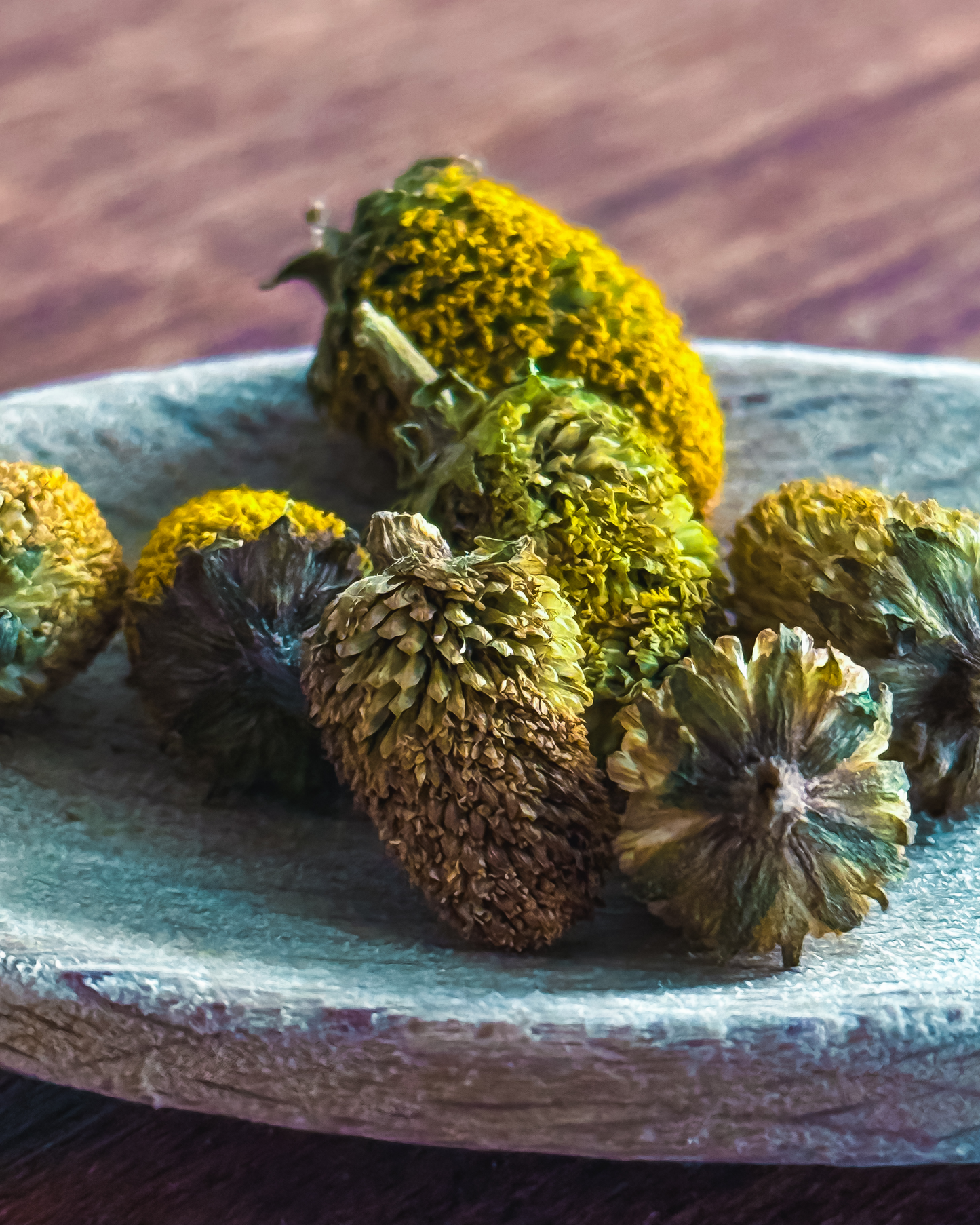
Flower Heads: The Heart of Botanical Quality
One of the most important decisions in premium botanical production is choosing which part of the plant to harvest.
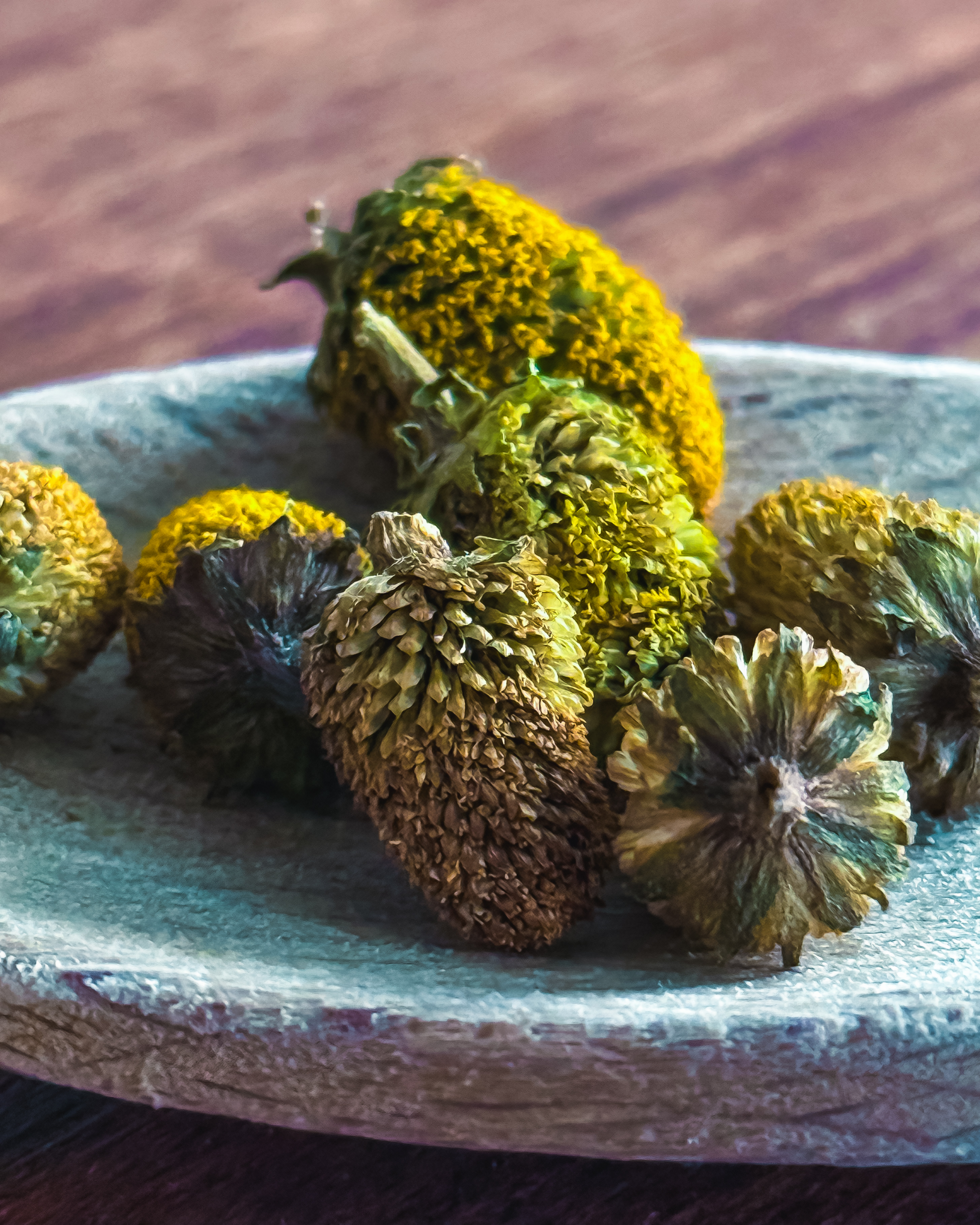
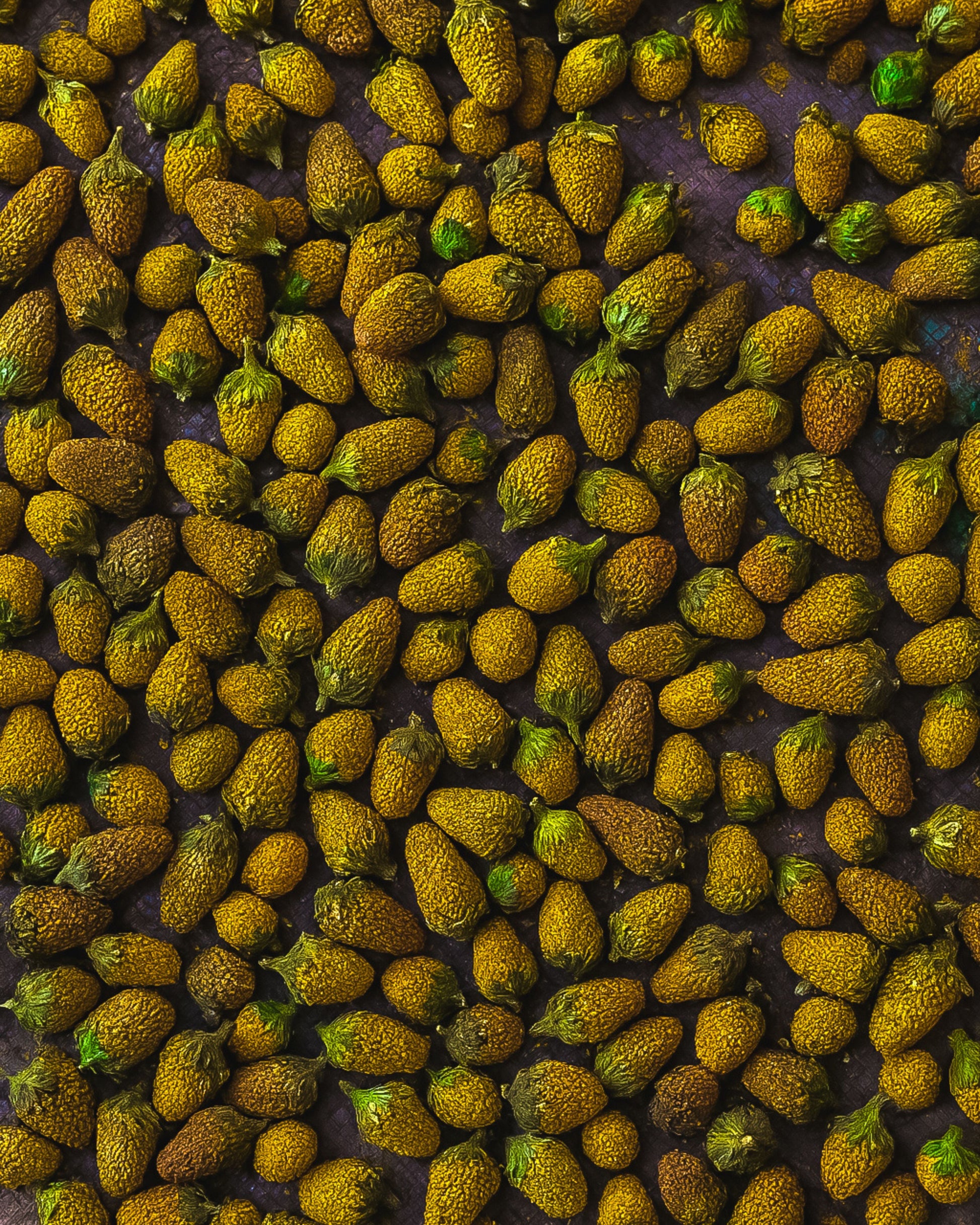
Scientific studies consistently show that the flower heads are the richest natural source of Spilanthol within Acmella oleracea.
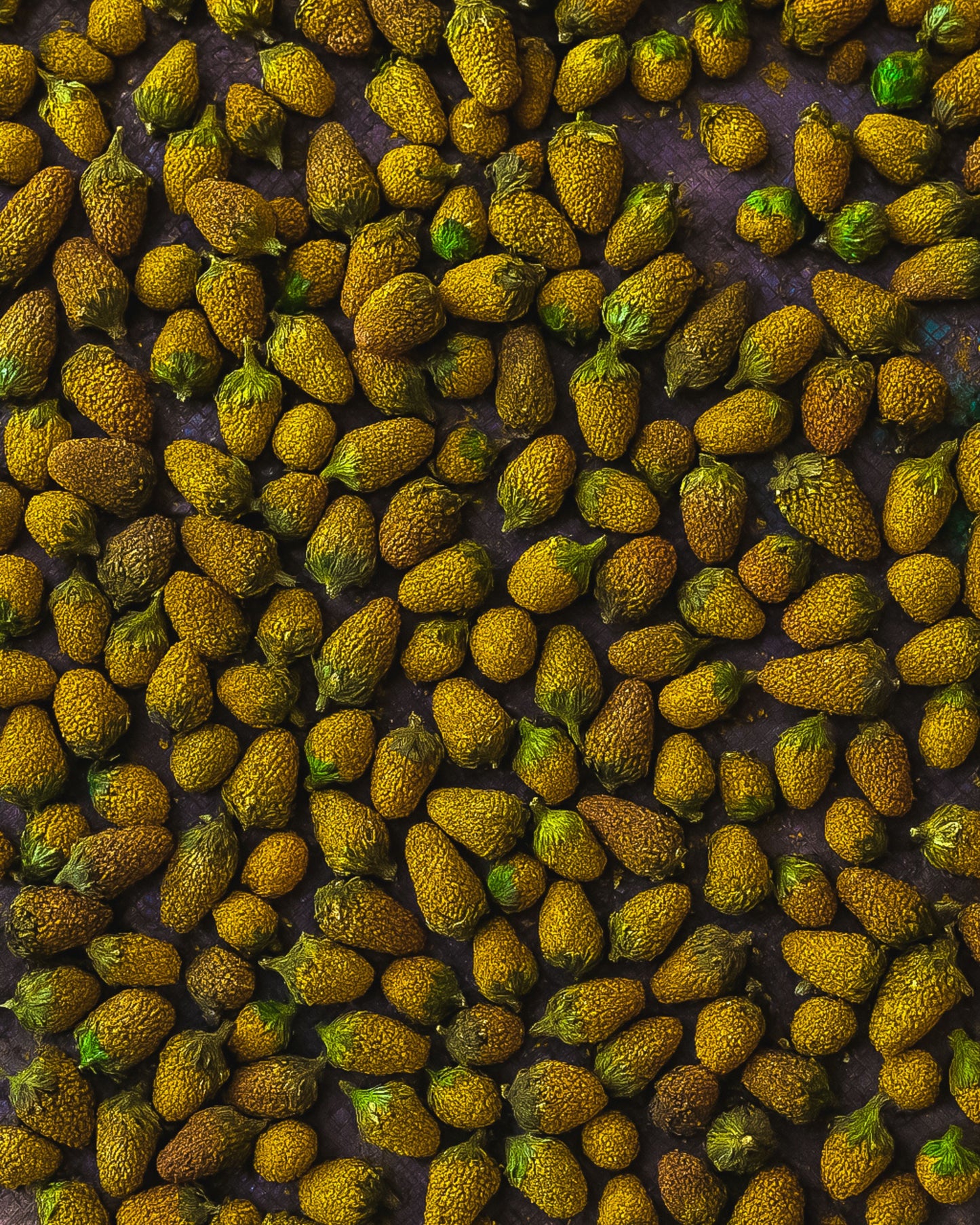
For this reason, Madabuzz harvests only mature flower heads rather than processing mixed whole-plant material.
Every flower is individually selected after careful observation in the field.
This process requires:
- patience
- experience
- multiple harvests during the flowering season
- careful visual inspection
Harvesting only flower heads is considerably more labor-intensive than harvesting the entire plant, but it allows us to focus on the botanical material most valued for premium botanical production.
Science in Everyday Life
Premium Chocolate Begins with Exceptional Cocoa Beans
The world's finest chocolate does not begin in the factory.
It begins on the farm.
Farmers carefully cultivate cacao trees, harvest ripe pods, ferment the beans, dry them correctly, and only then does chocolate production begin.
Every stage contributes to the final quality.
Acmella oleracea follows the same principle.
Extraction and laboratory testing are important, but they cannot replace careful cultivation, responsible harvesting, and proper post-harvest handling.
Great botanical ingredients begin long before they enter a laboratory.
The Journey from Field to Laboratory
Every Madabuzz flower head follows a carefully managed process designed to preserve quality and maintain complete traceability.
Step 1
Natural cultivation in Madagascar
↓
Step 2
Healthy plant development
↓
Step 3
Manual selection of mature flower heads
↓
Step 4
Responsible harvesting
↓
Step 5
Controlled drying
↓
Step 6
Careful storage
↓
Step 7
Independent laboratory analysis
↓
Step 8
Premium botanical ingredient
Every step is connected.
Removing quality from one stage weakens the next.
Why Independent Laboratory Testing Matters
No matter how experienced a farmer may be, appearance alone cannot determine every quality characteristic of a botanical ingredient.
Independent laboratory analysis provides objective data that complements responsible cultivation.
Depending on the application, laboratory evaluation may include:
- botanical identity
- chromatographic analysis
- naturally occurring Spilanthol content
- moisture determination
- microbiological quality
- documentation and traceability
Scientific testing provides confidence through measurable evidence rather than assumptions.
This commitment to transparency is an important part of the Madabuzz quality philosophy.
Our 4.01% Reference Analysis
One of the ways we demonstrate our commitment to transparency is through independent laboratory testing.
A reference batch of our flower-head material was independently analyzed and measured 4.01% naturally occurring Spilanthol.
This value represents that specific analyzed batch.
Because botanical ingredients are natural products, future batches may vary due to seasonal conditions, cultivation, and harvest timing.
That is precisely why we believe every batch should be verified through laboratory analysis rather than relying on assumptions or generalized claims.
Science confirms what careful cultivation has already begun.
More Than Farming: Building Stronger Communities
Our commitment to Madagascar extends beyond cultivation.
We believe sustainable botanical production should also create long-term opportunities for the communities that make it possible.
That is why Madabuzz works directly with local farming partners, building relationships based on transparency, respect, and shared success.
Our commitment also extends to education.
Five percent of every purchase supports local school projects in Madagascar, helping improve educational opportunities for children while strengthening the communities where our Acmella oleracea is grown.
For us, premium botanical ingredients should create value for people as well as plants.
Why Responsible Cultivation Protects the Future
As global demand for botanical ingredients continues to grow, protecting natural ecosystems becomes increasingly important.
Responsible cultivation helps reduce harvesting pressure on wild plant populations while allowing growers to produce botanical ingredients under carefully managed conditions.
Our cultivation philosophy focuses on:
- protecting biodiversity
- maintaining healthy soils
- supporting local farmers
- preserving traditional agricultural knowledge
- producing premium flower heads
- independently verifying quality
This approach supports both environmental sustainability and long-term botanical production.
Why Madagascar Is More Than an Origin
Many companies simply list the country where their ingredients come from.
For Madabuzz, Madagascar is much more than a label.
It is where our cultivation philosophy comes to life.
It is where healthy soils, tropical sunshine, seasonal rainfall, biodiversity, experienced farmers, and careful harvesting come together.
It is where premium flower heads begin their journey.
And it is where our commitment to quality starts, long before laboratory analysis.
Scientific Summary
Current scientific knowledge supports several important conclusions.
Well Established
✔ Acmella oleracea grows successfully under warm tropical conditions.
✔ Healthy soils, climate, and responsible cultivation support vigorous plant development.
✔ Flower heads are generally the richest natural source of Spilanthol within the plant.
✔ Traceability and laboratory testing are essential components of modern botanical quality assurance.
✔ Sustainable cultivation can help reduce pressure on wild plant populations while supporting farming communities.
Areas of Continuing Research
Scientists continue investigating:
- environmental influences on phytochemical composition
- cultivation optimization
- sustainable farming systems
- biodiversity and agricultural resilience
- analytical standardization
- post-harvest preservation
As research advances, producers continue improving cultivation practices and quality assurance methods.
Frequently Asked Questions
Why is Madagascar ideal for growing Acmella oleracea?
Madagascar offers a combination of tropical temperatures, fertile volcanic-derived soils, seasonal rainfall, abundant sunshine, rich biodiversity, and experienced farming communities that together create favorable conditions for cultivating healthy Acmella oleracea.
Does Madagascar guarantee higher Spilanthol levels?
No.
Spilanthol content depends on multiple factors, including genetics, cultivation practices, harvest timing, post-harvest handling, and natural seasonal variation.
This is why independent laboratory analysis is essential.
Why does Madabuzz harvest only flower heads?
Scientific studies consistently show that flower heads are the richest natural source of Spilanthol within Acmella oleracea. Harvesting only mature flower heads allows us to focus on the botanical material most suitable for premium botanical production.
Are your plants grown naturally?
Yes.
Our Acmella oleracea is cultivated using natural farming practices, and we do not routinely use synthetic pesticides or herbicides during cultivation.
Why is laboratory testing important?
Laboratory analysis provides objective information about botanical quality, helping verify important quality parameters and supporting transparency.
How does Madabuzz support Madagascar?
We work directly with local farming communities and dedicate 5% of every purchase to educational projects that support schools in Madagascar.
Is cultivation more sustainable than wild harvesting?
Responsible cultivation and responsible wild harvesting can both be sustainable when managed correctly. Our cultivation approach helps reduce harvesting pressure on wild populations while supporting long-term partnerships with local farmers.
Conclusion
Madagascar is not simply where our Acmella oleracea grows.
It is the foundation of everything we believe premium botanical production should represent.
Its tropical climate, fertile volcanic-derived soils, seasonal rainfall, rich biodiversity, and experienced farming communities provide an exceptional environment for cultivating healthy plants.
But nature alone is not enough.
Premium botanical quality is created through careful cultivation, selective hand harvesting, responsible post-harvest handling, complete traceability, and independent laboratory verification.
At Madabuzz, every flower head reflects this philosophy.
By combining the natural advantages of Madagascar with scientific transparency and a commitment to sustainability, we strive to produce botanical ingredients that respect the plant, support local communities, and provide confidence through measurable quality.
For us, Madagascar is more than an origin.
It is a promise of responsibility, craftsmanship, and continuous improvement.
Continue Exploring
Madagascar Collection
- Wild vs. Cultivated Acmella oleracea
- How to Grow Acmella oleracea
- When to Harvest Acmella oleracea
- Flower Heads vs. Leaves
- Complete Botanical Guide to Acmella oleracea
Spilanthol Science
- What Is Spilanthol?
- How Does Spilanthol Work?
- How Is Spilanthol Extracted?
- How Stable Is Spilanthol?
- How Is Spilanthol Measured?
- What Does 4.01% Spilanthol Mean?
Quality Assurance
- How to Read a Certificate of Analysis (COA)
- Why Independent Laboratory Testing Matters
- Understanding Botanical Quality