

Quick Answer
Spilanthol is extracted by placing properly prepared Acmella oleracea plant material into a suitable solvent, allowing the solvent to dissolve naturally occurring compounds over time. Because flower heads generally contain the highest concentrations of Spilanthol, they are typically preferred over leaves or stems when producing high-quality botanical extracts. Successful extraction depends on several factors, including plant material, drying, solvent selection, particle size, temperature, and extraction time.
Introduction
Every botanical extract begins with a simple question:
How do you separate the valuable compounds inside a plant from the plant itself?
For Acmella oleracea, that question is especially important.
Unlike essential oils, which are commonly obtained through steam distillation, Spilanthol is naturally retained within the plant tissues. Recovering it requires an extraction process that allows an appropriate solvent to dissolve and carry these compounds out of the plant material.
Although the basic idea is straightforward, producing a high-quality extract involves far more than placing flowers in oil or alcohol.
The quality of the final extract depends on decisions made long before the extraction even begins.
Which part of the plant is harvested?
Was it dried correctly?
How mature were the flowers?
Was moisture removed properly?
Was the solvent appropriate?
Every step influences the final result.
In this guide, we'll begin by exploring the science behind botanical extraction before moving on to practical maceration techniques and advanced extraction methods in later chapters.
What Is Botanical Extraction?
Botanical extraction is the process of transferring naturally occurring compounds from plant material into another medium, called a solvent.
Instead of consuming the entire plant, extraction allows specific groups of compounds to be concentrated into a liquid that can later be used in cosmetics, botanical preparations, research, or formulation.
Imagine making tea.
Hot water draws flavor, aroma, pigments, and other soluble compounds from tea leaves.
The leaves remain behind.
The water now contains many of the compounds that were originally inside the plant.
Botanical extraction follows the same basic principle.
The difference is that different compounds dissolve best in different solvents.
Choosing the right solvent is therefore one of the most important decisions in the entire process.
Why Is Extraction Necessary?
If you've ever chewed a fresh Paracress flower, you've experienced its characteristic tingling sensation almost immediately.
So why extract it at all?
The answer is consistency.
Fresh flowers vary naturally in composition.
They also contain a large amount of water, are highly perishable, and are difficult to incorporate directly into stable cosmetic formulations.
Extraction offers several advantages:
- Concentrates naturally occurring plant compounds.
- Improves handling during formulation.
- Helps create more consistent ingredients.
- Extends usable shelf life when prepared correctly.
- Allows incorporation into oils, serums, balms, creams, and other products.
Rather than relying on whole plant material, formulators can work with an extract whose characteristics are easier to evaluate and reproduce.
Where Is Spilanthol Found?
One of the most common misconceptions is that every part of Acmella oleracea contains similar amounts of Spilanthol.
Current phytochemical research suggests otherwise.
Although Spilanthol is present throughout the plant, its distribution is not uniform.
In general:
| Plant Part | Relative Spilanthol Abundance |
|---|---|
| Mature flower heads | Highest |
| Young flower heads | High, but influenced by maturity |
| Leaves | Moderate to lower |
| Stems | Lower |
| Roots | Lowest reported in most studies |
Because botanical composition varies with genetics, growing conditions, harvest timing, and analytical methods, exact concentrations differ between studies. However, researchers consistently identify the flower heads as the richest natural source of Spilanthol.
This is one reason commercial botanical producers often prioritize flower heads when preparing premium extracts.
Why Flower Heads Matter
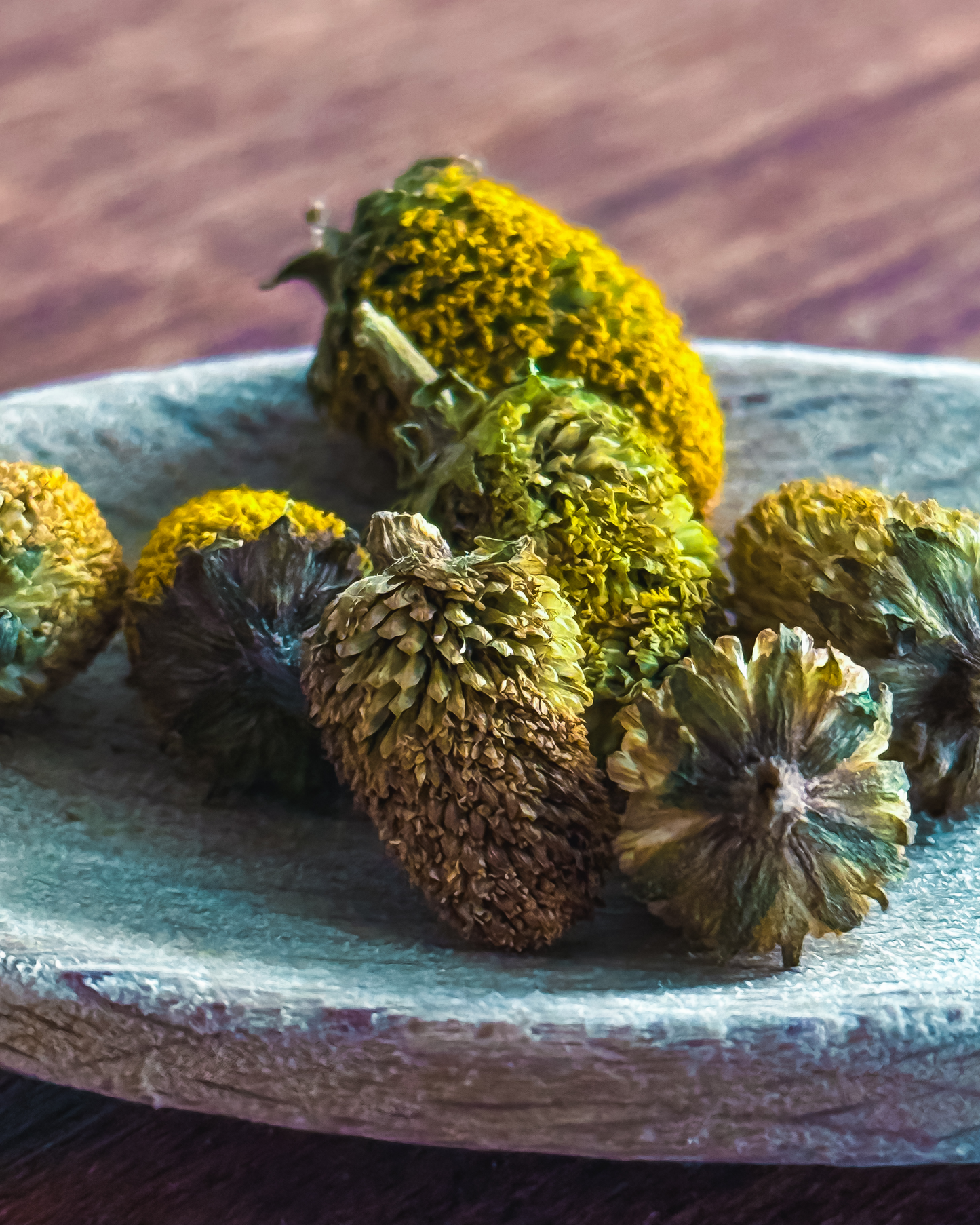
The flower head is the reproductive structure of the plant and one of its most chemically active tissues.
During flowering, the plant produces a diverse range of secondary metabolites that help it interact with its environment. These compounds may contribute to defense against herbivores, attraction of pollinators, or other ecological functions.
Spilanthol is one of these naturally occurring metabolites.
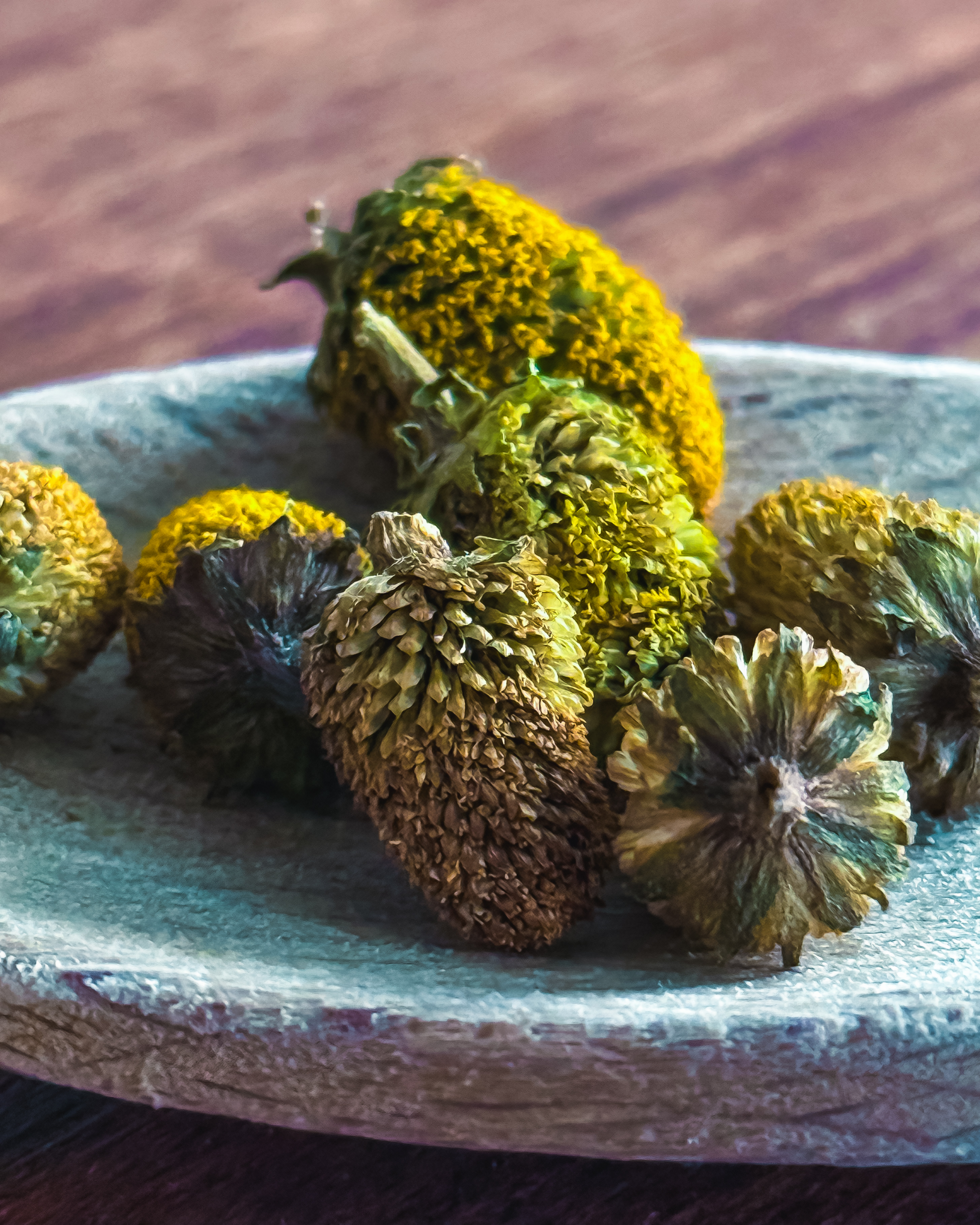
By harvesting mature flower heads at the appropriate stage of development, producers generally obtain plant material with greater concentrations of the target compound than if leaves or stems were used alone.
This does not mean leaves are "bad."
Leaves contain valuable phytochemicals of their own.
However, if the objective is specifically to maximize Spilanthol recovery, flower heads are generally the preferred starting material.
Why Leaves Produce a Different Extract
This distinction deserves special attention.
Many home extraction guides suggest placing the entire plant into a jar of oil or alcohol.
While this certainly creates a botanical extract, the resulting composition differs depending on which plant parts are included.
Flower heads and leaves are chemically distinct tissues.
Leaves contribute:
- chlorophyll
- waxes
- carbohydrates
- proteins
- organic acids
- various polyphenols
- lower relative amounts of Spilanthol
Flower heads contribute a different balance of compounds and generally a higher relative abundance of Spilanthol.
As a result, two extracts prepared using identical methods, but different plant material, may differ noticeably in color, aroma, viscosity, and phytochemical profile.
Understanding this distinction helps explain why ingredient selection is just as important as extraction technique.
Fresh vs. Dried Plant Material
One of the first decisions in any extraction process is whether to work with fresh or dried plant material.
Fresh flowers contain significant amounts of water.
That water plays an essential role while the plant is alive, but it introduces challenges during extraction.
Excess moisture can:
- dilute alcohol-based solvents
- encourage microbial growth
- shorten shelf life
- reduce storage stability
- alter the composition of the extract
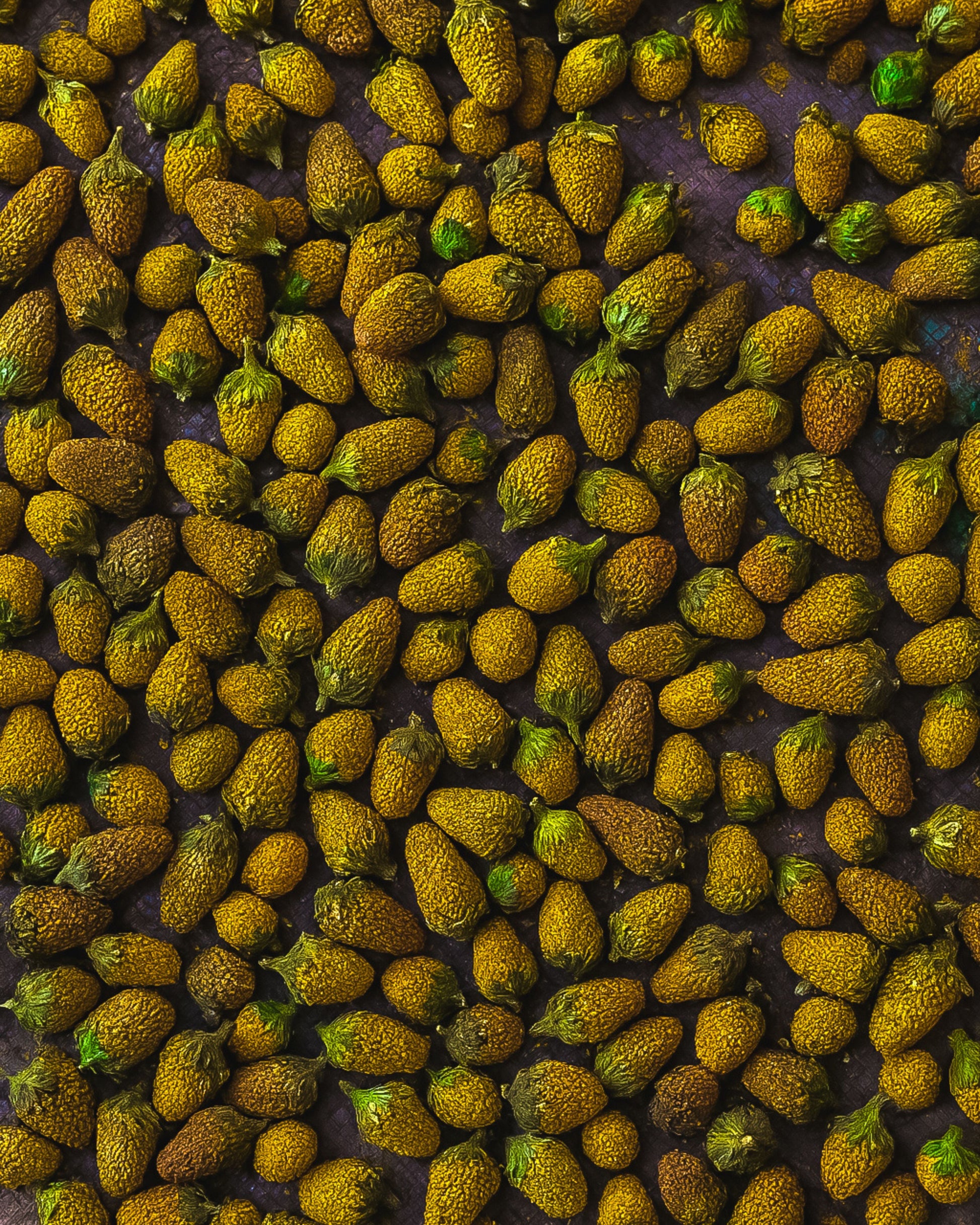
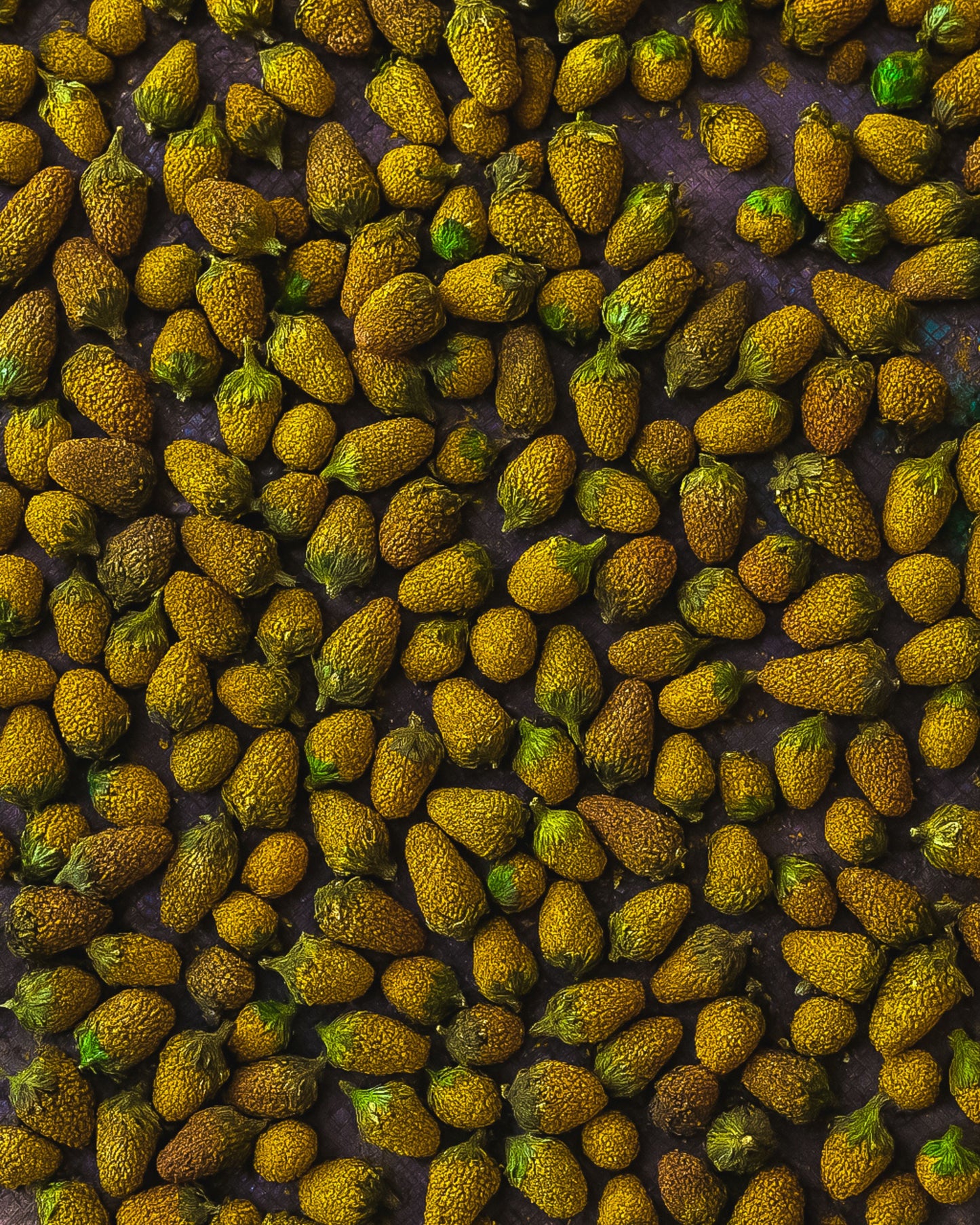
Drying removes much of this water while preserving the plant material for future processing.
Properly dried flowers are often easier to store, weigh, and extract consistently.
This is why many commercial botanical producers dry plant material under controlled conditions before beginning extraction.

Science Box
Why Drying Temperature Matters
Drying is not simply about removing water, it is about preserving the plant's chemistry.
Excessive heat can accelerate the degradation of some naturally occurring phytochemicals, reduce volatile components, and alter the overall chemical profile of the plant material.
For this reason, controlled drying at moderate temperatures with good airflow is generally preferred over rapid, high-temperature drying.
The objective is to remove moisture while maintaining the integrity of the botanical compounds intended for extraction.
Particle Size: Is Finer Always Better?
It might seem logical that grinding flowers into a very fine powder would always produce a better extract.
In practice, the answer is more nuanced.
Reducing particle size increases the surface area available to the solvent, which can improve extraction efficiency.
However, extremely fine powders can also create challenges:
- difficult filtration
- compacted plant material
- slower solvent flow
- increased sediment in the finished extract
Many professional processors therefore use coarsely milled or lightly crushed flower heads rather than ultra-fine powders.
The goal is to expose more surface area without creating unnecessary processing difficulties.
Finding the right balance often leads to cleaner, more manageable extracts.
Moisture: The Hidden Enemy of Extraction
Even after drying, moisture remains one of the most important variables to control.
Residual water can influence extraction in several ways, depending on the solvent used.
Too much moisture may:
- change solvent composition
- reduce extraction efficiency
- increase the risk of microbial growth
- shorten storage life
- introduce batch-to-batch variation
Professional producers often monitor moisture levels before extraction to improve consistency and reproducibility.
While home formulators may not have access to laboratory moisture analysis, storing dried flower heads in airtight containers and protecting them from humidity can help maintain their quality before extraction begins.
Key Takeaways
- Extraction transfers naturally occurring compounds from plant material into a suitable solvent.
- The quality of an extract begins with the quality of the harvested plant.
- Mature flower heads generally contain the highest naturally occurring concentrations of Spilanthol.
- Leaves and stems produce extracts with different phytochemical profiles and lower relative amounts of Spilanthol.
- Proper drying improves storage stability and supports more consistent extraction.
- Excessive drying temperatures may alter sensitive plant compounds.
- Moderate particle size often provides a practical balance between extraction efficiency and ease of filtration.
- Controlling moisture is essential for producing stable, reproducible botanical extracts.
Maceration: The Art and Science of Botanical Extraction
Maceration is one of the oldest and most widely used methods for extracting naturally occurring compounds from plants.
Despite its simplicity, it is also one of the most misunderstood.
Many online guides suggest that extraction is as simple as placing herbs into a jar of oil and waiting a few weeks.
While this may produce a botanical infusion, obtaining a high-quality extract depends on understanding the science behind the process.
Successful maceration is not controlled by one factor alone.
It is the result of many variables working together.
The quality of the plant material.
The choice of solvent.
The particle size.
The temperature.
The extraction time.
Even how often the mixture is gently agitated.
Understanding these variables allows you to improve extraction quality while avoiding common mistakes.
What Is Maceration?
Maceration is a passive extraction process in which plant material is immersed in a suitable solvent for an extended period.
During this time, naturally occurring compounds gradually move from the plant cells into the surrounding liquid.
Unlike steam distillation or high-pressure extraction, maceration relies primarily on diffusion.
No complex equipment is required.
Only time.
How Does Maceration Work?
Imagine placing a spoonful of sugar into a glass of water.
At first, all of the sugar is concentrated in one place.
Gradually, the sugar dissolves and spreads throughout the liquid until the concentration becomes more uniform.
Botanical extraction works in a similar way.
When dried Acmella oleracea flower heads are immersed in a solvent, compounds such as Spilanthol begin to dissolve.
As extraction continues, these compounds diffuse into the solvent until an equilibrium is gradually approached.
Several factors influence how efficiently this process occurs.
The Six Variables That Control Extraction
Every successful extraction is governed by six key variables.
Rather than memorizing recipes, understanding these principles allows you to adapt your process intelligently.
These variables are:
- plant material
- solvent
- particle size
- extraction time
- temperature
- agitation
Changing any one of these variables can influence the final extract.
Choosing the Right Plant Material
Everything begins with the raw botanical.
If the starting material is poor, no extraction method can fully compensate.
For Acmella oleracea, mature flower heads are generally preferred because phytochemical studies consistently identify them as the richest natural source of Spilanthol.
Leaves also contain Spilanthol, but they contribute a different phytochemical profile.
Compared with flower heads, leaf-based extracts often contain:
- more chlorophyll
- more waxes
- more leaf pigments
- lower relative amounts of Spilanthol
This does not make leaves unsuitable.
It simply means they produce a different extract.
If your goal is a premium Spilanthol-rich botanical ingredient, flower heads are generally the better starting point.
Science Box
Why Flower Heads Usually Produce Better Extracts
Think of extraction like making coffee.
Using high-quality coffee beans produces a richer cup than using leaves or stems from the coffee plant.
The brewing method may be identical, but the starting material determines much of the final result.
The same principle applies to Acmella oleracea.
Choosing flower heads gives the solvent access to plant tissues that generally contain the highest naturally occurring concentrations of Spilanthol.
Choosing the Right Solvent
Not every solvent extracts the same compounds.
Different phytochemicals have different chemical properties.
One of the most important characteristics of Spilanthol is that it is lipophilic.
This means it has a greater affinity for oils and other non-polar or moderately non-polar environments than for water alone.
Choosing the appropriate solvent therefore has a major influence on the final extract.
Comparing Common Extraction Solvents
| Solvent | Suitable for Spilanthol | Typical Applications | Notes |
|---|---|---|---|
| Sunflower oil | Yes | Cosmetic macerates | Stable, widely used |
| MCT oil | Yes | Serums, oils | Light texture, good oxidative stability |
| Jojoba oil | Yes | Premium cosmetics | Technically a liquid wax with excellent stability |
| Olive oil | Yes | Traditional herbal preparations | Rich composition, stronger aroma |
| Ethanol | Yes | Botanical tinctures and further processing | Broad-spectrum extraction |
| Glycerin | Limited | Glycerites | Better for hydrophilic compounds than lipophilic ones |
| Propylene glycol | Yes | Cosmetic formulations | Common cosmetic solvent |
| Water | Poor | Herbal teas and infusions | Inefficient for extracting Spilanthol on its own |
No single solvent is universally "best." The right choice depends on whether the final extract is intended for cosmetic formulation, further processing, or research.
Oil vs. Alcohol
This is one of the most common questions asked by formulators.
Oil extraction and ethanol extraction each have strengths.
Oil Maceration
Oil-based macerates are well suited for:
- facial oils
- balms
- massage oils
- salves
- anhydrous cosmetics
Advantages include simplicity and direct compatibility with many cosmetic formulations.
Ethanol Extraction
Ethanol generally extracts a broader range of botanical compounds and is commonly used when preparing concentrated botanical extracts that may later be incorporated into finished formulations.
Because ethanol evaporates relatively easily, it can also be removed during later processing if required.
Particle Size
Reducing particle size increases the amount of plant surface exposed to the solvent.
However, finer is not always better.
| Preparation | Advantages | Limitations |
|---|---|---|
| Whole flower heads | Easy filtration | Slower extraction |
| Coarsely crushed | Good balance | Slightly more sediment |
| Coarse powder | Faster extraction | More difficult filtration |
| Fine powder | Maximum surface area | High sediment, filtration challenges |
Many experienced processors prefer lightly crushed flower heads because they provide increased surface area without producing excessive sediment.
Extraction Ratio
Another important consideration is the proportion of plant material to solvent.
This is often expressed as a ratio.
For example:
1:5
One part dried botanical material.
Five parts solvent.
Other ratios may also be appropriate depending on the desired concentration, the absorbency of the plant material, and the extraction method.
Rather than following a universal formula, the objective is to ensure that all plant material remains fully submerged throughout the extraction.
Exposed plant material may oxidize or support microbial growth if moisture is present.
How Long Should Maceration Last?
Extraction begins almost immediately after the solvent contacts the plant.
However, diffusion takes time.
Many macerations continue for several days or weeks.
As extraction progresses, the rate gradually slows because the concentration difference between the plant material and the solvent becomes smaller.
Eventually, additional time produces only modest changes.
This phenomenon is known as diminishing returns.
Longer is not always better.
Does Heat Improve Extraction?
Temperature influences the movement of molecules.
Warmer conditions generally increase diffusion and can accelerate extraction.
However, excessive heat may also alter or degrade some botanical compounds and may accelerate oxidation of the carrier oil.
For most oil macerations, gentle temperatures are generally preferred over prolonged high heat.
The goal is to encourage extraction without unnecessarily stressing the botanical material or the solvent.
Why Agitation Matters
One of the simplest ways to improve extraction is gentle agitation.
When a jar remains completely still, a layer of concentrated compounds can develop around the plant material.
Occasionally swirling or gently shaking the container helps distribute dissolved compounds throughout the solvent.
This maintains a stronger concentration gradient and encourages continued diffusion.
Daily gentle agitation is often sufficient.
Vigorous shaking is usually unnecessary.
Filtration: More Important Than Many People Realize
An excellent extraction can be undermined by poor filtration.
Leaving fine plant particles suspended in the finished extract may affect:
- appearance
- clarity
- stability
- storage life
- consistency
Depending on the desired level of clarity, filtration may be performed in one or more stages using progressively finer filters.
Allowing the extract to settle before final filtration can also help reduce sediment.
Storage After Extraction
Extraction does not end when the plant material is removed.
Proper storage helps preserve the quality of the finished extract.
Good practices include:
- using clean amber or opaque glass containers
- minimizing exposure to air
- protecting the extract from direct sunlight
- storing at a stable, moderate temperature
- keeping containers tightly sealed
These steps help slow oxidation and maintain the extract's quality over time.
Professional Tips for Better Maceration
Small improvements can make a noticeable difference in extraction quality.
Experienced botanical processors often recommend:
✔ Use mature flower heads whenever possible.
✔ Dry the plant material thoroughly before extraction.
✔ Avoid introducing unnecessary moisture into the solvent.
✔ Lightly crush flower heads instead of grinding them into a fine powder.
✔ Ensure all botanical material remains completely submerged.
✔ Agitate the extraction gently rather than vigorously.
✔ Filter carefully,sometimes more than once.
✔ Label every batch with the harvest date, solvent, ratio, and extraction date.
✔ Record your process so successful batches can be reproduced.
Consistency is often the difference between an average extract and an exceptional one.
Key Takeaways
- Maceration relies on diffusion rather than heat or pressure.
- The six most important variables are plant material, solvent, particle size, time, temperature, and agitation.
- Mature flower heads generally produce extracts richer in naturally occurring Spilanthol than leaves.
- Solvent choice influences which groups of compounds are extracted.
- Moderate particle size often balances extraction efficiency with easier filtration.
- Longer extraction times eventually reach diminishing returns.
- Gentle agitation and careful filtration contribute to cleaner, more consistent extracts.
- Good documentation is essential for producing reproducible botanical preparations.
Professional Extraction, Standardization & Quality Control
Making a botanical extract is only half the story.
The real challenge is producing an extract that is consistent, traceable, and reproducible from one batch to the next.
This is where professional botanical production differs from most home extractions.
A successful extraction is not judged by its color, smell, or taste alone.
Instead, it is evaluated through careful process control and independent laboratory analysis.
The goal is not simply to create an extract.
The goal is to create an extract whose characteristics can be understood, documented, and reproduced as consistently as nature allows.
Nature Is Never Identical
One of the most important principles in botanical science is understanding that plants are natural products.
Unlike synthetic ingredients, no two harvests are perfectly identical.
The composition of Acmella oleracea may vary because of factors such as:
- climate
- rainfall
- sunshine
- soil characteristics
- genetics
- plant maturity
- harvest timing
- drying conditions
- storage
Even plants grown in the same field can differ slightly from one another.
This natural variation is not a defect.
It is part of working with living botanical materials.
Professional producers do not attempt to eliminate this variation.
Instead, they measure it and manage it.
Extraction Begins Before Harvest
Many people believe extraction starts when flowers are placed into oil or alcohol.
In reality, extraction starts weeksor even months earlier.
Professional production begins with decisions made during cultivation.
Questions include:
- Are the plants healthy?
- Have the flower heads reached the appropriate maturity?
- Is the harvest taking place under suitable weather conditions?
- Are damaged or immature flower heads being removed?
- How quickly will the harvested material be dried?
Every one of these decisions influences the quality of the final extract.
The solvent cannot recover compounds that were never present in the starting material.
The Importance of Flower Selection
Earlier in this guide, we explained that flower heads generally contain the highest naturally occurring concentrations of Spilanthol.
Professional producers take this one step further.
Instead of harvesting the entire plant, they often select only the botanical material most suitable for the intended extract.
This approach offers several advantages.
Using only flower heads generally results in:
- a higher relative abundance of Spilanthol
- reduced dilution from stems and leaves
- more consistent raw material
- a more reproducible phytochemical profile
- simpler process standardization
The result is not necessarily a "stronger" extract in every respect, but a more targeted extract with greater consistency.
Why Commercial Producers Standardize Their Process
Imagine preparing the same recipe every week.
If you use different ingredients, different measurements, and different cooking times, the final dish will vary.
Botanical extraction follows the same principle.
Professional producers therefore standardize every practical aspect of production.
This may include:
- harvest stage
- drying temperature
- moisture content
- particle size
- solvent quality
- extraction ratio
- extraction time
- filtration method
- storage conditions
By keeping these variables as consistent as possible, producers reduce unnecessary differences between batches.
Nature still introduces variation, but the manufacturing process does not add to it.
Science Box
Standardization Does Not Mean Identical
A common misunderstanding is that "standardized" means every batch is exactly the same.
For natural botanicals, this is rarely possible.
Instead, standardization means controlling the production process, monitoring important quality characteristics, and verifying the finished material through analytical testing.
The objective is consistency, not perfection.
How Professional Laboratories Evaluate an Extract
Appearance alone cannot reveal the chemical composition of a botanical extract.
Two extracts may look nearly identical while containing different concentrations of naturally occurring compounds.
Professional laboratories therefore use analytical techniques to verify quality.
Depending on the intended application, testing may include:
- botanical identification
- chromatographic fingerprinting
- Spilanthol quantification
- moisture analysis
- microbiological testing
- heavy metal screening
- pesticide residue analysis
- residual solvent testing (where relevant)
These tests provide objective data rather than assumptions.
Measuring Spilanthol with HPLC
One of the most widely used techniques for analysing botanical extracts is High-Performance Liquid Chromatography (HPLC).
HPLC separates the individual compounds within an extract.
This allows laboratories to identify and quantify naturally occurring substances such as Spilanthol.
Instead of asking,
"Does this extract seem good?"
HPLC allows scientists to ask,
"How much naturally occurring Spilanthol is actually present?"
This makes HPLC one of the most valuable tools for quality assurance.
Why Batch Testing Matters
Every production batch deserves to be evaluated on its own merits.
Assuming that one harvest will match the next is not good scientific practice.
Independent batch testing helps producers:
- confirm botanical identity
- verify process consistency
- document naturally occurring Spilanthol levels
- detect unexpected variation
- provide transparent quality information
Testing each batch builds confidence throughout the supply chain, from the grower to the formulator.
Madabuzz's Approach to Quality
At Madabuzz, quality begins with the plant itself.
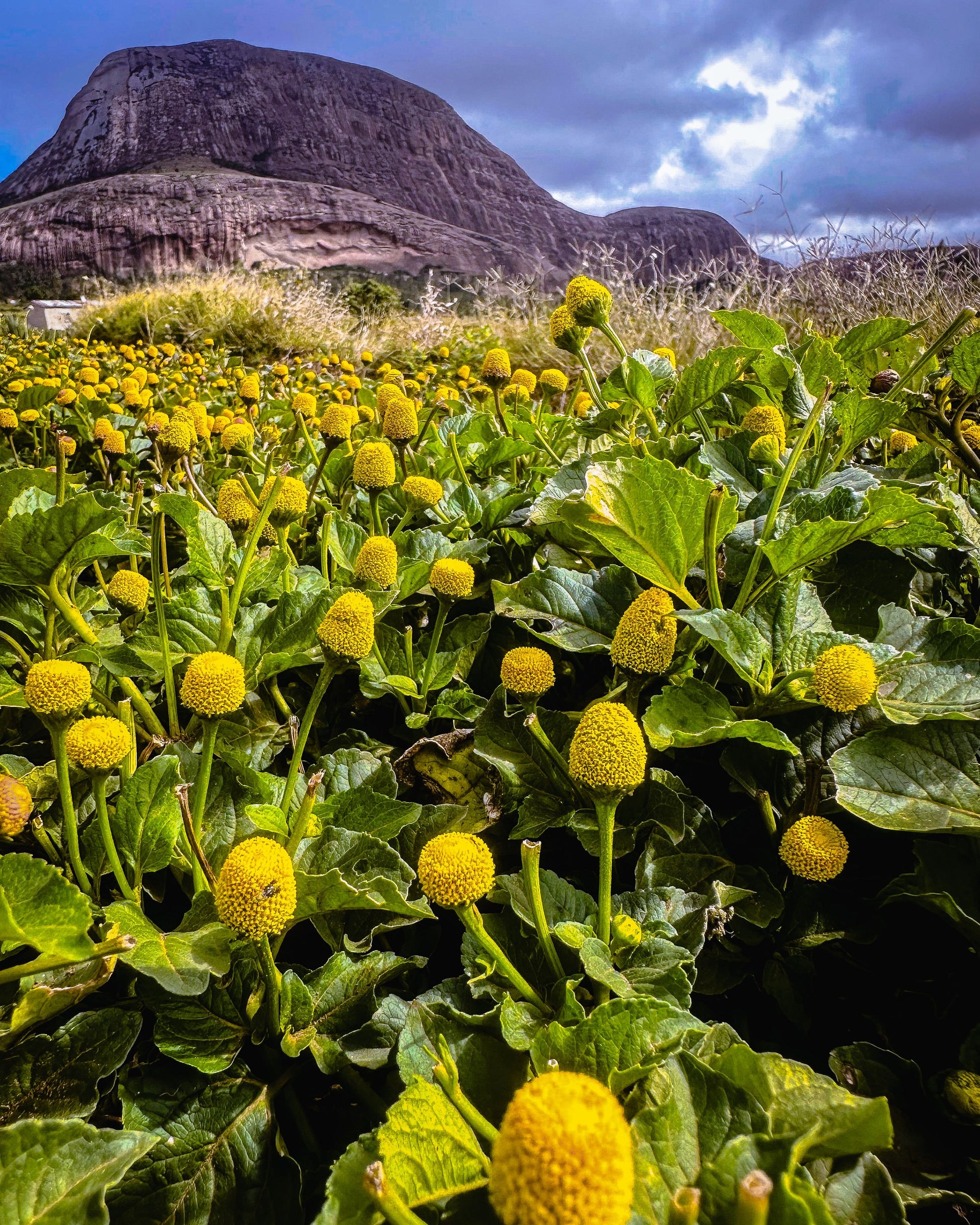
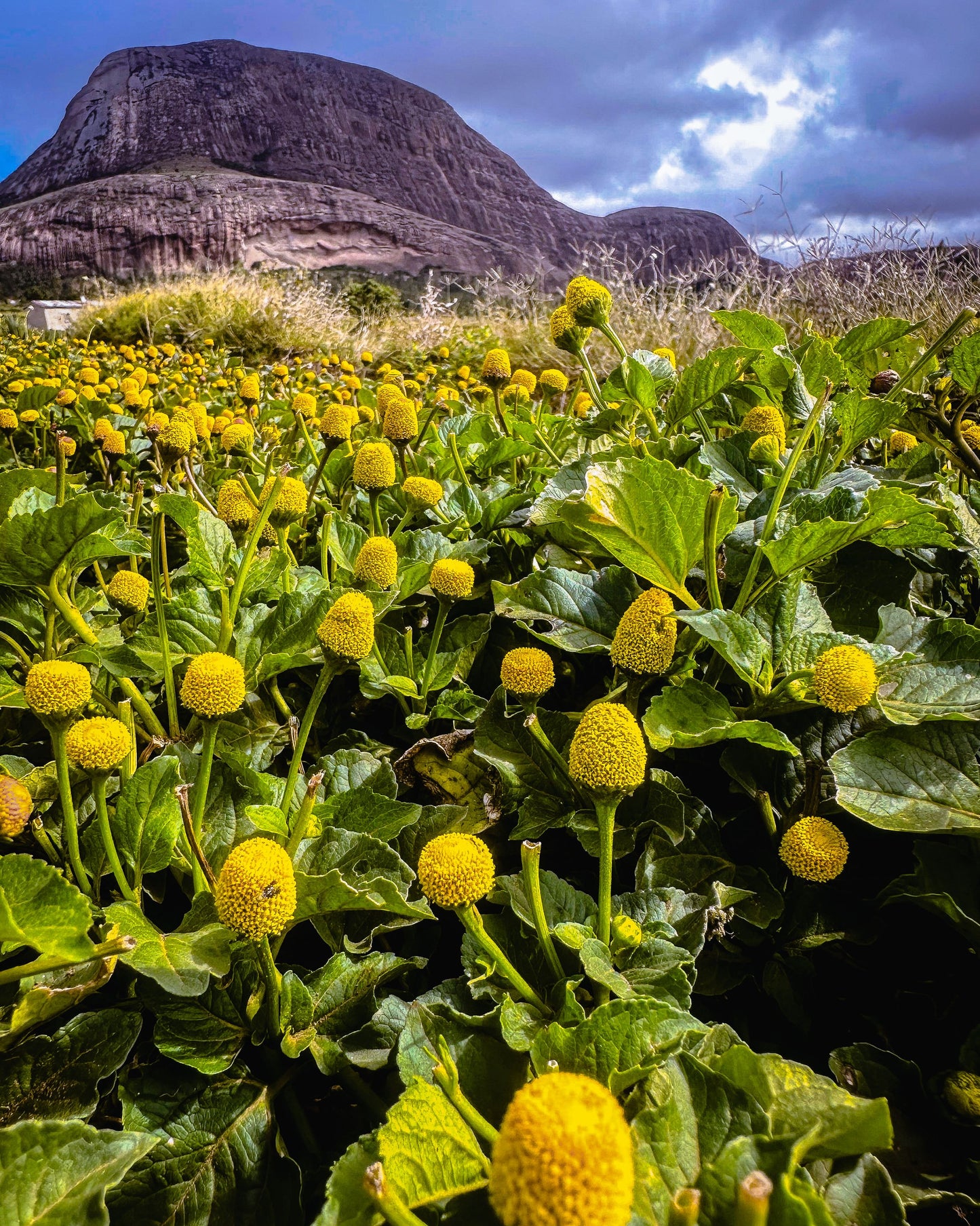
We cultivate Acmella oleracea under Madagascar's tropical growing conditions and harvest mature flower heads only, as these are generally recognized as the richest natural source of Spilanthol.
After harvesting, the flower heads are carefully dried under controlled conditions to help preserve their botanical integrity before extraction or further processing.
Every production batch is independently analyzed to verify key quality characteristics.
One of our reference batches measured 4.01% naturally occurring Spilanthol.
This value applies to that specific laboratory-tested batch and illustrates why analytical verification is so important. As with any botanical ingredient, future batches may vary because of natural growing conditions and seasonal factors.
Common Mistakes That Reduce Extract Quality
Whether you're making a home macerate or sourcing a commercial ingredient, certain mistakes can compromise quality.
Using Whole Plants Instead of Flower Heads
Including stems and large amounts of leaf material changes the phytochemical profile and generally reduces the relative abundance of Spilanthol in the extract.
Extracting Fresh, Wet Material Without Planning
Excess moisture can dilute alcohol-based solvents, promote microbial growth, and reduce the stability of the finished extract.
Proper drying is an important step toward consistent results.
Overheating the Extraction
While warmth can speed extraction, excessive heat may alter sensitive plant compounds and accelerate oxidation of carrier oils.
Gentle, controlled temperatures are generally preferred.
Choosing the Wrong Solvent
Not every solvent extracts the same range of compounds.
Selecting a solvent should always reflect the intended use of the finished extract.
Skipping Filtration
Fine plant particles can continue to break down during storage, affecting clarity, stability, and appearance.
Careful filtration helps produce a cleaner final ingredient.
Poor Record Keeping
Every extraction teaches something.
Recording the harvest date, solvent, extraction ratio, duration, and observations makes it easier to reproduce successful batches and identify the cause of unexpected variations.
Looking to the Future
Botanical extraction continues to evolve.
Researchers are exploring new technologies such as ultrasound-assisted extraction, microwave-assisted extraction, enzyme-assisted processing, and improved supercritical CO₂ systems to increase efficiency while preserving sensitive phytochemicals.
At the same time, traditional techniques such as maceration remain highly valued because of their simplicity, accessibility, and gentle processing.
Rather than replacing one another, traditional methods and modern analytical science work together.
Maceration provides a practical way to prepare botanical extracts.
Laboratory testing provides the confidence to understand what those extracts contain.
Together, they create a more reliable foundation for cosmetic formulation, botanical research, and quality assurance.
Frequently Asked Questions
What is the best part of Acmella oleracea for extraction?
Current phytochemical research consistently identifies mature flower heads as the richest natural source of Spilanthol, making them the preferred starting material when the goal is to maximize this compound.
Can I use leaves instead of flower heads?
Yes. Leaves can be extracted and contain a range of valuable phytochemicals, including lower relative amounts of Spilanthol. However, leaf extracts will differ in composition and are not directly comparable to flower-head extracts.
Is alcohol better than oil?
Neither is universally better. Ethanol generally extracts a broader range of compounds and is widely used in commercial processing, while oil maceration is well suited for cosmetic oils, balms, and anhydrous formulations. The appropriate solvent depends on the intended application.
Why should dried material be used?
Drying reduces moisture, improves storage stability, and helps create more consistent extraction conditions. Excess water can interfere with some extraction processes and increase the risk of microbial growth.
How do manufacturers verify extract quality?
Professional producers typically combine standardized processing with independent laboratory analysis. Techniques such as HPLC allow laboratories to identify and quantify naturally occurring compounds like Spilanthol, while additional testing may evaluate botanical identity, microbiological quality, moisture, and other relevant parameters.
What does 4.01% Spilanthol mean?
It refers to the naturally occurring Spilanthol content measured in one independently analyzed Madabuzz reference batch. Because botanical materials vary naturally, this value should not be interpreted as a guarantee for every future harvest.
Final Thoughts
Extracting Spilanthol from Acmella oleracea is both a science and an art.
The process begins with thoughtful cultivation, careful harvesting, and the selection of mature flower heads. It continues through drying, solvent selection, maceration, filtration, and finally, laboratory verification.
While no extraction method can eliminate the natural variability of botanical materials, a well-designed process can produce extracts that are consistent, traceable, and suitable for high-quality formulations.
For us at Madabuzz, quality is not defined by a single number or a single extraction technique. It is the result of respecting the entire journey, from the fields of Madagascar to the laboratory, while combining traditional botanical knowledge with modern analytical science.
Continue Exploring
Madagascar Collection
- Wild vs. Cultivated Acmella oleracea
- How to Grow Acmella oleracea
- When to Harvest Acmella oleracea
- Flower Heads vs. Leaves
- Complete Botanical Guide to Acmella oleracea
Spilanthol Science
- What Is Spilanthol?
- How Does Spilanthol Work?
- How Is Spilanthol Extracted?
- How Stable Is Spilanthol?
- How Is Spilanthol Measured?
- What Does 4.01% Spilanthol Mean?
Quality Assurance
- How to Read a Certificate of Analysis (COA)
- Why Independent Laboratory Testing Matters
- Understanding Botanical Quality